

In 2026, enterprise IT is taking the decisive leap from reactive chatbots to operationally executing Agentic AI Workflows. While traditional automations fail on unstructured data, modern multi-agent architectures resolve complex business processes autonomously, resiliently, and with dynamic tool calling via the Model Context Protocol.
This article is an in-depth expert contribution from our content cluster. Discover the complete overview on our main page:AI Automation & Intelligent Agents →
- From Prompting to Autonomous Execution: While classical LLMs were purely generative text engines, Agentic AI Workflows operate as proactive software systems. They autonomously break high-level business goals into sub-tasks, select appropriate APIs dynamically, and execute transactions across ERP, CRM, and database backends.
- Resilient Fault Tolerance via Self-Correction: Utilizing closed feedback loops (reflection and evaluator-optimizer cycles), agents detect invalid API responses or malformed data structures autonomously and iterate on alternative execution strategies without human intervention.
- Enterprise-Grade Governance with MCP: The standardized Model Context Protocol (MCP) and deterministic graph orchestrators like LangGraph enable SMEs to deploy fully auditable, GDPR-compliant multi-agent architectures with strict Human-in-the-Loop approval gates.
The Paradigm Shift: Why Standalone Chatbots Are Obsolete
Between 2023 and 2025, enterprises spent millions on conversational bots that could answer questions but lacked the ability to execute end-to-end business workflows. 2026 marks the turning point: Frontier models now feature native Reasoning capabilities and standardized tool interfaces. Companies evaluate AI ROI not by generated tokens, but by autonomously completed business transactions.
- 1. Paradigm Shift: Why Deterministic Workflows and Rigid RPA Fail in 2026
- 2. The 4 Architectural Pillars of Modern Enterprise AI Agents
- 3. Framework Comparison 2026: LangGraph, CrewAI, AutoGen & MCP in the Enterprise Stack
- 4. Proven B2B Use Cases in SMEs with Measurable ROI
- 5. Governance, Security & EU AI Act Compliance for Autonomous Systems
- 6. Cost Traps & Pitfalls: The 4 Biggest Mistakes in Agentic Deployments
- 7. 4-Phase Roadmap: From PoC to a Production Multi-Agent System
- 8. Conclusion: Driving the Operational Transformation for SMEs
1. Paradigm Shift: Why Deterministic Workflows and Rigid RPA Fail in 2026
For more than a decade, traditional process automation across small and medium-sized enterprises relied on two main technologies: Robotic Process Automation (RPA) at the user-interface layer and linear integration platforms such as Zapier, Make, or n8n. Both approaches share a fundamental architectural constraint: they are strictly deterministic. Every branch, condition, and error handler must be explicitly hardcoded in advance by software developers.
In the operational landscape of 2026, this deterministic paradigm has become a critical bottleneck. Over 80 percent of business workflows ingest unstructured information: supplier invoices with variable PDF layouts, ambiguous customer emails in multiple languages, handwritten dispatch notes, or suddenly updated regulatory standards. Whenever an input deviates from the expected schema, traditional RPA pipelines fail with uncaught exceptions and require manual intervention.
This is where Agentic AI Workflows transform enterprise operations. An AI agent is not a brittle script, but a goal-oriented software system. Instead of following rigid procedural instructions, it is assigned an objective (e.g., "Reconcile incoming supplier invoices against open purchase orders in SAP, verify early-payment discount terms, and prepare approval if price discrepancies are below 3 percent"). The agent analyzes the initial state, evaluates available tool interfaces, and dynamically plans the optimal sequence of actions.
Comparison: Rigid Linear Automation vs. Adaptive Agentic AI Workflows
- Brittle to Data Variance: Any unexpected layout, format, or schema change causes instant pipeline failure.
- High Maintenance Overhead: Every API update and new supplier template requires manual engineering hours.
- Zero Semantic Understanding: Lacks awareness of business priorities, urgency, or contractual context.
- Isolated Silos: Workflows operate in isolation without ad-hoc cross-departmental collaboration.
- Contextual Robustness: Seamlessly parses complex unstructured text, PDFs, and incomplete data payloads.
- Autonomous Self-Correction: Automatically retries failed API steps with adjusted arguments using reflection loops.
- Dynamic Tool Calling: Selects APIs, SQL queries, and browser actions dynamically at runtime.
- Multi-Agent Collaboration: Specialized agents share contextual memory over state graphs to solve complex tasks.
This transition represents a qualitative technological paradigm shift: while RPA merely mimicked mechanical keyboard and mouse actions, Agentic AI assumes autonomous operational problem-solving capabilities at the knowledge-worker tier.
2. The 4 Architectural Pillars of Modern Enterprise AI Agents
Integrating autonomous agent systems into enterprise IT infrastructures in a secure, audit-proof, and scalable manner requires far more than a single prompt. Industrial-grade agent architectures in 2026 rely on a four-tier framework combining cognitive foundation models with deterministic software engineering.
1. Dynamic Tool Calling & MCP
Agents connect directly to ERP systems, relational databases, cloud object storage, and browser sessions via standardized protocols such as the Model Context Protocol (MCP) and OpenAPI specs, generating type-validated arguments at runtime.
2. Hybrid Reasoning & Reflection
Modern frontier models leverage multi-step planning cycles (ReAct, Plan-and-Solve). Prior to executing state-modifying API calls, the agent simulates potential outcomes, validates intermediate data, and corrects erroneous assumptions.
3. Multi-Agent Supervisor Patterns
Rather than relying on a brittle monolithic prompt, specialized worker agents (e.g., research agent, compliance validator, booking agent) coordinate under a central supervisor orchestrator with strictly scoped responsibilities.
4. Enterprise Memory & GraphRAG
A multi-tiered memory architecture combining short-term session state, persistent working memory, and long-term enterprise knowledge. Utilizing vector search and knowledge graphs (GraphRAG), agents maintain relational context over months.
The cornerstone of this architecture is the integration of Dynamic Tool Calling with the Model Context Protocol (MCP). MCP acts as a universal USB-C standard for AI systems. Instead of building custom connector code for every CRM, ticketing tool, or database, enterprise applications deploy standard MCP servers. The agent dynamically parses tool schemas, validates input payloads, and executes authenticated calls with fine-grained role-based permissions.
Pro Tip: Optimize Tool Context via Semantic Schema-RAG
When your agent accesses hundreds of enterprise tools, avoid packing every tool schema into the system prompt. Implement Semantic Tool-RAG instead: the agent queries a vector index based on the task description to fetch only the 3 to 5 most relevant tool definitions into the active context window. This cuts input token consumption by up to 85 percent and eliminates false tool selection.
3. Framework Comparison 2026: LangGraph, CrewAI, AutoGen & MCP in the Enterprise Stack
Selecting the optimal orchestration framework is vital for production stability and long-term maintainability. In 2026, four key technologies dominate the enterprise ecosystem:
1. LangGraph: Cyclical State Control & Time-Travel Debugging
LangGraph (built on LangChain) is the industry standard for mission-critical enterprise workflows. Unlike linear DAG engines, LangGraph supports stateful cyclical graphs with conditional branches, persistent check-pointing in PostgreSQL/Redis, and time-travel debugging that allows engineers to inspect and replay agent execution states at any step.
2. CrewAI: Role-Based Collaboration & Rapid PoC Velocity
CrewAI excels in intuitive role-based abstractions. Developers define agents as collaborative team members with distinct roles, goals, backstories, and toolsets. For content operations, competitive research, and structured multi-step analysis, CrewAI delivers rapid time-to-market and clean code readability.
3. Microsoft AutoGen 0.4+: Asynchronous Event-Driven Multi-Agent Networks
The 2026 generation of AutoGen provides an asynchronous, event-driven actor architecture. AutoGen is exceptionally suited for complex simulation environments, cross-cloud distributed agent systems, and scenarios where dozens of autonomous agents communicate over message brokers like Kafka or RabbitMQ.
4. Model Context Protocol (MCP) Server Hub: Standardized Connectivity
MCP is not an orchestrator, but the universal protocol for tool connectivity. Modern architectures at Pragma-Code combine LangGraph state machines with a fleet of dedicated MCP servers for databases, ERP backends, email gateways, and APIs, completely decoupling the execution tier from model providers.
The Python implementation below demonstrates a robust stateful graph using LangGraph. It implements a Supervisor-Worker-Pattern with automated verification and a conditional human approval checkpoint (Human-in-the-Loop):
from typing import Annotated, TypedDict, Literal
from langgraph.graph import StateGraph, END
from langgraph.checkpoint.postgres import PostgresSaver

# 1. Central Agent State Definition
class InvoiceAgentState(TypedDict):
    invoice_pdf_path: str
    extracted_data: dict
    validation_errors: list[str]
    erp_match_found: bool
    requires_human_approval: bool
    is_approved: bool
    execution_status: str

# 2. Agent Node Definitions
def extract_invoice_node(state: InvoiceAgentState) -> dict:
    # Autonomous extraction via multimodal Vision-LLM and schema validation
    data = extract_structured_invoice(state["invoice_pdf_path"])
    return {"extracted_data": data}

def validate_erp_node(state: InvoiceAgentState) -> dict:
    # Cross-reference against purchase orders in ERP via MCP server
    match, errors = check_sap_purchase_order(state["extracted_data"])
    amount = state["extracted_data"].get("total_amount", 0)
    # Business rule: amounts > €10,000 or validation errors require human sign-off
    requires_approval = amount > 10000.0 or len(errors) > 0
    return {
        "erp_match_found": match,
        "validation_errors": errors,
        "requires_human_approval": requires_approval
    }

def execute_booking_node(state: InvoiceAgentState) -> dict:
    # Execute write-operation in ERP accounting module
    status = post_invoice_to_sap(state["extracted_data"])
    return {"execution_status": status}

# 3. Conditional Routing Logic
def check_approval_route(state: InvoiceAgentState) -> Literal["human_gate", "execute_booking", "reject_flow"]:
    if state["requires_human_approval"]:
        return "human_gate"
    if state["erp_match_found"] and not state["validation_errors"]:
        return "execute_booking"
    return "reject_flow"

# 4. Graph Construction with HITL Interrupt
workflow = StateGraph(InvoiceAgentState)
workflow.add_node("extract", extract_invoice_node)
workflow.add_node("validate", validate_erp_node)
workflow.add_node("execute_booking", execute_booking_node)

workflow.set_entry_point("extract")
workflow.add_edge("extract", "validate")
workflow.add_conditional_edges("validate", check_approval_route, {
    "human_gate": END, # Pauses for human webhook sign-off
    "execute_booking": "execute_booking",
    "reject_flow": END
})
workflow.add_edge("execute_booking", END)

# Compile with persistent PostgreSQL checkpointer
app = workflow.compile(checkpointer=PostgresSaver(conn_string="..."))
This design highlights the critical strength of modern agentic frameworks: execution is stateful and interruptible. The system operates fully autonomously whenever business rules pass, and pauses deterministically whenever human judgment is required.
4. Proven B2B Use Cases in SMEs with Measurable ROI
Agentic AI Workflows deliver maximum economic value in knowledge-intensive, repetitive processes where qualified staff are constrained by administrative bottlenecks. Below are four production-proven use cases across SMEs:
1. Autonomous Invoice Processing & ERP Discrepancy Reconciliation
In wholesale and manufacturing companies, finance teams spend hundreds of hours monthly reconciling supplier invoices against delivery slips and purchase orders. A dedicated invoice agent monitors email inboxes, extracts line-item data, verifies tax compliance under statutory rules, and cross-references quantities and prices in ERP systems (SAP, Microsoft Dynamics, or Odoo).
When rounding anomalies, changed freight fees, or discount terms arise, the agent drafts clarification inquiries to the vendor or presents a prepared booking voucher to the controller. Invoice cycle times typically drop from 4–6 business days to under 10 minutes.
2. 24/7 B2B Customer Operations & Ticket Triage with Direct CRM Execution
While legacy FAQ bots only regurgitate static text, a full-fledged support agent resolves operational requests: it identifies customers by domain, checks contract SLAs in the CRM, inspects error attachments, and runs diagnostics against server APIs.
For license expansions or return shipments, the agent triggers backend mutations, generates shipping labels, and credits accounts up to predefined thresholds (e.g., €250) autonomously. Human agents only handle escalations and edge cases.
3. Automated RFP & Tender Screening for Technical Service Providers
For engineering, industrial, and IT contractors, processing public and commercial tenders (RFPs) demands huge time investments. Hundreds of pages of specification documents must be reviewed for technical compliance, ISO certifications, and legal liabilities.
A multi-agent pipeline splits tender dossiers into modular requirements. Sub-agents evaluate corporate capability matches via GraphRAG, draft bill-of-materials estimates, and flag high-risk contractual clauses (e.g., liquidated damages). The result is a comprehensive 20-page executive summary with a Go/No-Go rating within 30 minutes of receipt.
4. Agentic DevOps & CI/CD Self-Healing Pipelines
Within engineering teams, autonomous ops agents monitor continuous integration pipelines. When an automated test fails after dependency upgrades, the agent parses stack traces, isolates breaking commits, researches changelogs in upstream repositories, and generates a pull request with the appropriate patch and updated unit tests.
Real-World Economic Metrics
SMEs deploying Agentic AI Workflows across administrative and customer-facing operations achieve average operating cost reductions of 42 to 68 percent, coupled with throughput time accelerations exceeding 80 percent. The Return on Investment (ROI) is typically realized within the first quarter post-launch.
5. Governance, Security & EU AI Act Compliance for Autonomous Systems
Autonomous software actions introduce substantial risks if implemented without robust safety guardrails. When an agent is granted write access to databases and communication channels, cybersecurity and regulatory compliance must be top priorities. In 2026, the EU AI Act mandates strict transparency, risk governance, and human oversight.
1. Human-in-the-Loop (HITL) Authorization Gates
Implementation of deterministic thresholds: write transactions exceeding financial limits, destructive deletions, and external legal agreements strictly require digital signatures from authorized human staff via webhook portals.
2. Prompt Injection Defense & Sandbox Isolation
Strict segregation of trusted system prompts from untrusted third-party inputs (e.g., supplier emails). Code execution and tool commands run in isolated Docker microVMs or WebAssembly sandboxes without host network access.
3. PII Redaction & Zero Data Retention
Automatic redaction of personally identifiable information (GDPR) at API gateways before forwarding prompts to foundation models. Use of dedicated enterprise endpoints with contractually enforced zero-retention policies.
4. Immutable Agentic Audit Trails
Comprehensive logging of every reasoning step, invoked tool payload, and execution timestamp in tamper-evident log stores to satisfy ISO 27001, SOC 2, and BSI audit requirements.
Complying with EU AI Act Transparency Obligations (Article 50) requires clean architectural engineering: customer-facing content produced by autonomous agents must be machine-readably watermarked and transparently disclosed in user interfaces.
6. Cost Traps & Pitfalls: The 4 Biggest Mistakes in Agentic Deployments
While the business opportunities are vast, poorly structured agent initiatives often encounter costly pitfalls. SME leaders should proactively address these four failure modes before launching agent initiatives:
1. Uncontrolled Token Burn from Infinite Loops
If an agent is trapped in a self-correction cycle repeating the same failing API call with minor prompt variations, inference bills can escalate into thousands of dollars in hours. Mitigation: Configure hard execution limits (Max-Iterations = 5) and strict token budgets per transaction.
2. Hallucinated Parameters on State-Modifying Calls
An LLM can generate syntactically valid yet business-invalid arguments (e.g., incorrect currency codes or mismatched account IDs). Mitigation: Enforce Pydantic schema validation and dual-pass verification agents before persisting database mutations.
3. Black-Box Debugging Without Tracing Observability
Without structured telemetry, diagnosing multi-agent failures becomes impossible when a sub-agent diverges from expected behavior. Mitigation: Integrate OpenTelemetry-based tracing platforms (e.g., LangSmith, Arize Phoenix) from day one.
4. Proliferation of Unmanaged Shadow Agents
Individual departments creating ungoverned automation scripts with root API access to production databases. Mitigation: Establish a centralized AI Control Tower with Role-Based Access Control (RBAC) and short-lived scoped credentials.
7. 4-Phase Roadmap: From PoC to a Production Multi-Agent System
To successfully deploy Agentic AI Workflows, Pragma-Code recommends a phased delivery framework that minimizes operational risk while delivering early business value:
-
Phase 1: Process Audit & API Readiness Assessment
Identify 2 to 3 candidate workflows with high manual labor costs, clear quantitative success metrics, and accessible REST/database interfaces. Evaluate underlying data hygiene and define authorization thresholds.
-
Phase 2: Single-Agent Prototyping (Read-Only Mode)
Build an isolated Proof of Concept (PoC) with read-only access to operational data. The agent analyzes real-world cases in shadow mode alongside human experts to benchmark accuracy and error rates.
-
Phase 3: Multi-Agent Orchestration with Human-in-the-Loop
Expand architecture into specialized worker agents coordinated by a LangGraph supervisor. Enable write-actions protected by human approval webhooks. Introduce real-time telemetry and token monitoring.
-
Phase 4: Enterprise Rollout, Autonomy Expansion & Scaling
Progressively increase autonomy thresholds based on empirical performance data. Onboard additional business units to the central MCP server hub and continually optimize latency and cost.
8. Conclusion: Driving the Operational Transformation for SMEs
Agentic AI Workflows mark the transition from conversational experimentation to robust operational engineering. For small and medium-sized enterprises, autonomous agent systems offer the strategic opportunity to mitigate skilled labor shortages, accelerate turnaround times, and reduce operational overhead.
Long-term success depends not on model scale alone, but on disciplined software architecture: resilient state machines, type-safe MCP interfaces, end-to-end tracing observability, and pragmatic Human-in-the-Loop controls transform generative AI into a reliable enterprise capability.
Action Checklist: Launching Agentic AI Workflows
Ready to Deploy Autonomous Agents in Your Business?
Let's evaluate which of your core business processes are best suited for Agentic AI Workflows and architect a secure, GDPR-compliant multi-agent ecosystem.
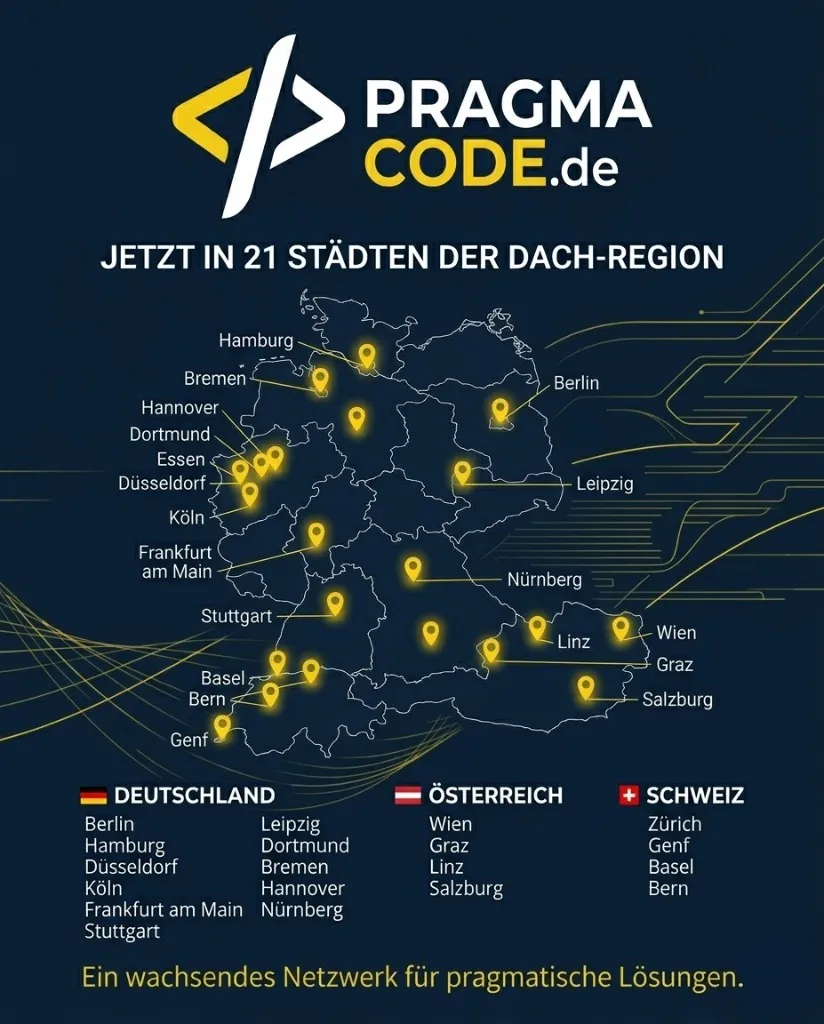
Schedule a Free ConsultationOur Regional Expertise
We are your digital partner – regionally anchored and successfully scaling across borders.
Have a vision?
Let's check together how we can make your idea take flight.
Book your free strategy call nowExtended Specialized Glossary
Agentic AI
Autonomous software systems that independently pursue multi-step goals, utilize external tools, and validate intermediate results.
Model Context Protocol (MCP)
An open standard for securely and seamlessly connecting enterprise data and API tools to AI agents without proprietary vendor lock-in.
LangGraph
An open-source framework for orchestrating cyclical multi-agent workflows using stateful graphs and built-in human-in-the-loop support.
Supervisor-Worker-Pattern
An architectural pattern where a central orchestrator dynamically delegates tasks to specialized worker agents and synthesizes outputs.
Dynamic Tool Calling
The capability of a language model to select appropriate API tools at runtime, generate validated arguments, and process responses.
Human-in-the-Loop
A governance mechanism requiring human authorization or oversight before executing critical or high-value agent actions.
Self-Correction Loop
A reflective feedback cycle in which an AI agent autonomously evaluates tool execution outputs, detects errors, and tries alternative paths.
GraphRAG
An evolution of RAG combining knowledge graphs with vector search to expose complex relational dependencies to AI agents.