Headless WooCommerce
The future of e-commerce.
Decoupled shop architecture with Next.js and WordPress — for maximum load speed, flexible frontend experiences and readiness for the age of AI agents.

 SSR · SSG · Edge
More speed, more flexibility, more future.

Four routes into the headless world.
From initial assessment to full transformation.
Headless assessment & strategy
Analyse your architecture and plan the headless transition — incl. ROI analysis, tech stack (WordPress, Next.js, Vercel) and roadmap.
Core Web Vitals boost
Optimise existing headless setups: ISR, edge caching, LCP/INP tuning for top scores.
Full headless transformation
Full decoupling — custom Next.js frontend, WPGraphQL without overfetching, seamless payment integrations.
Agentic commerce readiness
Structure catalogue data and APIs so LLMs and autonomous shopping bots can index and recommend your products optimally.
Six strengths of headless architecture.
What a decoupled architecture concretely brings.
Zero overfetching (WPGraphQL)
Only the data you really need is queried — no payload bloat, less bandwidth.
Ultra-fast load times
Next.js + edge caching delivers TTFB under 100 ms and LCP under 1.5 s.
Edge computing (Vercel)
Delivery from the nearest data center — globally low latency.
Scalability & security
Frontend scales independently from the backend. Attack surface reduced through separation.
PCI compliance simplified
Payment data flows directly between browser and provider — your shop is out of scope.
SEO: dynamic sitemaps & metadata
Yoast SEO metadata flows into the frontend via GraphQL; sitemaps are auto-generated.
The transformation process.
Step by step to the decoupled shop.
Infrastructure design
Pick the hosting stack (e.g. VPS for WordPress, Vercel for Next.js).
API protection & setup
Implement rate limiting, WPGraphQL and JWT authentication.
Frontend development
Set up Next.js with Apollo Client and checkout integration.
Testing & QA
Automated E2E tests for performance, cart and payment.
Go-live
Safe launch with SEO migration and monitoring.
Frequently asked.
Expertise around headless commerce.
How does the cart work without PHP sessions?
Is SEO harder with headless WooCommerce?
What does moving to a headless architecture cost?
Expert articles.
Deep dives into headless, performance and agentic commerce.
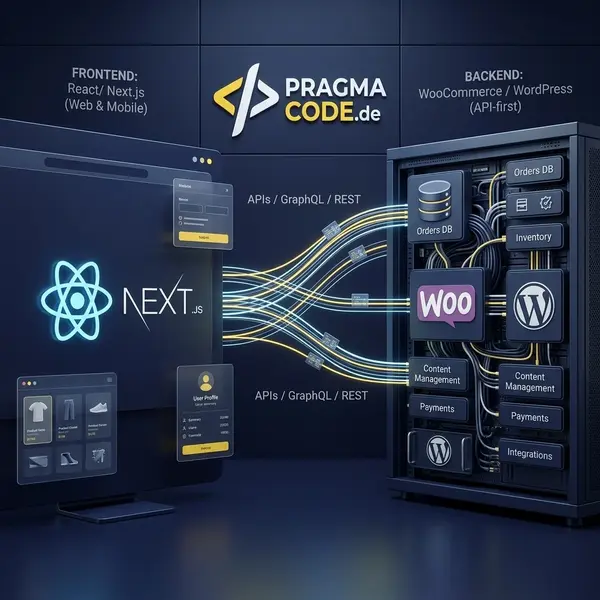
Headless WooCommerce Guide
How decoupling frontend and backend massively improves Core Web Vitals.
Read more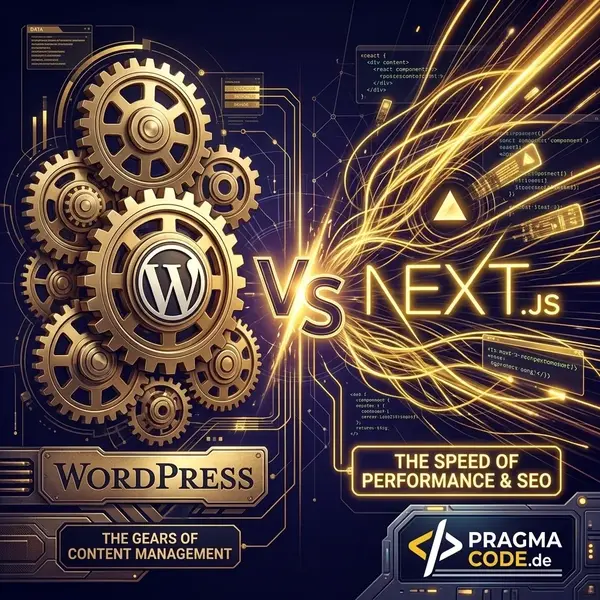
Core Web Vitals: WordPress vs Next.js
A performance comparison for decision makers. When is the switch worth it?
Read more
Agentic Commerce Readiness
How to optimise your product catalogue for AI shopping assistants.
Read moreReady for high-performance e-commerce?
We analyse your current setup and create a roadmap for your headless transformation.