

In 2026, customer service has undergone a fundamental transformation: Static FAQ pages and frustrating phone waiting queues are relics of the past. Modern AI chatbots and real-time voice agents empower small and medium-sized enterprises (SMEs) to deliver premium 24/7 1st-level support, resolve routine tickets fully automatically, and cut operational costs by up to 80%—powered by sub-300ms speech latency and 100% GDPR compliance.
This article is an in-depth expert contribution from our content cluster. Discover the complete overview on our main page:AI Automation for Enterprises →
Zero-UI & Speech-to-Speech: The Era of Seamless Conversation
While early chatbots failed against rigid decision trees and cascaded audio pipelines suffered from awkward multi-second pauses, 2026 marks the breakthrough of native Speech-to-Text and streaming architectures. Delivering turn-around latencies under 300 milliseconds, dynamic Barge-in capabilities, and seamless enterprise tool orchestration, AI voice agents have become the definitive frontier for stellar B2B and B2C support operations.
- 24/7 Instant Resolution: Up to 80% of all 1st-level tickets (order tracking, returns, master data updates, booking requests) are resolved autonomously in seconds without human touch.
- Zero-Latency Voice Interaction: Leveraging native audio streaming over WebRTC, voice agents speak fluently, handle human interruptions (Barge-in), and adapt cadence dynamically.
- GDPR Compliance & Flawless Human Handoff: Sensitive customer records remain safeguarded via zero-data-retention agreements and European data centers; complex exceptions transfer seamlessly to human experts.
- 1. The Evolution of Customer Service: From IVR Menus to Fluent Voice Conversations
- 2. System Comparison: Legacy IVR & Rule Bots vs. Agentic Voice & Chat Systems
- 3. Practical SME Use Cases: The 4 Most Profitable Implementations
- 4. Enterprise Architecture: The 4 Pillars of a Resilient Support Agent
- 5. Latency & Performance Benchmark: Voice Architectures Put to the Test
- 6. Data Privacy, GDPR & EU AI Act: Legally Compliant Enterprise Architectures
- 7. The 4 Cost Traps & Implementation Risks in Chatbot Projects
- 8. Human-in-the-Loop: The Flawless Escalation Process (Human Handoff)
- 9. Step-by-Step Implementation Roadmap: 5 Phases to Production-Grade AI Support
- 10. Economics & ROI: Measuring an 80% Cost Reduction
- 11. Conclusion: Customer Service as a Strategic Differentiator
1. The Evolution of Customer Service: From IVR Menus to Fluent Voice Conversations
In a global economy defined by real-time digital expectations, customers no longer tolerate friction. Waiting days for an email response or enduring ten minutes of low-bitrate music in telephone queues leads directly to brand attrition, abandoned carts, and negative reviews. For small and medium-sized enterprises (SMEs) across European and global markets, this creates an acute operational dilemma: Customers demand around-the-clock availability across voice, web chat, and instant messaging channels, while labor shortages and escalating contact center overhead constrain staffing capacities.
The solution lies in a structural technological leap. Historically, automated customer service has progressed through four distinct evolutionary stages:
1st Generation: Rigid IVR Telephone Systems (1990s – 2015)
The era of "Press 1 for Sales, 2 for Support". These Interactive Voice Response systems were inflexible, forced callers into narrow linear categories, and invariably resulted in misrouted calls or dropped lines whenever user needs deviated from presets.
2nd Generation: Rule-Based Keyword Chatbots (2016 – 2023)
Early website widgets powered by hardcoded if-else trees and simple regex pattern matching. Minor typos, colloquial phrasing, or synonyms immediately triggered the notorious fallback: "Sorry, I did not understand your question."
3rd Generation: Cascaded LLM Pipelines (2024 – 2025)
Combining decoupled models for speech recognition (Speech-to-Text), text generation (LLM), and speech synthesis (Text-to-Speech). While conversational nuance improved, total response delays of 2 to 4 seconds felt awkward and unnatural.
4th Generation: Autonomous Agentic Voice & Chat Systems (2026)
Native multimodal real-time streaming over WebRTC. They interpret tone, nuance, and background sound, support natural conversational interruptions (Barge-in), and execute active database workflows via Tool Calling.
The breakthrough of the 4th generation lies in transcending passive informational output to unlock proactive operational agency. A modern Voice Agent no longer merely recites static manual excerpts; it operates as an empowered digital caseworker that authenticates customer identities, queries transactional databases, updates backend records, and coordinates a smooth Human Handoff when edge cases arise.
Expert Tip: The 300ms Rule of Human Conversational Psychology
In natural human dialogue, the average conversational turn gap between two speakers spans 200 to 300 milliseconds. When an automated voice assistant exceeds an 800-millisecond threshold, the human brain perceives the dialogue as robotic, disconnected, and frustrating. At Pragma Code, we engineer low-latency voice pipelines with edge-streaming architectures so that synthesized audio playback begins in under 300 ms.
2. System Comparison: Legacy IVR & Rule Bots vs. Agentic Voice & Chat Systems
To illustrate the operational impact of this shift, consider the direct architectural and functional comparison between traditional contact center software and modern agentic AI systems:
Comparison: Legacy 1st-Level Support vs. Agentic AI Support
- Dialogue Control: Rigid decision trees and dual-tone multi-frequency (DTMF) keypad inputs without contextual comprehension.
- Error Tolerance: Immediately fails on dialects, filler words, or multi-part intent shifts.
- Action Capability: Restricted to passive FAQ display or simple call forwarding; no live backend transactions.
- Queue Handling: High call surges trigger extensive hold times; off-hours and weekend support is frequently unavailable.
- Cost Dynamics: Heavy recurring overhead for human agent shifts ($7.00 to $14.00 per customer interaction).
- Transfer Quality: Callers must repeat their entire problem from scratch when transferred to a human tier.
- Dialogue Control: Fluid, natural conversation driven by semantic intent classification and contextual memory.
- Error Tolerance: Robustly handles colloquialisms, noisy audio, regional accents, typos, and emotional shifts.
- Action Capability: Executes active API operations in ERP, CRM, and eCommerce platforms via Tool Calling.
- Queue Handling: True 0-second pickup (24/7/365) with unlimited parallel concurrency during traffic spikes.
- Cost Dynamics: Predictable pay-per-interaction pricing ($0.18 to $0.50 per fully resolved ticket).
- Transfer Quality: Flawless Human Handoff with structured conversation summaries and sentiment flags.
3. Practical SME Use Cases: The 4 Most Profitable Implementations
Implementing enterprise AI in customer service yields maximum return on investment (ROI) when targeted at high-volume, standardized workflows. Rather than tying up seasoned support specialists with repetitive status checks, AI agents handle routine inquiries end-to-end:
1. E-Commerce & Retail: WISMO Inquiries & Automated Returns
"Where is my order?" (WISMO) represents up to 50% of all customer inquiries in retail. The AI agent requests the order ID or billing postal code, verifies identity securely via SMS/Email OTP, fetches real-time parcel carrier data (DHL, FedEx, UPS), and generates prepaid return labels dispatched straight to the customer's smartphone.
2. IT Services & SaaS: Tier-1 Incident Triage & Password Resets
In technical support environments, voice agents conduct structured initial triage: Which environment is degraded? What error code is displayed? Is the issue isolated to a single workstation or affecting core network infrastructure? The bot logs a prioritized Jira or ServiceNow ticket, executes Active Directory password resets, or escalates P1 incidents directly to on-call engineers.
3. Manufacturing & Industrial Equipment: 24/7 Spare Parts Hotline
Field technicians and B2B clients frequently need urgent part numbers, maintenance guides, or error diagnostics outside standard operating hours. Utilizing RAG (Retrieval-Augmented Generation), the voice agent references thousands of PDF equipment schematics and ERP inventories, pinpointing replacement components and booking purchase orders.
4. Professional Services & Healthcare: Intelligent Appointment Scheduling
Whether for specialized clinics, trade contracting firms, or legal practices: The voice agent fields incoming calls, syncs calendar availability in real time (Google Calendar, Outlook, Cal.com), books available consultations, and dispatches SMS appointment reminders with directions.
4. Enterprise Architecture: The 4 Pillars of a Resilient Support Agent
A production-ready AI agent requires an enterprise-grade technical stack far beyond a generic chat interface. To guarantee low latency, robust data protection, and flawless uptime, Pragma Code utilizes a 4-layered modular architecture:
1. LLM Core & Hybrid Reasoning Engine
The cognitive core oversees intent classification, conversation memory, and strict guardrails. We orchestrate frontier foundation models (such as GPT-5.5 or Claude 3.5 Sonnet) alongside low-latency open-source models (such as Mistral Large or Llama 3.3) dynamically based on query complexity and compliance tiering.
2. Vector RAG & Hybrid Search Memory
Proprietary enterprise documents (manuals, price sheets, support documentation, policies) are indexed in dedicated vector databases (pgvector, Qdrant). Hybrid search blends dense semantic embeddings with exact BM25 keyword matching to ensure accurate, factual answers with source citations.
3. Realtime Voice Pipeline & WebRTC
Voice interactions utilize bidirectional audio streaming over low-latency WebRTC channels. Speech tokens are parsed incrementally as the user speaks. Integrated Voice Activity Detection (VAD) detects conversational interruptions (Barge-in) within milliseconds, silencing synthetic speech instantly.
4. Tool Calling & n8n Orchestration
Through structured function calling, the agent connects securely to backend microservices and workflow automation platforms such as n8n. This facilitates direct interactions with enterprise ERPs (SAP, NetSuite), CRMs (HubSpot, Salesforce), and e-commerce platforms (Shopify, Shopware).
5. Latency & Performance Benchmark: Voice Architectures Put to the Test
The choice of architectural design dictates the success or failure of any voice automation initiative. Our comprehensive benchmark evaluates three mainstream voice architectures across response turn-around delay (Time-to-First-Audio, TTFA) and First Contact Resolution (FCR) rates:
The benchmark highlights the clear limitations of sequential REST architectures: Waiting for a full sentence transcription before issuing an LLM call causes total turnaround delays exceeding 1.8 seconds, leading to unnatural speech overlaps. Pragma Code's streaming WebRTC architecture slashes this delay down to 280 milliseconds, while grounded RAG boosts first contact resolution to 88%.
6. Data Privacy, GDPR & EU AI Act: Legally Compliant Enterprise Architectures
For European companies and international enterprises operating under GDPR guidelines, data security and compliance are paramount. Deploying untrusted public cloud AI without strict contractual safeguards risks severe regulatory fines and brand damage. At Pragma Code, all agentic implementations adhere to Privacy by Design principles:
1. Zero-Data-Retention (ZDR) & Enterprise Agreements
We strictly integrate commercial enterprise endpoints (such as Microsoft Azure OpenAI or Anthropic Commercial) where providers contractually guarantee that enterprise data is never logged, stored, or utilized for foundation model training.
2. In-Flight PII Masking & Tokenization
Prior to reaching any external language model, the raw audio and text stream passes through an edge-level privacy filter. Personally Identifiable Information (PII, such as credit card numbers, IBANs, phone numbers, or residential addresses) is tokenized and only re-injected inside your protected infrastructure.
3. On-Premise & Sovereign European Cloud Hosting
For regulated industries (financial services, healthcare, defense), we deploy dedicated on-premise clusters using open-source models (e.g., vLLM or Ollama on European bare-metal infrastructure), ensuring not a single packet leaves your firewall.
4. EU AI Act Transparency Compliance
In accordance with Article 50 of the EU AI Act, users are transparently notified at dialogue onset that they are conversing with an AI agent. Built-in opt-out mechanisms ensure instant transfer to human staff upon request.
7. The 4 Cost Traps & Implementation Risks in Chatbot Projects
Many organizations rush into AI projects using generic off-the-shelf plugins or brittle no-code tools, encountering runaway costs and customer dissatisfaction. Recognizing these four core pitfalls prevents costly missteps:
Pitfall 1: Ungrounded Hallucinations & Erroneous Promises
Deploying a generic LLM without strict RAG leads the model to fabricate unauthorized discounts, invalid return windows, or out-of-stock items. Solution: Enforce strict factual grounding in vector databases with source-citation requirements.
Pitfall 2: Runaway Token Costs in Multi-Turn Dialogues
Sending uncompressed full-length conversation transcripts and massive document embeddings to frontier LLMs on every single turn causes token costs to explode. Solution: Dynamic model routing and intelligent context summarization.
Pitfall 3: Lack of Structured Human Fallback Mechanisms
Trapping an annoyed customer in an unhelpful automated loop severely damages customer relationships. Solution: Automated sentiment triggers and instant warm handoffs to live support specialists.
Pitfall 4: Prompt Injections & Tool Calling Vulnerabilities
Malicious actors may use prompt injection techniques to extract backend data or trigger unauthorized tool operations. Solution: Zero-trust backend validation on every single API parameter before execution.
8. Human-in-the-Loop: The Flawless Escalation Process (Human Handoff)
True operational excellence in customer service is not about forcing 100% of interactions through AI, but rather managing system boundaries gracefully. When a customer expresses acute frustration, raises complex legal questions, or negotiates specialized goodwill terms, our Human-in-the-Loop escalation workflow activates:
Real-Time Sentiment Analysis & Escalation Triggers
The engine continuously monitors customer phrasing, vocal tone, and resolution velocity. If frustration flags rise or the user explicitly asks for human support ("Connect me to an agent"), the system initiates an immediate transfer.
Automated Context Synthesis
As the call or chat session routes to your contact center software (Zendesk, Freshdesk, VoIP PBX), the AI generates a structured 3-point briefing: Customer Identity, Core Issue & Verified Pre-Steps.
Seamless Warm Handoff to Live Agents
The human agent receives the summary directly on their dashboard before picking up. They greet the customer by name and immediately resolve the remaining blockers—eliminating the need for the customer to restate their issue.
9. Step-by-Step Implementation Roadmap: 5 Phases to Production-Grade AI Support
Successfully deploying enterprise AI support demands a structured engineering methodology. Pragma Code guides your organization through a battle-tested 5-stage roadmap:
-
Phase 1: Support Ticket Audit & Use-Case Scoping
Analyzing historical CRM and phone ticket logs using the Pareto principle. We identify the top 20% of repetitive inquiries that drive 80% of total volume and define precise KPI targets (resolution rate, latency, deflection savings).
-
Phase 2: Knowledge Curation & RAG Architecture
Cleaning, chunking, and structuring manuals, FAQs, and product documentation into secure vector stores. Configuring client-side PII filtering to enforce GDPR data privacy standards.
-
Phase 3: Prototyping, Prompt Guardrails & Voice Design
Crafting conversational personas (tone, pacing, interruption handling) and establishing rigid system guardrails. Running closed sandbox simulations across simulated customer edge cases.
-
Phase 4: Backend Tool Calling & Telephony Integration
Connecting ERP, CRM, and ticketing endpoints via REST APIs and n8n workflows. Provisioning SIP trunks and WebRTC gateways for real-time voice streaming with your existing telephone PBX.
-
Phase 5: Soft Launch, Transcript Monitoring & Fine-Tuning
Rolling out to a controlled customer cohort. Performing daily transcript audits, identifying unhandled edge cases, and iteratively tuning prompts and knowledge embeddings for optimal resolution rates.
10. Economics & ROI: Measuring an 80% Cost Reduction
The economic value of automated AI support can be modeled with high financial precision. A standard mid-market enterprise handling 4,000 monthly 1st-level support interactions (phone & chat) achieves the following financial impact:
Financial Model: Mid-Market Contact Center ROI
Baseline Operations (Traditional Manual Model): 4,000 inquiries / month at an average blended cost of $9.00 per human-handled ticket = $36,000 monthly operational spend.
With Pragma Code Agentic AI Support (75% Autonomous Resolution):
- 3,000 tickets resolved autonomously at $0.40 per interaction = $1,200
- 1,000 complex tickets escalated to human specialists at $9.00 = $9,000
- Monthly cloud infrastructure & platform maintenance = $1,600
- New Monthly Operational Cost: $11,800 (Net Monthly Savings: $24,200 / 67% Total Cost Reduction).
For mid-sized volume levels, the initial implementation investment achieves full payback within 4 to 7 months. Beyond direct cash savings, qualitative returns are substantial: Customer satisfaction scores (CSAT) rise significantly due to zero wait times, and staff turnover drops as agents transition to higher-value consultative tasks.
Quick-Check: Is Your Organization Ready for AI Support?
11. Conclusion: Customer Service as a Strategic Differentiator
In 2026, deploying AI chatbots and voice agents in 1st-level customer support is no longer an experimental luxury—it is an established pillar of operational agility and sustained competitive advantage. Companies that implement intelligent voice and chat systems create a compelling win-win proposition: Customers receive immediate, accurate assistance around the clock, while the enterprise reduces operating costs and empowers human staff to focus on strategic growth.
At Pragma Code, we partner with you from initial use-case scoping and GDPR-compliant architecture through to production deployment. Contact us today to discover how custom voice and chat agents can revolutionize your customer service operations.
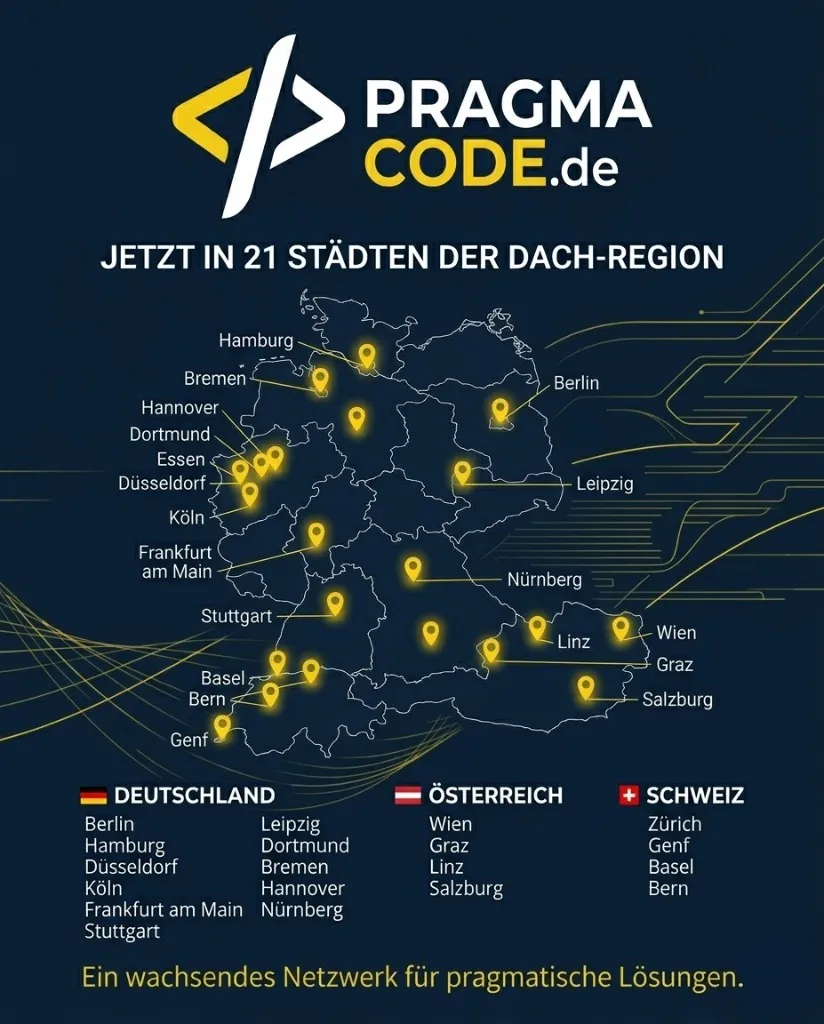
Our Regional Expertise
We are your digital partner – regionally anchored and successfully scaling across borders.
Have a vision?
Let's check together how we can make your idea take flight.
Book your free strategy call nowExtended Specialized Glossary
LLM (Large Language Model)
A deep neural language model trained on massive text corpora to capture complex contextual nuances and generate human-like natural language outputs.
RAG (Retrieval-Augmented Generation)
An architecture combining language models with external vector databases and enterprise documents to ensure grounded, hallucination-free answers without retraining.
Voice Agent
An autonomous AI system that comprehends spoken speech in real time, orchestrates multi-turn dialogues, executes backend actions, and synthesizes natural voice responses.
Barge-in
The capability of an automated voice system to detect when a human speaker interrupts during ongoing audio output, instantly halt playback, and process the new speech input.
Human Handoff
The structured transfer protocol from an automated AI agent to a human support specialist, including full conversation synthesis, intent metadata, and sentiment scoring.
WebRTC
An open web standard for ultra-low latency (< 200 ms) bidirectional real-time communication streaming audio and data directly between clients and backend AI engines.