


In 2026, looking at historical metrics in static dashboards is no longer enough for competitive enterprises. The paradigm shift from legacy Business Intelligence to agentic AI data analytics and Decision Intelligence empowers mid-market companies to unlock unstructured data streams in real time, forecast market shifts, and trigger operational workflows automatically.
This article is an in-depth expert contribution from our content cluster. Discover the complete overview on our main page:AI Automation for Business →
From Passive Dashboards to Proactive Reasoning Agents
Legacy BI dashboards only answer backward-looking questions. In 2026, generative reasoning models, vector lakehouses, and the Model Context Protocol (MCP) transform enterprise data assets into an active, decision-making intelligence layer.
- Overcoming the 80/20 Bottleneck: Modern AI agents automate up to 85% of manual data cleaning and ETL routines, freeing data teams to focus entirely on strategic business initiatives.
- Unlocking Unstructured Assets: Over 80% of corporate knowledge is trapped in PDFs, emails, ERP logs, and IoT telemetry. Semantic vector embeddings make these silos fully queryable for the first time.
- Decision Intelligence Over Number Graveyards: Frontier data agents do not merely highlight correlations; they simulate operational scenarios, quantify financial risks, and trigger automated actions directly in ERP and CRM systems.
- 1. The End of Dashboard Fatigue: Why Traditional BI Fails
- 2. From Passive Reporting to Decision Intelligence
- 3. The 4-Layer Architecture of Modern AI Data Platforms
- 4. Performance Benchmark: Traditional BI vs. Agentic Analytics
- 5. Four B2B Enterprise Use Cases for SMEs
- 6. Technical Integration: MCP, SQL Synthesis & Python Pipelines
- 7. Data Governance, GDPR, and EU AI Act Compliance
- 8. 5-Step Implementation Roadmap for Enterprises
- 9. Conclusion & Strategic Readiness Checklist
1. The End of Dashboard Fatigue: Why Traditional BI Fails
For more than two decades, corporate data analytics followed the exact same rigid paradigm: Operational data was extracted via nightly batch jobs into central data warehouses, molded into multidimensional schemas by data engineering teams, and finally rendered as colorful bar charts. The sobering reality in 2026? Dashboard fatigue. Executives and department leaders stare at dozens of metrics without understanding the root causes or having the means to intervene in time.
Legacy Business Intelligence tools are inherently backward-looking. They answer questions like: "What happened last quarter?" But in volatile procurement markets, shifting supply chains, and hyper-competitive B2B verticals, executives need instant answers to forward-looking, strategic questions: "Why did gross margins drop in product category B, which accounts are at imminent risk of churn, and what specific pricing adjustments will restore profitability?"
The core bottleneck remains the notorious 80/20 data dilemma: Analysts spend up to 80% of their billable hours searching, cleaning, and normalizing tabular extracts. Only 20% remains for strategic interpretation. Agentic AI and modern machine learning pipelines invert this equation by automating data preparation pipelines end-to-end.
The Dashboard Graveyard
Enterprises maintain hundreds of legacy reports in PowerBI or Tableau that burn thousands in recurring license fees every month yet are rarely used for operational decision-making.
Data Silo Lock-in
ERP transactions (SAP), CRM notes (HubSpot, Salesforce), and industrial IoT telemetries remain isolated. Cross-departmental causality remains invisible to managers.
Ungoverned Shadow AI
Employees paste sensitive business extracts into public LLMs because corporate IT infrastructure fails to provide fast, natural-language ad-hoc analytics.
2. From Passive Reporting to Decision Intelligence
The fundamental paradigm shift in 2026 can be mapped across three evolutionary tiers: from Descriptive Analytics (describing past events) through Predictive Analytics (forecasting trends) to Prescriptive & Decision Intelligence (recommending and triggering actions).
While legacy tools only compute aggregate sums across structured relational tables, modern AI systems leverage high-dimensional vector representations and Natural Language Processing (NLP) to process structured and unstructured information concurrently. This includes PDF contracts, complaint logs, email threads, maintenance records, and machine telemetry streams.
Comparison: Legacy BI vs. Autonomous Agentic Decision Intelligence
- Data Scope: Limited to structured SQL tables and rigid, pre-aggregated data warehouses.
- Latency: Nightly batch processing or monthly book closures with 24 to 72 hours of delay.
- Interaction: Predefined slice-and-dice filters; new questions require custom IT tickets.
- Output: Passive numbers and graphs without actionable operational guidance.
- Execution Boundary: Pure visualization layer with zero write or execution permissions in core systems.
- Data Scope: Multimodal: SQL, NoSQL, Vector DBs, PDFs, audio transcripts & IoT streams.
- Latency: Real-time event streams with synchronous in-memory vector embedding pipelines.
- Interaction: Natural language queries with autonomous Chain-of-Thought reasoning.
- Output: Causal root-cause analysis, risk quantifications, and simulated financial scenarios.
- Execution Boundary: Autonomous tool calling (MCP) to trigger actions directly inside ERP/CRM.
Decision Intelligence means the AI does not stop after identifying a pattern. When the system detects that component failure rates on CNC milling equipment spike by 34% whenever ambient workshop temperatures exceed 28 °C, it immediately models the financial loss, checks spare part inventories inside the ERP, and creates a prioritized service ticket inside the maintenance management system.
3. The 4-Layer Architecture of Modern AI Data Platforms
To ensure enterprise data analytics remains secure, scalable, and audit-proof, state-of-the-art engineering architectures enforce strict separation of concerns across four foundational layers:
Multi-Source Connector Layer
Zero-copy connectors and Change Data Capture (CDC) pipelines for relational stores (PostgreSQL, MS SQL), enterprise ERPs (SAP S/4HANA, Dynamics 365), CRMs, and industrial IoT telemetries.
Semantic Mesh & Vector Lakehouse
Hybrid storage combining serverless analytical SQL engines (Neon, DuckDB) with dense vector indexes (pgvector, Qdrant) for unstructured text and multimodal document corpora.
Agentic Analytical Engine
Orchestration of frontier reasoning models with dynamic tool execution. The agent synthesizes deterministic SQL queries, executes Python computations in isolated sandboxes, and validates outputs.
Actionable Decision Layer
Bridging insights to real-world value: dispatching operational commands via standardized MCP servers, webhooks, and enterprise event buses into production systems.
The primary architectural breakthrough lies in decoupling compute reasoning from physical data storage. Instead of migrating all proprietary data into a single vendor-locked warehouse, modern AI data agents query operational systems dynamically via standardized protocols or virtualized analytical replicas.
4. Performance Benchmark: Traditional BI vs. Agentic Analytics
How does modern AI-driven data analysis perform compared to legacy data warehousing and standalone RAG pipelines? The following benchmark figures reflect real-world performance measurements across mid-market enterprise deployments (500 to 5,000 employees) over a 6-month operational period.
The metrics underscore a game-changing efficiency gain: While ad-hoc reporting in traditional enterprise settings frequently takes days, combining semantic caching, deterministic code execution, and agentic workflows shrinks turnaround time to minutes while eliminating calculation errors.
5. Four B2B Enterprise Use Cases for SMEs
Architectural concepts prove their worth on the factory floor and in commercial operations. Below are four proven deployment scenarios where AI data analytics drives immediate competitive advantage and measurable ROI.
Use Case 1: Predictive Churn & Dynamic B2B Pricing in Wholesale Distribution
A mid-sized B2B industrial distributor struggled with silent customer churn. Legacy reports only raised flags after an account placed no orders for 60 consecutive days — far too late to salvage the relationship.
The AI Solution: An autonomous data agent continuously analyzes order basket compositions, web portal navigation journeys, ticket response times, and external market pricing trends. If an tier-A client reduces purchasing volume in key categories by more than 15%, the model detects the churn hazard weeks ahead of time. The agent simulates optimal margin structures and generates a tailored discount proposal inside CRM for the assigned account executive.
Use Case 2: Supply Chain Forensics & Predictive Disruption Management
Global supply networks are vulnerable to sudden shocks: port congestion, severe weather events, or tier-2 supplier insolvencies. Traditional ERP tools only report delays when raw materials fail to arrive at the production gate.
The AI Solution: By merging internal ERP inventory positions with maritime vessel tracking feeds, weather forecasts, and supplier news, AI data agents identify bottlenecks days before they impact assembly lines. The system models alternative freight lanes, compares spot rates, and triggers pre-approved purchase orders with certified secondary suppliers.
Use Case 3: Real-Time Financial Forensics & Automated Cash Flow Management
Corporate finance teams in SMEs often rely on monthly spreadsheet exports that are already out of date by the time they are reviewed. Cash flow deficits resulting from delayed payments from major clients are identified with significant lag.
The AI Solution: Integrating banking APIs, invoice ledgers, and accounts receivable data, Machine Learning models forecast daily cash flow positions over a 90-day forward horizon. The system detects risk clusters and automatically initiates stepped, personalized reminder workflows for overdue accounts.
Use Case 4: Predictive Maintenance & Scrap Reduction in Discrete Manufacturing
In precision manufacturing (e.g., CNC milling, injection molding), undetected tool wear and suboptimal spindle feeds lead to expensive component scrap and unplanned production stoppages.
The AI Solution: High-frequency IoT sensors capture acoustic vibrations, current draw, and thermal gradients directly at the machine spindle. A locally deployed Deep Learning model detects microscopic anomalies in vibration spectra and predicts the optimal replacement interval (Predictive Maintenance) before dimensional tolerances are exceeded.
6. Technical Integration: MCP, SQL Synthesis & Python Pipelines
A major vulnerability of early enterprise LLM setups was their propensity to hallucinate mathematical calculations. Modern data architectures eliminate this flaw through Deterministic Code Generation and Sandbox Execution: The AI never performs math in its weights; it generates and executes verifiable code.
The code architecture below illustrates how an enterprise data agent safely processes an analytical management request:
# Example: Secure enterprise data analysis pipeline with Polars & PII filtering
import polars as pl
from pydantic import BaseModel
import hashlib

class QueryRequest(BaseModel):
    natural_language_prompt: str
    tenant_id: str
    user_role: str

def execute_safe_data_analysis(request: QueryRequest) -> dict:
    # 1. Enforce Row-Level Security and Role Permissions
    validate_row_level_security(request.tenant_id, request.user_role)

    # 2. Synthesize deterministic Polars query via the LLM Reasoning Engine
    # The agent generates typed analytical code against the lakehouse:
    df = pl.read_parquet("s3://enterprise-lakehouse/sales_data_2026.parquet")

    # 3. Perform statistical aggregation within an isolated compute sandbox
    result = (
        df.filter(pl.col("tenant_id") == request.tenant_id)
          .group_by("product_category")
          .agg([
              pl.col("revenue").sum().alias("total_revenue"),
              pl.col("margin").mean().alias("avg_margin"),
              (pl.col("churn_risk_score") > 0.75).sum().alias("high_risk_accounts")
          ])
          .sort("total_revenue", descending=True)
    )

    # 4. Return structured, verified numerical dictionary
    return result.to_dicts()
Through the standardized Model Context Protocol (MCP), analytical tools can be integrated into the reasoning loop cleanly. An agent receives explicit capabilities such as query_sales_database, fetch_erp_inventory, or run_regression_model without ever exposing raw credentials or master database keys in prompt contexts.
7. Data Governance, GDPR, and EU AI Act Compliance
Deploying AI for enterprise-wide data analytics requires uncompromising security, strict confidentiality, and rigorous regulatory compliance. Handling customer datasets or internal financial records without safeguards introduces existential legal and commercial liabilities.
Pro-Tip: The 3 Pillars of Secure Enterprise AI Analytics
1. Zero Data Retention (ZDR): When leveraging commercial LLMs, mandate contractually enforced Zero Data Retention terms. Proprietary data must never be stored or used to train foundational models.
2. Localized Vector Embeddings: Generate and store document embeddings locally or inside your private VPC using open models like BGE-M3.
3. Strict Row-Level Security (RLS): The AI agent must inherit the exact user permissions defined in source systems (SAP, Active Directory), ensuring staff cannot query unauthorized payroll or executive metrics.
Compliance with the EU AI Act
Under the fully active EU AI Act in 2026, corporate data analytics systems face clear governance mandates. Internal reporting and descriptive business analytics agents generally fall under the Minimal Risk classification. However, if the system is configured to automate customer credit scoring, HR evaluations, or industrial critical safety loops, it is classified as a High-Risk AI System (Annex III).
Mandatory obligations in high-risk categories include:
Risk Management System
Continuous monitoring of algorithmic bias, model drift, and statistical error rates across all analytical pipelines.
Data Governance & Documentation
Full traceability, cataloging, and immutable audit logging for all training, embedding, and reference corpora.
Human-in-the-Loop Safeguards
High-impact operations (such as contract cancellations or high-volume purchase orders) must require explicit confirmation from a human decision-maker.
8. 5-Step Implementation Roadmap for Enterprises
Transitioning to an autonomous, data-driven enterprise is best accomplished through an agile, phased deployment strategy that delivers rapid time-to-value rather than multi-year waterfall projects.
-
1. Data Audit & Silo Mapping (Weeks 1–3)
Catalog core operational data sources (ERP, CRM, ticketing, document stores), identify data hygiene issues, and define high-impact business KPIs.
-
2. Semantic Layer & Vector Pipeline Setup (Weeks 4–6)
Deploy serverless analytical databases and vector stores. Ingest and embed unstructured documents with automated, GDPR-compliant PII filtering.
-
3. MCP Connectors & Tool Definitions (Weeks 7–9)
Expose system integrations via Model Context Protocol servers. Implement role-based permissions and configure sandbox execution environments for code generation.
-
4. High-ROI Pilot with Human-in-the-Loop (Weeks 10–12)
Launch a focused pilot in a high-leverage commercial area (e.g., sales forensics or procurement optimization). Monitor query accuracy and user adoption closely.
-
5. Enterprise Rollout & Continuous Governance (Month 4+)
Scale across departments, train teams on natural language interaction, and establish automated audit trails in compliance with the EU AI Act.
9. Conclusion & Strategic Readiness Checklist
In 2026, AI data analysis is no longer an experimental innovation lab project — it is the fundamental operating system of high-performing modern enterprises. Organizations that dismantle operational silos and activate their data through agentic architectures make faster, smarter, and more profitable decisions than competitors reliant on legacy reports.
True competitive advantage does not stem from hoarding larger data volumes, but from intelligently fusing structured metrics with unstructured enterprise knowledge — safeguarded by robust security and governed interfaces.
Quick-Check: Is Your Organization Ready for AI Data Analytics?
Ready to Unlock the Full Potential of Your Enterprise Data?
We design, architect, and deploy customized AI data analytics pipelines and agentic decision systems — secure, GDPR-compliant, and seamlessly integrated into your existing IT stack.
Schedule a Free Initial ConsultationOur Regional Expertise
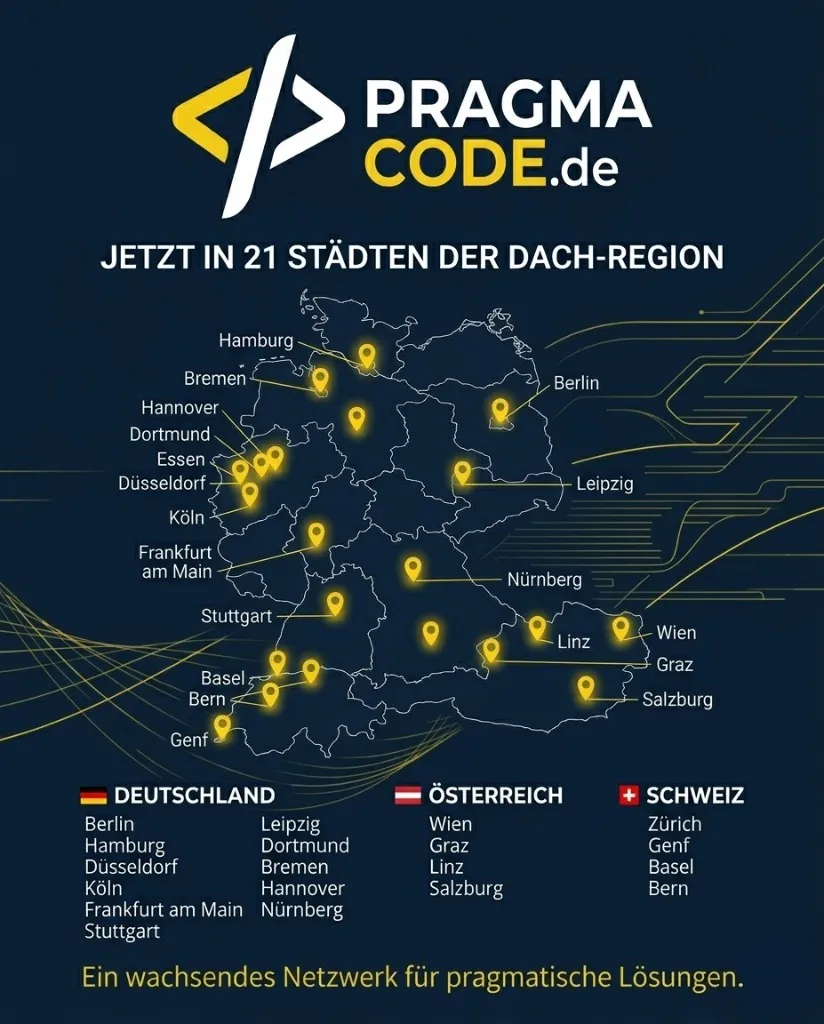
We are your digital partner – regionally anchored and successfully scaling across borders.
Have a vision?
Let's check together how we can make your idea take flight.
Book your free strategy call nowExtended Specialized Glossary
Machine Learning
A subset of artificial intelligence where algorithms independently learn patterns from historical datasets without being explicitly programmed for every edge case.
Natural Language Processing (NLP)
Technological methods for semantic comprehension, interpretation, and generation of human language across text and voice repositories.
Deep Learning
A class of machine learning techniques using multi-layered artificial neural networks capable of processing high-dimensional, unstructured data.
Predictive Maintenance
Condition-based maintenance of industrial machinery using real-time telemetry and sensor analytics to prevent unplanned downtime.
Agentic AI
Autonomous software architectures driven by reasoning models that plan multi-step goals, execute database queries, and trigger external API actions.