


In 2026, the future of connected enterprises is no longer determined by the illusion of impenetrable perimeter defenses, but by operational cyber resilience: How quickly can your systems isolate autonomous AI swarms, secure critical data streams with Zero Trust, and restore core business operations without downtime?
This article is an in-depth expert contribution from our content cluster. Discover the complete overview on our main page:IT Security →
- Paradigm Shift: Traditional perimeter defense is completely powerless against autonomous multi-agent swarms; identity, micro-segmentation, and Zero Trust represent the mandatory architectural baseline.
- Operational Resilience: The core metric has shifted decisively from simple prevention to guaranteed recoverability (RTO < 2 hours) backed by cryptographically immutable backups (Immutable Storage).
- Regulatory Mandate: Under NIS2 (including personal executive liability) and DORA, verifiable cyber resilience—including third-party vendor audits—is now the non-negotiable license to operate in B2B markets.
The Asymmetry of AI Threats
In 2026, the cybersecurity landscape is characterized by fundamental asymmetry: While defense teams must secure every single cloud endpoint without exception, malicious Agentic AI Attacks require only a single unmonitored interface. Autonomous agent swarms probe cloud infrastructures in fractions of a millisecond, chain together zero-day vulnerabilities, and dynamically adjust exploit payloads to bypass Web Application Firewalls (WAF). Pure defense perimeters are no longer sufficient—what modern enterprises require is adaptive, battle-tested Cyber Resilience.
- Introduction: The Shift to the Resilience Economy
- Chapter 1: The Paradigm Shift in Cloud Security
- Chapter 2: The Threat Landscape 2026: AI Swarms & Triple Extortion
- Chapter 3: The 4-Pillar Defense Construct (Defense in Depth)
- Chapter 4: 5-Step Roadmap to Operational Cyber Resilience
- Chapter 5: B2B Trust, NIS2 & DORA Compliance in Practice
- Conclusion: Safeguarding Operational Agility and Economic Permanence
Introduction: The Shift to the Resilience Economy
The digital transformation of European business has reached a new stage of maturity in 2026: Cloud-native architectures, hybrid workloads, serverless microservices, and interconnected AI workflows form the indispensable backbone of medium-sized enterprises. Yet with this explosive growth in connectivity and agility, the traditional security perimeter—the static firewall surrounding corporate premises—has finally disintegrated. In a decentralized, remote-enabled world, there is no longer a trusted "inside" that can be granted blind faith.
Simultaneously, cybercriminals have completely industrialized their operational methods. Where human hackers once spent weeks on manual reconnaissance and privilege escalation, fully automated, AI-driven attacker swarms now operate autonomously. These agents continuously sweep the global internet, detect misconfigurations across AWS, Azure, or Google Cloud accounts in real time, and execute targeted lateral movement before a human incident responder can even triage the initial alert.
Against this backdrop, the fundamental question facing CIOs, CISOs, and executive boards has shifted: In 2026, it is no longer a matter of whether a component can be compromised, but how rapidly the organization can contain the Blast Radius, isolate the threat, and maintain critical business operations without interruption. This is the very definition of modern Cyber Resilience.
Pro Tip: Prioritize Resilience Over Perfection
Abandon the illusion of 100% impenetrability. Allocate security budgets according to the 60/40 rule: 60% into preventative Zero-Trust hardening and 40% into automated detection, snapshot isolation, and rigorously tested rapid recovery processes (Business Continuity Management).
Clients, B2B partners, and cyber insurers now require transparent, auditable proof of the resilience of all connected systems. An uncontained failure in one link of a just-in-time supply chain triggers catastrophic cascading outages across the entire network. Organizations that lack a verified cyber resilience strategy not only expose themselves to multi-million-dollar extortion demands but immediately forfeit their commercial standing as a trustworthy partner.
Chapter 1: The Paradigm Shift in Cloud Security
For more than two decades, corporate IT security relied on the castle-and-moat model: A heavy firewall formed the moat, and any device or user inside the local network was considered trusted. With multi-cloud deployments, distributed SaaS toolchains, containerized Kubernetes clusters, and remote teams, this architecture is not merely obsolete—it represents a fatal vulnerability. In traditional networks, anyone who crosses the perimeter gains unrestricted access to internal databases and administrative endpoints.
The necessary paradigm shift is embodied in the Zero Trust Architecture (ZTA), standardizing on NIST SP 800-207 guidelines. The principle is uncompromising: "Never trust, always verify." Every transaction, API call, and identity request must be explicitly, contextually, and continuously validated—regardless of whether the request originates from an engineer laptop, a shop-floor IoT sensor, or an automated cloud function.
Comparison: Traditional Perimeter Defense vs. AI-Native Cyber Resilience & Zero Trust
- Trust Model: Implicit trust granted to all assets inside the corporate perimeter.
- Security Boundary: Static hardware firewalls and centralized VPN gateways.
- Incident Response: Manual log inspection following a successful breach.
- Impact Scope: Broad blast radius; lateral movement permitted throughout the network.
- Recovery: Lengthy manual data restoration from tape or network storage.
- Trust Model: Zero trust; continuous validation of identity, device posture, and context.
- Security Boundary: Identity-based micro-perimeter enforced at each endpoint and workload.
- Incident Response: Fully automated SOAR playbooks and real-time AI behavioral analysis.
- Impact Scope: Strictly quarantined micro-blast radius; lateral traversal blocked.
- Recovery: Automated orchestration from cryptographically immutable snapshots.
A vital pillar of cloud resilience is Microsegmentation. By partitioning cloud networks into isolated security zones communicating solely through strictly governed Software Defined Perimeters (SDP), an attacker lateral mobility is completely neutralized. If an adversary compromises a public-facing web service, micro-segmentation prevents them from accessing core transaction databases or backup repositories.
Furthermore, Post-Quantum Cryptography (PQC) has become an urgent priority in 2026: Threat actors actively pursue "Harvest Now, Decrypt Later" campaigns, intercepting and storing encrypted cloud telemetry today to decrypt it once cryptanalytically relevant quantum computers emerge. Forward-thinking cloud architectures are already implementing hybrid TLS encryption with post-quantum key encapsulation mechanisms (such as ML-KEM / Kyber under NIST FIPS 203) to safeguard intellectual property for decades to come.
Chapter 2: The Threat Landscape 2026: AI Swarms & Triple Extortion
The ubiquity of high-performing open-weights models and specialized offensive LLMs has democratized sophisticated cyber warfare capabilities. Cyber syndicates no longer rely on simplistic phishing templates; they deploy distributed attack platforms that operate with machine precision and speed.
The Cost Trap: Inadequate Resilience & Triple Extortion
The average total cost of a cloud security breach in European mid-market enterprises now exceeds €3.2 million. Beyond immediate ransom demands, regulatory penalties under GDPR, contractual delivery failure liabilities, and catastrophic loss of customer confidence push unresilient firms into severe insolvency risks.
The current threat landscape is defined by four primary attack vectors that modern architectures must withstand:
Agentic AI Botnets & Swarm Attacks
Autonomous software agents continuously probe cloud APIs and web services for undocumented zero-day vulnerabilities.
Millisecond ExploitsDiscovered weaknesses are automatically exploited through dynamically synthesized payload chains before traditional signature scanners can alert.
Deepfake Social Engineering & Executive Fraud
Real-time synthetic voice and video cloning used to manipulate employees with financial or administrative authority.
Identity HijackingAttackers inject authentic audio clones into live conferencing channels to coerce urgent wire transfers or bypass privileged MFA gates.
In parallel, ransomware has evolved into devastating Triple Extortion schemes: Criminals do not simply encrypt production databases; they exfiltrate massive volumes of confidential IP, codebases, and customer records in advance. If the victim recovers systems independently from backup data, the attackers threaten immediate darknet auctions. If the organization refuses negotiation, adversaries directly harass end customers, investors, and regulators. AI-driven parsing algorithms sift through gigabytes of exfiltrated data within minutes to pinpoint the most sensitive confidential assets (such as unfiled patents, exposed API secrets, or internal financial forecasts) to maximize coercive leverage.
Chapter 3: The 4-Pillar Defense Construct (Defense in Depth)
Defending against automated, machine-speed adversaries demands a cohesive Defense in Depth posture that harmonizes technical, operational, and architectural controls across all layers.
Phishing-Resistant Authentication
Passwords are obsolete in 2026. The gold standard enforces hardware-bound passkeys compliant with FIDO2/WebAuthn and the Continuous Access Evaluation Protocol (CAEP), which instantaneously terminates compromised sessions upon detecting behavioral anomalies.
Microsegmentation & API Gateways
Isolation of cloud workloads at the container and pod level via service meshes (such as Istio/Cilium). Strict API protection enforcing OpenAPI schema validation, cryptographic signing, and adaptive rate limiting.
Immutable Storage & Air-Gapping
Cryptographically sealed backups using WORM (Write Once, Read Many) technology and S3 Object Lock in compliance mode. Decoupled cloud accounts prevent rogue administrators or ransomware from modifying historical snapshots.
Automated SOAR & XDR Platforms
Real-time correlation of telemetry through AI-powered Extended Detection and Response (XDR). Automated execution of SOAR playbooks to quarantine compromised workloads in sub-second timeframes.
This four-pillar structure guarantees that an isolated security event cannot cascade into an enterprise-wide disaster. Combining continuous behavioral telemetry with autonomous remediation removes the attacker timing advantage entirely.
AI baselines the normal communication patterns across all cloud microservices. If anomalous data egress or abnormal API querying emerges, traffic is immediately throttled and escalated.
Snapshots are locked with strict compliance retention timers. Even compromised root credentials cannot overwrite or purge backups prior to the expiration of the retention window.
Privileged authentication mandates physical FIDO2 hardware keys (such as YubiKeys) or OS-level biometrics, rendering traditional credential theft and reverse-proxy phishing useless.
Upon verifying an active compromise, the SOAR engine immediately severs network access for the infected container and spins up clean instances from verified golden images.
Chapter 4: 5-Step Roadmap to Operational Cyber Resilience
Modernizing legacy cloud footprints into a resilient Zero-Trust architecture requires a disciplined, phase-driven execution. Our proven 5-stage transformation roadmap guides mid-market enterprises systematically without interrupting daily operations:
-
1. Deep-Dive Audit, Asset Discovery & Shadow AI Mapping
Comprehensive inventory of all IaaS, PaaS, SaaS assets, exposed API gateways, and IAM role bindings. Identification of unvetted generative AI toolchains (Shadow AI) and strict data classification according to sensitivity and GDPR tiering.
-
2. Identity Hardening & Enforcing Least-Privilege Access
Deployment of FIDO2 passkeys and phasing out static passwords. Rigorous consolidation of over-privileged administrative accounts, adoption of ephemeral Just-In-Time (JIT) credentials, and micro-segmentation of cloud VPCs.
-
3. AI-Driven SOC Establishment & Cloud Posture Management (CSPM)
Continuous configuration auditing against international security frameworks (CIS Benchmarks, ISO 27001). Implementation of an internal or managed SOC powered by XDR telemetry correlation and automated threat hunting.
-
4. Immutable Backup Architecture & Chaos Engineering (DR Drills)
Migration of all backup repositories to immutable WORM storage within air-gapped cloud accounts. Conducting unannounced chaos engineering drills to empirically prove Recovery Time Objectives (RTO < 2 hours) under simulated outages.
-
5. Continuous AI Red-Teaming, Supply Chain Audits & PQC Migration
Automated red-teaming simulations using AI attack platforms to benchmark defensive reflexes. Execution of mandatory vendor security audits and initiating gradual migration of critical encryption backbones to Post-Quantum Cryptography.
Chapter 5: B2B Trust, NIS2 & DORA Compliance in Practice
In 2026, cyber resilience is no longer an internal technical preference—it has become the primary legal and commercial benchmark in the European B2B arena. Supranational regulations like the NIS2 Directive and DORA (Digital Operational Resilience Act) impose rigorous compliance standards across executive leadership and critical supply chains.
1. Personal Executive Liability Under NIS2
Managing directors and board members face personal financial liability for gross negligence in cyber risk governance. Executives are legally required to actively oversee cybersecurity measures and document regular security training.
2. DORA: Threat-Led Penetration Testing (TLPT)
Financial institutions and critical ICT third-party vendors must undergo advanced, regulator-monitored Threat-Led Penetration Testing (TLPT) at least every three years to validate operational resilience against live attack simulations.
3. Mandatory Supply Chain Security Audits
Enterprise buyers and regulated entities must thoroughly audit the cyber resilience of their direct vendors. Suppliers unable to demonstrate Zero Trust controls and immutable backup mechanisms are systematically excluded from tenders and RFPs.
4. EU AI Act: Governance & Resilience of AI Systems
Organizations deploying high-risk AI models or autonomous agent workflows must comply with Article 15 requirements, demonstrating verifiable resilience against adversarial prompt injection, data poisoning, and model inversion.
Enterprises that embrace these compliance obligations proactively transform regulatory scrutiny into a formidable competitive advantage: Certified resilience accelerates procurement approvals, reduces cyber insurance premiums by up to 45%, and immunizes leadership from existential liability exposures.
Quick Check: Auditing Your Cyber Resilience Footprint
Conclusion: Safeguarding Operational Agility and Economic Permanence
The intensity and autonomy of AI-powered cyber threats will escalate exponentially in the coming years. Legacy security models anchored in passive perimeter defenses are fundamentally incompatible with modern cloud architectures. In an era dominated by automated zero-day chains and multi-vector extortion, the survivability of an enterprise hinges upon its containment speed and guaranteed recovery speed.
Cyber resilience through Zero Trust Architecture, granular micro-segmentation, immutable backups, and automated SOAR orchestration is not an optional IT expenditure—it represents the single most important strategic insurance policy for your business model. Establishing these robust foundations today safeguards critical intellectual property, shields corporate officers from personal liability, and cements your organization as a trusted, resilient leader in the interconnected global economy.
Any Questions About Cyber Resilience and Zero-Trust Architecture?
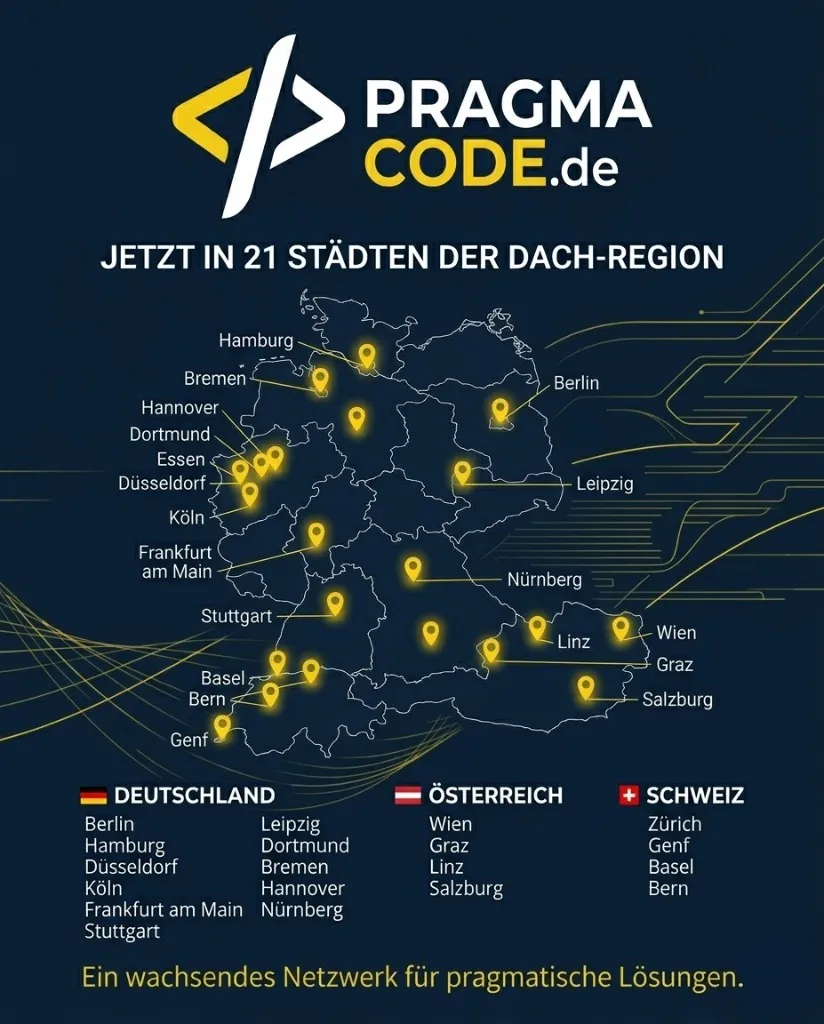
Book a Free Initial ConsultationOur Regional Expertise
We are your digital partner – regionally anchored and successfully scaling across borders.
Have a vision?
Let's check together how we can make your idea take flight.
Book your free strategy call nowExtended Specialized Glossary
Cyber Resilience
The ability of an organization to continuously prepare for, respond to, and quickly recover from cyber threats to maintain business operations even under hostile conditions (Business Continuity).
Zero Trust Architecture (ZTA)
A strict security model ("never trust, always verify") that utilizes micro-segmentation and denies inherent trust to any endpoint, user, or network, instead requiring strict validation for every single request.
Agentic AI Attacks
The next generation of cyberattacks orchestrated by autonomous AI agents that iteratively exploit vulnerabilities, adapt to bypass WAF blockades, and move dynamically across compromised systems.
Immutable Backup
A data protection concept where data cannot be technically deleted, manipulated, or encrypted over a specified "retention period" – a crucial defense mechanism against intelligent ransomware.
DORA (Digital Operational Resilience Act)
A binding EU regulation that mandates strict rules on operational resilience, Threat-Led Penetration Testing (TLPT), and ICT third-party risk management for financial entities and their critical tech vendors.
SOAR (Security Orchestration, Automation and Response)
A technology platform that aggregates security alerts, automates threat analysis, and executes predefined incident response playbooks in fractions of a second.
Blast Radius
The maximum scope of impact or lateral damage within a network infrastructure resulting from a security breach or the compromise of a single identity or service.
Defense in Depth
A multi-layered cybersecurity approach that establishes multiple independent defensive, detective, and recovery controls to prevent single points of failure across an infrastructure.