


In an era where multimodal frontier models are unveiled weekly, over 80 percent of enterprise AI initiatives stall at the 'Last Mile': the secure, fault-tolerant, and deterministic integration into mission-critical business processes. As a Frontier Deployment Engineer with a background in mechatronics engineering, I bridge the gap between theoretical model intelligence and industrial-grade reliability.
This article is an in-depth expert contribution from our content cluster. Discover the complete overview on our main page:All Services at a Glance →
Overcoming the Last Mile: From Raw Language Model to Resilient Production Architecture
In 2026, market leadership is no longer determined by the raw parameter scale of a model, but by its operational integration density. A Frontier Model only unleashes its commercial leverage when embedded into ERP, CRM, and database infrastructure through fault-tolerant interfaces, deterministic validators, and standardized protocols such as the Model Context Protocol (MCP).
- Mechatronic System Stability: Translating mechatronic feedback control loops to AI orchestration. Sensor ingestion, cognitive reasoning, and actuator execution form a fault-tolerant closed-loop system equipped with deterministic error recovery.
- RAG 2.0 & Hybrid Architectures: Bypassing costly, inflexible model retraining through semantic Hybrid Search, dynamic cross-encoder reranking, and semantic caching for strict cost control and zero Hallucinations.
- GDPR & EU AI Act Compliance: Granular PII redaction, zero-retention API enforcement, and on-premise execution via Local Deployment establish legally compliant, audit-proof AI architectures for mid-sized enterprises.
- 1. Introduction: Why Frontier Deployment Governs Real ROI
- 2. What is a Frontier Deployment Engineer? Defining a New Engineering Discipline
- 3. The Mechatronics Paradigm: Control Loop Engineering as the Foundation of Autonomous AI
- 4. Technological Deep Dive: My Arsenal as a Frontier Deployment Engineer
- 5. RAG 2.0 vs. Fine-Tuning: Architecting for Zero Hallucination
- 6. Case Study: From 48 Hours of Manual Review to 48 Seconds of Automated Pre-Qualification
- 7. Agentic Design Patterns & Operational Fault Tolerance
- 8. Security & Compliance: The EU AI Act and GDPR Governance in DACH
- 9. Roadmap for Your AI Deployment: 4 Phases to an Autonomous Business
- 10. Conclusion: Success is Not Coincidence, It Is Configuration
1. Introduction: Why Frontier Deployment Governs Real ROI
In a technological landscape where groundbreaking reasoning and multimodal models such as Claude 3.7 Sonnet with hybrid thinking, OpenAI o3, Gemini 3.7 Pro, and DeepSeek-R1 arrive at breathtaking speed, business executives face an acute paradox: While theoretical cognitive intelligence is surging, tangible operational returns within core commercial workflows lag far behind expectations. Isolated chatbot conversations inside browser tabs generate disjointed text snippets, but they fail to produce measurable efficiency gains across the corporate value chain.
The decisive roadblock is the notorious Last-Mile Problem of enterprise artificial intelligence. Raw base models possess neither direct awareness of your real-time inventory management nor the deterministic reliability required to resolve customer service tickets autonomously without risking hallucinations or security regressions. A language model is not an enterprise software application. It requires a resilient infrastructural harness that sanitizes inputs, injects contextual business knowledge dynamically, and triggers downstream actions through reliable interfaces.
This is where I step in as a Frontier Deployment Engineer. In practical business contexts, this role is often characterized as an AI Automation Engineer or Enterprise AI Systems Architect. My mission at Pragma Code is not to conduct detached academic model training, but to harness the cutting edge of frontier AI research and hardwire it directly into existing enterprise operations, forging resilient, highly available, and profitable automated workflows.
2. What is a Frontier Deployment Engineer? Defining a New Engineering Discipline
To appreciate how this role differs fundamentally from legacy IT positions, we must inspect the division of labor within contemporary technology organizations. A conventional software engineer writes deterministic code: If condition A is met, execute command B. A data scientist concentrates on statistical distributions, loss curves, and parameter weights to optimize raw model outputs.
A Frontier Deployment Engineer operates directly at the intersection of both domains. They take the non-deterministic, probabilistic power of cutting-edge Frontier Models and constrain them within deterministic software guardrails. The objective is an industrial-grade production system that delivers reliable, repeatable, and fully auditable business results despite the stochastic nature of artificial neural networks.
Comparison: Engineering Profiles in Modern Digital Value Creation
- Core Focus: Deterministic application logic or isolated statistical model training.
- Interfaces: Static REST endpoints lacking dynamic contextual routing.
- Fault Handling: Unhandled stochastic responses frequently trigger application exceptions.
- Time to Value: Multi-month development cycles often detached from operational pipelines.
- Core Focus: End-to-end orchestration of stochastic models inside live production environments.
- Interfaces: Dynamic Model Context Protocol (MCP) & asynchronous event brokers.
- Fault Handling: Self-healing Agentic Workflows with deterministic output evaluators.
- Time to Value: Rapid MVP prototyping and sub-second automation of mission-critical tasks.
The true benchmark of deployment excellence is never the raw volume of Python code written, but the system's operational resilience under heavy load and unexpected edge cases. At Pragma Code, every deployment architecture is built upon three foundational pillars:
1. Model Governance & Intelligent Routing
Precision model matching: Deploying open-weights architectures (such as Llama 3.3 or DeepSeek) for privacy-critical on-premise tasks versus routing multi-step analytical reasoning to top-tier commercial frontier models.
2. Resilient Middleware Infrastructure
Architecting robust orchestration layers through n8n, asynchronous message brokers, and low-latency vector stores designed to absorb third-party API outages and preserve state integrity around the clock.
3. Autonomous Agentic Loops
Engineering multi-agent collaborative networks that autonomously decompose high-level business goals into sequential sub-tasks, execute deterministic tools, reflect upon intermediary outputs, and deliver verified final data.
Frontier Deployment represents the specialized engineering discipline of coupling state-of-the-art AI models with enterprise databases, ERP software, and business workflows via open context protocols, RAG 2.0 pipelines, and deterministic guardrails—ensuring autonomous, error-resilient, and commercially profitable execution.
3. The Mechatronics Paradigm: Control Loop Engineering as the Foundation of Autonomous AI
My technical perspective is uniquely shaped by my background in mechatronics engineering at Osnabrück University of Applied Sciences. In pure software development, practitioners often attempt to mask underlying system flaws by appending layers of conditional code. In mechatronics, however, an unstable feedback control loop results in physical hardware destruction. That acute reverence for systemic equilibrium and deterministic feedback is the exact mindset I inject into AI architecture.
When evaluated through the lens of a mechatronics engineer, an autonomous agentic process is nothing less than a digital closed-loop control system:
Context Ingestion & Triggers
The agent ingests raw external signals: Inbound webhooks, customer emails, PDF technical drawings, or database event streams are captured, parsed, and converted into structured context schemas.
Reasoning & Decision Loop
The cognitive model analyzes the captured system state, evaluates it against targeted setpoints (business logic), and plans the optimal sequence of corrective steps.
Tool Execution via MCP
The agent influences its environment: Executing parameterized SQL mutations, invoking REST webhooks, generating ERP invoices, or dispatching verified outbound notifications.
Evals & Self-Correction
The outcome of the actuated step is verified against target criteria. If an API call fails or an output fails schema validation, the reflection engine triggers automated correction.
This control engineering approach protects Pragma Code clients from the vulnerabilities plaguing hastily assembled prototype scripts. If a third-party API falters or an external schema alters unexpectedly, our deployment architecture does not enter uncontrolled hallucination loops; it stabilizes the workflow deterministically via pre-configured fail-safes.
4. Technological Deep Dive: My Arsenal as a Frontier Deployment Engineer
A craftsman's capability is defined by their command of tooling. In production AI automation, we deploy a modern engineering stack that balances rapid development agility with uncompromising operational stability. We avoid fragile proprietary silos in favor of transparent, open, and auditable industry standards.
1. n8n: The Nervous System of Enterprise Workflow Orchestration
n8n serves as the visual and procedural backbone of our enterprise automations. Featuring more than 400 native connectors, granular execution audit trails, and 100% self-hosted deployment on dedicated infrastructure within the DACH region, n8n enables GDPR-compliant interoperability between legacy ERP systems and modern frontier models. Asynchronous queues, error branches, and complex retry strategies are tracked with precision.
2. Model Context Protocol (MCP): The Global Standard for Tool Integration
Initiated by Anthropic and established as the dominant cross-industry standard in 2026, the Model Context Protocol (MCP) fundamentally standardizes how AI systems connect to business data. Rather than developing brittle, bespoke function calls for each individual LLM provider, we build standardized MCP servers for enterprise databases, file servers, and internal tools. This architectural consistency eliminates vendor lock-in and allows seamless model swapping overnight.
3. Vector Databases & Semantic Retrieval (Qdrant & pgvector)
For sub-second indexing and retrieval of proprietary company knowledge, we utilize dedicated vector stores such as Qdrant or PostgreSQL with pgvector. Corporate policy documentation, technical schematics, and service records are transformed into high-dimensional vector embeddings. Powered by HNSW indexing, our autonomous agents pinpoint needles in digital haystacks within milliseconds across multi-million-page corporate repositories.
4. Deterministic Guardrails & Validation Frameworks
Before and after every model interaction, data payloads pass through automated security validators. Utilizing frameworks like NeMo Guardrails, Pydantic, and Outlines, we enforce strictly typed JSON schemas. Injections, prompt extraction attempts, and sensitive data leakage are intercepted and neutralized within our protected network boundaries before reaching public cloud models.
5. RAG 2.0 vs. Fine-Tuning: Architecting for Zero Hallucination
One of the most frequent strategic missteps I encounter when consulting mid-sized enterprises is an impulsive desire to "train our own private model." Companies routinely allocate five-figure budgets toward fine-tuning open-weights models, only to realize weeks later that the resulting model quotes outdated catalog pricing or fabricates obsolete product specifications.
As a Frontier Deployment Engineer, I enforce a strict operational rule: RAG first, Fine-Tuning second.
Architectural Comparison: RAG 2.0 vs. Model Fine-Tuning
- Knowledge Recency: Frozen at the timestamp of the training run; demands recurring, costly re-training.
- Hallucination Risk: Substantial; the model generates plausible-sounding answers without verifiable source citations.
- Cost Profile: High capital expenditure due to GPU cluster reservations and data engineering overhead.
- Primary Use Case: Teaching domain-specific jargon, strict output formatting, or bespoke tone of voice.
- Knowledge Recency: Instantaneous; database modifications and new PDFs are accessible on the very next query.
- Hallucination Risk: Negligible; model answers are strictly constrained to grounded, retrieved text excerpts.
- Cost Profile: Highly cost-effective and predictable; leverages scalable vector databases and pay-per-token APIs.
- Primary Use Case: Accurate question answering across enterprise documentation, contracts, and ERP data.
In modern RAG 2.0 architectures, we transcend naive vector similarity search, which routinely breaks down when confronting typos or specific alphanumeric part numbers. We deploy a sophisticated multi-stage retrieval pipeline:
-
1. Hybrid Retrieval (Dense Vectors + Sparse BM25)
Fusing high-dimensional semantic search with traditional lexical BM25 token matching ensures that conceptual inquiries and exact part numbers, DIN norms, or EAN codes are retrieved with equal precision.
-
2. Cross-Encoder Re-Ranking
A specialized neural cross-encoder (e.g., Cohere Rerank or BGE-Reranker) rescores the initial top-50 candidates, filtering out superficial keyword collisions and presenting only the most contextually relevant passages.
-
3. Contextual Chunking & Synthesis
Every ingested document fragment is pre-annotated with global contextual metadata before embedding, ensuring isolated sentences never lose their governing situational context during model inference.
Expert Tip: The Semantic Caching Principle
Reduce up to 70% of your recurring API expenditure by introducing a high-performance semantic cache layer (e.g., utilizing Redis or GPTCache). Whenever an incoming user query exhibits a vector similarity score above 0.96 relative to a previously verified answer, the cached resolution is dispatched in under 50 milliseconds—bypassing costly frontier model calls entirely.
6. Case Study: From 48 Hours of Manual Review to 48 Seconds of Automated Pre-Qualification
Engineering theory is validated through production metrics. A compelling case study from our client engagements illustrates the compounding business leverage of frontier deployment: A mid-sized B2B industrial systems supplier received over 200 complex tender inquiries and project requests every week. Each tender included extensive technical specifications encapsulated in PDF attachments spanning 30 to 80 pages.
The Baseline Challenge: Two senior sales engineers spent over 60 percent of their working hours manually reading through documentation, cross-referencing capabilities against the internal production catalog, and manually creating CRM records. The average response latency to reach the first qualified client consultation was 48 hours. High-margin rush opportunities were repeatedly captured by faster, more agile competitors.
Inbound Trigger & OCR Parsing
An n8n orchestration pipeline continuously monitors the central tender mailbox. Incoming RFPs and attached engineering drawings are parsed, processed via a localized OCR pipeline, and formatted into clean structured text.
MCP Knowledge Retrieval & ERP Verification
A specialized research agent connects via an authenticated MCP server to the internal ERP database and historical project archives, verifying required metallurgical properties, dimensions, and ISO certifications against inventory.
Scoring & Proposal Draft Synthesis
The frontier reasoning model evaluates the opportunity against operational margins and production capacity, generating a composite lead score (0–100) alongside a bulleted feasibility brief and indicative pricing model.
Human-in-the-Loop Approval
The sales engineer receives an actionable card in Microsoft Teams containing the summary score and pre-drafted response. With a single click, the proposal is dispatched and the CRM pipeline is updated automatically.
The Operational Outcome: Inquiry qualification turnaround plunged from 48 hours to 48 seconds. Sales engineers reclaimed more than 20 productive consulting hours per week. Deal closure rates surged by 27 percent within three months because the company consistently established first-mover advantage with prospective clients.
7. Agentic Design Patterns & Operational Fault Tolerance
Transitioning from rudimentary single-prompt chains to resilient agentic architectures requires implementing battle-tested design patterns. At Pragma Code, we construct production systems upon four proven Agentic Design Patterns that empower autonomous systems to solve intricate tasks with human-level thoroughness:
1. Reflection & Self-Correction
The primary agent does not immediately push its draft output to production. Instead, it passes the result to a secondary critic prompt that inspects the artifact against rigorous quality checklists: Are all required parameters satisfied? Is PII scrubbed? Only upon passing this internal audit is the payload released.
2. Dynamic Tool Use via MCP
The agent autonomously recognizes cognitive knowledge gaps. When asked for real-time foreign currency conversions or warehouse stock availability, it dynamically calls the designated MCP tool, reads the returned telemetry, and incorporates the verified data into the response.
3. Hierarchical Planning (Plan-and-Solve)
Complex business tasks are decomposed into a directed acyclic graph (DAG) of discrete milestones. A lead orchestrator agent delegates sub-routines to specialized domain agents, monitoring execution progress until completion.
4. Multi-Agent Orchestration
Establishing collaborative operational division of labor: A research agent extracts facts, a computational agent validates figures, a copywriter agent synthesizes prose, and a compliance agent issues regulatory sign-off.
Through this modular architecture, the failure probability of an individual model iteration is virtually eliminated. Each agent peer-reviews the intermediary outputs of its counterparts—mirroring the rigor of an elite engineering squad.
8. Security & Compliance: The EU AI Act and GDPR Governance in DACH
In the European and DACH corporate landscape, data sovereignty is non-negotiable. No chief executive or IT director can justify transmitting proprietary CAD drawings, customer records, or financial disclosures to overseas third-party cloud APIs without ironclad safeguards. Under the regulatory enforcement of the EU AI Act, corporate duties regarding algorithmic transparency, risk assessments, and traceability have become legally binding.
As a Frontier Deployment Engineer, I guarantee that technological innovation and regulatory compliance operate in complete lockstep. Our security architecture is fortified across four defensive tiers:
1. Local PII Redaction
Prior to reaching external APIs, inbound text streams pass through a local tokenization filter. Names, IBANs, physical addresses, and account numbers are substituted with cryptographic pseudonyms and restored only post-inference.
2. Zero-Retention Cloud Agreements
All commercial model endpoints are strictly accessed via enterprise tier agreements featuring contractually guaranteed zero-data-retention and an absolute prohibition against training future models on customer data.
3. On-Premise & Private Cloud Fallbacks
For strictly confidential workloads (e.g., HR files, proprietary IP), we deploy quantized open-weights models (such as Llama 3.3 70B or DeepSeek) directly on company-owned bare metal or ISO-27001-certified European data centers.
4. Cryptographic Audit Trails
Every algorithmic inference, tool invocation, and decision payload is logged immutably with millisecond timestamps, prompt hash versions, and model metadata—ensuring comprehensive audit readiness under the EU AI Act.
9. Roadmap for Your AI Deployment: 4 Phases to an Autonomous Business
Transforming your organization into an AI-augmented enterprise does not require multi-year, high-risk IT implementations. We execute a disciplined, agile 4-phase delivery methodology that establishes tangible ROI within weeks while mitigating capital risk:
-
Phase 1: Readiness Audit & High-Leverage Opportunity Mapping (Weeks 1–2)
Collaborative assessment of your existing software infrastructure and manual business workflows. We pinpoint the 2–3 processes with the highest ROI leverage and establish quantifiable KPIs (turnaround speed, error rate, cost reduction).
-
Phase 2: Prototyping & MVP Sandbox Validation (Weeks 3–4)
Engineering a functional prototype in n8n connected to relevant data endpoints via MCP and REST APIs. Your team evaluates system accuracy using historical enterprise data in a secure staging environment.
-
Phase 3: Deep Production Integration & Guardrail Hardening (Weeks 5–7)
Seamless embedding into core operational systems (ERP, CRM, ticketing). Implementation of deterministic guardrails, PII scrubbers, and live monitoring dashboards for comprehensive transaction visibility.
-
Phase 4: Enterprise Rollout & Team Enablement (Weeks 8+)
Staged departmental rollout, hands-on user onboarding, and continuous fine-tuning of semantic vector caches and prompt prompts to sustain lasting competitive advantage.
10. Conclusion: Success is Not Coincidence, It Is Configuration
The era of casual chatbot experimentation has ended. In 2026, market dominance belongs to organizations that treat artificial intelligence as an engineering pillar of their software architecture. As a Frontier Deployment Engineer, I partner with forward-thinking enterprises to translate ambiguous AI promises into dependable, profitable production software.
By marrying mechatronic systems thinking with robust orchestration middleware and uncompromising data privacy, we deliver solutions that reduce operating expenses, elevate workforce productivity, and position your company firmly at the competitive frontier.
Quick Check: Is Your Business Ready for Frontier Deployment?
Ready to automate your enterprise workflows with frontier AI?
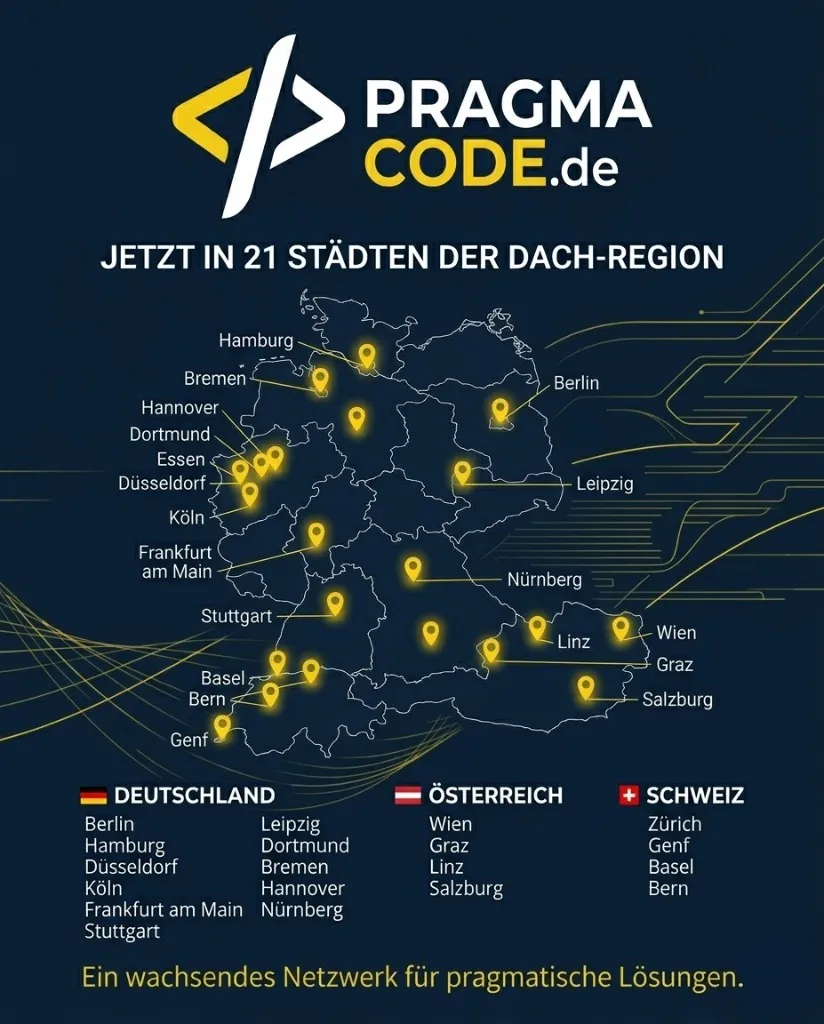
Request a Free AI Opportunity AssessmentOur Regional Expertise
We are your digital partner – regionally anchored and successfully scaling across borders.
Have a vision?
Let's check together how we can make your idea take flight.
Book your free strategy call nowExtended Specialized Glossary
Agentic Workflow
A process in which AI agents autonomously make decisions and use tools (APIs, browsers, scripts) to achieve a predefined goal.
Retrieval Augmented Generation (RAG)
A technique to feed LLMs with external, secured data. The AI "reads" the documents first before answering, which minimizes hallucinations.
Local Deployment
The installation and operation of AI models on your own servers or in private clouds to ensure maximum data sovereignty.
Prompt Engineering
The art and science of structuring input commands so that the AI delivers precise, correct, and useful results.
Frontier Models
The most powerful AI models on the market (such as GPT-5.6 or Claude Fable 5) that are at the boundary of current technical performance.
Token Optimization
Techniques for reducing the amount of data sent to the AI to lower costs and increase processing speed.
Vector Database
A specialized database that stores information mathematically to enable the AI to search through millions of documents in a flash.
Hallucination
A phenomenon where an AI invents facts that sound plausible but are incorrect. RAG is the most effective antidote.
Model Context Protocol (MCP)
An open protocol initiated by Anthropic that provides AI models with standardized, secure interfaces to local files, developer tools, and enterprise databases.
Hybrid Search
The combination of dense vector search and traditional keyword-based BM25 retrieval to maximize precision and recall in RAG pipelines.
AI Guardrails
Deterministic safety and validation filters that inspect LLM inputs and outputs for data privacy, compliance, and hallucination prevention.