

Introduction: Why ChatGPT Is Only the Tip of the Iceberg
Artificial Intelligence is on everyone's lips. But while many companies are still busy using ChatGPT to write emails or social media posts, the pioneers in the middle market are already pulling ahead. Today, AI is much more than an intelligent chatbot. It is the tool with which SMEs can increase their efficiency, reduce costs, and tap into entirely new business models.
The real revolution doesn't happen in the interface, but in the depth of the processes. It's about automating routine tasks, predicting machine maintenance, and intelligently analyzing customer data. In this post, we'll show you how medium-sized companies can concretely deploy AI – practically, solution-oriented, and without academic superstructure.
Generative AI vs. Predictive AI
While generative AI (like ChatGPT) creates new content, predictive AI analyzes existing data to recognize patterns and make predictions. For SMEs, the combination of both often offers the greatest leverage.
Application Area 1: Intelligent Process Automation (RPA & AI)
From Manual Data Entry to Autonomous Processing
In many medium-sized companies, administrative tasks eat up valuable time. Invoices must be reconciled, orders transferred to the ERP system, and customer inquiries sorted. This is where the combination of Robotic Process Automation (RPA) and AI comes in.
Today, a modern system can not only read texts but understand their meaning. AI-supported OCR (Optical Character Recognition) immediately recognizes on an invoice what amount the VAT is, who the sender is, and whether the line items match the order – even if the layout looks different every week.
"The AI does not take over the employee's job, but rather the Sisyphean task that keeps them from their actual tasks." – Expert for Automation, Pragma-Code.
Application Area 2: Predictive Maintenance in Manufacturing
Minimizing Downtime Before It Occurs
For manufacturing companies, a machine stoppage is the absolute nightmare. Thanks to inexpensive sensors (IoT) and powerful AI algorithms, SMEs can predict today when a component will fail.
The AI learns the subtle vibrations, temperature differences, or power consumption patterns of a healthy running machine. As soon as anomalies appear that are invisible to the human ear or eye, the system sounds the alarm. Maintenance is no longer carried out according to rigid schedules, but exactly when it is necessary. This saves material costs and prevents expensive production stops.
Application Area 3: Smart Customer Service & Support
24/7 Availability Without Personnel Costs
Customers today expect immediate answers – even on weekends. An AI agent like our OpenClaw can make the difference here. Not only does it answer FAQs, but it can actively work in systems. It schedules appointments, checks the status of an order, or helps with troubleshooting by accessing the documentation.
The best part: If the AI doesn't know what to do next, there is a seamless handover to a human employee who already has all relevant information on the screen. This increases customer satisfaction and massively relieves the team.
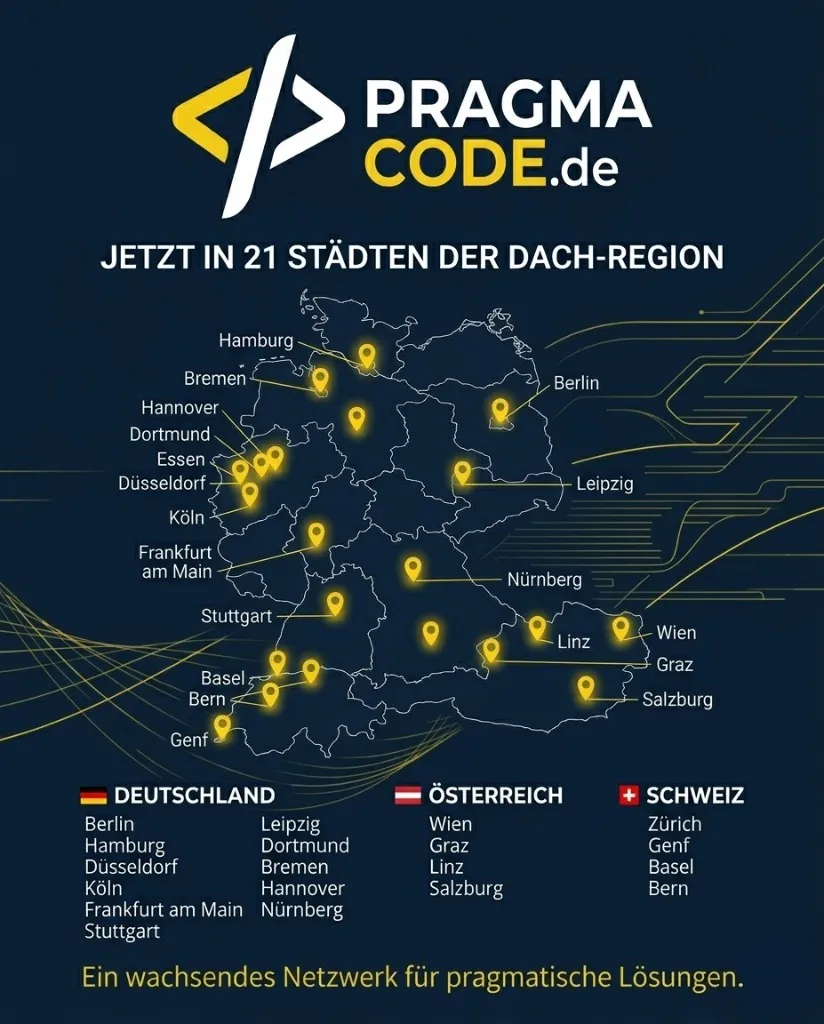
Our Regional Expertise
We are your digital partner – regionally anchored and successfully scaling across borders.
Would you like to discover the AI potential in your company?
We analyze your processes and show you concrete use cases for an AI integration.
Schedule a free AI consultationStrategic Guide: How Your Company Starts with AI
- Check data basis: AI needs data. Start recording your processes digitally if you haven't already done so.
- Identify "Low Hanging Fruits": Where does your team spend the most time with repetitive tasks? The ROI is highest here.
- Cloud vs. On-Premise: Consider whether you want to rely on ready-made cloud solutions or host your own models (important for data privacy/IP).
- Bring employees along: Take fears seriously and show how AI makes everyday work easier.
- Collaborate with experts: AI projects are complex. Save time and money by working with experienced partners.
Conclusion: AI Is Not Hype, But a Survival Tool
The middle market is the backbone of the economy. To remain competitive, the integration of AI is inevitable. This is not about utopian future visions, but about tangible efficiency gains in the here and now. Those who set the course today secure the advantage of tomorrow.
Glossary: The Most Important AI Terms at a Glance
Machine Learning (ML)
A subfield of AI where algorithms learn from data to recognize patterns and make decisions.
NLP (Natural Language Processing)
Technology that enables machines to understand and process human language (written or spoken).
Predictive Analytics
The use of data and algorithms to predict the probability of future outcomes based on historical data.
RPA (Robotic Process Automation)
Software robots that take over rule-based, repetitive tasks in user interfaces.
Generative AI
AI models trained to generate new content such as text, images, or code (e.g., LLMs).
Computer Vision
A subfield of AI that enables computers to understand visual information from the world (images, videos).