

Introduction: The Marketing Trap of SMEs
It's Monday morning in a typical medium-sized company. The marketing manager sits in front of her screen and works through a list of 200 new newsletter signups from the past week. Every single contact has to be entered manually into the CRM system. At the same time, 15 unprocessed contact form inquiries are waiting, the social media channels are crying out for new posts, and somewhere in an Excel spreadsheet lie leads that showed interest three months ago and have since been forgotten.
Does this sound familiar? Then you are in good company. According to a HubSpot study, marketing teams spend an average of 64% of their working time on manual, repetitive tasks instead of creative strategy and customer acquisition. This is not only frustrating for the employees but also economically devastating. The middle market leaves hard cash on the table here – literally.
The solution is marketing automation. But while large corporations have long relied on sophisticated automation platforms, many SMEs shy away from getting started. Too complex, too expensive, too difficult to integrate – these are the most common reservations. In this comprehensive guide, we clear up these myths and show you how you can put your marketing on autopilot with the right strategies and partners, without losing the personal touch that characterizes the middle market.
The numbers speak for themselves
Companies that use marketing automation generated on average 451% more qualified leads (The Annuitas Group). At the same time, costs per lead drop by up to 33%, while the conversion rate increases by an average of 77%. This is no coincidence, but the result of consistency, scalability, and data-driven decisions.
Chapter 1: What is Marketing Automation Really?
More than just automatic emails
When most people think of marketing automation, they picture newsletters that send themselves automatically. While this is a piece of the puzzle, it's far from the complete picture. Modern marketing automation is a strategic ecosystem that intelligently orchestrates all touchpoints with potential and existing customers.
At its core, it's about letting software execute recurring marketing tasks based on predefined rules and behavioral patterns. This starts with simple triggers ("When a user fills out the form, send a welcome email") and extends to complex multi-channel journeys that dynamically adapt to the individual behavior of each contact.
The Three Pillars of Marketing Automation
Successful marketing automation is based on three fundamental pillars that must interlock perfectly:
- Data collection and integration: Without clean data, there is no automation. All touchpoints – website, social media, email, CRM, sales – must flow together in a central database. Only then does the complete picture of a lead emerge.
- Segmentation and personalization: The collected data makes it possible to segment target groups granularly. Instead of "watering can" communication, each contact receives content that matches their current interest profile and their position in the buying process.
- Automated workflows: Predefined chains of action that run without manual intervention. These workflows can be simple (form letter to all newsletter subscribers) or highly complex (adaptive journey with 50+ decision points based on user behavior).
The Distinction: Automation vs. Mass Marketing
A critical misunderstanding needs to be cleared up: Marketing automation is the opposite of impersonal mass marketing. It's not about sending more spam more efficiently. It's about delivering the right message to the right person at the right time – and doing so on a scale that would never be achievable manually.
Well-done automation doesn't feel automated to the recipient. It feels like attentive, personal service. The difference: Behind the service is not a human working 24/7, but an intelligent system that does the work of ten marketing employees.
Chapter 2: The Most Common Automation Workflows
1. Lead Nurturing: From Prospect to Customer
Probably the most effective use case for marketing automation. Lead nurturing refers to the process of systematically "warming up" new contacts and guiding them to a purchasing decision. In B2B markets, months often pass between the first contact and the closing of the deal. Without automation, most leads are lost during this time.
A typical lead nurturing workflow could look like this:
Whitepaper Download
Immediate welcome email with download link.
Follow-up Email
Further content on the same topic.
Webinar Invitation
Invitation to a webinar or case study.
Engagement Check
Did the lead open emails? Click links?
High Engagement
Personal contact by the sales team.
Low Engagement
Switch to a long-term nurturing track with monthly content.
The beauty of it: This workflow runs individually for every single lead, adapted to their entry time and behavior. And completely without manual intervention.
2. Email Marketing Automation
Email remains one of the most effective marketing channels with an average ROI of 4200% (for every euro invested, 42 euros are returned). Automation makes this channel even more powerful.
Typical automated email campaigns include:
Welcome Series
3-5 emails introducing new subscribers to your world.
Abandoned Cart
Reminders for cart abandoners (the biggest quick win).
Re-engagement
Reactivating inactive contacts.
Birthday/Anniversary
Personalized greetings and offers on special dates.
Post-purchase
Onboarding, cross-selling, and review requests.
Quick Win: The Welcome Series
Welcome emails have an average open rate of 82% – more than any other type of email. Those who don't use this opportunity and leave new subscribers to their own devices are giving away enormous potential. A well-designed 5-part welcome series can increase the conversion rate of new sign-ups by up to 50%.
3. Social Media Automation
Social media is time-consuming. Multiple channels, daily posts, community management – that eats up resources. Automation helps here on several levels:
Planning
Content calendar with posts scheduled weeks in advance.
Cross-posting
Automatically distribute posts to all platforms.
Social Listening
Notifications when your brand or keywords are mentioned.
Chatbots
Automated initial responses and lead qualification.
4. Lead Scoring: Automatic Qualification
Not every lead is equally valuable. Lead scoring is an automated point system that assigns a score to each contact based on their behavior and characteristics. The higher the score, the more ready to buy the lead is.
Typical scoring criteria:
Demographics (+)
- Decision maker status
- Industry relevance
- Company size & potential
Online Behavior (+)
- Website visits
- Pricing page views
- Whitepaper downloads
Inactivity (-)
- No interaction for 30+ days
- Unresponsive contacts
- Negative score adjustments
As soon as a lead reaches a defined threshold (e.g., 100 points), it is automatically handed over to sales. This ensures that sales only spends time with the most promising contacts, while marketing continues to "warm up" the others.
Chapter 3: Integration into Existing Systems
Building the Data Bridges
Marketing automation only unleashes its full power when it is seamlessly integrated into your existing system landscape. Isolated tools are data silos – and data silos are the enemy of every automation strategy.
The most critical integrations are:
HubSpot, Salesforce, Pipedrive – bidirectional sync is essential.
WordPress, Shopify, Next.js – tracking pixels and personalization.
Syncing purchase history for advanced automation.
Customer status influences marketing communication.
APIs and Middleware: The Technical Reality
In practice, integration often means API work. Modern automation tools like HubSpot, ActiveCampaign, or Salesforce Marketing Cloud offer comprehensive APIs and native integrations for the most common tools. For everything else, there are middleware solutions like Zapier, Make (formerly Integromat), or n8n.
These platforms act as "translators" between systems that do not speak to each other natively. A typical setup: When someone fills out a form on the website (Webflow) → the contact is created in the automation platform (ActiveCampaign) → a deal is created in the CRM (Pipedrive) → a Slack notification goes to sales. All fully automatic, in seconds.
"The greatest challenge in marketing automation is not the technology – it is data quality. Garbage In, Garbage Out. Before you automate, clean up your data. This is unglamorous but indispensable foundation work."
Chapter 4: ROI and Cost Savings
The Math Works Out
Investments in marketing automation often pay for themselves faster than expected. Let's look at the typical savings and gains:
Direct Cost Savings
- Personnel costs: A marketing employee who spends 60% of their time on manual tasks costs the company approx. 35,000€ per year for these activities (with a salary of 60,000€). Automation can replace 70-80% of this.
- Agency costs: Less dependence on external service providers for operative campaign execution.
- Error costs: Manual processes are prone to errors. Incorrectly addressed emails, forgotten follow-ups, duplicate data – all of this costs money and reputation.
Increased Revenue through Efficiency
- Higher Conversion Rates: Personalized, time-optimized communication converts better. Studies show increases of 20-77%.
- Shorter Sales Cycles: Well-nourished leads are more ready to buy when sales contacts them. The closing quote increases, the time to closing decreases.
- Fewer Lost Leads: No lead slips through the net anymore. Every prospect is systematically looked after.
Case Study: Müller Maschinenbau GmbH
Starting position: 3-person marketing team, manual newsletter dispatch, no lead follow-up, CRM data outdated.
Investment: 15,000€ for setup, 500€/month for tool costs.
Result after 12 months:
- Lead Generation: +280%
- Time for manual tasks: -65%
- Qualified leads to sales: +150%
- New orders through automated campaigns: 12 (Value: approx. 180,000€)
- ROI in the first year: 1,200%
Chapter 5: Step-by-Step Implementation
Phase 1: Strategy and Goal Definition (Week 1-2)
Before a single email is automated, the strategy must be in place. Ask yourself the following questions:
- What are our specific goals? (More leads? Higher conversion? Better customer retention?)
- What does our customer journey look like? What touchpoints are there?
- What data do we already have? What is missing?
- Which processes are currently the biggest time wasters?
The result of this phase is a prioritized roadmap: Which automations bring the greatest impact with the least effort? Start there.
Phase 2: Tool Selection and Setup (Week 3-4)
Choosing the right platform is critical. The following solutions are particularly suitable for SMEs:
- HubSpot Marketing Hub: All-in-One solution with CRM integration. Good for SMEs that want everything from a single source. More cost-intensive from a certain size.
- ActiveCampaign: Focus on email automation and CRM. Very good price-performance ratio. Flexible automations.
- Brevo (formerly Sendinblue): Inexpensive entry-level solution with solid features. Suitable for smaller teams.
- Salesforce Marketing Cloud: Enterprise solution for complex requirements and large amounts of data. Corresponding budgets required.
Phase 3: Data Cleansing and Integration (Week 5-6)
The technical connection takes place. CRM, website, e-commerce are linked. In parallel: data cleansing. Removing duplicates, adding missing fields, archiving outdated contacts. This work is not glamorous but essential.
Phase 4: Initial Automations (Week 7-10)
Start with "Quick Wins" – simple automations that quickly show results:
- Welcome email series for newsletter signups
- Automatic lead capture from contact forms into the CRM
- Simple Lead Scoring based on website activity
- Automatic reminder email for unopened campaigns
Phase 5: Scaling and Optimization (Ongoing)
After the first successes, more complex workflows are built. A/B tests show what works. Reports provide data for data-driven decisions. Automation grows with your requirements.
Chapter 6: Common Mistakes and How to Avoid Them
Mistake 1: Wanting too much at once
Many companies try to build complex multi-channel journeys from day one. This leads to overwhelm, long project durations, and frustrated teams. Better: Start small, celebrate successes, expand iteratively.
Mistake 2: Neglecting content
The best automation is useless if the content is boring. Automation multiplies what you put into it. Good content is scaled. Bad content too. Invest in content quality simultaneously.
Mistake 3: Set-and-Forget mentality
Automation does not mean "set it up once and forget it". Markets change, customer behavior changes? Your workflows have to adapt. Schedule regular reviews: What is performing? What is not? Where is there optimization potential?
Mistake 4: No testing
Subject lines, sending times, CTA buttons – everything can be tested. A/B tests are not a freestyle, but a duty. Even small improvements (5% higher open rate) multiply to significant gains with thousands of emails.
Conclusion: The Time to Act is Now
Marketing automation is not hype and not a vision of the future. It is a proven, accessible technology that also offers significant advantages for medium-sized companies. The question is no longer whether you should automate, but when – and the answer is: as soon as possible.
Your competition never sleeps. While you are still manually maintaining lists, your competitors are building scalable lead machines. The head start you build today will be hard to catch up with tomorrow.
With Pragma Code, you have a partner at your side who not only understands the technology but also knows the specific challenges of the middle market. We implement marketing automation that fits your business – not enterprise solutions in SME clothing. Pragmatic, efficient, results-oriented.
Lead Scoring
Automated evaluation of contacts based on behavior and characteristics. Higher score = more ready-to-buy lead.
Drip Campaign
Email series sent automatically over a defined period of time to gradually lead prospects to a purchase.
CRM
Customer Relationship Management. Software for managing all customer interactions and data in a central location.
Customer Journey
The sum of all touchpoints a customer has with your company – from the first contact to purchase and beyond.
Conversion Rate
Percentage of visitors/contacts who perform a desired action (e.g., purchase, registration, download).
Lead Nurturing
Systematic process of guiding prospects to a purchase decision through relevant content and communication.
Multi-Channel-Marketing
Coordinated marketing activities across multiple channels (Email, Social, Web, Ads) for a consistent customer experience.
API Integration
Technical interface that allows different software systems to exchange data and communicate with each other.
FAQ: Common Questions about Marketing Automation
Costs vary depending on company size and the selected tools. Entry-level packages often start between €500 and €1,000 per month, while professional setup by experts can range from €5,000 to €15,000 as a one-time investment.
HubSpot or ActiveCampaign are ideal for many SMEs as they combine CRM and automation in one interface. However, the choice depends heavily on your existing systems and specific sales goals.
Quick wins like automated welcome series often show results within a few weeks. Complex lead nurturing cycles typically take 3-6 months to produce statistically significant increases in conversion rates.
Our Regional Expertise
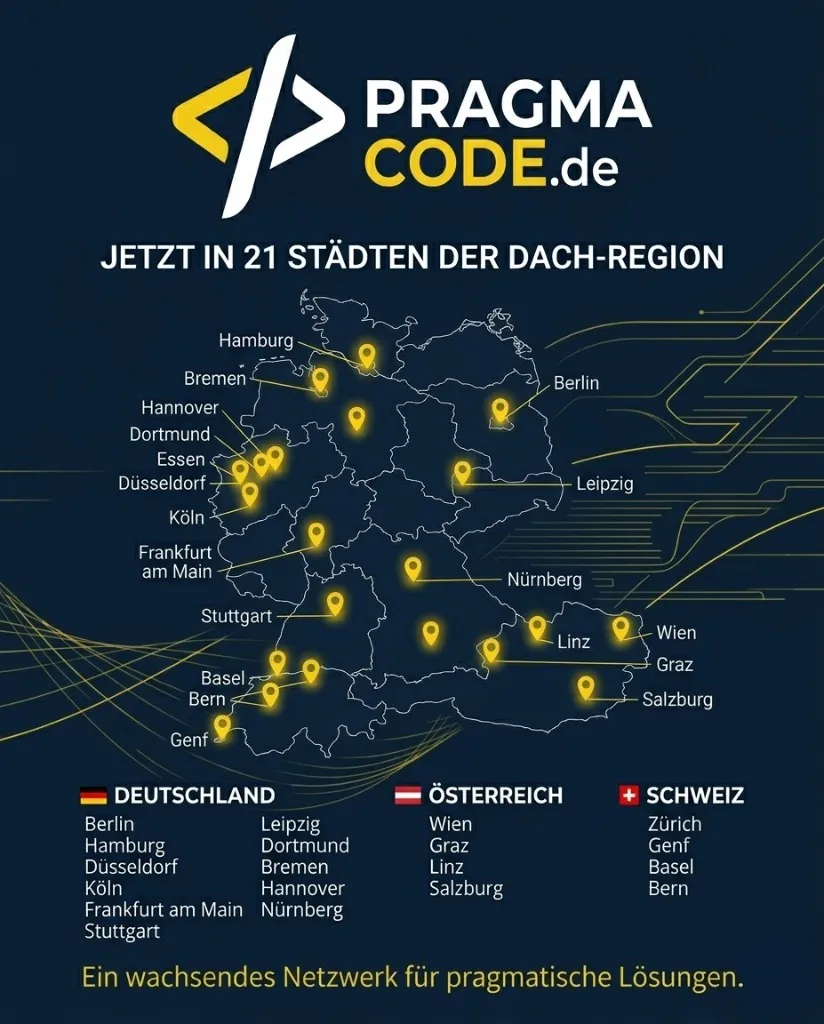
We are your digital partner – regionally anchored and successfully scaling across borders.