


The phase-out of third-party cookies is not a crisis for mid-sized businesses, but the foundation for higher measurement precision, GDPR compliance, and AI-driven attribution. Learn how server-side tracking, first-party data, and modern AI attribution secure your competitive data advantage.
This article is an in-depth expert contribution from our content cluster. Discover the complete overview on our main page:All Services at a Glance →
From Cookie Surveillance to Probabilistic Data Intelligence
In 2026, third-party cookies are obsolete across all modern web browsers. At the same time, GDPR, the Digital Markets Act (DMA), and ePrivacy regulations demand uncompromising user privacy. Businesses still relying on outdated client-side tracking pixels are flying blind with their marketing budgets. Discover how resilient architectures combining first-party data, server-side tagging, and AI attribution unite 100% data sovereignty with maximum performance today.
- Data Collection Paradigm Shift: The demise of client-side third-party cookies (ITP, ETP, Privacy Sandbox) forces the transition to server-side tagging (Server-Side Tracking) and direct platform interfaces like the Conversions API (CAPI).
- First-Party & Zero-Party Dominance: Proprietary customer data (First-Party Data) and explicit preferences (Zero-Party Data) unified in a central Customer Data Platform (CDP) have become an enterprise's most valuable strategic asset.
- AI Attribution Replaces Last-Click Romanticism: Deterministic last-click models are dead. Modern marketers leverage Bayesian Marketing Mix Modeling (MMM) and AI Attribution with probabilistic behavioral modeling (Consent Mode v2) to measure the true incremental return across all channels.
- 1. The End of an Era: Why Third-Party Cookies Are History in 2026
- 2. The Anatomy of Data Loss: What Really Happens Without Cookies
- 3. Comparison: Client-Side Pixels vs. Modern Server-Side & AI Tracking
- 4. The 4 Pillars of Future-Proof Tracking Architecture in 2026
- 5. Server-Side Google Tag Manager (sGTM) & Edge Tagging in Practice
- 6. Conversions API (CAPI) & Enhanced Conversions Without Pixels
- 7. AI Attribution & Synthetic Modeling: How AI Closes Data Gaps
- 8. Marketing Mix Modeling (MMM) 2.0: Causality Over Correlation
- 9. First-Party & Zero-Party Data: Building Your Proprietary Data Moat
- 10. Chronology of the Shift: From Third-Party Cookies to Privacy-First AI
- 11. 5-Step Roadmap: Migrating to a Post-Cookie Tracking Architecture
- 12. Quick-Check: Actionable Checklist for Marketing & IT Leaders
- 13. Conclusion & Outlook: Data Privacy as a Lever for Market Leadership
1. The End of an Era: Why Third-Party Cookies Are History in 2026
For more than two decades, digital performance marketing rested upon a fragile foundation: the client-side third-party cookie. A user visited Website A, a third-party script dropped a text file into their browser, and from that point onward, the user was tracked, profiled, and served retargeting ads across hundreds of unrelated domains. For years, this system operated with notable efficiency — yet it did so at the expense of user privacy, data transparency, and corporate data sovereignty.
In 2026, this paradigm has permanently collapsed. The breakdown was driven by three powerful market forces:
Regulatory Enforcement (GDPR & DMA)
European data protection authorities and the Digital Markets Act (DMA) mandate explicit, verifiable consent records. Unrestricted raw data sharing with third-party ad networks without consent is strictly prohibited.
Browser Architecture & Anti-Tracking
Apple's Safari (ITP) and Mozilla's Firefox (ETP) block third-party cookies by default and severely cap first-party cookie lifetimes. Google Chrome's Privacy Sandbox eliminates client-side cross-site tracking permanently.
Technological User Behavior
Over 40% of Internet users across Europe utilize ad blockers, DNS content filters, or privacy browsers like Brave. Client-side tracking scripts are intercepted and blocked before they finish downloading.
For mid-market enterprises, the consequences are stark: Companies still relying on client-side browser pixels lose between 35% and 70% of their actual transaction data. Strategic decisions are based on distorted metrics, automated smart-bidding algorithms train on incomplete signals, and Customer Acquisition Costs (CAC) spiral out of control without clear diagnostic insights.
Expert Tip: The Illusion of the Standard Cookie Banner
Many organizations believe that deploying a standard cookie consent banner provides complete compliance and reporting safety. The overlooked reality: When 30% to 50% of visitors decline consent, those sales vanish entirely from client-side ad accounts. Without a modern server-side architecture and privacy-preserving AI modeling, your automated bidding algorithms optimize against a heavily biased subset of your actual customer base.
2. The Anatomy of Data Loss: What Really Happens Without Cookies
To understand the technical prerequisites of the post-cookie era, we must inspect where traditional measurement pipelines break down. A typical modern B2B lead or high-ticket e-commerce purchase spans several touchpoints over multiple weeks: from initial mobile research through whitepaper downloads to final contractual execution on a corporate desktop workstation.
In a cookie-dependent infrastructure, this multi-step journey fails across four major vulnerabilities:
1. Cross-Device & Browser Breaks
When an executive clicks an ad on LinkedIn Mobile but completes the inquiry days later using Safari on macOS, attribution breaks completely without persistent first-party identifiers.
2. Aggressive Cookie Expiration Caps
Safari classifies URL parameter cookies (such as gclid or fbclid) as trackers and deletes them after 1 to 7 days. B2B sales cycles take 30 to 90 days — erasing initial channel attribution.
3. Ad Blockers & Network Filters
Content blockers prevent network requests to endpoints like google-analytics.com or connect.facebook.net. The user visit occurs, yet remains completely invisible to analytics systems.
4. Consent Bouncing
Visitors who decline or ignore cookie banners are omitted entirely in legacy tracking setups, creating massive blind spots in fundamental engagement metrics, category paths, and true traffic volume.
The solution is not to bypass user privacy through evasive techniques such as browser fingerprinting. Such workarounds violate GDPR mandates and expose companies to severe regulatory penalties. The true remedy lies in a clean architectural triad: server-side data sovereignty, explicit first-party data capture, and mathematically robust AI attribution.
3. Comparison: Client-Side Pixels vs. Modern Server-Side & AI Tracking
The comparison below highlights the fundamental divergence between obsolete client-side tracking and the 2026 state-of-the-art server-side standard:
Comparison: Obsolete Client-Side Tracking vs. Resilient Server-Side & AI Tracking
- Architecture: Direct execution of 10–20 third-party JavaScript snippets inside the visitor's browser.
- Data Control: Zero. Third-party vendor scripts can read form fields, keystrokes, and URLs without internal oversight.
- Data Loss: 30% to 65% loss caused by ad blockers, Safari ITP caps, and declined consent banners.
- Performance Impact: Slow page load times and degraded Core Web Vitals (high INP/TBT) due to heavy JS execution.
- Attribution Methodology: Rudimentary last-click or first-click attribution devoid of causal validation.
- GDPR Compliance: Severe legal liability risks from unmanaged US cross-border data transfers and cookie proliferation.
- Architecture: A unified first-party data stream routed directly to your own edge server (sGTM / Cloudflare Worker).
- Data Control: 100% sovereign. Data is cleaned server-side, PII is masked, and IP addresses are anonymized.
- Data Precision: Near 100% conversion capture via direct server-to-server APIs (Conversions API (CAPI)).
- Performance Impact: Optimal PageSpeed and Core Web Vitals by offloading script processing to the cloud edge.
- Attribution Methodology: Probabilistic AI Attribution & Bayesian Marketing Mix Modeling (MMM).
- GDPR Compliance: Built-in Privacy-by-Design with dedicated EU cloud hosting and zero unconsented data leakage.
4. The 4 Pillars of Future-Proof Tracking Architecture in 2026
To establish dependable marketing intelligence and profitably scale ad campaigns across Google Ads, Meta, LinkedIn, and programmatic channels in 2026, Pragma Code implements a 4-pillar architectural framework for mid-sized enterprises:
1. First- & Zero-Party CDP
Consolidating all verified customer interactions, purchase histories, and explicit preferences into a GDPR-compliant Customer Data Platform (CDP). Identifiers such as SHA-256 hashed emails and customer IDs serve as the immutable anchor.
2. Server-Side Tagging & Edge
Relocating tag management from the browser to dedicated server instances (sGTM on Google Cloud or AWS in Frankfurt). Inbound data streams are validated, sensitive PII is sanitized, and cookies are emitted as first-party HTTP headers.
3. Conversions API Pipeline
Direct server-to-server integration with advertising networks using the Conversions API (CAPI), Google Enhanced Conversions, and LinkedIn CAPI. Events are deduplicated seamlessly via unique event IDs.
4. AI Attribution & MMM
Deploying advanced machine learning attribution models and aggregated Marketing Mix Modeling (MMM). AI agents evaluate true causality, seasonal baselines, and incremental uplift across all channels.
5. Server-Side Google Tag Manager (sGTM) & Edge Tagging in Practice
The core of every modern post-cookie infrastructure is server-side tag management (Server-Side Tracking). Rather than having the visitor's browser load 15 third-party JavaScript libraries and transmit data to third-party endpoints, the client communicates strictly with a subdomain hosted on your own corporate infrastructure — such as data.your-domain.com.
This server-side container (typically deployed within a high-availability cloud cluster in Frankfurt) operates as an intelligent data firewall and proxy:
1. Complete PII Sanitization and GDPR Filtering
Before any event payload is forwarded to ad networks like Google or Meta, the server inspects the data stream. Sensitive variables (such as plaintext email addresses, passwords, phone numbers, or internal database IDs) are either stripped or securely hashed using SHA-256. User IP addresses are truncated and anonymized server-side, preventing third parties from extracting geographical or individual fingerprints.
2. Resilient First-Party Cookies via HttpOnly & SameSite
Cookies set by the server (such as session IDs or hashed client tokens) are delivered through HTTP response headers as genuine first-party cookies. They bypass the strict restrictions of Safari ITP (which deletes JavaScript-created document.cookie entries after a few days) and remain persistent throughout the full B2B sales cycle.
3. Significant Core Web Vitals & PageSpeed Acceleration
Eliminating heavy third-party JavaScript from the browser reduces client-side script payloads by over 300 kB in typical deployments. This directly improves Interaction to Next Paint (INP) and Largest Contentful Paint (LCP) — delivering immediate gains in organic search rankings and conversion efficiency.
4. Hybrid Redundancy & Event Deduplication
To guarantee zero data loss, enterprise systems execute hybrid tracking: A browser event and a server event fire simultaneously, sharing an identical, unique event_id. The ad platform recognizes the duplicate and prioritizes the enriched server payload for smart bidding optimization if the browser event was intercepted by an ad blocker.
6. Conversions API (CAPI) & Enhanced Conversions Without Pixels
Server-side tracking delivers maximum impact when paired with direct server-to-server APIs provided by major ad networks. In 2026, the Meta Conversions API (CAPI), Google Enhanced Conversions, LinkedIn CAPI, and TikTok Events API serve as the primary data pipelines for high-performance marketing. For an in-depth look at structuring profitable ad funnels, explore our strategic guide on Google & Meta Ads for SMEs 2026.
Conversion data exchange operates across these APIs in four synchronized process steps:
Transaction Execution in the Backend: A user places an order in an online store or submits a B2B project inquiry. The backend system (Shopify, WooCommerce, HubSpot, or a Next.js web application) records the order details and revenue amount directly on the server level.
Payload Generation & Normalization: The server compiles a secure event payload. Customer attributes (email, phone, name, postal code) are standardized and hashed locally using SHA-256 (e.g., john.doe@company.com transforms into a cryptographic string) to protect PII.
Direct HTTPS POST Request: The server transmits this payload via authenticated REST API directly to ad network endpoints (e.g., graph.facebook.com/v20.0/.../events) — fully decoupled from the user's browser and ad-blocker immune.
Event Match Quality (EMQ): The ad platform matches the hash against authenticated user accounts. Providing multiple verified first-party signals (hashed email + phone + postal code) regularly yields Event Match Quality scores exceeding 8.5/10 for smart bidding.
The outcome: Automated bidding algorithms receive 100% of conversion signals in real time. Machine learning models accurately identify which customer segments generate the highest Customer Lifetime Value (CLV) and optimize bids autonomously.
7. AI Attribution & Synthetic Modeling: How AI Closes Data Gaps
Even with server-side infrastructure and robust first-party pipelines, a segment of web visitors will inevitably remain unconsented — whether due to explicit banner opt-outs or corporate network security policies. This is where modern AI Attribution becomes indispensable.
Historically, an opt-out resulted in the complete loss of all session and conversion intelligence. In 2026, advanced machine learning standards like Consent Mode v2 and synthetic behavioral modeling bridge this gap across three core stages:
Consent-less Identifier-Free Pings
When a user declines consent, no cookies are stored. The browser emits only an aggregated status ping (e.g., "Pageview on URL X occurred", "Conversion with value $250 completed").
Neural Behavioral Modeling
Machine learning models analyze behavioral patterns of the consented cohort and project conversion pathways onto the unconsented cohort based on device, time, and landing page.
Probabilistic Conversion Assignment
The AI calculates the mathematical likelihood that an anonymous purchase was driven by a preceding campaign, feeding modeled conversions directly into bidding systems in full GDPR compliance.
This probabilistic architecture ensures that even with consent rates of 60%, mid-market organizations maintain a statistically sound 95% data foundation for strategic decision-making.
8. Marketing Mix Modeling (MMM) 2.0: Causality Over Correlation
Alongside operational real-time attribution, one of the most rigorous econometric disciplines has experienced a major revival: Marketing Mix Modeling (MMM).
Historically, MMM was confined to multinational enterprises with dedicated data science departments. Today, powered by open-source frameworks like Google Meridian and Meta Robyn combined with automated AI pipelines, MMM is accessible and cost-effective for any mid-market enterprise with an annual marketing budget starting at $100,000.
In stark contrast to pixel tracking, MMM requires no user-level personal data whatsoever. It operates as a macro-level Bayesian regression model built on three foundational pillars:
Aggregated Channel Inputs
Daily or weekly expenditure by channel (Google Ads, Meta, LinkedIn, SEO, print, trade shows), web traffic, qualified leads, revenue, pricing changes, and macroeconomic variables (seasonality, holidays, weather).
Adstock & Saturation Curves
The AI calculates the carryover decay rate of advertising impressions over time and determines diminishing return inflection points across various spend thresholds.
Incremental vs. Baseline Revenue
MMM isolates baseline sales (revenue the brand would achieve organically without ad spend) from incremental uplift directly generated by marketing investments.
The result provides leadership with an objective answer to the central capital allocation question: "If we deploy an additional $25,000 next month, which channel will generate the highest incremental return on investment?"
9. First-Party & Zero-Party Data: Building Your Proprietary Data Moat
Upgrading your tracking infrastructure is only the technical half of the equation. The most resilient hedge against future platform volatility and privacy legislation is cultivating a verified, proprietary customer data ecosystem.
We categorize proprietary customer data into two critical tiers:
1. First-Party Data (Behavioral & Transactional)
Data gathered across direct commercial interactions: transaction history, subscription terms, support tickets, client portal login frequency, and email engagement metrics.
2. Zero-Party Data (Explicit Declarations)
Data that prospects or customers intentionally share: inputs in interactive ROI calculators, responses in B2B needs assessment quizzes, product configurations, and preference centers.
Enterprises offering tangible value in exchange for zero-party insights (such as tailored industry benchmark reports, interactive cost calculators, or custom product recommendations) build depth and trust that third-party cookies could never provide. These rich profiles power hyper-personalized marketing automation, targeted Account-Based Marketing (ABM), and precision interactions executed by autonomous AI agents.
10. Chronology of the Shift: From Third-Party Cookies to Privacy-First AI
The timeline below chronicles the tectonic shift in digital measurement from early surveillance tracking to modern privacy-first AI architectures:
GDPR takes effect in the EU, followed by landmark CJEU rulings mandating explicit cookie consent (Planet49). Apple introduces ITP 2.0, initiating the systematic restriction of third-party cookies in Safari.
Apple's App Tracking Transparency (ATT) on iOS disrupts up to 50% of client-side conversion signals. Major ad networks release initial server-side Conversion APIs (CAPI) to mitigate signal degradation.
Enforcement of the EU Digital Markets Act (DMA) mandates Google Consent Mode v2. Server-Side Google Tag Manager (sGTM) becomes the gold standard for mid-market IT infrastructure.
Complete adoption of probabilistic AI attribution, autonomous Marketing Mix Modeling (MMM), and edge-native server tagging. Proprietary first-party data moats become the defining competitive asset.
11. 5-Step Roadmap: Migrating to a Post-Cookie Tracking Architecture
Modernizing your enterprise tracking infrastructure demands a methodical execution plan to prevent measurement disruption during transition. We recommend the following tested 5-step roadmap:
-
1. Current-State Audit & Data Leakage Inventory
Inspect all active tracking scripts and browser pixels on your website. Identify unmanaged client-side data leaks, benchmark discrepancies between CRM/store revenue and analytics data, and calculate signal loss from ad blockers.
-
2. Provisioning Server-Side Tag Manager Cloud Infrastructure
Deploy a dedicated Server-Side Tag Manager container on a corporate first-party subdomain (e.g.,
data.your-company.com) hosted on ISO 27001-certified European cloud infrastructure. Configure SSL certificates and DNS routing. -
3. Implementing the Conversions API Pipeline (CAPI & Enhanced Conversions)
Establish direct server-to-server connections with Google Ads, Meta, LinkedIn, and your CRM. Implement SHA-256 cryptographic hashing for customer identifiers and configure robust event deduplication using unique event IDs.
-
4. Activating Consent Mode v2 & Behavioral Modeling
Synchronize your Consent Management Platform (CMP) with your server container. Configure consent-less pings for opt-out visitors to activate automated AI conversion modeling.
-
5. Deploying Marketing Mix Modeling & First-Party CDP
Consolidate transactional, marketing spend, and customer data into a unified dashboard. Implement a Bayesian MMM engine to continuously guide cross-channel marketing budget allocation.
12. Quick-Check: Actionable Checklist for Marketing & IT Leaders
Use this diagnostic checklist to immediately assess the maturity and resilience of your current measurement architecture:
Quick-Check: Is Your Measurement Stack Ready for 2026?
13. Conclusion & Outlook: Data Privacy as a Lever for Market Leadership
The retirement of third-party cookies does not signify the decline of digital marketing — it marks the demise of untargeted, intrusive advertising waste. Organizations that delay modernization and continue relying on legacy browser pixels will suffer declining return on ad spend and heightened compliance liability.
For proactive mid-market leaders, the post-cookie era offers a substantial competitive advantage: By uniting sovereign server-side infrastructure, direct platform APIs, and cutting-edge AI attribution, you achieve measurement clarity and predictive precision that leave competitors guessing. Data privacy transforms from a regulatory burden into your most powerful performance accelerator.
Ready to audit your current tracking infrastructure or implement a turnkey server-side & AI attribution architecture for your organization? Our team of web architects and performance engineers supports you from initial data flow analysis through to enterprise production deployment.
Ready for Future-Proof Tracking Without Cookies?
Request a Free Tracking AuditOur Regional Expertise
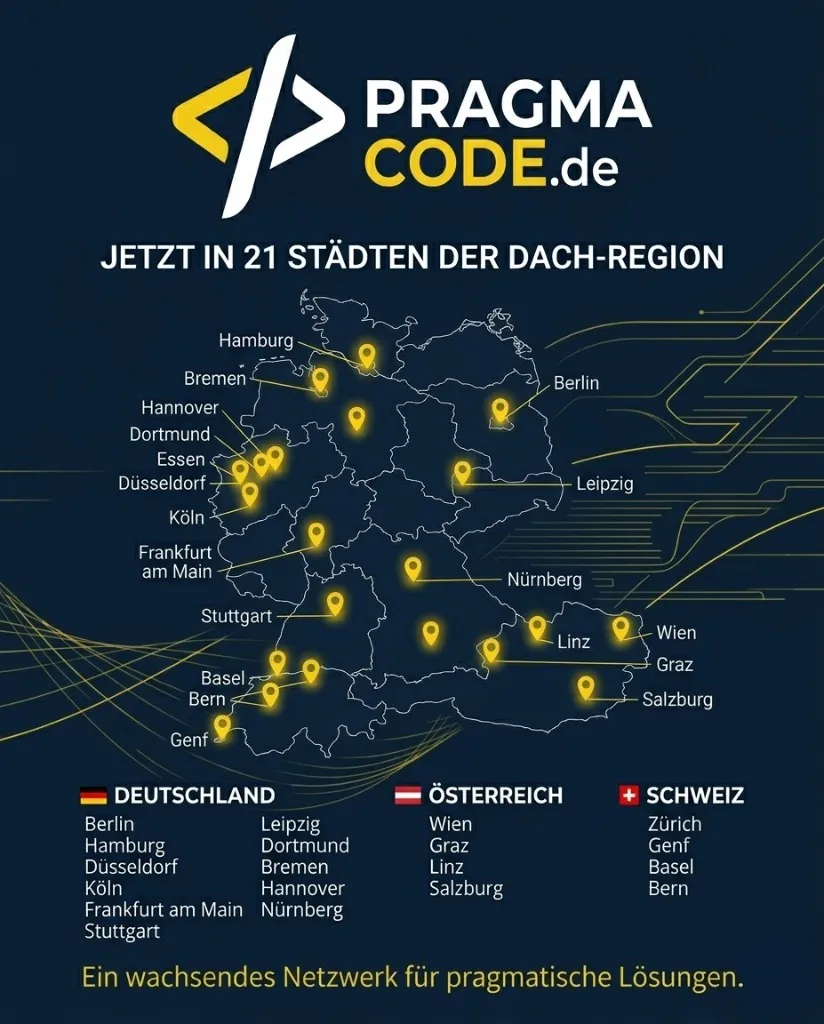
We are your digital partner – regionally anchored and successfully scaling across borders.
Have a vision?
Let's check together how we can make your idea take flight.
Book your free strategy call nowExtended Specialized Glossary
First-Party Data
Data collected by a company directly from its customers or website visitors with their consent.
Server-Side Tracking
A tracking architecture where data is first sent to your own server and then passed to third parties in a controlled manner.
Conversions API (CAPI)
A direct server-to-server interface for secure, cookie-independent transmission of conversion events.
AI Attribution
The use of machine learning models to probabilistically and accurately determine the value contribution of marketing touchpoints.
Consent Mode v2
Google standard for dynamically adapting tracking tags to user consent status to enable AI behavioral modeling.
Marketing Mix Modeling (MMM)
A statistical-Bayesian analysis methodology that quantifies marketing impact without tracking individuals.
Customer Data Platform (CDP)
A centralized platform harmonizing customer data across all touchpoints into consistent, privacy-compliant profiles.
Zero-Party Data
Data that customers intentionally and proactively share, such as preferences, survey responses, and product configurations.