


In 2026, pure text SEO is no longer enough. Search engines and AI agents such as Google Gemini, ChatGPT Search, and Perplexity perceive the web as an interconnected semantic knowledge graph. Discover in this comprehensive guide how to anchor your brand, products, and services in machine-readable form using Schema.org, JSON-LD, and advanced entity nesting to dominate rich snippets in the SERPs.
This article is an in-depth expert contribution from our content cluster. Discover the complete overview on our main page:SEO & Content →
The Semantic Anchor of Truth in the AI Era
Why Schema.org and structured data form the fundamental backbone of modern Generative Engine Optimization (GEO): LLMs and autonomous agents no longer crawl unstructured text deserts; they specifically navigate through verified entity networks.
- Entities Instead of Keywords: Search engines and AI systems interpret websites as nodes of a global knowledge graph. Schema.org unambiguously anchors companies, people, and services in the semantic web.
- JSON-LD as the Gold Standard: By decoupling presentation markup from the data model, JSON-LD ensures maximum code hygiene, fault tolerance, and performant server-side serialization in modern frameworks like Astro and Next.js.
- Visibility Through Rich Results & GEO: Fully nested schemas secure interactive SERP enhancements (stars, FAQ accordions, pricing) and provide the trustworthy factual basis for citations in AI Overviews, Perplexity, and ChatGPT Search.
- 1. Introduction: The Paradigm Shift from Keywords to Entities
- 2. Technical Fundamentals: JSON-LD vs. Microdata & RDFa
- 3. The 4 Pillars of Schema.org Architecture in 2026
- 4. Deep Dive B2B: Organization, Service & Knowledge Graph
- 5. Deep Dive E-Commerce: Product, Offer & Merchant Center
- 6. Modern Framework Integration: Astro, Next.js & TypeScript
- 7. Step-by-Step Implementation Roadmap for Enterprises
- 8. Common Pitfalls, Testing & GSC Monitoring
- 9. Conclusion & Future Outlook: The Semantic Web in the Era of Autonomous Agents
1. Introduction: The Paradigm Shift from Keywords to Entities
The way search engines and users explore the internet has undergone its most profound transformation since the invention of the PageRank algorithm. In 2026, the era of isolated keyword matching is definitively over. Modern search engines such as Google and Microsoft Bing, alongside AI-driven search engines like Perplexity AI, ChatGPT Search, and Claude, no longer act merely as simple text scanners, but as sophisticated semantic inference engines. They extract facts, evaluate logical relationships, and construct a comprehensive global Knowledge Graph.
In this transformed ecosystem, organic search success is no longer dictated by how often a keyword appears on a landing page, but by the machine-readable clarity of the entities behind it. Who is the author? What verified expertise does the company possess? What specific services are offered in which geographic territory? Which products are currently in stock and under what commercial terms? This is precisely where the open standard of Schema.org becomes indispensable.
Large Language Models (LLMs) and generative AI Overviews face a fundamental challenge: they must eliminate hallucinations and present verifiable facts to their users. When an AI engine analyzes your website, structured data acts as a digital seal of truth. Without this semantic markup, algorithms classify your content as unstructured noise – leading to severe drops in organic visibility and zero citations in generative responses (Generative Engine Optimization).
What Exactly is Schema.org?
Schema.org is an open, collaborative initiative launched in 2011 by Google, Microsoft, Yahoo, and Yandex. It provides a universal semantic vocabulary that webmasters can use to enrich HTML documents with machine-readable metadata. Over 1,000 structured types and thousands of properties cover virtually every commercial and academic domain – from products, services, and events to scientific publications and regulatory certifications.
2. Technical Fundamentals: JSON-LD vs. Microdata & RDFa
Historically, developers had multiple options for embedding semantic annotations into HTML documents. In addition to the modern standard JSON-LD, legacy formats like Microdata and RDFa were widely used. By 2026, however, there is unanimous consensus across professional software engineering and enterprise SEO on the superior standard.
Technology Comparison: JSON-LD vs. Microdata & RDFa
- Markup Pollution: Attributes like
itemprop,itemscope, anditemtypeare woven directly into visible HTML tags. - High Fragility: Frontend redesigns or component refactorings frequently break structured entity hierarchies accidentally.
- High Maintenance Overhead: Nested entities require complex DOM nesting and unnecessarily inflate the HTML document size.
- Poor Scalability: Dynamic data originating from headless CMS or API endpoints cannot be cleanly serialized inline.
- Strict Separation of Data & Design: Markup resides in a standalone
<script type="application/ld+json">block within the head or body. - Robust Decoupling: Visual styling or template changes have zero impact on the semantic data structure.
- Complete Nesting Freedom: Complex graph relations and cross-references via
@idcan be cleanly modeled hierarchically. - Official Google Preference: Google and AI crawlers parse JSON-LD with top priority and minimal computational overhead.
The decisive architectural advantage of JSON-LD lies in the maintainability of modern software applications. Whether you are using server-rendered Astro islands, Next.js React Server Components, or monolithic enterprise platforms: JSON-LD allows engineering teams to generate structured data centrally through type-safe models without cluttering the UI component templates.
3. The 4 Pillars of Schema.org Architecture in 2026
To achieve maximum impact across search engines and AI agents, your semantic markup should never consist of arbitrary, disconnected code snippets. Successful enterprises construct a structured architecture grounded on four interconnected pillars:
Corporate & Entity Graph
Anchors corporate identity, operating locations, founders, commercial register entries, and social profiles using Organization and LocalBusiness. Creates the foundation for an official Knowledge Panel.
B2B Services & Catalogs
Models the service portfolio through Service and OfferCatalog. Connects target audiences (audience), geographic service areas (areaServed), and pricing models to the providing organization.
E-Commerce & Merchant Feeds
Defines products, inventory levels, GTIN/EAN codes, return policies, and shipping costs using Product and Offer. Powers Google Shopping listings and rich merchant badges.
SERP Enhancements & Content
Generates interactive SERP features and AI direct answers using FAQPage, HowTo, Article, and BreadcrumbList. Maximizes click-through rates via visual dominance in search results.
4. Deep Dive B2B: Organization, Service & Knowledge Graph
In the B2B sector, companies do not sell standardized mass-market commodities; they deliver customized engineering, consulting, software, and enterprise services. The key to ranking authority lies in creating an explicit semantic relationship graph that search engines and AI agents can seamlessly traverse.
4.1 Root of the Graph: Organization & Disambiguation via @id
A frequent mistake in practice is the isolated declaration of multiple unlinked schemas across different pages. The homepage defines an Organization, a landing page defines a Service, and a blog post declares a BlogPosting – with zero logical connections between them. For an AI model, these appear as three fragmented, unverified data points.
The standard for 2026 is: Unambiguous entity referencing using the @id attribute combined with SameAs properties linking to authoritative third-party knowledge bases like Wikidata, Wikipedia, Crunchbase, and verified social profiles.
{
  "@context": "https://schema.org",
  "@graph": [
    {
      "@type": "Organization",
      "@id": "https://www.pragma-code.de/#organization",
      "name": "Pragma-Code",
      "legalName": "Pragma-Code IT & SEO Solutions",
      "url": "https://www.pragma-code.de",
      "logo": {
        "@type": "ImageObject",
        "@id": "https://www.pragma-code.de/#logo",
        "url": "https://www.pragma-code.de/assets/pragma-code-logo.webp",
        "caption": "Pragma-Code Logo"
      },
      "sameAs": [
        "https://www.linkedin.com/company/pragma-code",
        "https://github.com/pragma-code",
        "https://twitter.com/pragmacode"
      ],
      "contactPoint": [
        {
          "@type": "ContactPoint",
          "telephone": "+49-123-4567890",
          "contactType": "customer service",
          "areaServed": ["DE", "AT", "CH"],
          "availableLanguage": ["German", "English"]
        }
      ],
      "founder": {
        "@type": "Person",
        "@id": "https://www.pragma-code.de/#alexander-ohl",
        "name": "Alexander Ohl",
        "jobTitle": "Lead IT Architect & SEO Specialist",
        "sameAs": "https://www.linkedin.com/in/alexander-ohl"
      }
    }
  ]
}
4.2 Service Nesting with OfferCatalog and Audience Targeting
On service pages, connect the Service schema directly to the parent organization. By nesting hasOfferCatalog, audience, and areaServed, Google understands precisely who delivers the service, which target audience it caters to (e.g., B2B / SME), and which service packages are available.
{
  "@context": "https://schema.org",
  "@type": "Service",
  "@id": "https://www.pragma-code.de/en/seo-content/#service",
  "name": "Enterprise SEO & GEO Optimization",
  "serviceType": "Search Engine & Generative AI Optimization",
  "provider": {
    "@type": "Organization",
    "@id": "https://www.pragma-code.de/#organization"
  },
  "areaServed": {
    "@type": "Country",
    "name": "Germany"
  },
  "audience": {
    "@type": "BusinessAudience",
    "name": "B2B SMEs & Digital Leaders"
  },
  "hasOfferCatalog": {
    "@type": "OfferCatalog",
    "name": "SEO & GEO Service Portfolio",
    "itemListElement": [
      {
        "@type": "Offer",
        "itemOffered": {
          "@type": "Service",
          "name": "Technical Schema.org Audit & Entity Graph Setup"
        }
      },
      {
        "@type": "Offer",
        "itemOffered": {
          "@type": "Service",
          "name": "AI Visibility Monitoring & AI Overviews Optimization"
        }
      }
    ]
  }
}
5. Deep Dive E-Commerce: Product, Offer & Merchant Center
In e-commerce, structured data functions as the central nervous system of your sales pipeline. Without comprehensive Schema.org markup, an online store in 2026 is effectively invisible on Google Shopping, free product listings, and mobile rich snippets. Furthermore, Google synchronizes structured product metadata directly with Google Merchant Center feeds to reconcile pricing and inventory in real time.
Global trade identifiers such as GTIN/EAN (gtin13) and manufacturer part numbers (mpn) are essential. They allow search engines to accurately match products and compare prices across all retail merchants.
Specify exact price, currency, condition (NewCondition), stock availability (InStock), and price validity periods (priceValidUntil). Schema pricing must match visible page pricing second-by-second.
Authentic customer reviews and aggregated star ratings generate prominent yellow review stars in search results, boosting click-through rates (CTR) by up to 25%.
Since 2024/2026, Google rewards structured declarations for delivery costs (shippingDetails) and return rules (hasMerchantReturnPolicy) with prestigious merchant trust badges.
Expert Tip: Dynamic Price Consistency in E-Commerce
One of the primary causes of Merchant Center suspensions and rich snippet revocation is a timing discrepancy between dynamic discounts on the shop frontend and cached Schema.org data. Use server-side rendering or reactive data serialization to ensure flash sales, tiered discounts, and currency conversions in JSON-LD are perfectly synchronized with the customer-facing product detail page.
6. Modern Framework Integration: Astro, Next.js & TypeScript
Manually maintaining raw JSON-LD strings within static HTML is tedious and error-prone. In modern web architectures, structured markup is generated dynamically from CMS data models and databases. Using TypeScript alongside specialized packages like schema-dts ensures full compliance with Schema.org specifications directly at build time.
Type-Safe Schema Generation in Astro & Next.js
Within Astro or Next.js (App Router), you define reusable schema helper functions or components. The schema object is serialized to JSON on the server and injected directly into the HTML stream with zero client-side JavaScript penalty.
import type { WithContext, BlogPosting } from 'schema-dts';

interface Props {
  title: string;
  description: string;
  publishDate: string;
  authorName: string;
  slug: string;
}

const { title, description, publishDate, authorName, slug } = Astro.props;

const schemaData: WithContext<BlogPosting> = {
  "@context": "https://schema.org",
  "@type": "BlogPosting",
  "headline": title,
  "description": description,
  "datePublished": publishDate,
  "dateModified": new Date().toISOString().slice(0, 10),
  "mainEntityOfPage": `https://www.pragma-code.de/en/${slug}`,
  "author": {
    "@type": "Person",
    "name": authorName,
    "url": "https://www.pragma-code.de/en/alexander-ohl"
  },
  "publisher": {
    "@type": "Organization",
    "name": "Pragma-Code",
    "logo": {
      "@type": "ImageObject",
      "url": "https://www.pragma-code.de/assets/pragma-code-logo.webp"
    }
  }
};
7. Step-by-Step Implementation Roadmap for Enterprises
To integrate Schema.org sustainably and error-free across your web infrastructure, follow this proven 4-phase roadmap:
Inventory Audit & Entity Mapping
Analyze existing page templates using the official Schema Markup Validator. Map out which entities (Organization, Services, Products, Authors, FAQs, Case Studies) belong on which URLs.
Dynamic Architecture & Templating
Implement automated JSON-LD generators in your CMS or frontend framework. Guarantee mandatory fields (images, dates, pricing, authors) are automatically populated from structured content models.
Staging Validation & Rich Results Testing
Test every template release in staging environments using the Google Rich Results Test. Address all warnings regarding optional fields to maximize rich snippet eligibility.
Continuous Monitoring in Google Search Console
Following deployment, monitor the Enhancements reports in GSC (e.g., Merchant listings, FAQs, Review snippets) to resolve any indexing warnings or syntax regressions immediately.
8. Common Pitfalls, Testing & GSC Monitoring
Structured data leaves no room for careless mistakes. A single missing quote or invalid trailing comma in a JSON script will cause parser failure, prompting Google to disregard the entire block. Keep the following quality assurance rules in mind:
- Never Mark Up Hidden Content (Anti-Spam Compliance): Every piece of data declared within your Schema.org markup (reviews, FAQ answers, business hours, prices) must be fully visible to human users on the rendered page. Hidden fake reviews in JSON-LD trigger direct manual spam penalties from Google.
- Relative vs. Absolute URLs: In attributes such as
image,logo, orurl, always provide fully qualified absolute URLs includinghttps://. - ISO 8601 Date Standardization: Format dates in
datePublishedordateModifiedstrictly according to standard ISO formats (YYYY-MM-DDorYYYY-MM-DDTHH:mm:ssZ). - Regular Knowledge Graph Audits: Use the Google Knowledge Graph Search API Explorer to verify how Google currently ranks your entity authority and Knowledge Graph Result Score.
Quick Check: Your Path to Schema.org Excellence
@id and sameAs implemented
Service and OfferCatalog
9. Conclusion & Future Outlook: The Semantic Web in the Era of Autonomous Agents
The digital landscape is moving at breakneck speed from a "Web of Documents" to a "Web of Actions and Entities". In 2026 and beyond, human users will increasingly bypass traditional search engine results pages. Instead, autonomous AI agents, personalized assistants, and multimodal LLMs will conduct research, evaluate solutions, and prepare purchasing decisions on their behalf.
These agents do not read lengthy marketing hype – they parse and validate facts through structured data. Schema.org is the universal API of the modern web. Enterprises that equip their digital infrastructure with deeply nested entity graphs today not only secure top rankings and high-converting rich snippets in today's search engines, but establish the indispensable foundation to remain visible, relevant, and authoritative in tomorrow's AI-driven economy.
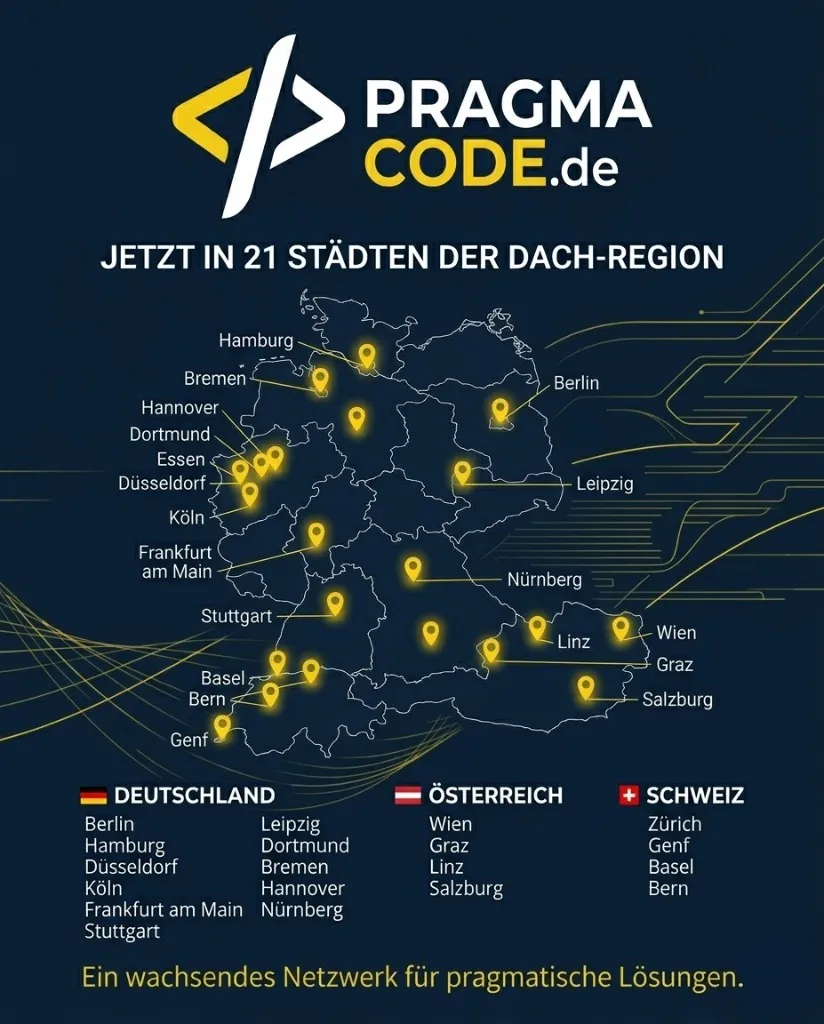
Our Regional Expertise
We are your digital partner – regionally anchored and successfully scaling across borders.
Have a vision?
Let's check together how we can make your idea take flight.
Book your free strategy call nowExtended Specialized Glossary
Schema.org
A collaborative, standardized vocabulary developed by major search engines to structure semantic data across the web.
Structured Data
Information that is available in a standardized format (such as JSON-LD) to make it easier for machines to understand content.
JSON-LD
JavaScript Object Notation for Linked Data. The format recommended by Google for embedding Schema markups, which decouples data and design.
Entity Graph
A semantic knowledge network that models real-world entities (people, brands, products, services) and their relationships in machine-readable form.
Rich Snippets
Enhanced search results that display additional information such as stars, images, prices, or FAQ accordions directly in the Google results.
Knowledge Graph
Google's semantic knowledge base that stores entities (people, places, companies) and their relationships to one another and displays them in info boxes.