

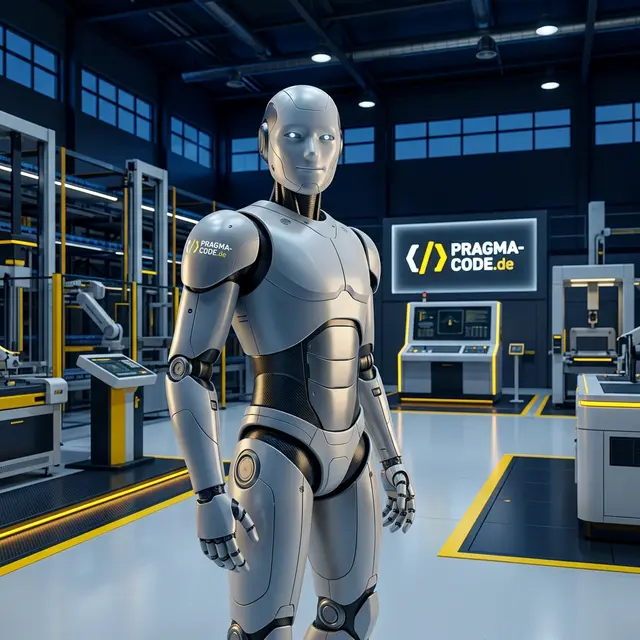
It is no longer a science fiction scenario. As we look ahead to the year 2026, we are witnessing a decisive turning point in industrial history. Humanoid robots, which just a few years ago were considered expensive, error-prone toys reserved for massive tech giants, are now ready for widespread deployment in Small and Medium-sized Enterprises (SMEs). The rapid advancement of Artificial Intelligence, specifically what is known as Physical AI, has led to an unprecedented convergence of software and physical hardware. What does this mean in tangible terms for SMEs? It means that automation is no longer restricted to static assembly lines or highly complex, inflexible robotic cells surrounded by strict safety fences. Instead, an entirely new generation of "digital colleagues" is entering factory floors, distribution centers, and warehouses – intelligent machines inspired by human anatomy, designed to integrate seamlessly into environments that, for decades, were built exclusively for human beings.
The skilled labor shortage across Europe and North America has reached a threatening record high. Vacancies in logistics, production, order picking, and facility maintenance remain unfilled for months on end. This is exactly where humanoid robots step in. Their purpose is explicitly not to replace human workers. Rather, they are designed to fill the glaring gaps created by demographic shifts and the retirement of entire generations of skilled labor. They deliberately take on tasks that are often described in the industry as "dirty, dull, and dangerous." This strategic shift allows valuable human employees to focus on more cognitively demanding, analytical, creative, and ultimately value-adding activities, such as quality management, continuous process optimization, or complex problem-solving.
"2026 marks the year when robots no longer work isolated behind steel fences, but as collaborative, flexible partners right beside us – and at acquisition and operating costs that make immediate sense even for smaller companies."
1. The Economic Breakthrough: Why Exactly NOW?
Many technology trends are heralded with a hype cycle that precedes reality by years. However, with humanoid robotics, three fundamental factors have altered the landscape in 2026 so profoundly and abruptly that the technology is no longer exclusive to massive automotive conglomerates or global logistics giants. These three pillars explain why the mid-market sector must act right now to avoid missing out on the next wave of global automation.
1.1 The Massive Price Drop (Economies of Scale and Price Erosion)
The hardware costs for humanoid robots have plummeted over the past five years at a pace that has surprised even seasoned industry experts. While the first viable prototypes consumed millions in development costs and early commercial models hovered around $150,000 to $200,000, 2026 presents an entirely new, highly competitive pricing structure. Thanks to massive economies of scale in the production of high-precision electric motors, actuators, gearboxes, and sensors (a development heavily driven and subsidized by the mass production in the smartphone and electric vehicle industries), innovative robotics startups worldwide have slashed manufacturing costs.
Today, extremely capable humanoid units are available on the market for well under $25,000. This massive price erosion makes the Return on Investment (ROI) for SMEs unbeatably attractive. A traditional industrial robotics installation, which previously took up to 10 years to amortize due to custom engineering and hard-coding, is giving way to a system that—thanks to its 24/7 operational capability—can operate profitably within 12 to 18 months, especially when utilized in multi-shift operations.
1.2 The Rise of Physical AI and Foundation Models
State-of-the-art hardware alone is not enough; a robot is only as capable and agile as its "brain." The absolute breakthrough of recent years is the leap from rigid, algorithmic programming to what is known as "Physical AI." In the past, industrial robots had to be painstakingly coded by highly paid engineers using proprietary languages for every minute movement – every angle, every grip pressure, every path calculation. When combined with the high hourly rates of these system integrators, automating small batch runs (High-Mix Low-Volume) was virtually unprofitable or even economic suicide for an SME.
Thanks to massive Visual-Language-Action (VLA) Foundation Models (similar to ChatGPT, but extensively trained for spatial awareness, physics, and object interactions), robots in 2026 learn by simple observation (Imitation Learning), through simulation (Reinforcement Learning), or via straightforward verbal instructions. A warehouse worker can literally show a robot how to grip a specific, delicate component, either via a Virtual Reality headset or by manually guiding its arms. The AI instantly abstracts these motion sequences and applies the learned logic autonomously to similar, yet non-identical objects. This radically reduces what used to be prohibitively high integration and retooling costs to a mere fraction.
1.3 The "Robot-as-a-Service" Model (RaaS)
The third, and perhaps most crucial liquidity-saving driver for small and medium-sized enterprises, is the established "Robot-as-a-Service" (RaaS) business model. Instead of investing large sums of Capital Expenditure (CapEx) into hardware and software, companies simply rent the robots as an Operational Expenditure (OpEx). Under RaaS, SMEs pay a predictable, often hourly or monthly fee that covers maintenance, cloud infrastructure, continuous over-the-air (OTA) software updates, and frequently even the provision of immediate replacement units in the event of hardware failures.
This flexible service model dramatically lowers the critical barrier to entry and investment risk. It empowers companies to react highly flexibly to seasonal order peaks (such as the holiday shopping season or Black Friday) by simply deploying additional robotic labor for three months, without tying up capital into expensive fixed assets over the long term. RaaS decisively democratizes access to high-end robotics.
Price Erosion & ROI
Units that were traditionally unaffordable are now extremely cost-effective due to scale. ROI is often achievable in under 18 months.
Physical AI Evolution
Thanks to generative Foundation Models, robots learn through observation or speech, replacing line-by-line coding.
RaaS Scalability
Robot-as-a-Service preserves company capital (OpEx instead of CapEx) and offers maximum seasonal flexibility during peak loads.
2. Physical AI & Agentic Workflows: Understanding the Invisible Technology
The term "Agentic AI" (agent-based Artificial Intelligence) dominates the software and tech debates of 2026. But what does it mean when combined with hardware weighing over 50 kilograms? The profound, true game-changer is the seamless fusion of Large Language Models (LLMs) and Vision-Language-Action Models (VLAMs) with an active, physical environment – what we define as "Physical AI."
A cutting-edge humanoid robot doesn't just understand written or spoken natural language; it comprehends the semantic context and spatial dimensions (Spatial Computing) of its immediate surroundings. Imagine the following, entirely realistic scenario for today: A logistics manager walks onto the floor and gives the robot a verbal command: "Take all the boxes marked with a red hazardous materials sticker from the back of Pallet A and stack them carefully onto Pallet B, but make absolutely sure the heaviest boxes go at the bottom."
Just a few years ago, this seemingly trivial command would have required weeks of programming work, the installation of complex camera rigs, and millimeter-precise, totally rigid path planning. Any deviation from the norm would have caused an immediate system halt. Today, an embedded Agentic Workflow (the robot's software architecture) translates this sentence in fractions of a second into a series of logically linked, autonomous sub-steps:
Semantic Object Recognition
Visual identification of the environment, locating "Pallet A," and scanning all objects for the "red hazardous materials sticker" pattern.
Physical Estimation
Estimating the weight and mass distribution of the boxes (either by reading text labels via OCR or through a slight diagnostic lift using force-torque sensors in the arms).
Spatial Planning
Real-time planning of the optimal stacking logic within 3D space (heavy objects form the foundation, avoiding overhangs).
Dynamic Path Navigation
Execution of the complex gripping motions, maintaining dynamic balance while lifting heavy loads, and guaranteed collision avoidance with humans en route to Pallet B.
If an unexpected, unprogrammed obstacle appears – such as a carelessly parked pallet jack blocking the path, or an employee crossing the aisle – the robot doesn't just stop and flash a fatal red error light (as unfortunately many classic AGVs or automated guided vehicles do). It calculates a safe alternative route or reschedules the process flow in milliseconds. This immense autonomy of action makes these systems so incredibly valuable, as it drastically reduces the manual, expensive "babysitting" required from human staff down to near zero.
3. Practical Use Cases for SMEs
Many skeptics frequently ask: "Why specifically a humanoid, human-like form factor? Wouldn't a much cheaper, classic robot arm on wheels suffice?" The pragmatic answer lies hidden within our own factory halls and warehouse structures. Our entire civilizational and industrial infrastructure – staircases, door handles, shelving systems, tool shapes, vehicle chassis, and ceiling heights – has been built exclusively for the human anatomy over centuries.
A humanoid robot can maneuver and operate completely seamlessly and instantly within these existing environments without requiring exorbitantly expensive, months-long modifications to the facility infrastructure (like laying guide rails or magnetic sensors in the floor). They excel primarily in work areas that were simply too unstructured, chaotic, or expansive for classic, stationary industrial robots:
Unloading entirely chaotic, unpalletized overseas shipping containers (Container Unloading) was considered unsolvable for a long time. Humanoids now master this. Likewise with picking heterogeneous items, micro-picking mixed customer pallets, and sorting irregular returns. These robots operate precisely where absolute flexibility is paramount among constantly changing packaging shapes (polybags, cartons, loose parts).
Support in the assembly and manufacturing of small series (the High-Mix Low-Volume principle). When setting up a dedicated, fixed automation line for just 500 components would never pay off, the humanoid plays to its strengths. The robot grabs the tool (cordless screwdriver, etc.), moves from station to station along with the human colleague or the workpiece, and performs assembly tasks, fastening, or lifting heavy components tirelessly.
Autonomous, mobile inspection rounds in hostile production environments. Operating analog valves and switches in hazardous zones (e.g., in the chemical industry or at extreme temperatures). Checking machine parameters, visually inspecting for micro-cracks in manufactured parts, right down to simple but essential maintenance and cleaning tasks outside regular shift hours.
3.1 The Magic of Safe Human-Robot Collaboration (HRC)
The justified fear that hundred-pound iron robots could injure humans was an absolute no-go for decades and the primary obstacle to widespread automation outside of thick Lexan safety cages. Today, in the state-of-the-art of 2026, the issue of workplace safety has been resolved in a stunningly effective manner through inherently soft and smart designs.
The new generation of humanoid robots extensively utilizes advanced, capacitive "artificial skin" sensors, high-resolution 3D LiDAR systems, and ultra-fast AI vision networks. They don't just passively detect humans; they use behavioral pattern analysis to anticipate the intentions and walking paths of their human colleagues in a fraction of a second. If a human spontaneously crosses its range of motion, the robot executes a gentle, impedance-controlled evasion or "freezes" acting like a soft spring, rather than braking with raw industrial force (the concept of Soft Robotics). We are witnessing the shift from strict spatial separation to true co-evolution within the exact same workspace.
4. The Fundamental Economic Impact: A New ROI Equation
The business case and the Return on Investment (ROI) calculation for automation measures have shifted significantly in favor of SMEs. Consider a typical mid-sized logistics or manufacturing company that technically needs to operate in three shifts due to order volume but simply cannot find staff for the night shift.
The true total cost for a single qualified logistics employee, including all ancillary wage costs, employer contributions, vacation entitlements, sick days, recruitment costs, and contractual shift or weekend bonuses, quickly adds up to $50,000 to $70,000 per year. If you want to staff this workstation in full three-shift (24/7) operation, we are easily talking about well over $180,000 in labor expenses per year for a single station.
Contrast this with the drastically falling costs of robotics. A humanoid robot on a full-service RaaS subscription (including all software licenses, support, and cloud connectivity) averages between $2,000 and $3,000 per month in 2026. This translates to fixed costs of roughly $24,000 to $36,000 annually. Since this robot can operate at constant efficiency around the clock on holidays and weekends—aside from short, efficient charging cycles often bridged by automated battery swapping systems—this single leased unit economically replaces multiple expensive shifts. The financial leverage for the mid-market is simply gigantic.
Furthermore, the hidden productivity gains must not be underestimated: An AI-driven robot does not suffer from a lack of concentration at 3:00 AM. It doesn't drop valuable or fragile goods, it never forgets workplace safety protocols, and it scans barcodes with relentless 100 percent precision. In practice, this leads to dramatically less scrap, drastically reduced return rates (because incorrectly packed boxes are a thing of the past), and significantly higher customer satisfaction. The health aspect is also enormous: as soon as robots take over the ergonomically damaging, heavy, and monotonous lifting tasks, herniated discs and general physical complaints among the workforce drop measurably. The overall sick leave rate in the company reduces rapidly, significantly boosting overall profitability.
5. Hidden Challenges: What CEOs Must Unconditionally Consider
Despite the entirely understandable enthusiasm surrounding the technological potential, integrating highly advanced humanoid robotics into a traditional SME is rarely a pure "plug and play" process. Those who want to extract the full, measurable added value must prepare for strategic, structural, and cultural challenges.
5.1 The Hurdle of IT-OT Convergence and Network Infrastructure
An autonomous robot making independent decisions via Agentic Workflows in milliseconds consumes and generates massive amounts of data traffic. High-resolution 4K camera streams, LiDAR point clouds, and constant queries to local edge control servers demand a ruthlessly stable, zero-latency, and facility-wide wireless network connection within the factory halls. Old, patchy Wi-Fi 4 or 5 networks that drop out deep between warehouse aisles almost always form the fatal industrial bottleneck here.
Upgrading to cutting-edge Wi-Fi 7 standards or investing in a company's own dedicated private 5G campus network is therefore often an indispensable prerequisite before the first robot is even delivered. Furthermore, the robot is operationally blind if it doesn't know what it is transporting. Seamless, bidirectional data integration into the existing corporate backend (ERP systems like SAP, Oracle, or Microsoft Dynamics, as well as Warehouse Management Systems, WMS) requires API architecture expertise. This critical merging of office IT and shop-floor technology is called IT-OT convergence.
5.2 Cybersecurity, Industrial Espionage, and NIS2 Compliance
Let's be honest: Technologically speaking, a humanoid robot is the ultimate, free-roaming "Internet of Things" (IoT) device. Packed with high-resolution optics, sensitive microphones, and access to production data, this system represents a veritable goldmine for industrial espionage and a perfect attack vector for ransomware extortionists. If this device is carelessly connected to a flat corporate network, you are opening the doors to your core business wide for hackers.
In an era of extremely tightened cybersecurity regulations (like the EU's NIS2 Directive or similar US frameworks), executives and CEOs are often held personally liable for such IT risks. Uncompromising data security is therefore mission-critical. Strict network segmentation (robots operate in strictly separated, isolated VLANs), end-to-end encryption of telemetry data, multi-factor authentication for accessing fleet management consoles, and end-to-end Zero-Trust architectures are absolute mandatory tasks. Robot fleets must be hardened just as rigorously as the innermost firewall core of your corporate data center.
5.3 The Human Factor: Change Management and the Workforce
Many technology projects fail not because of the software, but because of psychology. The arrival of a nearly 6-foot-tall, autonomously acting robot on the shop floor will inevitably trigger mixed feelings, ranging from curiosity to deep, existential fears of immediate job loss. Without active guidance, internal resistance quickly forms, manifesting itself in a lack of cooperation or passive rejection of the new technology by the workforce.
Proactive, honest, and transparent change management is of enormous importance. Management must unequivocally and repeatedly communicate that the robots are not being purchased to fire long-term, loyal employees. They are being brought in to eliminate crushing mountains of overtime, minimize health-ruining late shifts, reduce extreme physical wear and tear, and ultimately—by increasing overall productivity and global competitiveness—secure the jobs of all employees and the long-term survival of the company.
6. Concrete Implementation Roadmap: Success in 4 Structured Steps
Many SME owners are fascinated but don't know where to start solidly. Putting an expensive robot into an inefficient hall without preparation just ends up automating inefficiency. This is the pragmatic roadmap for success in 2026:
-
Phase 1: Radical Potential and Process Validation
Never start the process backward by looking at a technology and frantically trying to find a problem for it ("Technology in search of a problem"). Start with your facility's essential pain points: Where is staff turnover highest? Which manual tasks have the highest error rate (e.g., order picking)? In which monotonous pick-and-place tasks are you tying up qualified skilled workers who are desperately needed at the CNC machine? Rigorously analyze, filter, and standardize this process before automating it.
-
Phase 2: The Isolated Proof of Concept (PoC)
Leverage the massive advantages of flexible RaaS rental models for a low-risk experiment. Bring exactly one robot in-house for a pilot phase of three to six months. Isolate deployment to a very simple task initially, ideally in a separate, safe area away from critical production bottlenecks. The goal here is not immediate operational profit, but rather gathering key metrics, stress-testing your Wi-Fi infrastructure, and getting your employees accustomed to their new "metal colleague."
-
Phase 3: Deep IT System Integration
Once the POC has met economic targets, the master discipline follows. The robot must no longer receive commands by voice or from a local tablet. Now you program API interfaces (usually via iPaaS solutions like n8n or proprietary ERP connectors). The robot autonomously pulls its picking orders every second from SAP Business One (or a comparable ERP), books the retrieved goods directly out of the system, automatically generates delivery notes, and pushes live inventory updates to the production planning dashboard.
-
Phase 4: Fleet Management and Orchestration
It rarely stops at just one system. When rolling out to 5 or 15 robots, specialized fleet management software becomes indispensable. This phase is where the true magic of "Agentic AI" emerges: The overarching system acts as an omniscient dispatcher. It dynamically distributes tasks based on current battery levels, the spatial proximity of individual robots, and prioritized demand. Robots dynamically offload tasks to each other, detours are synchronized between machines in real-time, and humans and machines fuse into a gigantic, highly optimized work cell.
Conclusion: From Observer to Beneficiary
The hype has evaporated, and real-world applicability has set in. In the pragmatic year of 2026, humanoid robots are no longer a distant, Hollywood-esque vision of the future. They have evolved into a tangible, economically imperative, and surprisingly affordable toolkit for the mid-market. For companies caught in the vise grip of demographic change, ruthless downward price pressure from overseas, and a brutal shortage of skilled labor, they represent nothing less than a historic opportunity for survival.
It is no longer a question of whether humanoid automation is coming at all—it is solely a question of which side of economic history your company will stand on. Pioneers who courageously yet methodically engage with these Physical AI technologies now, initiate targeted pilot projects, audit their networked architectures, and involve their workforce early on, will build a market and margin advantage that will be unassailable for years. It is time to stop fearing the robot as a soulless, threatening machine on the iron assembly line, and start recognizing it for what it is today: Your most resilient, reliable new employee, paving the way for sustainable corporate growth and innovation.
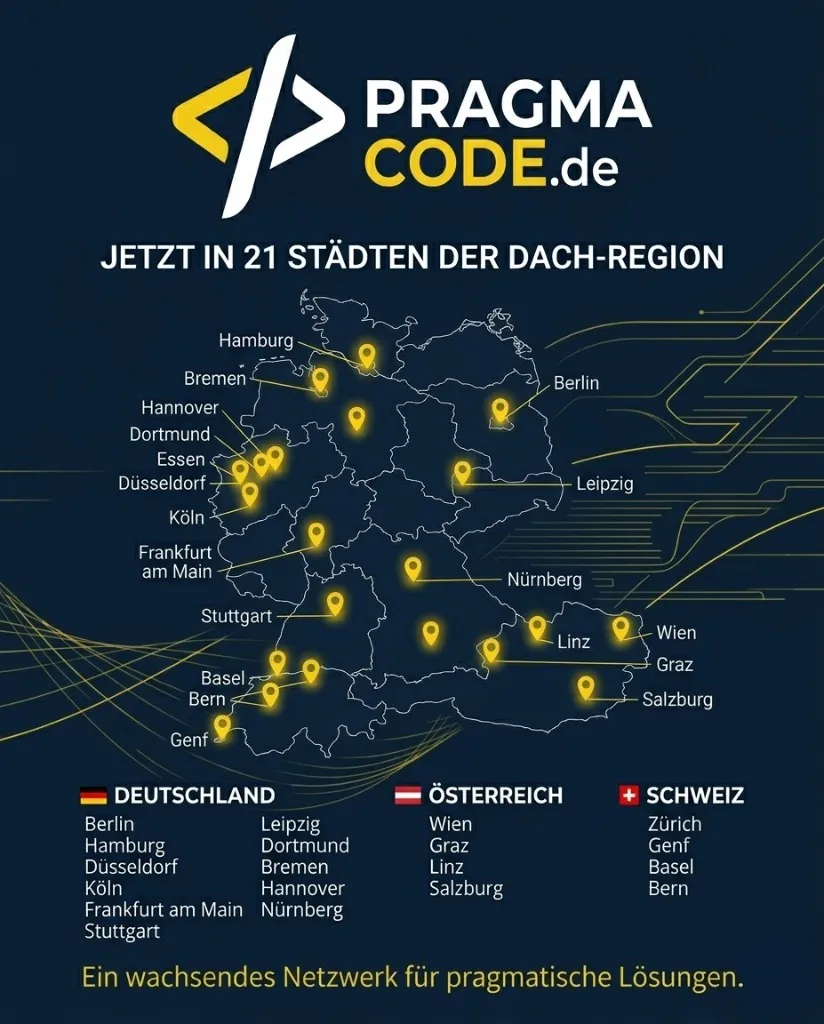
Our Regional Expertise
We are your digital partner – regionally anchored and successfully scaling across borders.
Glossary
Physical AI
The integration of AI models into physical robotic systems for autonomous task performance.
RaaS (Robot-as-a-Service)
A business model where robots are rented rather than purchased, often including maintenance and software.
IT-OT Convergence
The merging of information technology (IT) and operational technology (OT) in industrial environments.