


In 2026, B2B marketing is completing the crucial transition from reactive AI assistants to fully autonomous Agentic Operations. Networked multi-agent systems take over up to 70% of operational workflows—from real-time market research and generative GEO content pipelines to predictive lead scoring. Discover how modern enterprises build scalable competitive advantages with robust agent workflows, strict governance guardrails, and Human-in-the-Loop architectures.
This article is an in-depth expert contribution from our content cluster. Discover the complete overview on our main page:AI Automation for Enterprises →
The Paradigm Shift in B2B Marketing
Agentic AI refers to systems that receive high-level strategic goals and autonomously plan, validate, and execute the required multi-step workflows. We demonstrate how B2B enterprises automate 70% of operational marketing workloads and why isolated prompt assistants have become obsolete.
- Goal-Oriented Autonomy over Rigid Rules: Agents adapt dynamically to incomplete data, API failures, and market signals instead of aborting pipelines on syntax errors.
- Scalable Multi-Agent Orchestration: Specialized agent squads (Research, GEO Copywriting, Ad Optimization, CRM Routing) collaborate autonomously in closed feedback loops.
- 70/30 Efficiency Dividend with Human-in-the-Loop: Up to 70% of operational load is delegated—with 100% audit compliance and human review at critical decision gates.
- 1. Introduction: The Shift from Assistance to Autonomy
- 2. What is Agentic Marketing? Architecture & Definition
- 3. 11 Core Areas of B2B Transformation
- 4. The Technical Foundation: 4 Pillars of Modern Agent Architecture
- 5. System Comparison: Rule-Based Workflows vs. Agentic Operations
- 6. Risks, Ethics & Data Governance
- 7. Implementation Roadmap for B2B Enterprises
- 8. Quick-Check: Readiness for Agentic Marketing
- 9. Future Outlook 2030: The Autonomous B2B Ecosystem
1. Introduction: The Shift from Assistance to Autonomy
Marketing has undergone a profound transformation in recent years. While generative AI initially served as a text copilot or digital drafting assistant, 2026 marks the definitive transition to fully autonomous systems: Agentic AI. For modern B2B enterprises, system integrators, and mid-market leaders, this represents a fundamental redesign of the entire marketing operations architecture.
The core paradigm shift lies in delegating high-level strategic goals rather than managing deterministic command chains. Previously, marketers had to formulate granular prompts for isolated paragraphs or manually maintain complex If-This-Then-That triggers in tools like Zapier or Make. Agentic Marketing Operations inverts this dynamic: We assign high-level objectives, such as „Analyze the latest industry benchmark, extract the top 3 pain points for DACH manufacturing executives, and generate a multi-stage lead campaign including a technical whitepaper and CRM nurture sequence“. The AI system decomposes the goal into subtasks, maps execution dependencies, calls relevant APIs, and carries out the workflow autonomously.
The primary goal of this transformation is emphatically not to replace human talent. Rather, it aims to delegate approximately 70% of repetitive, data-heavy, and operational tasks entirely to autonomous agents. The freed-up 30% of human capacity is reinvested into strategic leadership, empathetic client relationships, high-trust networking, and distinctive brand positioning—factors that gain immense value in an era of saturated automated content.
Organizations that operationalize this shift early unlock compounding scale advantages: They drastically reduce customer acquisition costs, compress reaction times to market trends from weeks to minutes, and maintain a 24/7 lead generation engine that continuously refines itself.
2. What is Agentic Marketing? Architecture & Definition
Agentic Marketing Operations describes the coordinated execution of networked, specialized software agents that autonomously and purposefully manage marketing and sales workflows. Compared to conventional automation setups, agents possess three defining superpowers: situational reasoning, adaptive planning, and autonomous error recovery.
When a conventional Zapier or Make automation encounters an empty JSON field or a third-party API timeout, the entire pipeline crashes. An autonomous agent, in contrast, detects the failure code, evaluates root causes, triggers alternative API calls, or queries fallback data sources to accomplish the assigned objective without human intervention. This resilience is the bedrock of dependable enterprise operations.
The Autonomous Multi-Agent Workflow in Production
The High-Level Objective: „Generate 50 highly qualified B2B leads in Q3 for our new Cyber Security Audit service among mid-market manufacturing companies with 100 to 500 employees.“
The Autonomous Pipeline: A research agent queries target account APIs, extracts compliance triggers (e.g., NIS2 requirements), and passes enriched records to the content agent. This agent generates tailored whitepapers and GEO-optimized technical briefs. A campaign agent configures LinkedIn sponsored ads, tracks real-time conversion velocity, and reallocates budget dynamically. Once leads convert, a scoring agent assesses purchase intent and automatically schedules discovery calls into the sales team's calendar.
3. 11 Core Areas of B2B Transformation
The deployment of goal-oriented agent systems disrupts the entire B2B marketing value chain. The following eleven core domains illustrate how enterprises eliminate operational drag and achieve exponential productivity gains.
Real-Time Market Analysis & Competitive Intelligence
Dedicated monitoring agents continuously scan competitor web domains, press releases, pricing pages, and industry news feeds. Using structured NLP analysis, they detect portfolio shifts instantly. If a competitor releases a new offering, the system drafts an internal executive summary, counter-positioning angles, and comparative landing page copy within minutes.
Autonomous Content Creation for Answer Engines (GEO)
Traditional SEO practices are augmented by Generative Engine Optimization (GEO). Content agents evaluate how AI answer engines (such as ChatGPT Search, Perplexity, and Google AI Overviews) synthesize responses. They identify topical gaps and produce highly structured, authoritative technical assets designed for primary LLM attribution.
Predictive Lead Scoring & Intent Analysis
Replacing rigid click-counting point models, ML scoring agents evaluate dynamic behavioral vectors: Pricing page dwell times, G2 review patterns, tech stack job vacancies, and developer activity merge into a live intent matrix. Sales teams receive actionable alerts with context-rich engagement hooks.
Hyper-Personalized 1-to-1 Email Sequences
Static drip campaigns are replaced by context-aware email workflows. Prior to drafting, the agent researches recent executive publications and strategic initiatives on professional networks. If a prospect replies with technical inquiries, the system autonomously adapts follow-up touchpoints with deeper architectural detail.
Dynamic Performance Marketing & Budget Allocation
Ad management agents continuously optimize cross-channel Return on Ad Spend (ROAS) across LinkedIn, Google Ads, and Meta. The system reviews hourly conversion funnels, iterates creative variations, and shifts spend automatically toward campaign branches yielding the lowest Customer Acquisition Cost (CAC).
Automated Technical Audits & Web Remediation
Action agents monitor website infrastructure, Core Web Vitals, and crawl efficiency. They identify broken redirect chains, unoptimized media assets, or script bottlenecks, resolving them directly at the server level or submitting verified pull requests to the Git repository.
Proactive B2B Community Management & Social Listening
Agents track high-impact discussions across professional forums and social networks. They analyze sentiment in real time, answer technical customer queries within verified brand tone guidelines, and flag high-leverage conversations where executives can establish thought leadership.
Account-Based Marketing (ABM) Deep Dossier Generation
For strategic target accounts, research agents compile comprehensive organizational dossiers. Annual reports, ESG disclosures, IT architecture profiles, and leadership structures are synthesized into executive sales briefings, cutting discovery prep time dramatically.
Cross-Channel Reporting & Proactive Anomaly Detection
Rather than presenting passive dashboards, reporting agents provide synthesized diagnostics. If a high-converting landing page experiences a sudden drop in submission rates, the agent isolates the underlying script anomaly, alerts engineering, and recommends immediate rollbacks.
Real-Time Customer Journey Orchestration
Agents tailor web touchpoints dynamically based on individual visitor journey stages. When an enterprise visitor repeatedly inspects API documentation, the system customizes navigation cards, case studies, and live assistant prompts toward that integration use case.
Continuous Messaging & Positioning Tracking
Agents track semantic shifts across the competitive landscape. When leading market rivals recalibrate their positioning toward new compliance or security themes, the system provides data-backed recommendations for refining value propositions.
4. The Technical Foundation: 4 Pillars of Modern Agent Architecture
Enterprise Agentic AI systems rely on a robust, modular architectural stack that extends far beyond simple API queries. A reliable production environment consists of four foundational layers:
1. Reasoning Engine
Advanced foundation models (such as Claude 3.5 Sonnet or GPT-4o) serve as the cognitive core. They break strategic objectives into deterministic subtasks (Task Decomposition), evaluate intermediate outputs, and adapt execution plans dynamically upon encountering obstacles.
2. Vector & Working Memory
The memory stack separates short-term execution state from persistent enterprise knowledge. Leveraging vector databases (Pinecone, Qdrant) and RAG pipelines, agents retrieve brand guidelines, historical CRM interactions, and product documentation in milliseconds.
3. Tool Calling & API Connectors
Tool execution is what turns models into active agents. Through function calling, systems execute Python scripts, trigger REST endpoints, interact with HubSpot or Salesforce via webhooks, and perform automated headless browser operations.
4. Multi-Agent Orchestration
Frameworks like LangGraph and AutoGen coordinate specialized agent swarms. An orchestrator allocates workloads, a research agent gathers data, a copywriter crafts messaging, and a critic agent verifies compliance before human review.
5. System Comparison: Rule-Based Workflows vs. Agentic Operations
To evaluate the business impact of this shift, consider how traditional deterministic tools compare directly against modern agentic frameworks:
Comparison: Rule-Based Automation vs. Autonomous Agentic Operations
- Process Logic: Rigid, deterministic If-This-Then-That pipelines
- Fault Tolerance: Workflows break immediately upon encountering unexpected API responses
- Data Processing: Restricted to structured database columns and simple text fields
- Decision Making: Zero autonomy; every single conditional branch must be hand-configured
- Maintenance Drag: Escalates exponentially with every added third-party integration
- Process Logic: Goal-directed planning with dynamic step synthesis
- Fault Tolerance: Autonomous root-cause analysis and fallback path execution
- Data Processing: Multimodal (PDF whitepapers, live web data, APIs, unstructured text)
- Decision Making: Contextual judgment bounded by enterprise safety guardrails
- Maintenance Drag: Self-healing; agents adjust data mapping autonomously
6. Risks, Ethics & Data Governance
Delegating operational execution to autonomous systems necessitates robust security, compliance, and governance frameworks. Uncontrolled agent autonomy without clear boundary enforcement introduces significant brand, legal, and financial risks.
Human-in-the-Loop (HITL) as Standard Architecture: Autonomous systems should always be implemented with tiered supervisory levels. In initial phases, agents perform roughly 90% of prep work (research, copywriting, campaign scaffolding, and data validation), while final deployment and budget allocation strictly require human sign-off. As confidence metrics mature, low-risk routines transition to „Human-on-the-Loop“ monitoring, where agents act autonomously while humans oversee system telemetry and anomaly logs.
EU AI Act & Transparency Obligations (Article 50): Under the European AI Act, AI-generated communications and autonomous interactive workflows must be transparently disclosed. When autonomous agents interface directly with enterprise buyers via interactive chat or personalized nurturing sequences, users must be informed that they are interacting with an AI system. Proactive compliance prevents regulatory penalties and strengthens brand trust.
Data Privacy & Enterprise Compliance (GDPR): Protecting personally identifiable information (PII) is non-negotiable in enterprise B2B markets. Customer records and lead details must never pass into unvetted public model endpoints. Production deployments require enterprise APIs backed by contractual zero-data-retention agreements, automated PII sanitization pipelines, or isolated private cloud hostings.
Expert Tip: Guardrails & Prompt Injection Defense
Always deploy a dual-stage validation barrier: Before an agent modifies production databases or dispatches external communications, an isolated validator agent must inspect inputs to prevent indirect prompt injection attacks. Maintain strict separation of read and write permissions according to the principle of least privilege.
7. Implementation Roadmap for B2B Enterprises
Establishing a resilient Agentic Workflow ecosystem requires a disciplined, phased roadmap. The following progression guides organizations toward production maturity:
-
Phase 1: Data Architecture & API Consolidation
Consolidate fragmented data silos from CRM, analytics, and marketing automation into a centralized single source of truth. Ensure all key repositories provide secure REST APIs or webhooks with modern token authentication.
-
Phase 2: High-Volume Pilot Workflows
Begin with internal back-office workflows lacking direct external touchpoints. High-ROI pilot initiatives include automated competitive intelligence briefings, account-based dossier generation, and automated technical SEO remediation.
-
Phase 3: Multi-Agent Orchestration (MAS)
Connect specialized single-task agents into collaborative Multi-Agent Systems (MAS). Implement recursive critique loops to elevate output quality before triggering human review checkpoints.
-
Phase 4: Enterprise Scaling & HITL Governance
Expand agentic operations to customer-facing channels (content distribution, lead nurturing). Enforce strict verification gates, role-based authorization controls, and continuous telemetry monitoring for sustained performance gains.
8. Quick-Check: Readiness for Agentic Marketing
Evaluate your organization's readiness for autonomous marketing operations against these four core prerequisites:
Quick-Check: Prerequisites for Agentic Operations
9. Future Outlook 2030: The Autonomous B2B Ecosystem
By 2030, the B2B commerce landscape will evolve into an interconnected Machine-to-Machine (M2M) ecosystem. Seller marketing agents will interface directly with enterprise procurement agents, negotiating contract tiers and validating technical requirements in real time.
In this market reality, competitive advantage will no longer stem from manual content output volume, but from the precision, reliability, and architectural excellence of your agentic infrastructure. Laying these foundational systems today guarantees leadership in tomorrow's automated B2B marketplace.
Ready to build autonomous marketing operations?
Schedule a Free Initial ConsultationOur Regional Expertise
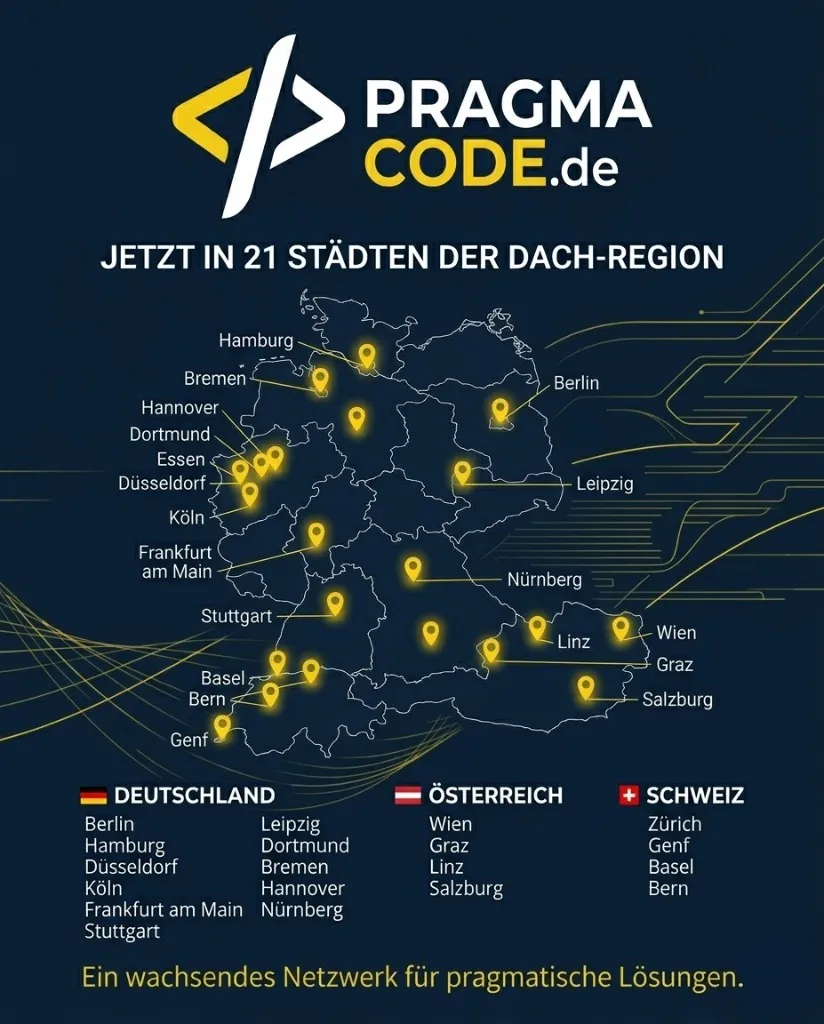
We are your digital partner – regionally anchored and successfully scaling across borders.
Have a vision?
Let's check together how we can make your idea take flight.
Book your free strategy call nowExtended Specialized Glossary
Agentic AI
Artificial intelligence systems capable of independently breaking down complex goals into sub-tasks, making decisions, and executing actions in their environment (e.g., software APIs, web browsers, databases) to achieve those goals. They act proactively rather than reactively.
Agentic Workflow
Process sequences controlled by autonomous AI agents. Unlike rigid automations, agents can independently correct errors, run through feedback loops, seek alternative solutions, and flexibly complete tasks without human micromanagement.
Generative Engine Optimization (GEO)
The evolution of classic SEO for AI-driven search engines (like ChatGPT Search, Perplexity, or Google AI Overviews). The focus is no longer purely on keywords, but on direct answers, high information density, structure, expert quotes, and being cited as a reliable, authoritative source by the LLM.
Human-in-the-Loop (HITL)
A safety concept in AI development where a human reviewer must confirm a specific step or the final execution before the AI action takes effect. It prevents uncontrolled erroneous actions by autonomous systems.
Multi-Agent System (MAS)
An ecosystem of multiple specialized AI agents that interact and cooperate with each other to achieve a common, highly complex goal. Each agent has a specific role (e.g., researcher, programmer, critic) and specific tools at its disposal.