

Autonomous AI agents are fundamentally transforming work in small and medium enterprises: Instead of pure text generation, networked multi-agent systems take over entire process chains from inbox to ERP. This master guide outlines architectures, practical use cases, ROI calculations, and governance standards for 2026.
This article is an in-depth expert contribution from our content cluster. Discover the complete overview on our main page:AI Automation for Enterprises →
The Era of Operational Autonomy
In 2026, we no longer talk about passive text assistants waiting for manual prompts. We are implementing interconnected, autonomous multi-agent systems that independently and audit-compliantly execute complete business workflows from the inbox through the CRM to the final ERP booking.
Imagine delegating not just the drafting of a single email to Artificial Intelligence, but an entire, cross-system business workflow. You don't prompt "Write a friendly response to this customer complaint." Instead, you set a strategic objective: "Monitor the support inbox. Verify incoming returns against our ERP order history. For legitimate claims, issue the credit note, generate the return shipping label, post the transaction in the inventory system, and update the customer with tracking details."
Welcome to the era of Agentic AI.
While the years 2023 to 2025 were characterized by the hype surrounding generative text models and isolated chatbots, 2026 represents the definitive technological turning point. Large Language Models (LLM) have acquired advanced Reasoning capabilities, enabling them to control software tools, plan complex intermediate stages independently, and correct execution errors proactively. For small and medium-sized enterprises (SMEs), this evolution unlocks a historic opportunity: operational scalability and solving acute skilled labor shortages without linear headcount growth.
In this comprehensive practical guide, we examine the technological architecture of autonomous agents, introduce the groundbreaking Model Context Protocol (MCP), compare copilots with agent swarms, and provide battle-tested implementation roadmaps alongside ROI calculations for SME decision-makers.
- Introduction
- The Paradigm Shift: From Reactive Chats to Autonomous Agents
- Cognitive System Architecture: How Agents Operate in 2026
- Comparison: Copilot vs. Autonomous Multi-Agent System
- Decision Matrix: When Do Agents Pay Off for SMEs?
- Top Use Cases in SMEs with Measurable ROI
- Economics & ROI Calculation: The Token Economy
- Security, EU AI Act & Human-in-the-Loop Governance
- Roadmap: 5 Steps to Agentic Transformation
- Quick-Check: Your Implementation Blueprint
- Conclusion and Outlook
- From Text Generation to Process Execution: Agentic AI shifts the focus from simple text outputs to cross-system workflow actions inside ERP, CRM, and SQL databases via standardized interfaces (MCP).
- Multi-Agent Orchestration Outperforms Monolithic Prompts: Complex enterprise workflows are not solved by a single giant model, but by specialized, collaborative agents (Planner, Tool Executor, Auditor).
- Scalable ROI with Full Regulatory Compliance: Leveraging deterministic guardrails and Human-in-the-Loop (HITL), SMEs achieve substantial workload reduction for skilled teams starting in month 2 while remaining fully compliant with GDPR and the EU AI Act.
The Paradigm Shift: From Reactive Chats to Autonomous Agents
To understand the strategic value of Agentic AI, we must move away from the traditional way we interact with generative AI tools. The initial wave of AI adoption was fundamentally reactive.
In a reactive setup, the human employee remains the constant bottleneck, orchestrator, and gatekeeper: An employee inputs a prompt, the model generates a text draft, and the employee must manually inspect, copy, paste into target systems such as SAP or Salesforce, and reprompt if mistakes occur. The core friction – manual data transfer and cognitive context switching across fragmented business applications – remained untouched.
Agentic AI, by contrast, operates proactively, statefully, and goal-driven. An autonomous agent receives a high-level business objective and access to a configured toolbox. The system independently plans, iterates, and executes the solution pathway.
"Agentic AI marks the transition from AI that gives us advice to AI that takes action on our behalf. We are leaving the era of text generation and entering the era of operational process execution."
What Defines a Production-Ready AI Agent?
A true enterprise AI agent is an autonomous software system powered by a modern Large Language Model (LLM) with advanced reasoning capabilities. The agent is defined by four core pillars: Memory for contextual state retention, Tool Execution for API and interface operations, Planning for decomposing complex objectives into actionable steps, and Self-Correction for autonomous error recovery without human intervention.
Companies experiment with generative text models. Value is primarily confined to drafting assistance, translations, and brainstorming. Workflows remain 100% manual.
Language models connect to company PDFs and internal documentation via vector embeddings. Chatbots answer questions based on corporate knowledge but cannot execute transactional actions.
AI integrates into IDEs and standard productivity software. Copilots assist knowledge workers with isolated micro-tasks, yet still require continuous human steering and manual triggers.
Fully autonomous multi-agent swarms take over end-to-end business workflows. They consume APIs, navigate web applications, validate transactions against ERPs, and collaborate seamlessly with human staff.
Cognitive System Architecture: How Agents Operate in 2026
The true performance of modern AI agents does not depend on a single monolithic prompt, but on a layered software architecture. At its core, modern platforms such as our proprietary OpenClaw framework merge generative intelligence with deterministic software logic.
1. Autonomy & Planning Engine
The agent breaks down high-level business goals using Chain-of-Thought (CoT) and ReAct (Reasoning and Acting) into structured sub-tasks. If an intermediate step encounters an exception (e.g. an invalid API parameter), the feedback loop analyzes the failure and devises an alternative execution route.
2. Tool Execution & MCP Standard
Using the open Model Context Protocol (MCP) and structured function calling, the agent connects securely to enterprise APIs. From direct SQL queries to REST endpoints in SAP, Salesforce, or headless browser automation: tools are invoked with strict type safety.
3. Cognitive Memory Layers
Modern agents combine three distinct memory tiers: Working Memory for the active execution context, Episodic Memory for storing past execution successes and failures, and Semantic Memory (GraphRAG) for company guidelines and domain knowledge.
4. Multi-Agent Systems (MAS)
Instead of relying on a single generalist model, specialized agents work in swarms: A Supervisor Agent coordinates task routing, domain agents perform research and data synthesis, and an Auditor Agent verifies compliance and calculations before execution.
Comparison: Copilot vs. Autonomous Multi-Agent System
Many enterprise leaders wonder why existing copilot licenses (such as Microsoft Copilot) are insufficient for achieving end-to-end process automation. The answer lies in their foundational architecture: Copilots are interactive assistants for human knowledge workers; agentic systems are autonomous execution engines.
Direct Comparison: Reactive Copilots vs. Autonomous Agent Systems
- Trigger: Strictly requires manual human input (prompt) for every individual step.
- Execution: Produces text, code, or spreadsheet suggestions without system write access.
- Error Handling: Stops upon errors; human must troubleshoot and rephrase prompts.
- System Boundaries: Usually confined to a single application silo (e.g. Word or IDE).
- Scalability: Scales 1:1 with the available time and attention of the employee.
- Trigger: Launches autonomously via webhooks, incoming emails, or schedules (24/7).
- Execution: Performs true read and write transactions in ERP, CRM, and SQL databases.
- Error Handling: Iterative self-correction through structured feedback loops.
- System Boundaries: Operates cross-system via open protocols (MCP, REST, GraphQL).
- Scalability: Processes hundreds of parallel workflows without linear time overhead.
Decision Matrix: When Do Agents Pay Off for SMEs?
Agentic AI is a powerful tool, but not every IT challenge warrants an agentic solution. A rigid, deterministic If-This-Then-That workflow (e.g. via Zapier or n8n) is often faster and cheaper for simple linear data transfers. AI agents deliver their unparalleled ROI where cognitive flexibility, unstructured input data, and dynamic decision branches converge.
Repetitive Cognitive Complexity
Workflows where incoming information is unstructured (e.g. free-text customer emails, delivery notes, claim reports) yet must be handled according to strict business logic.
Cross-System Media Breaks
Processes where data is manually copied between email inboxes, CRMs, legacy ERPs, and spreadsheets. Agents bridge these disconnected islands without costly monolithic re-platforming.
Multi-Dimensional Pre-Qualification
Scenarios requiring qualitative evaluation before taking action (e.g. "Does this candidate match our job requirements?" or "Is this refund claim eligible for goodwill processing?").
The Hidden Cost Trap: Manual Media Breaks in SMEs
Studies across European SMEs reveal: Knowledge workers spend up to 32% of their daily working hours manually copying, reformatting, and cross-checking data across isolated legacy software. In an era of skilled labor shortages, this represents not only massive overhead costs but also sluggish response times and lost customer loyalty.
Top Use Cases in SMEs with Measurable ROI
Implementing Agentic AI is no longer a distant pilot project in 2026. Across small and medium enterprises, production agent workflows are delivering positive returns within the first operating quarter.
1. 24/7 Autonomous Customer Support with ERP Write-Back
Instead of quoting static FAQ pages, the support agent accesses live customer order records via secure APIs. It tracks shipments, flags supply chain delays, books replacements directly into SAP or WooCommerce, and sends personalized status updates – liberating 1st-level support teams from repetitive burdens.
2. Intelligent Invoice & Document Processing (No-Touch Accounting)
Incoming PDF invoices and receipts are extracted from inboxes, verified against purchase orders and delivery notes in the ERP, assigned proper ledger accounts, and exported directly into financial accounting systems like DATEV. Discrepancies are flagged for targeted human review.
3. Hyper-Personalized B2B Sales & Lead Nurturing
Agents research target decision-makers on platforms like LinkedIn, analyze their business challenges, map them against your core services, and draft highly tailored outreach communications. Responses are pre-qualified and handed over seamlessly to sales representatives.
4. Autonomous IT Operations & Log Anomaly Remediation
Monitoring agents continuously scan system logs in real time. Upon detecting anomalies (e.g. database connection spikes, expiring SSL certificates), the agent consults internal IT runbooks, executes diagnostic scripts, remediates standard issues, and notifies engineers with a complete audit trail.
Human Support Workflow
Traditional operations in an SME
Ø 12–24h Response TimeHigh fixed labor costs, rigid business hours (Mon–Fri 8am–5pm), error-prone manual copy-pasting, and severe bottlenecks during peak seasons.
Agentic Support Workflow
Autonomous multi-agent with live ERP integration
Ø 45 Sec. Response TimeTrue 24/7 availability, seamless scalability at zero marginal cost, automated ERP bookings, and instant customer satisfaction.
Economics & ROI Calculation: The Token Economy
One of the greatest advantages of Agentic AI is its transparent cost architecture. While hiring additional staff incurs fixed salaries, employee benefits, and onboarding friction, AI agents operate on the principles of the Token Economy: costs only accrue when productive work is executed.
Consider a concrete business case from an SME customer support department handling 1,000 complex service tickets monthly (e.g. order tracking, returns processing, master data updates):
- Handling Time: Ø 15 min per ticket (review, ERP search, drafting, ticketing)
- Monthly Effort: 250 labor hours for 1,000 monthly tickets
- Internal Rate: €45 internal cost per labor hour
- Agent Execution: 15 seconds for retrieval, ERP query & drafting
- Human-in-the-Loop: 1.5 min review & approval (25 hours / month)
- Infrastructure & Tokens: ~€180 (~€0.18 per transaction)
Security, EU AI Act & Human-in-the-Loop Governance
As autonomy increases, the requirements for IT security, traceability, and data privacy scale accordingly. An agent that autonomously dispatches emails or modifies database records without guardrails poses operational risks. For this reason, enterprise-grade deployments adhere to a four-pillar security architecture.
1. Deterministic API Scopes
Agents are never granted unrestricted database access. Interfaces follow the principle of least privilege, enforced through dedicated microservices with read-only scopes or strict financial transaction limits.
2. GDPR & PII Masking
Before transmission to external LLMs, sensitive personally identifiable information (PII such as credit card numbers, passwords, and personal IBANs) is pseudonymized locally and re-hydrated only after model execution.
3. Reversible Audit Logging
Every step, tool invocation, and decision path executed by the agent is captured in an immutable audit log to ensure complete compliance with statutory accounting and regulatory standards.
4. EU AI Act Compliance
Full adherence to transparency requirements under Article 50 of the EU AI Act (marking AI-generated outputs) and implementing clear emergency stop switches (kill switches) for all autonomous pipelines.
Expert Tip: The Principle of Graduated Autonomy
Always initiate new agents in Human-in-the-Loop (HITL) mode. The agent autonomously performs all research, validation, and draft creation, but presents the final result as a pending task. Only after the system maintains a proven accuracy rate exceeding 99.5% over at least 500 transactions should autonomy be elevated to Human-on-the-Loop (spot-check supervision) for routine cases.
Roadmap: 5 Steps to Agentic Transformation
Successfully introducing Agentic AI in an SME is not an unwieldy mega-project. It follows a structured, phased implementation roadmap designed for rapid milestone realization.
-
Step 1: Process Audit & Bottleneck Analysis
Identify repetitive business workflows with high manual data entry overhead and unstructured inputs (low-hanging fruits in customer support, sales, or accounts payable).
-
Step 2: Interfaces & MCP Infrastructure
Establish standardized API endpoints and MCP connectors for target business systems (ERP, CRM, ticketing, databases) with granular access controls.
-
Step 3: Agent Design, Prompts & Guardrails
Define agent roles, configure decision trees, integrate proprietary domain knowledge via RAG, and implement deterministic safety guardrails.
-
Step 4: Human-in-the-Loop Piloting
Deploy the agent in a sandboxed staging environment. Staff members review and correct drafts; the system learns from feedback to sharpen execution reliability.
-
Step 5: Production Rollout & Scaling
Enable autonomous execution for validated standard cases, continuously monitor performance dashboards, and expand agents across adjacent business units.
Quick-Check: Your Implementation Blueprint
Assess your organization's readiness for autonomous process automation with our quick evaluation checklist:
Checklist: Readiness Criteria for Agentic AI
Conclusion and Outlook: The Future Belongs to the Agentic Enterprise
Agentic AI is not a distant technological hypothesis; it is the definitive driver of competitive resilience for small and medium enterprises in 2026. Organizations that transition today from passive consumers of AI chatbots to active orchestrators of autonomous agent swarms will secure an insurmountable advantage in efficiency, customer experience, and workforce engagement.
Stop treating your valuable professionals like data-entry robots. Hand over repetitive clicks and manual copy-paste workflows to intelligent autonomous agents – freeing your human talent to focus on what humans do best: building empathetic client relationships, driving strategic innovation, and pursuing authentic enterprise growth.
Ready to Deploy Autonomous AI Agents in Your Business?
We analyze your workflows, identify your highest-ROI automation opportunities, and build tailored, secure agentic AI systems engineered for enterprise performance.
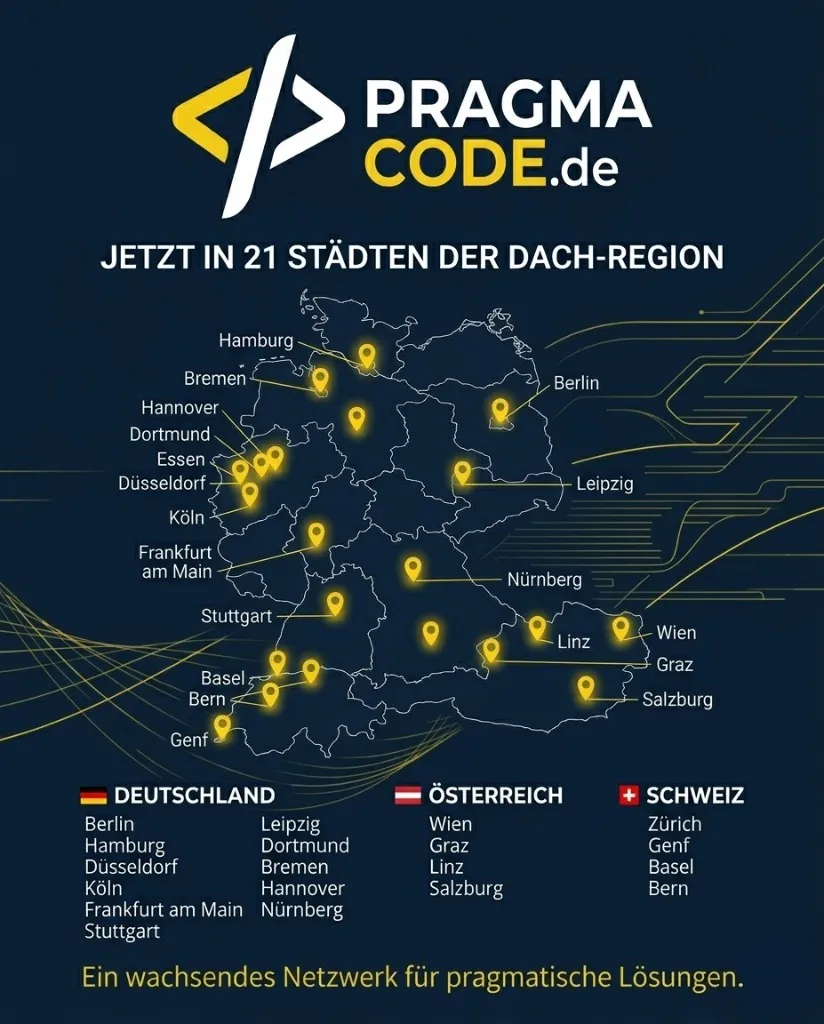
Request a Free AI Strategy SessionOur Regional Expertise
We are your digital partner – regionally anchored and successfully scaling across borders.
Have a vision?
Let's check together how we can make your idea take flight.
Book your free strategy call nowExtended Specialized Glossary
Agentic AI
Autonomous software systems that independently pursue goals, plan intermediate steps, and use external tools via interfaces based on Large Language Models.
LLM (Large Language Model)
The core technological intelligence of AI agents. A neural language model trained on massive amounts of data to understand language, logic, workflows, and code.
RAG (Retrieval-Augmented Generation)
A technique where the AI specifically searches internal databases for relevant information before generating an answer to prevent hallucinations.
Reasoning
The ability of an AI model to break down a complex problem into logical intermediate steps, evaluate intermediate results, and find iterative solutions.
Human-in-the-Loop (HITL)
An integration model where the autonomous AI agent prepares actions, but a human can manually validate, approve, or correct them.
Model Context Protocol (MCP)
An open standard protocol for securely connecting AI models with local and cloud data sources, developer tools, and enterprise APIs.
Multi-Agent System (MAS)
A network of specialized AI agents that collaboratively and autonomously orchestrate complex business processes through defined roles and interfaces.