


Introduction: Why Traditional SEO is No Longer Enough
For a long time, a simple formula applied in online marketing: Find the right keyword, place it strategically in the text, build a few backlinks – and the ranking goes up. These days are over. With the advent of Large Language Models (LLMs) like GPT-5.5 and the integration of AI directly into search engines (Google AI Overviews, SearchGPT), search behavior is fundamentally changing.
Users no longer just look for "tax advisor Berlin", but ask: "Who is the best tax advisor in Berlin for startups focused on SaaS?". The AI often provides the answer directly without the user having to click on a website (Zero-Click Searches). For companies, this means: Those who only optimize for keywords become invisible. But those who offer understanding, authority, and real solutions win.
Dieser Artikel ist ein vertiefender Fachbeitrag aus unserem Content-Cluster. Entdecken Sie die vollständige Übersicht auf unserer Hauptseite: →
Chapter 1: The New Search Behavior (Search Generative Experience)
The way we search for information is becoming more "conversational". Instead of entering keywords, users ask complex questions. The AI systems understand the context and the intention behind the search query.
What are AI Overviews?
Google and Bing are increasingly displaying generated summaries (AI Overviews) right at the top of the search results. These push classic organic hits further down. The goal is to comprehensively answer the user's question directly on the search page.
For website operators, this is both a risk and an opportunity. The risk: Clicks drop because the answer has already been given. The opportunity: Whoever is cited as a source in these AI Overviews enjoys extremely high trust and receives highly qualified traffic.
Voice Search & Conversational AI
With the spread of smart speakers and the integration of voice features in apps (e.g., ChatGPT Voice Mode), search is becoming more oral. Optimize not only for written keywords, but for spoken questions. Long-tail keywords that sound like natural sentences ("How do I install a heat pump in an old building?") become more important than generic terms ("buy heat pump").
Chapter 2: The Evolution of Ranking Factors
Algorithms are becoming more "human". They no longer evaluate content mechanically, but semantically.
From Keywords to Topic Clusters
A single article on a keyword is no longer enough. Search engines want to see that you are a holistic authority in your field. Build "Topic Clusters": A comprehensive "Pillar Page" (main page) surrounded by many detailed sub-articles, all linked together.
E-E-A-T: The Currency Model of the Future
Google evaluates content according to E-E-A-T: Experience, Expertise, Authoritativeness, and Trustworthiness.
Conclusion: SEO in 2026 is no longer about keywords, but about Topical Authority and Value. Those who understand how to harmonize AI-driven efficiency with human expertise will dominate the search results of the future. See our References for successful SEO projects.
- Experience: Have you really tested the product? Are there real photos/videos?
- Expertise: Who is writing here? An anonymous admin or a qualified expert?
- Trust: Is the site secure? Is there an imprint, contact options, and genuine reviews?
User Signals: The Silent Ranking Factor
Google measures very precisely how users interact with your result. Do they click and immediately return ("Pogo-Sticking")? That is a fatal signal. A high Dwell Time, on the other hand, shows relevance. Make sure users stay on the page with internal linking, videos, and interactive elements.
Chapter 3: GEO & LLMO – The New Optimization Disciplines
In addition to classic SEO (Search Engine Optimization), new fields are emerging:
GEO (Generative Engine Optimization)
This is about structuring content so that AI models can easily read, understand, and summarize it. Clear structures, concise definitions, and fact-based statements increase the chance of being cited in an AI Snapshot.
LLMO (Large Language Model Optimization)
This aims to ensure that your brand appears in the training data of AIs. When someone asks ChatGPT "What ERP systems do you recommend for mid-sized companies?", your name should come up. You achieve this through strong brand presence, PR, and mentions in relevant trade media.
Chapter 4: Local SEO in the AI Era
For local businesses, the competition is getting tougher, but the opportunities are better. AI systems rely heavily on structured data from Google Maps & Co. When a user asks "Find an IT service provider nearby who knows about cyber security", the AI scans reviews and service descriptions. Maintain your Google Business Profile carefully and ensure consistent NAP data (Name, Address, Phone) across the web.
Chapter 5: Content Strategy for 2026
"Content that could also be written by an AI in 5 seconds is worthless."
To stand out, you must create content that an AI cannot (yet) replicate:
- Your own data & studies: Publish your own surveys or statistics.
- Opinion & Stance: Take a stand on industry trends. AIs are mostly neutral.
- Personal Experience: Tell real customer success stories with emotional components.
- Interactive Tools: Calculators, configurators or checklists offer added value that a text cannot provide.
Chapter 6: Practical Implementation
How do you make your website fit for the AI era?
- Maintain author profiles: Show your face. Link to LinkedIn profiles of your experts.
- Structured Data (Schema.org): Help machines understand your content. Markups for FAQs, articles, products, or events are mandatory.
- Up-to-dateness: Outdated content is mercilessly weeded out. Update your top articles regularly ("Content Pruning").
- Brand Building: Invest in brand building. If users search directly for your name, that is the strongest signal for Google.
Chapter 7: The 2026 SEO Checklist
Here are the most important to-dos to make your website future-proof:
- Perform Audit: Identify outdated "zombie content" and delete or update it.
- Show Expert Status: Add author boxes with qualifications to every article.
- Structured Data: Implement Schema.org markup for Organization, Person, Article and Product.
- Become Multimodal: Include your own images and videos – no stock photos!
- Performance: Optimize for Core Web Vitals (load time under 2.5s).
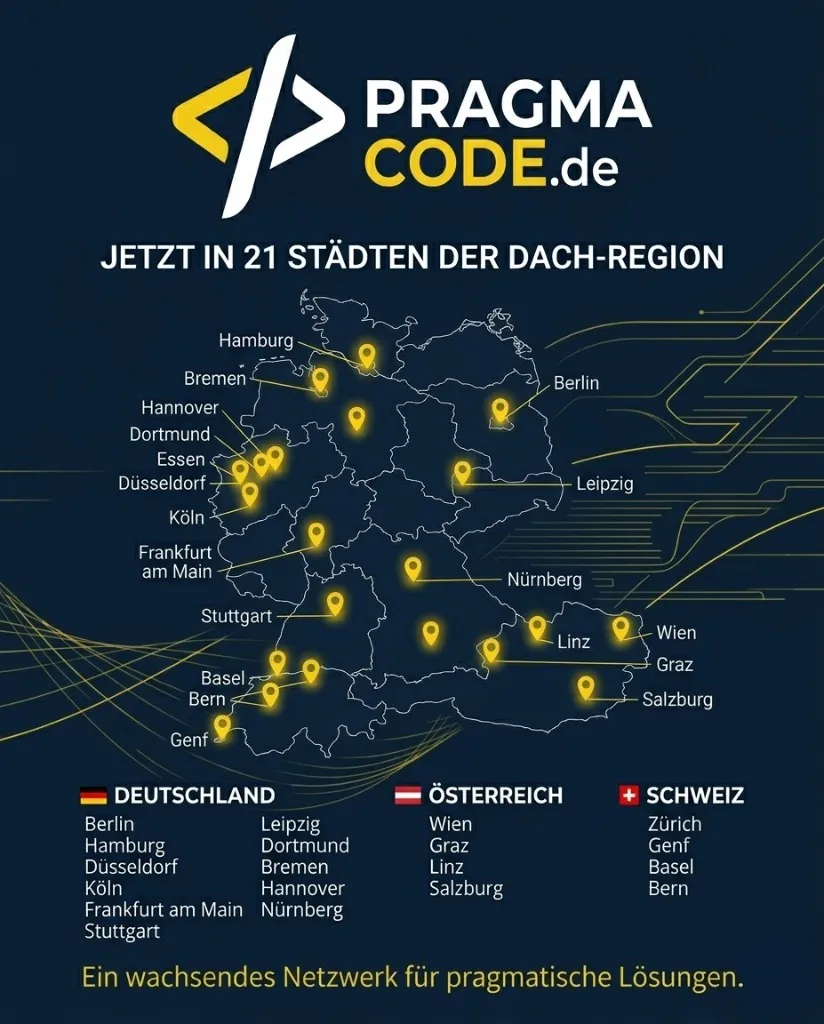
Our Regional Expertise
We are your digital partner – regionally anchored and successfully scaling across borders.
Latest Insights & Articles

E-E-A-T in the AI Era
Why human expertise and authority are more important than ever in 2026.
Read More →
GEO: The New Era of SEO
How to optimize your content specifically for Perplexity, ChatGPT and Gemini.
Read More →
Website 2026: Intelligent Ecosystems
Why the technical architecture is becoming the decisive SEO factor.
Read More →Do you have questions about SEO strategies for your company?
Schedule a Free ConsultationGlossary
AI Overviews
AI-generated summaries displayed directly at the top of search results, providing direct answers to queries.
E-E-A-T
Google quality criteria: Experience, Expertise, Authoritativeness, Trustworthiness. Crucial for ranking on sensitive topics ("Your Money Your Life").
GEO (Generative Engine Optimization)
Optimization of content specifically for AI-driven search engines so they are cited as sources in generated answers.
Zero-Click Search
A query where the user does not leave the search results page because the answer is already displayed there (e.g., via a Featured Snippet or AI Overview).
Topic Cluster
Internal linking strategy: A pillar page covers a broad topic and links to many specific sub-pages (cluster content) to build topical authority.