


Traditional passwords represent the single greatest security vulnerability and the primary driver of cart abandonment in modern online retail. With passkeys based on FIDO2 and WebAuthn standards, merchants replace vulnerable passwords with cryptographic biometrics – delivering sub-second one-click logins, up to 20% higher conversion rates, and total immunity against phishing.
This article is an in-depth expert contribution from our content cluster. Discover the complete overview on our main page:IT Security & NIS-2 Consulting →
The Post-Password Era in Online Retail
Why traditional passwords represent the single greatest conversion barrier and security liability in 2026 e-commerce, and how the FIDO2 standard is redefining user experience.
- Increase Sales Through Conversion Optimization: Shortening the sign-in and checkout flows down to a simple biometric prompt (Face ID, Touch ID) reduces cart abandonment rates by up to 20% and accelerates order processing.
- State-of-the-Art Cybersecurity: Employing asymmetric public-key cryptography makes passkeys fundamentally immune to phishing, brute-force attacks, and credential stuffing. No secret credential exists on the server to be stolen.
- Regulatory Compliance Natively: Because biometric scans remain strictly localized on the user's secure hardware enclave, GDPR compliance is simplified, and requirements for Strong Customer Authentication (SCA) under PSD3 are met seamlessly.
- Introduction: The Password Crisis in Modern Online Retail
- Chapter 1: Checkout Psychology & Conversion Levers: Why Every Millisecond Counts
- Chapter 2: Technical Mechanics: Asymmetric Cryptography & WebAuthn Ceremony
- Chapter 3: Regulatory Compliance 2026: GDPR, NIS-2, PSD3 & Accessibility
- Chapter 4: E-Commerce Platform Integration Matrix (WooCommerce, Shopify, Headless)
- Chapter 5: 5-Stage Implementation Roadmap & Fallback Strategies
- Chapter 6: Real-World Use Cases, ROI Calculation & Support Relief
- Conclusion: The Future of E-Commerce Authentication
Introduction: The Password Crisis in Modern Online Retail
The e-commerce market of 2026 is defined by a relentless battle for consumer attention, customer lifetime value, and digital trust. In an era where purchasing decisions are made within split seconds on mobile devices, every point of friction in the checkout funnel directly results in measurable revenue loss. Yet, one of the oldest, most error-prone, and deeply vulnerable elements of the web remains widespread: the conventional password.
Forgotten credentials, frustrating password recovery email loops, stringent special character requirements, and persistent customer anxiety over corporate data breaches severely degrade user experience. Concurrently, cybercriminals utilizing advanced automated AI tooling and residential botnets are executing attacks like Phishing, Man-in-the-Middle (MITM) interceptions, and large-scale Credential Stuffing at unprecedented rates. For online merchants, this translates into costly shopping cart abandonments, brand erosion, and heavy support desk overhead.
The definitive answer to this twin challenge of checkout usability and enterprise cybersecurity is the passkey. Built on the global FIDO2 standard and the WebAuthn W3C specification, this technology enables a completely passwordless authentication architecture. It is not only mathematically impervious to traditional credential theft but condenses user sign-ins into an effortless gesture: a quick facial scan (Face ID) or fingerprint touch (Touch ID).
Chapter 1: Checkout Psychology & Conversion Levers: Why Every Millisecond Counts
In Conversion Rate Optimization (CRO), a fundamental rule governs digital commerce: each additional input field and cognitive barrier in the purchasing funnel exponentially reduces completion rates. The authentication step – whether signing into an existing customer profile or registering during checkout – is historically the most fragile touchpoint in the consumer journey.
Empirical consumer research highlights the stark cost of password friction: more than 50% of mobile shoppers permanently abandon their carts when prompted to reset a forgotten password. Switching contexts between the storefront, email client, and browser instantly shatters purchase momentum. On mobile smartphones, typing complex alphanumeric strings on compact virtual touchscreens introduces continuous validation errors and friction.
Pro Tip: Usability Wins Over Security Drills
Attempting to force customers into maintaining complex passwords or utilizing third-party password managers invariably suppresses e-commerce conversion rates. Passkeys resolve this historical trade-off by packaging military-grade public-key cryptography beneath a standard biometric gesture. Consumers remember nothing, type nothing, and checkout instantly.
The Hidden Financial Toll of Password Friction in E-Commerce
Digital retailers lose up to 15% of prospective new customers at the account creation stage alone. Additionally, manual password resets and account unlocking tickets cost businesses an estimated €25 to €40 per incident, absorbing up to 30% of total customer support capacity.
Conditional UI & Passkey Autofill: Frictionless Ambient Logins
A decisive technical capability of modern web browsers (Safari, Google Chrome, Microsoft Edge, Mozilla Firefox) is Conditional UI (Passkey Autofill). When a shopper touches the email or username input field within a storefront checkout, the browser automatically presents their stored passkeys as an ambient autofill suggestion directly above the keyboard.
A single tap on the suggestion triggers device biometrics, transmits the cryptographic signature in the background, and authenticates the customer immediately. The complete interaction finishes in under 1.5 seconds. For impulse purchases generated via social marketing channels (Instagram Ads, TikTok Shop) or Google Performance Max campaigns, this removes the single largest barrier between product interest and completed checkout.
Chapter 2: Technical Mechanics: Asymmetric Cryptography & WebAuthn Ceremony
To understand why passkeys cannot be compromised like traditional credentials, one must look at the underlying cryptographic architecture. Legacy passwords depend on the fragile concept of "shared secrets." Both the user and the server store copies (or cryptographic hashes) of the password. If malicious actors breach the retailer's SQL database, these hashes can be cracked offline via dictionary and rainbow table attacks.
In contrast, passkeys utilize battle-tested Asymmetric Cryptography (utilizing elliptic curves such as ECDSA with Curve P-256 or Ed25519), the proven mathematical foundation underpinning SSH, TLS, and public-key infrastructure (PKI).
Legacy Passwords vs. Passkeys
- Shared Secret: Credentials or hashes reside on servers, creating catastrophic risk during database breaches.
- Phishing Vulnerability: Shoppers can be deceived into typing passwords into lookalike domains.
- Checkout Friction: Password resets, typos, and special character rules disrupt purchase flow.
- Credential Reuse: Shoppers repeatedly recycle identical passwords across dozens of online services.
- Asymmetric Cryptography: No secrets exist on the server; database dumps leak zero usable authentication secrets.
- Phishing Immunity: Passkeys are bound cryptographically to the exact verified origin domain name.
- Zero-Friction UX: One click and biometric confirmation (Face ID / Touch ID) complete sign-in.
- Mathematical Isolation: Every merchant domain receives an entirely unique, isolated cryptographic keypair.
The WebAuthn Ceremony: Registration & Authentication Flows
Communication between the browser, operating system hardware authenticator, and the e-commerce backend follows a standardized two-part WebAuthn ceremony:
1. The Registration Ceremony (Credential Creation):
When a customer creates a passkey, the merchant backend generates a unique cryptographic challenge (random binary payload) combined with the Relying Party ID (domain name) and sends it to the frontend. The browser calls navigator.credentials.create(). The user verifies their identity via biometrics, prompting the local Secure Enclave to generate a new asymmetric keypair. The client returns only the public key and attestation object to the server. The private key never leaves the client hardware.
2. The Authentication Ceremony (Assertion):
During subsequent logins, the storefront calls navigator.credentials.get() with a fresh server challenge. Following biometric authorization, the client device signs the server challenge using the isolated private key and sends the digital signature back to the backend. The server validates the signature against the stored public key. If valid, the customer is authenticated – without a single password or biometric template ever traversing the network.
1. Secure Enclave & TPM
Private keys are generated inside isolated hardware modules (Apple Secure Enclave, Android Titan M, Windows TPM 2.0), shielded from operating system malware and remote extraction.
2. WebAuthn API & Conditional UI
The W3C browser standard bridges digital storefronts with native platform authenticators, powering ambient passkey autofill directly inside form inputs.
3. Relying Party (RP) Server
The merchant server acts as a Relying Party: generating single-use challenges, indexing public keys, and verifying mathematical signatures with zero stored secrets.
4. FIDO Multi-Device Credentials
Passkeys sync securely across end-to-end encrypted cloud keychains (Apple iCloud Keychain, Google Password Manager, Microsoft, 1Password).
Cryptographic Domain Binding: Eliminating Phishing and Proxy MITM
Phishing remains the most destructive attack vector in e-commerce. Adversaries deploy lookalike domains or reverse proxies (e.g., Evilginx) to intercept session tokens and passwords. Passkeys neutralize this vector by design: the browser and operating system cryptographically bind each credential to the verified origin domain (e.g., pragma-code.de).
If a consumer is tricked into visiting a fraudulent domain (e.g., pragma-code-deals.de), the client hardware refuses to supply a signature because the hostnames fail cryptographic validation. Furthermore, because users possess no secret password, they cannot be manipulated into typing sensitive credentials into adversary forms.
Chapter 3: Regulatory Compliance 2026: GDPR, NIS-2, PSD3 & Accessibility
Beyond substantial conversion gains, modernizing authentication infrastructure is an imperative for regulatory compliance and liability minimization across the European Union and global digital markets.
GDPR Compliance (Privacy by Design)
Because biometric verifications (Face ID/Touch ID) take place exclusively on the client hardware, the merchant platform never processes or stores biometric data. No sensitive biometric Personally Identifiable Information (PII) is transmitted across the network.
NIS-2 & Cybersecurity Governance
The EU NIS-2 Directive requires digital providers and e-commerce platforms to implement state-of-the-art cybersecurity and phishing-resistant Multi-Factor Authentication (MFA).
PSD3 & PSR: Strong Customer Authentication (SCA)
The EU Payment Services Directive 3 (PSD3) and Payment Services Regulation (PSR) demand Strong Customer Authentication (SCA). Passkeys natively satisfy two distinct authentication factors (possession of hardware + inherence via biometrics) in a unified step.
European Accessibility Act (BFSG)
Accessibility laws require friction-free e-commerce experiences. Passkeys liberate shoppers with motor or cognitive impairments from deciphering distorted captchas, complex password rules, or memory puzzles.
Chapter 4: E-Commerce Platform Integration Matrix (WooCommerce, Shopify, Headless)
Integrating passkeys depends on your e-commerce architecture. In 2026, certified, production-ready integration paths exist for all primary storefront platforms:
1. WooCommerce & WordPress Deployments
Certified WebAuthn plugins (such as WP WebAuthn or enterprise FIDO-certified modules) integrate directly into WooCommerce checkout templates and account dashboards. They enable Conditional UI autofill in checkout fields while hardening the WordPress wp-admin area against credential-stuffing exploits.
2. Shopify & Shopify Plus (Shop Pay)
Shopify integrates passkeys natively into Shop Pay and new Customer Account architectures. Shopify Plus merchants can deploy passkeys seamlessly in checkout funnels and utilize Shopify Checkout Extensibility to present automated post-purchase passkey enrollment prompts.
3. Shopware 6 & Adobe Commerce (Magento)
Enterprise extensions connect Shopware and Magento backends with WebAuthn endpoints. These enable multi-device credential management where customers can bind multiple hardware authenticators (e.g. work laptop, smartphone, YubiKey) to their customer account.
4. Headless & Composable E-Commerce (Next.js, Astro, Node.js)
Modern decoupled architectures integrate lightweight open-source packages such as @simplewebauthn/browser on the client and @simplewebauthn/server on Node.js/Next.js backends. This delivers complete control over checkout UI, sub-second API performance, and seamless headless user flows.
Chapter 5: 5-Stage Implementation Roadmap & Fallback Strategies
Transitioning an established retail storefront to passwordless authentication requires a methodical, structured implementation. Pragma Code recommends a progressive rollout balancing technical stability with frictionless user onboarding:
-
Step 1: Platform & API Architecture Audit
Examine existing storefront session management, customer database schemas, and WebAuthn API readiness. Define Relying Party configurations and establish origin validation parameters.
-
Step 2: Hybrid Authentication & Fallback Strategy
Ensure seamless compatibility for legacy desktop browsers and non-FIDO devices. Maintain passwordless fallbacks like email Magic Links or One-Time Passcodes (OTP) alongside passkeys.
-
Step 3: Progressive Post-Purchase Enrollment
Prompt shoppers to create a passkey at peak moments of delight: immediately following successful account login or on the order confirmation screen ("Sign in with Face ID next time in 1 second – activate passkey").
-
Step 4: Account Recovery & Multi-Device Management
Build an intuitive customer account portal where users can register secondary devices or revoke lost hardware. Establish secure verification flows via authenticated email or SMS for emergency account recovery.
-
Step 5: Customer Education & Accessibility Launch
Design transparent UI microcopy. Communicate benefits using familiar concepts like "Sign in with Face ID / Fingerprint" rather than confusing technical jargon.
WebAuthn API
Native Browser API
Enables direct communication between digital storefronts and the client hardware security coprocessor.
Cloud Sync
Cross-Device Sync
Passkeys synchronize securely across Apple iCloud, Google Password Manager, or Microsoft credentials.
FIDO2 Token
Hardware Keys
Enterprise administrators and security-conscious shoppers can pair physical USB/NFC tokens (YubiKeys).
Chapter 6: Real-World Use Cases, ROI Calculation & Support Relief
Passkeys in e-commerce are far beyond theoretical promises. Industry leaders including PayPal, Shopify, Amazon, Apple, Google, Kayak, and Best Buy have established passkeys as their primary authentication method with dramatic success.
PayPal
-50% Login Time
Cut checkout authentication duration by half following passkey rollout, achieving significantly higher transaction completion rates.
Shopify
Shop Pay
Embedded passkeys into Shop Pay to secure and accelerate one-click checkouts across millions of international merchant stores.
Example ROI Calculation for a Mid-Sized Online Retailer
To illustrate the concrete commercial return of passkey implementation, consider a representative mid-sized B2C/B2B online store with the following baseline operational metrics:
€250,000 / Month
Monthly Gross Revenue
Representative baseline for mid-market B2C and B2B digital retailers.
2.0%
Baseline Conversion Rate
Standard conversion benchmark prior to checkout friction optimization.
€80
Average Order Value (AOV)
Mean cart basket total per completed checkout transaction.
Industry benchmark data demonstrates that approximately 15% of prospective buyers abandon orders specifically during account sign-in or registration steps due to password friction. Deploying passkeys with Conditional UI conservatively recovers one-third of these abandoned sessions.
Conversion Lift
Recovered transactions resulting from eliminated password checkout friction.
+ 0.1%Increases overall baseline conversion rate from 2.0% to 2.1%.
Direct Revenue Impact
Pure top-line sales growth achieved with zero increase in advertising expenditure.
+ €12,500 / MonthGenerates an annual recurring revenue increase of €150,000 with negligible ongoing overhead.
Simultaneously, support operations benefit from major operational efficiency: customer inquiries regarding forgotten passwords, locked accounts, and failed SMS 2FA codes drop by up to 80% post-launch. These freed resources can be redirected directly into revenue-generating customer consulting and sales initiatives.
Quick Check: Your Path to a Passwordless E-Commerce Storefront
Conclusion: The Future of E-Commerce Authentication
Conventional passwords are an obsolete artifact of the early internet. In 2026, they represent both the primary vulnerability for automated cyberattacks and a severe conversion barrier in digital retail. Passkeys present online merchants with an unprecedented opportunity to elevate platform cybersecurity to enterprise zero-trust standards while radically streamlining checkout usability.
Merchants investing in passkey integration secure a lasting competitive advantage: accelerated checkout velocities, diminished cart abandonment rates, reduced customer support costs, and heightened consumer trust. The technology is mature, supported natively across all operating systems and browsers, and intuitively embraced by consumers through their daily mobile biometrics.
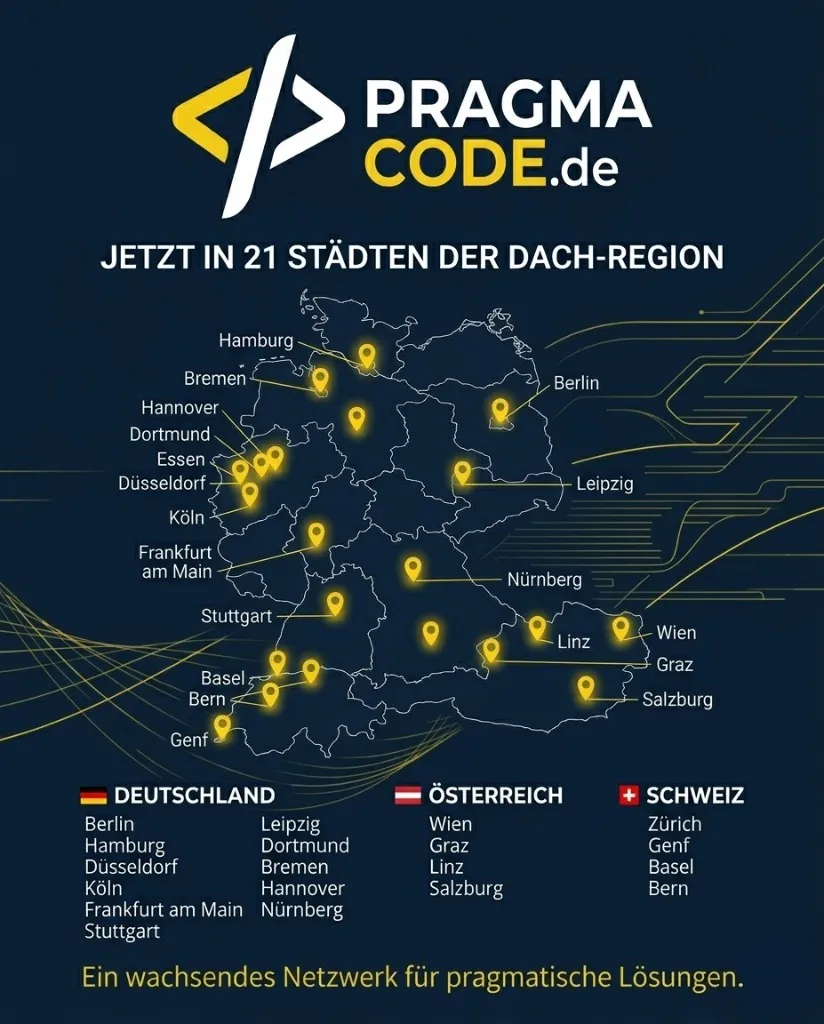
Our Regional Expertise
We are your digital partner – regionally anchored and successfully scaling across borders.
Have a vision?
Let's check together how we can make your idea take flight.
Book your free strategy call nowExtended Specialized Glossary
Passkey
A passkey is a passwordless authentication method based on public-key cryptography. Users authenticate using biometrics (such as Face ID or Touch ID) or a device PIN, making their login credentials immune to phishing attacks and server database breaches.
WebAuthn
WebAuthn (Web Authentication API) is a global W3C standard for passwordless authentication in web applications. It allows websites to interact with built-in cryptographic security hardware and operating system authentication mechanisms to enable passkeys.
FIDO2
FIDO2 is an industry standard developed by the FIDO Alliance for passwordless web authentication. It encompasses the WebAuthn standard for browsers and the Client-to-Authenticator Protocol (CTAP2) for physical authenticators like YubiKeys or smartphones.
Asymmetric Cryptography
A cryptographic method utilizing a key pair comprising a public key and a private key. The public key verifies signatures on the server, while the private key remains secured on the user device.
Secure Enclave
A hardware-isolated security coprocessor on client devices (e.g. Apple Secure Enclave, Google Titan M) that executes cryptographic operations and isolates private keys from the main operating system.
CTAP2
Client-to-Authenticator Protocol 2 (CTAP2) is part of the FIDO2 standard, defining communication between the browser or OS and roaming authenticators like hardware security keys or smartphones via USB, NFC, or BLE.
Credential Stuffing
An automated cyberattack where compromised username and password pairs are systematically tested against various online services. Passkeys completely neutralize this vector by eliminating shared secrets.
Strong Customer Authentication (SCA)
A regulatory requirement under PSD2 and PSD3 mandating at least two independent authentication factors (knowledge, possession, inherence) for electronic payments. Passkeys fulfill SCA requirements natively in a single gesture.