

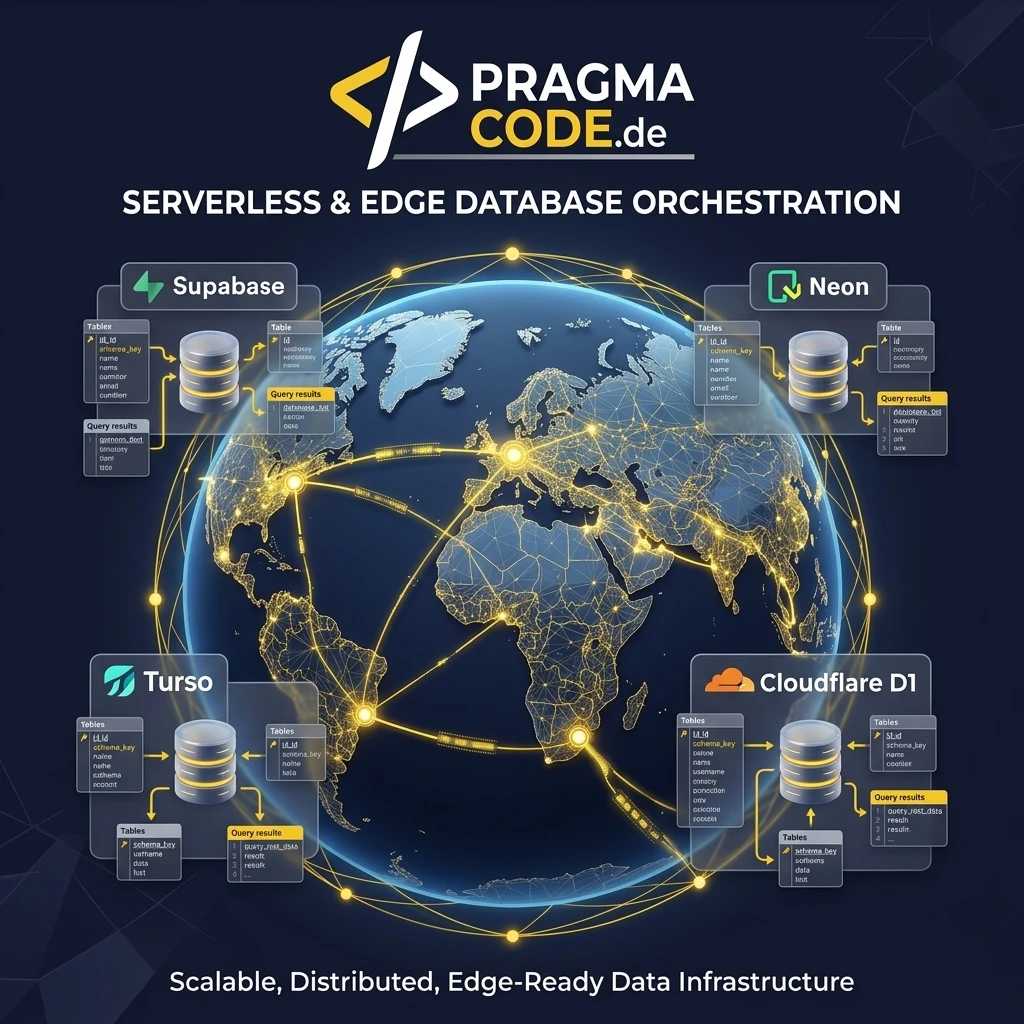
Modern B2B web applications and autonomous AI agents require instant elasticity, single-digit millisecond latency worldwide, and zero idle infrastructure costs. Discover why traditional SQL instances are hitting physical limits and how serverless SQL and edge databases are reshaping enterprise architecture.
This article is an in-depth expert contribution from our content cluster. Discover the complete overview on our main page:Web Development & Web Apps →
The Farewell to Idle Compute Runtimes
In 2026, we are witnessing the definitive mainstream arrival of autonomous AI agents, stateless serverless runtimes, and globally distributed edge clusters. Operating traditional SQL databases on persistently running virtual machines in this environment leads to unnecessary idle costs and elevated latencies. Discover in this deep dive why serverless SQL and edge databases have emerged as the gold standard for enterprise B2B applications.
- Connection limits eliminated: Traditional TCP connections are superseded by modern HTTP/WebSocket drivers and high-throughput connection poolers like Supavisor, preventing serverless request dropouts.
- Genuine cost efficiency via Scale-to-Zero: Decoupling compute from persistent storage ensures that compute charges accrue exclusively during active query processing.
- Sub-15ms latency across the global edge: Distributed Read Replicas and embedded in-memory engines relocate relational datasets physically adjacent to end users.
- 1. Introduction: The End of the Classical RDBMS Era
- 2. The 4 Bottlenecks of Traditional Database Models
- 3. The Paradigm Shift: Serverless SQL & Edge
- 4. B2B Decision Compass: Which System for Which Use Case?
- 5. B2B Comparison Matrix: Traditional vs. Modern
- 6. The Cost Trap & Risk Analysis
- 7. Migration Roadmap: The Way to Serverless Data Storage
- 8. Conclusion: A New Era for B2B Applications
1. Introduction: The End of the Classical RDBMS Era
For decades, the architectural standard for enterprise B2B web applications followed a predictable blueprint: a monolithic application server communicating over persistent TCP sockets with a relational SQL database (mostly PostgreSQL or MySQL) running on a virtual machine (VM) or a managed cloud instance (such as AWS RDS). While this architecture performed reliably in static server environments, the widespread adoption of cloud-native systems, serverless runtimes (AWS Lambda, Vercel, Cloudflare Workers), and Edge-Native Architectures has pushed traditional databases to their physical limits.
Today's B2B SaaS solutions and enterprise web applications require instantaneous scaling, single-digit millisecond response times globally, and complete elasticity. When hundreds of stateless serverless functions or autonomous AI agents fire concurrently, conventional SQL clusters become overwhelmed by connection spikes. Simultaneously, businesses pay substantial baseline fees for idle VM capacity outside business hours. This is where Serverless Databases and Edge Databases enter the scene, reshaping how B2B companies store, query, and scale relational data.
2. The 4 Bottlenecks of Traditional Database Models
To understand why innovators like Supabase, Neon, and Turso are capturing significant market share in enterprise deployments, we must analyze the structural limitations of traditional Relational Database Management Systems (RDBMS) when integrated into modern cloud runtimes.
1. Connection Limit Collapse
Traditional PostgreSQL and MySQL instances dedicate a distinct memory allocation (often 2 to 10 MB RAM) to each active TCP connection. In stateless serverless environments where functions spin up ephemerally and cannot easily pool connections, a typical ceiling of 100 to 500 connections is breached rapidly. Without dedicated proxy middleware, B2B clients experience fatal query timeouts.
2. Cold Starts & Autoscaling Lag
Standard cloud autoscaling groups take multiple minutes to provision virtual nodes, initialize operating system kernels, and replicate state. Sudden traffic spikes common in B2B environments—such as synchronous morning logins or scheduled ERP batch syncs—trigger noticeable latency spikes before legacy infrastructure can scale out.
3. Physical Latency Barriers
When primary databases reside in a single central data center, API requests dispatched from remote offices face an unavoidable network Latency penalty exceeding 200 milliseconds due to the speed of light in fiber optic cables. For complex interactive B2B frontends issuing multiple queries, latency cascades into seconds of delay.
4. Static Compute Idle Overhead
Monolithic database deployments must be dimensioned to handle absolute peak loads comfortably. Overnights, during weekends, and throughout public holidays, costly multi-core CPU and RAM allocations remain completely idle. Segregating economical persistent storage from costly active compute is fundamentally unsupported in legacy setups.
"Deploying a relational database engineered for persistent servers running continuously in a modern serverless runtime is like installing a combustion engine inside an electric vehicle: it physically and architecturally conflicts with the modern execution environment."
3. The Paradigm Shift: Serverless SQL & Edge
Modern software architecture in 2026 addresses these architectural frictions through the complete decoupling of storage (data persistence) and compute (query execution). This decoupling enables two powerful categories of database infrastructure:
Serverless SQL (e.g., Neon, Supabase)
Serverless SQL dynamically adjusts compute resources to active query volumes in real time, scaling completely down to zero (Scale-to-Zero) when idle. Data persists on durable, distributed cloud object layers (such as AWS S3 or custom NVMe block storage fabrics). When queries cease, compute billing halts completely. The moment an API request or an autonomous AI agent initiates an operation, a compute node activates within milliseconds, resolves the query, and suspends after a configurable quiet period.
To prevent connection bottlenecks, modern serverless platforms integrate high-capacity connection managers like Supavisor (an Elixir-based pooler capable of handling over one million concurrent connections with minimal overhead) alongside native HTTP and WebSocket drivers. Stateless functions can now execute queries via compact web calls without incurring full TCP handshakes.
Edge-Native Databases (e.g., Turso, Cloudflare D1 & Hyperdrive)
Edge databases take decentralization further by replicating relational state across global CDN nodes. Leveraging streamlined engines like libSQL, Turso enables Embedded Replicas: the database can run as an in-memory replica directly inside the application process memory. Read queries execute with zero network round-trips in under one millisecond, while write operations synchronize asynchronously back to the primary instance.
Cloudflare D1 embeds relational SQLite storage directly into the V8 Worker execution layer, while Cloudflare Hyperdrive accelerates connectivity to existing centralized PostgreSQL instances through intelligent Connection Pooling and global edge query caching.
While Serverless SQL focuses on dynamic autoscaling, compute-storage disaggregation, and eliminating infrastructure management overhead, Edge SQL prioritizes distributed geographic locality to bypass the physical latency limits of long-haul networks. Leading enterprise architectures frequently combine both approaches for maximum efficiency.
Pro-Tip: Keep-Alives & Autoscaling Thresholds for B2B Services
Do not allow critical production databases to scale down completely to zero during core operating hours (e.g., Monday through Friday between 07:00 and 19:00). Configure a minimum compute allocation of 0.25 vCPU or establish a lightweight cron worker that dispatches a brief heartbeat query (SELECT 1;) every 4 minutes. This preserves Scale-to-Zero cost advantages during off-hours while guaranteeing zero Cold Start latency for your business customers during the workday.
4. B2B Decision Compass: Which System for Which Use Case?
For enterprise architects and CTOs in 2026, the question is no longer simply: "What is the best database?" Instead, technical leadership asks: "Which relational architecture solves my specific scaling, compliance, and velocity challenge most effectively?" Our B2B Architecture Decision Compass maps the four leading platforms directly to four dominant enterprise use cases:
1. Supabase: Unified AI Memory
Ideal for: Autonomous AI agents, customer support workflows, knowledge systems, and interactive enterprise apps. Supabase pairs standard PostgreSQL 17 with pgvector and integrated hybrid search (combining dense HNSW vectors with sparse BM25 text retrieval). This eliminates the operational friction and substantial expense of hosting a secondary dedicated vector database like Pinecone. Enterprise state stays within an ACID-compliant engine protected by table-level Row-Level Security (RLS).
2. Neon: Instant Branching & Testing
Ideal for: High-velocity software development teams, continuous deployment pipelines, and ephemeral preview environments. Neon's copy-on-write storage architecture provisions complete database branches—including schema definitions and production data snapshots—in just 1 to 2 seconds for every Pull Request. Developers can safely validate complex schema migrations and test breaking features against authentic datasets without impacting production systems.
3. Turso: Physical GDPR Tenant Isolation
Ideal for: Multi-tenant SaaS products, financial platforms, and applications with strict European compliance obligations. Turso leverages libSQL to deliver the Database-per-Tenant pattern at scale: rather than pooling all client records into a massive shared table with tenant IDs, each enterprise customer receives an isolated SQL database. Embedded Replicas run in server memory, dropping read query latencies to sub-1ms speeds.
4. Cloudflare D1 & Hyperdrive: Sub-10ms CDN
Ideal for: Globally distributed client portals, dynamic commerce backends, and low-latency digital products. D1 executes relational operations directly within Cloudflare's global V8 edge runtime. Paired with Cloudflare Hyperdrive, even traditional legacy PostgreSQL or MySQL databases in central data centers receive edge connection pooling and distributed read query acceleration without undergoing complex re-platforming.
5. B2B Comparison Matrix: Traditional vs. Modern
The matrix below summarizes the operational and architectural distinctions between traditional managed RDS/VM instances and modern serverless/edge database platforms for enterprise workloads:
| Evaluation Criteria | Traditional (VM / RDS) | Neon (Postgres) | Supabase (Postgres) | Turso (libSQL) |
|---|---|---|---|---|
| Architecture | Monolith (Compute & storage tightly coupled) | Serverless (Disaggregated storage and compute) | Managed Postgres + API, Auth & Storage layer | Edge-Native (Decentralized libSQL / SQLite nodes) |
| Scaling Dynamics | Manual / Vertical (Requires minutes of downtime) | Automatic, elastic & sub-second Scale-to-Zero | Instance autoscaling with read replica pools | Globally distributed with embedded replicas |
| Connection Model | Rigid TCP limits (typically 100–500 sockets) | HTTP/WebSocket drivers with unlimited concurrency | Supavisor connection pooling (1M+ concurrent clients) | Stateless requests over standard web protocols |
| Multi-Tenancy Model | Shared Schema / Shared Database (high coupling) | Multiple logical databases or branches per project | Single project database with Postgres RLS enforcement | Database-per-Tenant (physical tenant isolation) |
| Global Latency | Elevated (Bound to central region, often >200ms) | Moderate (Read replicas available in key regions) | Moderate (Read replicas deployable across AWS zones) | Extremely low (<15ms globally, <1ms embedded) |
| AI Agents & pgvector | Manual extension installation & tuning | Native pgvector with dynamic compute scaling | Built-in pgvector, realtime streaming & embeddings | libSQL Vector Search for compact local embeddings |
| GDPR & EU Residency | Full infrastructure control (e.g., Frankfurt DC) | EU Frankfurt region (AWS eu-central-1) supported | EU Frankfurt region (AWS eu-central-1) supported | Configurable EU primary locations & replica nodes |
Direct Comparison: Traditional RDBMS vs. Serverless & Edge SQL
- Latencies: Bound to a single data center; international users experience latency delays exceeding 200 milliseconds.
- Scalability: Slow vertical scaling operations requiring maintenance windows and planned downtime.
- Connections: Restrictive TCP socket ceilings trigger connection exhaustion under serverless traffic surges.
- Cost Profile: Continuous billing for provisioned server hardware even during periods of zero query activity.
- Latencies: Global read replication and local in-memory caching maintain latencies below 15 milliseconds.
- Scalability: Sub-second automated elasticity and zero compute consumption during idle periods.
- Connections: Infinite concurrent query capability through stateless HTTP drivers and poolers like Supavisor.
- Cost Profile: Transparent pay-as-you-go billing aligned strictly with active compute time and stored bytes.
6. The Cost Trap & Risk Analysis
Despite the substantial technical advantages of serverless and edge data platforms, technology leaders and solutions architects must evaluate potential operational trade-offs before initiating architectural migrations.
Cold Start Penalties in Scale-to-Zero Modes
When a serverless database spins down completely during periods of inactivity, resolving the initial incoming query requires allocating a fresh compute instance. For Neon or Supabase, this can introduce an initial cold start latency of 500ms to 2.5 seconds. For time-critical B2B integrations, teams must configure keep-alive heartbeats or maintain a baseline compute allocation.
Egress Surcharges & Unindexed Table Scans
Consumption-based billing models calculate charges from active compute hours, row operations, and network data egress. Unoptimized queries executing full-table scans across millions of records will generate substantial consumption charges that can rapidly exceed the predictable monthly cost of a fixed virtual machine.
Vendor Lock-in With Proprietary Edge APIs
While Supabase and Neon adhere strictly to standard PostgreSQL protocols and support standard tooling, specialized features in Turso or Cloudflare D1 require proprietary client libraries. Reversing this architecture at a later stage necessitates refactoring application data-access layers.
7. Migration Roadmap: The Way to Serverless Data Storage
Transitioning an active B2B application from a traditional SQL deployment to a modern serverless or edge architecture succeeds most predictably through a structured four-stage migration strategy:
-
Phase 1: Workload Profiling & Architectural Fit
Analyze your application's read-to-write ratio. Workloads with over 85% read operations (such as product catalogs, customer portals, or content repositories) achieve dramatic performance gains from edge replication (Turso/D1). Heavy transactional applications or workloads requiring pgvector are best suited for serverless Postgres (Neon/Supabase).
-
Phase 2: Schema Audit & Connection Refactoring
Audit existing queries to ensure comprehensive indexing and eliminate unindexed full-table scans. Refactor database drivers within serverless cloud functions to utilize HTTP connection adapters or modern connection poolers like Supavisor instead of persistent TCP sockets.
-
Phase 3: Zero-Downtime Migration via Logical Replication
For modest databases, standard dump utilities (
pg_dump/pg_restore) suffice during brief maintenance windows. For enterprise systems requiring continuous availability, configure logical replication to synchronize changes continuously until the final DNS cutover takes place without downtime. -
Phase 4: Monitoring, Keep-Alives & CI/CD Branching
Establish monitoring dashboards for query latency, cold-start frequency, and data egress volumes. Configure scheduled keep-alive pings during business hours and incorporate copy-on-write database branching into automated deployment pipelines for staging verification.
Quick-Check: Is Your Stack Ready for Serverless SQL?
8. Conclusion: A New Era for B2B Applications
The era of manually provisioning database servers, configuring external connection poolers on dedicated instances, and paying for idle CPU cycles during off-hours has come to an end. Platforms such as Supabase, Neon, Turso, and Cloudflare D1 demonstrate how data management operates in 2026: resilient, horizontally elastic, globally replicated, and integrated directly into cloud-native engineering workflows.
For B2B organizations, this architectural shift offers significant strategic value: development velocity accelerates through instantaneous copy-on-write branching, hosting expenditures decline sharply thanks to Scale-to-Zero economics, and global clients enjoy dependable, low-latency performance around the clock.
Looking to Modernize Your Database Infrastructure?
Schedule a Free Strategy CallOur Regional Expertise
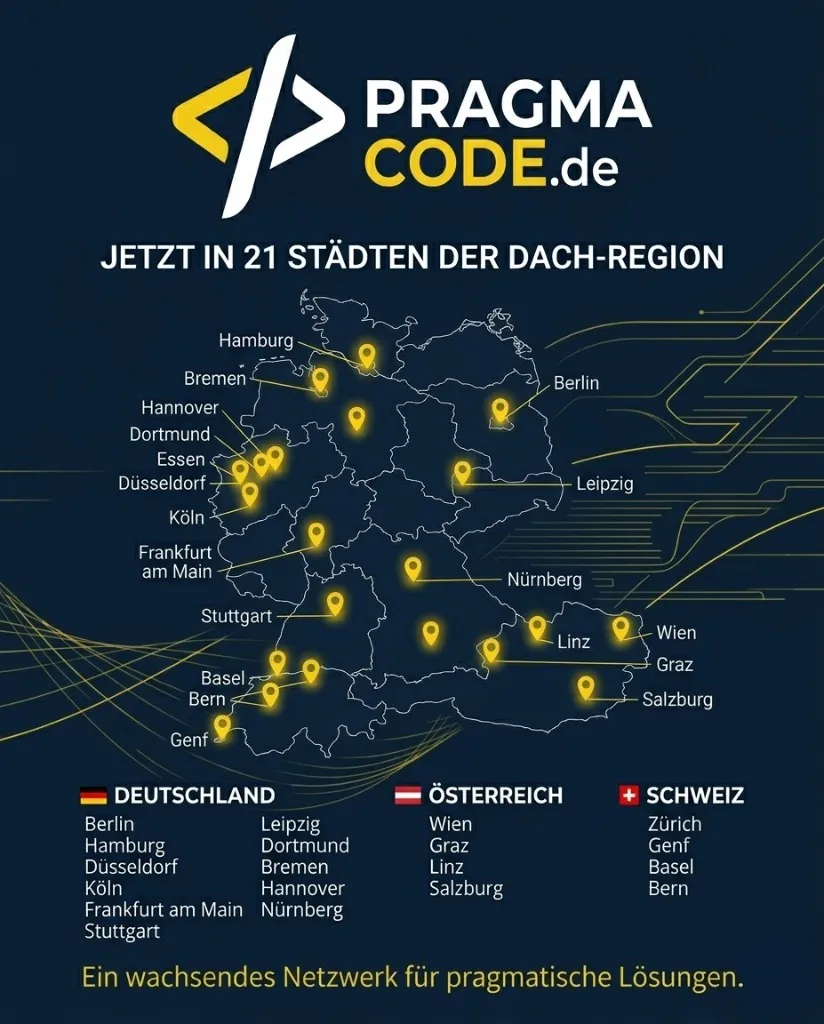
We are your digital partner – regionally anchored and successfully scaling across borders.
Have a vision?
Let's check together how we can make your idea take flight.
Book your free strategy call nowExtended Specialized Glossary
Serverless Database
A database architecture where compute resources scale automatically to meet demand, including scaling down to zero (Scale-to-Zero). Storage and compute are decoupled, allowing you to pay only for the exact resources consumed.
Edge Database
A relational or non-relational database that replicates and distributes data across a global network of edge nodes, minimizing physical query distance and providing sub-15ms response times.
Connection Pooling
A mechanism that maintains a cache of database connections open for reuse by future requests (via poolers like Supavisor or PgBouncer) instead of establishing expensive TCP handshakes per query.
Cold Start
The initial delay that occurs when a serverless resource is spun up from an idle state (Scale-to-Zero) to handle an incoming query. For database compute instances, this delay ranges from 500ms to 3 seconds.
Latency
The time delay between sending a data request and receiving the response. In web networks, latency is directly limited by physical distance and the speed of light.
Read Replica
A read-only copy of the primary database cluster deployed across distributed regions to handle regional read traffic and offload stress from the primary write node.