


In 2026, CEOs and CTOs face a historic realignment of their IT strategy: The traditional dogma that 'SaaS beats custom build' no longer holds in the era of generative AI, escalating seat-based licensing fees, and strict data sovereignty regulations. Discover why combining Next.js with self-hosted n8n democratizes custom development, how to establish a future-proof hybrid architecture, and why you must insist on technological independence for differentiating core processes.
This article is an in-depth expert contribution from our content cluster. Discover the complete overview on our main page:All services at a glance →
The New Era of Software Sovereignty
In 2026, the traditional balance of power between custom software development and off-the-shelf SaaS models has fundamentally shifted. Driven by the rapid maturation of Agentic AI, robust workflow automation platforms like n8n, and modern full-stack frameworks like Next.js, building your own software (Make) is not only significantly faster and cheaper—it has become the most effective strategic lever to safeguard core proprietary workflows, meet stringent regulatory mandates, and differentiate sustainably from competitors.
- Standardization vs. Differentiation: Rent commodity SaaS for generic support processes (such as payroll or accounting). Build proprietary software whenever a workflow defines your core competitive advantage or distinct customer experience.
- The TCO Pivot: Escalating seat pricing, artificial API throttles, and aggressive AI add-on surcharges are reversing the economics: Custom solutions built on Next.js and self-hosted n8n cut 3-year total costs by up to 75% compared to enterprise SaaS suites.
- Data Sovereignty & AI Act Compliance: Hosting n8n in European private cloud environments (such as Hetzner or AWS Frankfurt) guarantees absolute data ownership, eliminates unwanted model training on your proprietary data, and ensures seamless GDPR and EU AI Act compliance.
- Introduction: The Make-or-Buy Conflict in 2026
- 1. The SaaS Trap: When Off-the-Shelf Software Becomes a Liability
- 2. The Next.js & n8n Stack: Democratizing Custom Software Development
- 3. Technical Deep Dives: Self-Hosting, Server Actions & Tool Calling
- 4. TCO Comparison & Benchmark: 3-Year Cost Analysis in Detail
- 5. The 4-Pillar Decision Framework: When to Rent, When to Build?
- 6. The Headless Hybrid Strategy: The Pragmatic Gold Standard
- 7. Enterprise Governance: Operations, Security & Maintainability
- 8. Step-by-Step Transformation Roadmap for Engineering Leaders
- 9. Conclusion: Software Sovereignty as a Strategic Moat
Introduction: The Make-or-Buy Conflict in 2026
Every CTO, CEO, and IT decision-maker regularly confronts the classic Make vs. Buy dilemma: Should we subscribe to a pre-packaged commercial SaaS solution (Buy) or develop custom applications in-house (Make)? For decades, conventional wisdom in boardrooms was unmistakable: standard software wins almost every time. The underlying reasoning was compelling: bespoke software development was notoriously expensive, consumed engineering resources over months or years, introduced substantial delivery risks, and created unpredictable maintenance overhead. Consequently, organizations routinely licensed a SaaS product that satisfied 80% of their operational requirements, begrudgingly tolerating the remaining 20% friction as an unavoidable cost of doing business.
In 2026, however, the technological, financial, and regulatory foundations of that calculation have transformed beyond recognition. We are living in an era shaped by Agentic AI, event-driven data fabrics, and hyperspeed market cycles. Companies attempting to force their proprietary, AI-augmented workflows into rigid, one-size-fits-all SaaS structures quickly discover that commercial software no longer accelerates organizational agility—it paralyses it. Simultaneously, software engineering itself has undergone a paradigm shift: empowered by AI-native developer tooling, modular visual automation engines like n8n, and robust full-stack web frameworks like Next.js, the delivery cycle for custom solutions has compressed dramatically, while capital expenditure and maintenance complexity have fallen to a fraction of past norms.
This executive playbook examines why relying solely on SaaS subscriptions has turned into a strategic liability for modern enterprises, how combining Next.js with self-hosted n8n creates a potent technological moat, and how engineering leaders can establish a resilient, sovereign hybrid IT architecture that reconciles cost control with uncompromising agility.
1. The SaaS Trap: When Off-the-Shelf Software Becomes a Liability
For years, the SaaS business model offered an alluring proposition: instant cloud provisioning, predictable monthly per-user billing, zero infrastructure maintenance, and automated rolling updates. In 2026, however, enterprise reality reveals the profound structural downsides of this subscription monoculture. Many enterprise IT environments find themselves shackled to sluggish, costly SaaS monoliths that impede experimentation and cultivate severe external dependencies.
Vendor Lock-in & Compounding Price Hikes
Once your mission-critical data, client relationships, and business logic are stored in a closed commercial SaaS ecosystem, switching providers becomes nearly unthinkable. Enterprise B2B software vendors exploit this leverage with compounding annual price hikes of 15% to 25%. Opaque proprietary database schemas and artificially throttled export utilities turn data migration into an operational nightmare.
Zero Differentiation via Cookie-Cutter AI
To capitalize on the artificial intelligence wave, enterprise SaaS providers rush to bundle built-in AI assistants into their interfaces. The fatal flaw for your competitive strategy: these features are powered by identical generic prompts and shared models rolled out to every competitor in your industry. True operational differentiation, proprietary domain reasoning, and tailored customer journeys are impossible to achieve with off-the-shelf AI widgets.
Compounding this dilemma is the monetization of API access. Modern enterprise architectures require high-frequency, event-driven communication between internal systems and autonomous AI agents. Yet commercial SaaS vendors increasingly treat API endpoints as toll roads: they impose strict daily call quotas, charge hefty premiums for real-time webhooks, or restrict programmatic access entirely to prohibitively expensive enterprise contracts. Attempting to deploy intelligent agents across commercial SaaS databases invariably triggers exponential integration surcharges.
Furthermore, regulatory pressure is mounting across Europe. Under the EU AI Act and GDPR directives, enterprises face rigorous compliance standards regarding data provenance, localized processing, and unconsented model training by American hyperscalers. Entrusting sensitive corporate telemetry and intellectual property to multi-tenant US cloud SaaS platforms introduces legal liabilities that risk-conscious leaders can no longer ignore.
Pro-Tip: Audit the Data Exit Clause Before Signing
Before entering any multi-year SaaS agreement, demand legally binding data exit provisions. Require contractual guarantees for automated, full-fidelity relational database backups, digital assets, and comprehensive audit trails via standard REST or GraphQL endpoints at zero additional cost. If a vendor refuses or charges exorbitant exit tolls, you are not buying software—you are leasing a data cage.
2. The Next.js & n8n Stack: Democratizing Custom Software Development
Why has custom in-house software development staged such a dramatic comeback in 2026? The breakthrough stems from an architectural convergence that eliminates the painful friction of traditional programming while avoiding the suffocating limitations of no-code platforms. The pairing of Next.js for the presentation tier and n8n for backend automation, system orchestration, and AI pipeline execution represents the premier modern development stack.
Next.js: The Bedrock for High-Performance Frontends
Next.js stands as the global standard for modern web application development. Leveraging Server-Side Rendering (SSR), React Server Components (RSC), and native Server Actions, Next.js removes the need for clunky separate API backend layers for routine transactions. Applications load instantly with sub-second page transitions, adhere to accessibility standards by default, and provide pixel-perfect fidelity tailored to your brand and team requirements.
n8n: The Visual Control Hub for AI & APIs
n8n operates as the powerful, modular central nervous system of your business automation. Instead of hand-coding fragile glue code and custom API integrations, your developers and operations engineers visually model complex pipelines. n8n includes hundreds of pre-built connectors to enterprise software ecosystems alongside native nodes for advanced AI features such as vector stores, retrieval-augmented generation (RAG), and agentic tool invocation.
The operational synergy between these technologies is seamless and decoupled: Next.js delivers a responsive, bespoke user interface—such as an automated quoting tool, a partner portal, or an internal operational dashboard. When a user submits an action, Next.js securely calls an authenticated webhook endpoint in n8n via a server-side mutation. Within n8n, the workflow executes autonomously: it validates inputs, cross-references internal CRM data, analyzes attached PDFs via local LLM endpoints, persists structured records in a sovereign PostgreSQL database, and triggers notifications across Slack or email.
Unlike closed integration platforms like Zapier or Make, n8n adheres to a fair-code, open-source model. It can be self-hosted entirely within your private cloud or virtual private server (VPS). There are no artificial limits on executed operations, no paywalls on data volume, and no per-connector fees. Your infrastructure budget scales with raw hardware capacity rather than vendor penalties, keeping overhead exceptionally lean and predictable.
3. Technical Deep Dives: Self-Hosting, Server Actions & Tool Calling
Successfully running custom enterprise software requires rigorous architectural foundations. A production-grade Next.js and n8n stack integrates effortlessly with modern DevOps toolchains, providing security, scalability, and audit-readiness out of the box.
1. Scalable Enterprise Self-Hosting for n8n
In production enterprise setups, n8n operates in Queue Mode. A primary master instance handles webhook routing, scheduling, and UI management, while multiple stateless worker instances consume tasks concurrently through a resilient Redis broker. Persistent state resides in an isolated PostgreSQL cluster with continuous WAL archiving. An edge reverse proxy (such as Caddy or Traefik) enforces automatic TLS certificate renewals, DDoS mitigation, and IP whitelisting for administrative interfaces.
2. End-to-End Type Safety via Server Actions
Historical web architectures suffered from duplicating data models across client frontends and separate REST or GraphQL services. In Next.js 15+ with TypeScript, Server Actions allow developers to trigger backend operations directly from UI components without exposed network endpoints. Form data undergoes strict runtime validation via Zod schemas, while private API secrets remain strictly server-side. Outbound communication to internal n8n nodes is secured via cryptographic HMAC headers or mutual TLS (mTLS).
3. n8n as an Agentic Tool-Calling Engine
A transformative development in 2026 is utilizing n8n workflows as standardized callable tools for autonomous AI agents. Advanced reasoning models (such as Claude 3.7 Sonnet or open-weight models like Llama 3) excel at high-level planning but must never be granted unconstrained direct database access. By packaging n8n workflows as validated OpenAPI endpoints or Model Context Protocol (MCP) servers, agents invoke actions safely, while n8n handles parameter enforcement, rate limiting, and mandatory human-in-the-loop approvals.
4. Sovereign Identity & Role-Based Access Control (RBAC)
Enterprise applications implement passwordless authentication standards via OpenID Connect (OIDC), OAuth2, or WebAuthn Passkeys. Integrating identity providers like Zitadel, Keycloak, or Auth.js enables granular role-based permissions. Internal staff, executive leadership, and external clients access only their authorized views and workflows, with immutable access logs satisfying ISO 27001 and NIS2 compliance audits.
The following Docker Compose blueprint illustrates a production-ready, hardened self-hosted deployment for n8n backed by PostgreSQL and Redis:
# Hardened Docker Compose architecture for sovereign n8n self-hosting
services:
  postgres:
    image: postgres:16-alpine
    restart: always
    environment:
      POSTGRES_USER: ${DB_USER}
      POSTGRES_PASSWORD: ${DB_PASSWORD}
      POSTGRES_DB: n8n_enterprise
    volumes:
      - postgres_storage:/var/lib/postgresql/data
    networks:
      - internal_net

  redis:
    image: redis:7-alpine
    restart: always
    command: redis-server --appendonly yes --requirepass ${REDIS_PASSWORD}
    volumes:
      - redis_storage:/data
    networks:
      - internal_net

  n8n_master:
    image: n8nio/n8n:latest
    restart: always
    environment:
      - DB_TYPE=postgresdb
      - DB_POSTGRESDB_HOST=postgres
      - DB_POSTGRESDB_DATABASE=n8n_enterprise
      - DB_POSTGRESDB_USER=${DB_USER}
      - DB_POSTGRESDB_PASSWORD=${DB_PASSWORD}
      - EXECUTIONS_MODE=queue
      - QUEUE_BULL_REDIS_HOST=redis
      - QUEUE_BULL_REDIS_PASSWORD=${REDIS_PASSWORD}
      - N8N_ENFORCE_SETTINGS_FILE_PERMISSIONS=true
      - WEBHOOK_URL=https://automation.your-domain.com/
    ports:
      - "127.0.0.1:5678:5678"
    networks:
      - internal_net
    depends_on:
      - postgres
      - redis

volumes:
  postgres_storage:
  redis_storage:

networks:
  internal_net:
    internal: true
At the frontend layer, Next.js Server Actions provide type-safe programmatic orchestration without exposing authentication credentials to browser clients:
// app/actions/trigger-order-pipeline.ts
'use server';

import { z } from 'zod';

const OrderPayloadSchema = z.object({
  customerId: z.string().uuid(),
  packageTier: z.enum(['starter', 'business', 'enterprise']),
  workflowCount: z.number().int().positive()
});

export async function triggerOrderPipeline(formData: unknown) {
  // 1. Strict runtime schema validation via Zod
  const parsed = OrderPayloadSchema.safeParse(formData);
  if (!parsed.success) {
    return { success: false, errors: parsed.error.flatten().fieldErrors };
  }

  // 2. Authenticated server-to-server webhook dispatch to private n8n cluster
  const webhookUrl = process.env.N8N_PRIVATE_WEBHOOK_URL!;
  const authToken = process.env.N8N_WEBHOOK_SECRET!;

  try {
    const response = await fetch(webhookUrl, {
      method: 'POST',
      headers: {
        'Content-Type': 'application/json',
        'Authorization': `Bearer ${authToken}`
      },
      body: JSON.stringify({
        ...parsed.data,
        timestamp: new Date().toISOString(),
        initiatedBy: 'client-portal-v2'
      }),
      cache: 'no-store'
    });

    if (!response.ok) {
      throw new Error(`Automation Gateway returned status: ${response.status}`);
    }

    const result = await response.json();
    return { success: true, trackingId: result.trackingId };
  } catch (error) {
    console.error('Failed to trigger workflow execution:', error);
    return { success: false, message: 'Automation pipeline is temporarily unreachable.' };
  }
}
4. TCO Comparison & Benchmark: 3-Year Cost Analysis in Detail
When evaluating software investments, executive teams often fall into the trap of comparing initial onboarding fees against the first month's invoice. Commercial SaaS products tout deceptively affordable headline rates ("From 60 EUR per user/month"), whereas custom development requires an upfront capital commitment. To make an objective financial decision, leadership must evaluate the Total Cost of Ownership (TCO) across a 3- to 5-year operating horizon.
Comparison: Commercial SaaS (Buy) vs. Next.js & n8n Stack (Make)
- Licensing Escalation: Scales linearly with every hired team member (seat pricing). Heavy, recurring fixed cost burden from day one.
- API Metering: Hidden financial friction caused by API rate caps, webhook quotas, and enterprise tier add-on pricing.
- Customization Premiums: Exorbitant consultancy day rates for minor workflow changes and custom schema adjustments.
- Compliance Exposure: Complete dependency on third-party cloud infrastructure and ongoing data protection risks.
- Infrastructure Flat-Rate: Constant, modest hosting expenses (e.g., Hetzner Cloud or AWS) completely decoupled from team headcount.
- API Freedom: Unrestricted automation executions and bulk data processing without arbitrary per-call surcharges.
- Maintainability: Predictable, lightweight maintenance thanks to standardized open-source web frameworks and TypeScript.
- Absolute Ownership: 100% proprietary code ownership with guaranteed GDPR and AI Act compliance hosted in Europe.
Consider a representative enterprise case study: a mid-sized organization with 100 employees requiring a centralized customer service and partner portal, integrated AI document parsing, automated ticket classification, and real-time ERP synchronization.
Option A (Enterprise SaaS Platform): Licensing an established commercial B2B platform averages 85 EUR per user/month. That equates to 8,500 EUR monthly, or 102,000 EUR annually. Over three years, base seat licensing alone reaches 306,000 EUR. Adding modest estimates of 12,000 EUR for API traffic surcharges and 30,000 EUR for initial setup, consulting, and onboarding, the 3-year TCO climbs to 348,000 EUR—without granting your business a single line of proprietary IP.
Option B (Bespoke Stack via Next.js & n8n): Turnkey solution engineering, UI design, and production integration delivered by Pragma-Code costs a one-time fee of 45,000 EUR. Resilient, high-availability European cloud hosting (Next.js edge delivery paired with a dedicated Hetzner n8n and PostgreSQL cluster in Frankfurt) costs approximately 160 EUR monthly (5,760 EUR over 3 years). Budgeting 500 EUR monthly for ongoing security patching, dependency upgrades, and iterative improvements (18,000 EUR over 3 years), the 3-year TCO totals just 68,760 EUR.
"In this realistic enterprise scenario, building custom software on Next.js and n8n saves more than 275,000 EUR in recurring costs over 3 years—while delivering 100% intellectual property ownership and total operational control."
5. The 4-Pillar Decision Framework: When to Rent, When to Build?
Despite the immense financial and technical advantages of modern bespoke systems, it would be reckless to advocate building every piece of corporate software from scratch. Sustainable enterprise IT requires a disciplined, balanced portfolio. In 2026, technology leaders evaluate the Make vs. Buy decision across four objective criteria:
1. Core Competence & Competitive Moat
Does the process generate your primary value proposition in the market? If your proprietary pricing logic, client onboarding flow, or automated logistics pipeline define why buyers choose you over competitors, you MUST build (Make). Commercial SaaS enforces generic industry conventions, extinguishing your unique competitive advantage.
2. Process Dynamics & Change Frequency
Does the workflow require monthly or quarterly iterations in response to market shifts or client feedback? In dynamic verticals, deployment speed is existential. With visual n8n pipelines, logic modifications deploy in minutes. With commercial SaaS, your team is captive to external product roadmaps and multi-year waitlists.
3. Data Security & Regulatory Compliance
Does the system handle sensitive intellectual property, proprietary models, financial records, or protected health data? Self-hosting n8n and PostgreSQL in sovereign European clouds guarantees zero-retention compliance. Sensitive PII never crosses external commercial boundaries for unauthorized model training.
4. User Headcount & Transaction Growth
Does the application serve thousands of occasional users, external suppliers, or high-volume transactional streams? Seat-based SaaS pricing penalizes business expansion. With an in-house Next.js and n8n stack, you scale effortlessly on flat-rate infrastructure without paying extra for user accounts.
For executive leadership in 2026, the strategic directive is clear: Commodity workflows that represent necessary administrative overhead where differentiation offers zero commercial edge (such as general ledger accounting with DATEV, corporate email, or payroll) should invariably be rented as SaaS (Buy). Conversely, any workflow that touches client engagement, orchestrates proprietary domain knowledge, or powers your core offering belongs firmly in your own technological hands.
6. The Headless Hybrid Strategy: The Pragmatic Gold Standard
Modern enterprise architecture is no longer constrained to an all-or-nothing dichotomy between pure custom development and rigid SaaS suites. The most effective, risk-minimized approach for mid-market and enterprise organizations is the Headless Architecture within a hybrid framework.
In this architecture, your organization retains established SaaS platforms strictly as "commodity backends"—leveraging them solely for foundational data storage, transaction recording, and compliance filing. However, you intentionally bypass their cluttered, generic user interfaces and expensive add-on modules. Instead, you deploy a custom, high-velocity Next.js frontend that matches your precise brand identity and operational ergonomics. In between, n8n acts as the intelligent event broker and automation engine.
Consider an enterprise example: a global B2B distributor uses Salesforce or HubSpot as its foundational CRM. Rather than purchasing 4,000 expensive client portal licenses from the CRM vendor, the company deploys a sleek Next.js portal. When a customer logs in, n8n securely retrieves account records, queries warehouse inventory from legacy ERPs, applies real-time pricing rules, and uses local AI models to recommend related supplies. The client experiences an instantaneous, bespoke B2B interaction. If the enterprise switches its underlying CRM in five years, the client portal, user ergonomics, and automation workflows remain completely uninterrupted—requiring only minor configuration tweaks within n8n.
7. Enterprise Governance: Operations, Security & Maintainability
A frequent reservation voiced by corporate risk committees regarding custom software centers on long-term maintainability: What happens if key engineers depart? How is uptime guaranteed? How are regulatory audits satisfied? In 2026, mature enterprise governance patterns solve these concerns systematically.
Automated CI/CD & Code Quality
Custom Next.js codebases are tracked under strict Git version control. Automated GitHub Actions pipelines execute linting, type-checking, Zod schema validation, and end-to-end regression tests on every push. Production releases deploy with zero downtime across isolated containerized infrastructure.
Centralized Secret Management & PII Scrubbing
Production API credentials and database secrets are never hardcoded inside n8n workflow nodes. Integration with dedicated secret management vaults (such as HashiCorp Vault or AWS Secrets Manager) and automated PII redaction pipelines protect sensitive corporate records from unauthorized disclosure.
Real-Time Telemetry & Error Alerting
Standardized Prometheus and OpenTelemetry endpoints track pipeline execution latencies, resource consumption, and error rates. If an n8n node encounters an execution failure, automated error triggers instantly dispatch alerts to Slack, Microsoft Teams, or on-call incident response systems.
Disaster Recovery & Immutable Backups
Both Next.js deployment definitions and persistent n8n PostgreSQL instances undergo automated incremental hourly backups and encrypted daily snapshots stored in geo-redundant S3 storage repositories. Full disaster recovery restoration tests complete in under 15 minutes.
Furthermore, relying on ubiquitous open-source industry standards such as React, Next.js, TypeScript, and Docker completely eliminates developer lock-in. Your organization is never beholden to an obscure proprietary vendor: millions of skilled software engineers worldwide build with Next.js and PostgreSQL daily, guaranteeing effortless talent acquisition and continuous system evolvability.
8. Step-by-Step Transformation Roadmap for Engineering Leaders
Migrating from a fragmented SaaS monoculture to a sovereign, resilient hybrid architecture should never be attempted as a reckless overnight "big bang" switch. Successful transformation relies on a disciplined, phased 4-stage implementation roadmap:
Process Audit & SaaS Expense Mapping
Perform an unsparing audit of existing software subscriptions. Where are you paying premium seat licenses for occasional users? Where do restrictive SaaS APIs bottleneck operational flow? Identify the top 3 cost drivers and operational friction points across your organization.
Deploy Sovereign Core Infrastructure
Establish a hardened, GDPR-compliant cloud environment with an established European hosting provider. Provision n8n in high-availability Queue Mode using Docker, PostgreSQL, and Redis, securing internal database links through encrypted VPN or mTLS tunnels.
Ship a High-Impact Pilot Project
Select a tightly scoped, commercially critical workflow (such as an automated client quote configurator or an internal AI ticket dispatch portal). Build and deploy the Next.js and n8n application in 4 to 6 weeks, validating user satisfaction and proving the TCO advantage.
Incremental Scale & SaaS Deprecation
Gradually migrate adjacent workflows onto your sovereign automation backbone. Systematically downgrade or cancel redundant third-party SaaS seats. Cultivate internal workflow engineering capabilities or partner with Pragma-Code for turnkey architecture and maintenance.
Quick-Check: Your Roadmap to Software Sovereignty
9. Conclusion: Software Sovereignty as a Strategic Moat
In 2026, decisions regarding enterprise software architecture are no longer mere IT tactical discussions—they are fundamental determinants of commercial survival and strategic resilience. Organizations that surrender their mission-critical processes and client interfaces to closed commercial SaaS monopolies incur a compounding penalty: runaway subscription overhead, total vendor dependency, and the erosion of operational uniqueness.
By leveraging the potent combination of Next.js for high-speed, tailored user experiences and n8n for sovereign, AI-augmented backend execution, mid-market enterprises gain capabilities previously reserved for multi-billion-dollar technology giants. Custom software engineering is now rapid, cost-effective, and thoroughly manageable. Rent generic commodity systems where differentiation offers no return, but build and own your differentiating core with Next.js and n8n to protect margins, out-innovate competitors, and secure true digital independence.
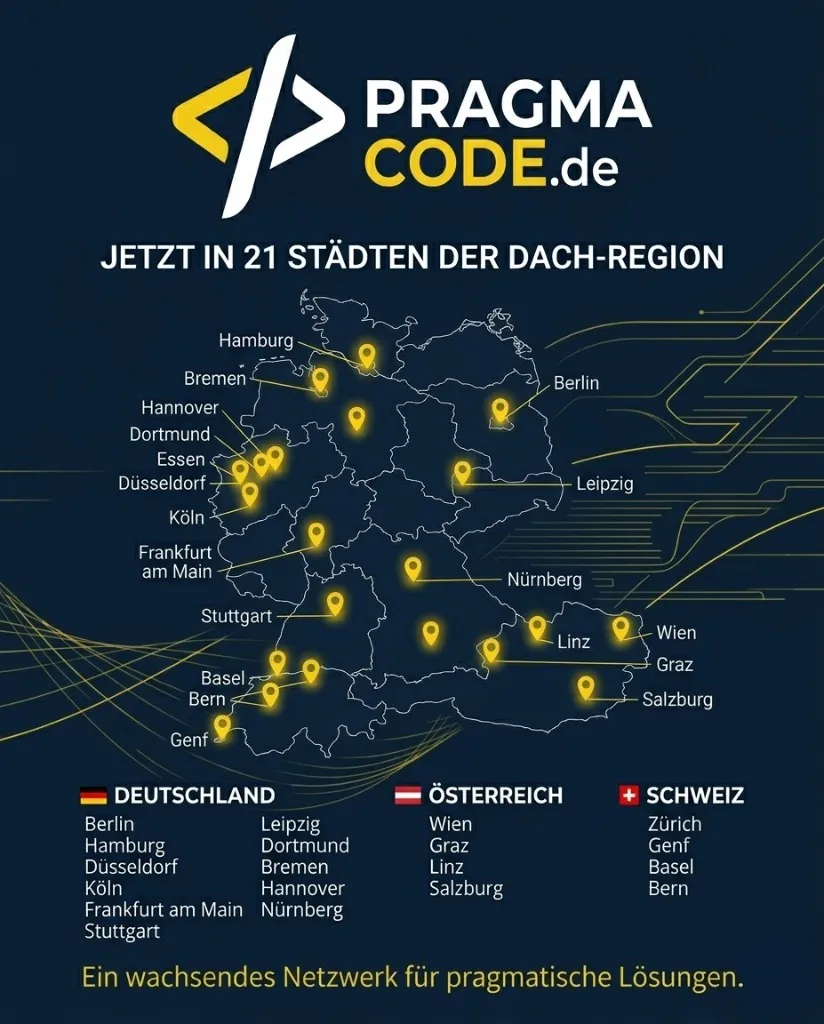
Our Regional Expertise
We are your digital partner – regionally anchored and successfully scaling across borders.
Questions about your Make-or-Buy Strategy?
We analyze your current SaaS stack, uncover hidden cost traps, and architect custom Next.js and n8n solutions for complete technological independence.
Book Free Strategy ConsultationExtended Specialized Glossary
Make vs. Buy
The strategic decision in business management whether a software solution should be developed in-house (Make) or licensed/rented as a commercial product (Buy).
Next.js
A leading React framework for modern full-stack web applications featuring native support for Server-Side Rendering (SSR), React Server Components (RSC), and type-safe Server Actions.
n8n
A flexible workflow automation platform that combines visual low-code pipelines with native AI orchestration, OpenAPI connectivity, and 100% GDPR-compliant self-hosting control.
Vendor Lock-in
Dependence on a specific software provider due to proprietary data formats and closed APIs, making migration to alternative solutions technically or economically prohibitive.
Agentic AI
Autonomous AI systems that plan multi-step workflows independently, interact with external software tools via APIs (Tool Calling), and adapt dynamically to shifting contexts.
Headless Architecture
An architectural approach where the frontend presentation layer is decoupled from the backend data and business logic, interacting seamlessly via standardized APIs.
Low-Code
A software development methodology combining visual drag-and-drop builders with extensible custom code to accelerate software delivery dramatically.