
Digital Minister Wildberger has presented a far-reaching master plan to modernize Germany's administration and economy with the 'Germany-Stack'. The shift towards open source, open cloud infrastructure, and artificial intelligence has fundamental implications for SMEs in the DACH region. In this guide, SMEs will learn how to position themselves strategically to benefit from standardization.
This article is an in-depth expert contribution from our content cluster. Discover the complete overview on our main page: Process Automation for SMEs →
- The Germany-Stack as a Standard: Germany's administration is set to be fundamentally modernized through standardized open-source modules, unified APIs, and interoperable cloud infrastructures, dismantling decades of legacy system silos.
- Opportunities for SMEs: State-driven standardization creates open interfaces, transparent data models, and predictable IT architectures for SMEs, lowering integration expenses and curbing reliance on US hyperscalers.
- Focus on Digital Sovereignty: The strategic emphasis on open-source software, transparent data models, and on-premise-compatible AI stacks bolsters GDPR compliance and establishes reliable foundations for modern B2B processes.
- 1. Introduction: The Wake-Up Call from the Digital Ministry
- 2. The Germany-Stack: Vision and Architecture of a Sovereign Platform
- 3. Focus on Open Source and Artificial Intelligence
- 4. The Alliance of Stakeholders: Open CoDE, ZenDiS, and Industry
- 5. What the Germany-Stack Means for SMEs in the DACH Region
- 6. Practical Guide: 4-Phase Roadmap to a Sovereign IT Architecture
- 7. Conclusion: Proactively Shaping Germany's Digital Future
1. Introduction: The Wake-Up Call from the Digital Ministry
For decades, Germany's digital infrastructure has resembled a fragmented patchwork quilt. Incompatible silo solutions across municipalities, federal states, and national agencies have consistently impeded administrative operations while imposing enormous friction on the private sector. Whether seeking industrial building permits, environmental impact assessments, or corporate tax audits: businesses across Germany lose billions of euros annually due to prolonged, paper-heavy interactions filled with manual media discontinuities. In 2026, this structural imbalance has transformed into a critical economic risk due to heightened geopolitical tensions, extraterritorial legislation such as the US Cloud Act, and aggressive price hikes imposed by global software monopolies. The widely documented Digitalization Lag in the DACH Region increasingly jeopardizes the competitive standing of medium-sized industrial enterprises.
Against this backdrop, the comprehensive Digital Master Plan introduced by Federal Digital Minister Karsten Wildberger represents a decisive turning point. Wildberger's initiative aims to overcome decades of technological inertia. At the center of this modernization agenda stands the so-called Germany-Stack – an architectural blueprint that goes far beyond conventional government web portals. It represents the strategic design of a digitally sovereign platform ecosystem for Germany, systematically anchored in open standards, verifiable open-source code, and vendor-neutral cloud technologies. While initially perceived as an internal overhaul for public ministries and data centers, a closer analysis reveals its transformative ripple effect across the entire B2B mid-market.
The Era of Infrastructure Sovereignty
Why IT sovereignty, auditable open-source core platforms, and vendor-independent API interfaces constitute the essential prerequisite for resilient B2B data exchange, autonomous workflow automation, and GDPR-compliant AI pipelines in medium-sized enterprises in 2026.
For mid-sized companies in German-speaking regions, thoroughly understanding this initiative is an existential imperative. Dismissing the Germany-Stack as merely another bureaucratic public-sector experiment ignores how modern digital ecosystems function: when the largest single procurer of IT services – the public sector – mandates interoperable interface standards, strict data sovereignty criteria, and modular open-source delivery, enterprise software vendors, ERP providers, and system integrators inevitably reorient their product roadmaps accordingly. Organizations that understand the architecture of this stack today will successfully turn emerging regulatory and technical requirements into lasting competitive market advantages.
2. The Germany-Stack: Vision and Architecture of a Sovereign Platform
The Germany-Stack is deliberately not a monolithic mega-software program attempting to bundle every specialized public and private process into a single cumbersome application. Similar past attempts consistently collapsed under overwhelming architectural complexity, explosive budget overruns, and multi-year rollout delays. Instead, the master plan adopts modern cloud-native architectural patterns: modular, loosely coupled, API-first, and component-driven.
The primary objective is to supply standardized foundational services that domain-specific applications and enterprise third-party platforms can consume via open communication protocols. This framework prevents 16 distinct federal states and thousands of local municipalities from redundantly developing incompatible solutions for digital payments, encrypted mailboxes, identity verification, or automated document processing. The architectural core of the stack rests upon four clearly defined, complementary layers:
1. Sovereign Cloud & Virtualization
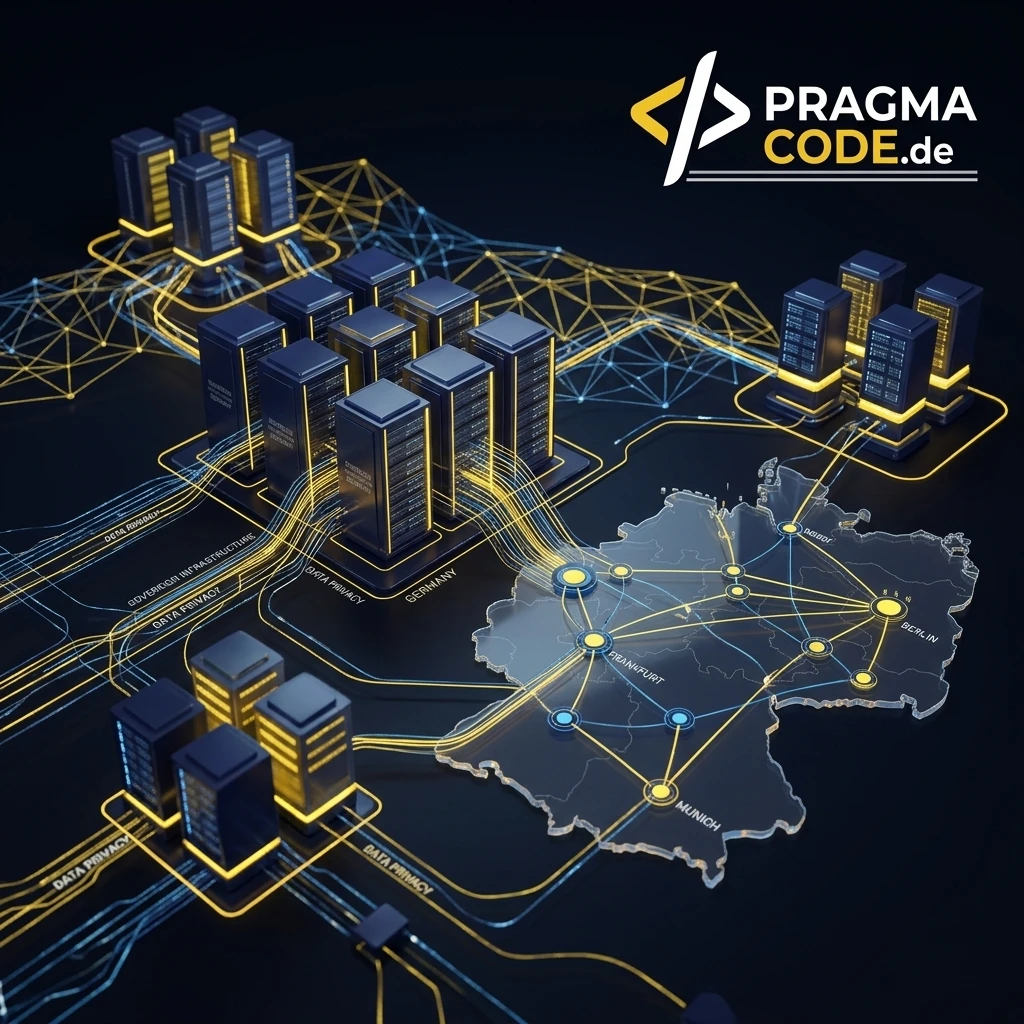
A distributed, secure cloud infrastructure operated strictly under European data protection standards. It ensures physical data residency within the DACH region, fulfills rigorous BSI C5 audit criteria, and shields corporate data from foreign surveillance mandates.
2. Unified APIs & Interoperability
Standardized, publicly documented application programming interfaces built upon OpenAPI 3.1 and proven REST/gRPC protocols. They enable enterprise ERPs, administrative software, and third-party systems to exchange structured business records without proprietary lock-ins.
3. Federated IAM & eIDAS 2.0
A federated, cryptographically secured identity and access management framework for organizations, staff, and citizens. It natively supports verifiable business credentials, corporate digital wallets, and legally binding digital signatures without workflow breaks.
4. Modular Open-Source Components
Pre-audited, reusable software microservices and open libraries addressing routine operations such as form intake, automated payment routing, document rendering, and audit-proof long-term archiving, curated through the national repository Open CoDE.
Implementing these four structural layers fundamentally alters how public authorities and commercial enterprises interact. When new EU statutory directives regarding corporate sustainability reporting (CSRD) or supply chain due diligence take effect, integration occurs through centralized schemas and modular middleware within the stack. Rather than having to maintain hundreds of customized, point-to-point connections across disparate state portals, SMEs can connect their ERP and document management systems to a standardized gateway. The technical robustness of this model is underpinned by container standards (OCI) and portable orchestration platforms like Kubernetes. Consequently, the entire stack remains portable and can be deployed flexibly across municipal data centers, certified European sovereign clouds, or dedicated on-premise clusters.
3. Focus on Open Source and Artificial Intelligence
The core philosophy driving Minister Wildberger's master plan is an uncompromising commitment to Open Source. For decades, public agencies and mid-sized enterprises found themselves trapped in a vicious cycle of proprietary vendor dependencies. Opaque software licenses triggered escalating operational costs while causing a catastrophic loss of autonomous technological control. Organizations deprived of source-code access cannot independently audit vulnerabilities, cannot extend interfaces to meet unique operational needs, and remain completely vulnerable to unilateral price increases or premature product obsolescence.
With the Germany-Stack, the country institutionalizes the strategic doctrine: "Public Money, Public Code". Software developed through public investments must be published under open licenses for collective reuse. This breaks proprietary monopolies, strengthens the regional software ecosystem, and allows independent security audits by academic researchers and cybersecurity specialists. The profound strategic differences between closed proprietary models and sovereign open-source infrastructures are contrasted below:
Comparison: Proprietary Software vs. Sovereign Open Source
- Vendor Lock-in: Severe migration hurdles, proprietary data schemas, and arbitrary subscription price increases.
- Black Box Architecture: Zero inspection of underlying source code; security patches depend entirely on provider priorities.
- Extraterritorial Jurisdiction: Regulatory risks from US Cloud Act, FISA 702, and direct compliance friction with the GDPR.
- Unpredictable Licensing: Compounding recurring expenditures per seat, data volume, and cloud computing minute.
- Full Data Sovereignty: Unrestricted governance over codebases, data storage, and hosting within the DACH region.
- Auditable Transparency: Publicly accessible code enables rigorous penetration testing and continuous code reviews.
- Guaranteed Compliance: Physical hosting within European boundaries ensures full compliance with statutory GDPR rules.
- Capital Protection: Budgets fund bespoke integrations, organizational skills, and long-term equity instead of license drains.
Intertwined with the open-source mandate is the systematic integration of Artificial Intelligence. The master plan does not treat AI as a superficial novelty, but rather as an indispensable lever to counter dramatic demographic shifts within public administrations and mid-sized businesses. Given hundreds of thousands of impending retirements across the civil service and industrial sectors, automated processing, structured data extraction, and customer self-service workflows can only be sustained through intelligent automation.
In this arena, the Germany-Stack champions a strictly sovereign path: instead of funneling confidential business data and citizen records through non-transparent cloud APIs owned by overseas mega-corporations, the initiative prioritizes open-weights language models (such as Llama 3, Mistral, or emerging European foundational models) hosted in hardened sovereign cloud clusters or on-premise infrastructure. Review our comprehensive analysis on On-Premise AI in DACH to explore how enterprises operate state-of-the-art models without compromising data confidentiality. This architecture ensures that valuable industrial IP, financial records, and personally identifiable information remain strictly protected under European jurisdiction, fulfilling the highest standards of Digital Sovereignty.
4. The Alliance of Stakeholders: Open CoDE, ZenDiS, and Industry
No sovereign state can construct a digital infrastructure of this magnitude from isolated ministerial chambers. The master plan deliberately builds upon structured collaboration involving public agencies, established enterprise leaders, scientific institutes, and agile open-source startups. Key institutional pillars anchor and accelerate this nationwide transition:
1. Center for Digital Sovereignty (ZenDiS) & openDesk
ZenDiS directs flagship sovereign initiatives such as openDesk – the public sector's open-source workplace suite. By orchestrating robust components like Nextcloud, Matrix, Open-Xchange, Collabora, and Univention, it offers a functional alternative to Microsoft 365, serving as a scalable reference architecture for security-conscious mid-market businesses.
2. Open CoDE: The Public Sector Code Repository
The Open CoDE platform functions as the central clearinghouse for sharing, auditing, and reusing public-sector software components. Mid-sized software vendors and system houses can directly pull pre-audited libraries, integrate standardized connectors, and contribute custom modules to the broader community.
3. Sovereign Tech Fund (STF)
To fortify foundational open-source components, the federal government finances critical foundational projects through the Sovereign Tech Fund. Investments target maintenance, vulnerability remediation, and continuous hardening of essential libraries, network protocols, and core database engines.
4. Industry Alliances: SAP, Telekom & Specialized Integrators
Global players such as SAP and Deutsche Telekom contribute sovereign cloud compute facilities and enterprise ERP connectors. Meanwhile, modular open specifications prevent traditional monopolization by global consulting firms, enabling specialized regional IT providers to participate as co-equal implementation partners.
The rollout of the Germany-Stack is organized across a phased multi-year schedule, moving from foundational standardization to wide-scale B2B commercial adoption:
Consolidating digital competencies within the Federal Ministry, finalizing core API specifications for the Germany-Stack, and deploying pilot installations across selected pioneer municipalities and states integrating openDesk.
Expanding certified sovereign cloud environments across regional European data center operators. Opening code repositories and API registries on Open CoDE for commercial software houses, ERP creators, and external IT integrators.
Mandatory transition of public procurement reporting, fiscal audits, and commercial statutory submissions to standardized stack interfaces. Direct ERP integration enabling automated, real-time structured data transfer between enterprises and authorities.
This phased implementation timeline underscores that the Germany-Stack is not a fleeting political talking point, but a deeply engineered institutional transformation. Mid-market companies that postpone modernization until legal deadlines arrive face hurried, expensive emergency migrations. Conversely, forward-thinking enterprises that align their IT architectures today will unlock operational efficiencies and capture early-adopter market shares.
5. What the Germany-Stack Means for SMEs in the DACH Region
Although the primary catalyst for the Germany-Stack lies in reforming the public sector, its architectural standards directly influence the private economy. For mid-sized enterprises, this evolution presents significant cost-saving opportunities alongside concrete technical mandates:
B2B Process Standardization
Establishing uniform REST/OpenAPI endpoints and standard data schemas within the Germany-Stack slashes custom development costs for B2B interfaces connecting customers, suppliers, and regulatory bodies. Proprietary point-to-point scripts are superseded by standardized, reusable connectors.
Audit-Proof Compliance & Data Privacy
Adopting open-source European standards and sovereign cloud hosting eliminates legal ambiguities regarding GDPR, the NIS-2 directive, and the Cyber Resilience Act (CRA). Companies achieve end-to-end transparency across their digital supply chain through auditable Software Bills of Materials (SBOM).
Access to Government Innovation Grants
Federal and regional governments aggressively subsidize investments that bolster digital sovereignty. SMEs upgrading their core infrastructure with open-source tools or implementing interoperable interface gateways can tap into substantial non-repayable consulting and technology subsidies.
The most formidable hurdle for mid-sized enterprises stems from entrenched legacy debt. Many businesses still rely on monolithic ERP and inventory systems installed decades ago that lack modern REST endpoints or whose providers demand extortionate licensing fees for API access. However, engaging in an abrupt "rip-and-replace" overhaul introduces immense operational risk and consumes vast capital reserves over multi-year periods. The pragmatic answer lies in an intelligent middleware strategy: by inserting an agile integration layer, organizations can encapsulate legacy systems and connect them cleanly to the modern API landscape of the Germany-Stack.
6. Practical Guide: 4-Phase Roadmap to a Sovereign IT Architecture
To capitalize on the momentum generated by the Germany-Stack while future-proofing internal IT operations, executive leadership should pursue a structured, phased implementation roadmap. Proactive preparation ensures your organization avoids costly last-minute retrofits:
Expert Tip: The Open-Source Audit as a Strategic Lever
Execute an independent IT audit immediately. Pinpoint which proprietary licenses pose severe vendor lock-in liabilities, evaluate where subscription fees are escalating disproportionately, and evaluate where self-hosted open-source technologies (such as n8n for workflow orchestration and PostgreSQL for data storage) can instantly restore operational agility and reduce recurring overhead.
The following battle-tested 4-phase roadmap provides managing directors and IT leaders with a step-by-step framework to establish an interoperable, sovereign digital infrastructure:
-
1. Baseline Assessment & Lock-in Audit
Conduct a thorough inventory across your complete application estate. Catalogue systems utilizing proprietary formats, unmonitored SaaS dependencies, and obsolete interfaces. Quantify financial exposure, licensing escalation risks, and business continuity vulnerabilities over the upcoming 36-month horizon.
-
2. Establish API-First Middleware
Deploy a vendor-neutral integration layer instead of programming rigid point-to-point scripts between legacy cores and modern cloud services. By implementing open workflow engines such as n8n, your organization gains a versatile data transformation hub supporting standardized OpenAPI 3.1 endpoints.
-
3. Introduce Sovereign Open-Source Modules
Systematically replace proprietary point solutions with hardened open-source alternatives. Adopt Nextcloud for enterprise file synchronization, Matrix for encrypted organizational messaging, and run self-hosted language models (via vLLM or Ollama) within certified regional European data centers or on-premise hardware.
-
4. Secure Funding & Institutionalize Compliance
Leverage national and regional subsidy programs to co-finance process modernization and infrastructure hardening. Establish automated workflows to maintain current Software Bills of Materials (SBOM), satisfying upcoming compliance mandates under NIS-2, the Cyber Resilience Act, and public procurement audits.
Deploying a versatile automation platform such as n8n forms the vital bridge connecting legacy business records with the open endpoints of the Germany-Stack. Organizations preserve their core operational investments while securing the architectural agility required to adopt modern microservices. We break down the technical prerequisites for deploying self-hosted, GDPR-compliant automation workflows in our deep dive on n8n GDPR Compliance and Data Sovereignty.
7. Conclusion: Proactively Shaping Germany's Digital Future
Federal Minister Wildberger's Digital Master Plan and the emergence of the Germany-Stack signal a vital recalibration of German and European technology policy. Shifting away from fragmented silos and proprietary lock-ins toward an open, standardized, and interoperable platform architecture unlocks unprecedented opportunities for private enterprise. Treating digital sovereignty not as a bureaucratic burden, but as an engine of competitive differentiation delivers tangible cost reductions, impeccable data protection, and permanent architectural resilience.
For mid-sized enterprises across the DACH region, the strategic imperative is unmistakable: decisions made today will define operational independence for the next decade. Companies that deliberately orient their digital architectures around open interfaces, modular open-source foundations, and vendor-neutral cloud infrastructure will maintain leadership in their industries and insulate their operations against global geopolitical volatility.
Quick-Check: Your Path to Sovereignty
Do you have questions about IT strategy and digital sovereignty?
Schedule a Free ConsultationOur Regional Expertise
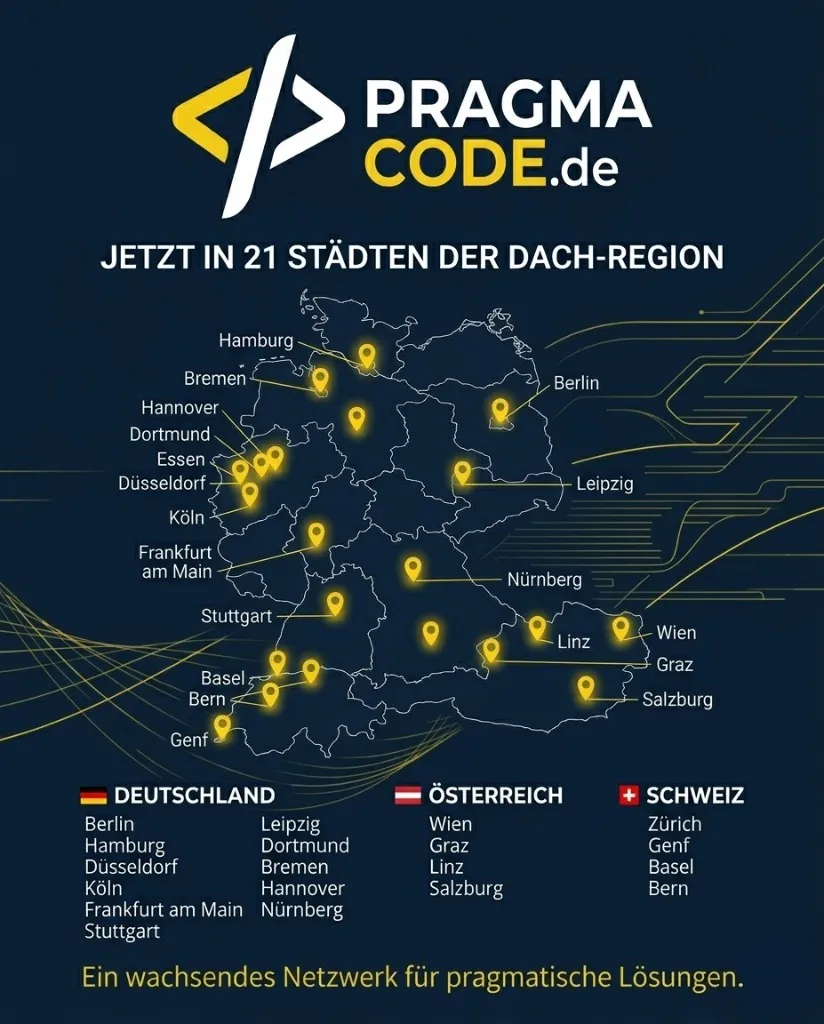
We are your digital partner – regionally anchored and successfully scaling across borders.
Process automation for your business?
I deliver this for small and mid-sized businesses: at a fixed price agreed upfront, working directly with the person who builds it. Process, scope and pricing are on the service page.
See service & pricing Or request a free intro callExtended Specialized Glossary
Germany-Stack
A concept for a sovereign and standardized IT infrastructure in Germany, based on open-source software and open standards, aiming to reduce digital dependencies.
Digital Sovereignty
The ability of states, organizations, or individuals to shape their digital affairs self-determinedly and minimize technological dependencies.
Open Source
Software whose source code is publicly accessible and can be viewed, modified, and used by third parties. Usually free of charge and royalty-free.