


In business, concentration risk is the silent destroyer of enterprise value and operational continuity: Companies that tie their mission-critical workflows, customer acquisition, and software infrastructure to a single tech monopoly or manual administrative paperwork face catastrophic collapse upon the slightest friction. Just as classical Flag Theory provided individual sovereignty, the Digital Flag Theory offers strategic immunity: Instead of relocating offshore, forward-thinking enterprises build resilient domestic sovereignty — through owned web infrastructure, autonomous AI workflows, and undisputed search authority from a single source.
This article is an in-depth expert contribution from our content cluster. Discover the complete overview on our main page: AI Automation for SMEs & Enterprises →
- Concentration risks threaten business continuity: Bundling sales pipelines, customer relations, financial billing, and core computing in proprietary third-party platforms creates an existential vulnerability to sudden account bans, pricing spikes, or algorithm shifts.
- The Digital Flag Theory builds true structural resilience: Established enterprises do not need to physically relocate overseas to achieve security. By dividing digital value creation into three decoupled pillars — Owned Web Assets, open-standard AI automation, and multi-engine GEO authority — companies gain operational invulnerability.
- The strategic power of a single accountable partner: Fragmentation between siloed web agencies, freelance SEO consultants, and corporate IT houses breeds finger-pointing and compounding friction. A unified partner aligns core engineering, process automation, and market positioning into an airtight ecosystem.
- 1. The Spark of Debate: Concentration Risks in Modern Business
- 2. Flag Theory: From Perpetual Traveling to Enterprise Digital Strategy
- 3. The Enterprise Reality: Why Relocation Is Not an Option
- 4. The 3 Pillars of Digital Flag Theory Explained
- 5. Pillar 1: Web Sovereignty & Owned Media vs. „Rented Land“
- 6. Pillar 2: Autonomous AI Automation as a Buffer Against Bureaucracy and Labor Shortages
- 7. Pillar 3: Visibility in 2026 – From Traditional SEO to Generative Engine Optimization (GEO)
- 8. The Multi-Vendor Fallacy: Why Three Disconnected Agencies Compound Risk
- 9. Step-by-Step Roadmap: Establishing Full Turnkey Digital Sovereignty
- 10. Executive Quick-Check & References: The Concentration Risk Audit
The Concentration Risk Debate: Why Sovereignty Trumps Geography
Facing mounting administrative burdens, aggressive platform terms of service, and rapid technological disruption, corporate leaders stand at an inflection point. While solopreneurs discuss geographic migration, established industrial and mid-market firms must engineer resilience within their existing operational base: through architectural decoupling, proprietary data ownership, and self-hosted automated efficiency.
1. The Spark of Debate: Concentration Risks in Modern Business
Imagine an executive discovering overnight that their primary corporate banking account has been abruptly terminated because an automated compliance algorithm flagged an atypical cross-border transaction. Operations instantly seize up: vendor payments fail, payroll cannot execute, and customer inquiries freeze. This exact scenario played out live in a recent interview on the German business podcast „ungeskriptet“ hosted by Ben, featuring Christoph Heuermann, the founder of staatenlos.ch and Europe's most prominent advocate of Flag Theory. During the recording session, Ben received a bank notification confirming that his primary business account was being closed with immediate notice — a textbook illustration of devastating concentration risk.
In strategic risk management, concentration risk describes an unhealthy aggregation of critical dependencies along a single axis. Placing 100% of an investment portfolio into a single speculative stock is widely recognized as irresponsible. Yet thousands of established mid-market enterprises and business owners commit this precise mistake daily across their mission-critical operations:
1. Customer Acquisition Concentration Risk
80 percent of qualified sales leads originate from Google Ads or Meta campaigns. When an ad-account suspension strikes or ad costs surge, customer acquisition drops to zero overnight.
2. Software & Infrastructure Concentration Risk
Mission-critical customer records, quotes, and project histories reside in closed, proprietary SaaS silos. Sudden annual licensing hikes or policy shifts enforce an inescapable vendor lock-in.
3. Administrative & Labor Concentration Risk
Every invoice matching step, regulatory filing (such as e-invoicing compliance or supply-chain reporting), and routine inquiry relies on manual administrative labor — in a job market where skilled clerical staff is virtually impossible to recruit.
2. Flag Theory: From Perpetual Traveling to Enterprise Digital Strategy
Originally formulated in the 1960s by investment strategist Harry Browne and updated for the internet era by Christoph Heuermann, classical Flag Theory is rooted in an elegant premise: „Go where you are treated best.“ In its traditional personal application, it diversifies an individual's life across sovereign jurisdictions:
Flag 1: Citizenship
A passport from a country that does not tax foreign-sourced income and provides unhindered travel freedom.
Flag 2: Tax Residency
A domicile situated in a jurisdiction with low or zero territorial taxation on global revenue.
Flag 3: Corporate Entity
A company incorporation in a transparent, light-touch regulatory environment with minimal red tape.
Flag 4: Asset Vaulting & Banking
Commercial bank accounts and liquidity reserves stored in solid jurisdictions with strong creditor protections.
Flag 5: Playgrounds & Living
Locations chosen purely for lifestyle, security, culture, and environmental quality.
During the podcast, Heuermann articulated how he has maintained this nomadic architecture for over a decade: visiting over 160 countries, holding multiple legal citizenships, and running operations across decentralized teams. However, the most profound insight for business leaders lies not in offshore structuring, but in his origin story: He arrived in Mexico with just 2,000 euros in savings, writing freelance articles about bicycle helmets for 15 euros per hour — and quickly realized that selling linear time inevitably leads to an operational dead end.
His eventual multi-million-euro breakthrough was powered by one fundamental engine: an independent, self-hosted blog. Heuermann dedicated years to publishing in-depth, 3,000-to-4,000-word authoritative guides every other day, converting traffic into owned email subscribers via downloadable playbooks. This organic asset generated inbound commercial demand without relying on paid advertising budgets or corporate intermediaries. He constructed true digital private property — the foundational prototype of digital sovereignty.
Comparison: Traditional Concentration Risk vs. The Digital Flag Theory
- Acquisition Channel: 100% dependent on paid Google or Meta ads, vulnerable to unpredictable cost-per-click surges and policy bans.
- Web Infrastructure: Bloated legacy CMS (e.g., monoliths with 45 plugins) hosted on generic shared servers with frequent vulnerabilities.
- Process Execution: Manual paperwork, disconnected spreadsheets, and overworked staff wrestling with bureaucratic reporting.
- Entity Authority: Invisible in generative AI tools; missing structured data graphs; defenseless against search algorithm drops.
- Vendor Structure: Fragmented blame games: web designers clash with SEO agencies, who in turn blame internal IT teams.
- Acquisition Channel: Decoupled, multi-channel inbound pipeline built on blazing-fast owned web assets, organic ranks, and direct AI citations (GEO).
- Web Infrastructure: Hardened Astro edge architecture, zero cookie friction, full GDPR compliance, and sub-second load speeds (LCP < 0.8s).
- Process Execution: Autonomous AI pipelines (e.g., n8n & Hermes agents) automating invoice parsing, quotation routing, and CRM updates.
- Entity Authority: Prominently established knowledge-graph entity across Perplexity, ChatGPT, Claude, and Google AI Overviews.
- Vendor Structure: A single strategic partner engineering your web foundation, AI automation, and search dominance seamlessly.
3. The Enterprise Reality: Why Relocation Is Not an Option
In the podcast dialogue, Heuermann openly acknowledged a fundamental truth: „This is not the mid-market model.“ A family-owned manufacturing plant in Baden-Württemberg, a specialized engineering firm in Texas, or an established logistics provider in Rotterdam cannot simply pack their operations into a carry-on suitcase. When an enterprise operates physical CNC machinery, assembly lines, hundreds of skilled employees, regional supplier networks, and generational heritage, moving to Cyprus or Panama is neither viable nor desirable.
Yet, executives across mature economies feel the operational squeeze intensifying. The structural friction is undeniable:
-
Escalating Compliance & Administrative Burdens
From mandatory structured electronic invoicing (ZUGFeRD, XRechnung) to NIS-2 cybersecurity mandates and supply-chain auditing directives: Regulatory overhead consumes substantial executive mindshare and clerical bandwidth.
-
Structural Shortages of Operational Talent
Experienced administrative staff capable of managing complex order processing, document reconciliation, technical customer support, and IT workflows have become nearly impossible to hire and retain.
-
Erosion of Pricing Power via Middleman Platforms
Firms that surrendered customer acquisition to proprietary aggregators, paid advertising auctions, or closed third-party directories face escalating commission structures while their own brand equity diminishes into a commoditized listing.
Therefore, the core strategic question for business leaders is not: „How do we flee our home jurisdiction?“ but rather: „How do we insulate our domestic operations through automated efficiency, sovereign technology, and owned digital assets so thoroughly that bureaucratic shifts and external shocks cannot erode our profitability?“ This is where the Digital Flag Theory delivers immediate enterprise value.
4. The 3 Pillars of Digital Flag Theory Explained
Just as personal Flag Theory hedges personal exposure, the Digital Flag Theory insulates the three core organs of any B2B enterprise: its digital storefront (Web Infrastructure), its operational nervous system (Business Processes), and its client pipeline (Market Visibility).
1. Web Sovereignty & Owned Media
Deploying an uncompromising, ultra-fast web foundation using modern edge architectures (Astro, serverless static pipelines). Eliminating fragile plugin dependencies, proprietary site-builders, and insecure hosting silos.
2. Autonomous AI Automation
Eliminating clerical bottlenecks with self-hosted workflow engines (n8n) and specialized Agentic AI frameworks. Invoicing, ticket triage, and lead pre-qualification operate without staffing constraints.
3. GEO & Entity Visibility
Upgrading online reach for the 2026 AI search landscape: Embedding brand entity data into semantic knowledge graphs so engines like Perplexity, ChatGPT, Claude, and Google AI Overviews cite your brand directly.
4. Turnkey Engineering from One Hand
Integrating all components into a synchronized operational stack. No API impedance mismatches, no disputes between creative agencies and IT integrators — just a coherent, production-ready system.

5. Pillar 1: Web Sovereignty & Owned Media vs. „Rented Land“
The most dangerous illusion of the past decade was assuming that social media feeds, third-party marketplaces, or proprietary website SaaS platforms could substitute for an owned digital headquarters. Building business visibility solely on LinkedIn, Instagram, or rented proprietary storefronts means constructing an empire on leased land („Rented Land“). A single update to terms of service, an unexpected account suspension, or an algorithmic demotion can obliterate years of audience equity overnight.
Christoph Heuermann's trajectory reinforces this reality: His enterprise was built entirely on an independent domain. Articles written eight years ago continue to rank and generate clients today. However, in 2026, web sovereignty demands far more than maintaining a basic CMS. Aging WordPress installations burdened with 45 disparate plugins represent severe operational and security liabilities. They are sluggish, brittle, and prime targets for automated exploit bots.
Pragma Code engineers true digital independence by deploying decoupled, modern web architectures:
Static Edge Compilation with Astro
Instead of executing sluggish database queries on every HTTP request, web pages are pre-compiled into lightweight, hyper-optimized HTML and CSS. The result is instant page loads (Core Web Vitals consistently at 100/100) and 99.99% uptime resilience under extreme traffic surges.
Strict Privacy & Data Sovereignty
Dedicated hosting in privacy-conscious European facilities, self-hosted typography, and modern privacy-first analytics (such as Plausible) without intrusive cookies. This completely eliminates legal liability while signaling enterprise-grade rigor to corporate buyers.
Modular Scalability
The website ceases to be an inert digital brochure and transforms into an interactive client interface, communicating seamlessly via standardized webhooks with your internal automation fabric.
6. Pillar 2: Autonomous AI Automation as a Buffer Against Bureaucracy and Labor Shortages
During the podcast, Heuermann reflected on his earliest freelance gigs: „I used to write content descriptions for bicycle helmets... Today, AI handles all of that. Back then, you could earn 15 euros an hour doing that.“ While commoditized freelance writing has dissolved, this technological shift presents mid-sized companies with the single greatest margin-expansion lever since the advent of enterprise computing.
Mid-sized enterprises rarely suffer from a lack of engineering talent or client demand — they suffer from structural friction. When senior engineers, sales directors, and controllers spend 40% of their week manually retyping supplier invoices, hunting down data across legacy ERP tables, or answering repetitive status emails, growth stagnates under operational bloat.
Strategic Advisory: Workflow Architecture Before Model Selection
The most common corporate pitfall in AI adoption is distributing generic chatbot subscriptions to staff without workflow orchestration. True productivity breakthroughs occur when foundation models are connected directly to databases, ERP APIs, and communication queues via open-source workflow platforms like n8n. Crucially, enterprise data must strictly adhere to zero-data-retention standards, preventing private corporate records from training public models.
By engineering specialized AI pipelines and autonomous agents (such as Pragma Code's Hermes system), we systematically eliminate operational bottlenecks:
1. Automated Document & Invoice Processing
Inbound PDF invoices, packing slips, and electronic ZUGFeRD data are ingested, parsed with multi-modal vision models, cross-referenced with purchase orders, and committed into accounting systems without human data entry.
2. Autonomous 24/7 Technical Lead Triage
An on-site conversational intelligence agent answers complex technical inquiries regarding engineering tolerances, specs, and certifications, vetting prospective buyers before directly booking qualified calls into your executive calendar.
3. Real-Time Cross-System Data Synchronization
Breaking down software silos: Event-driven workflows propagate order milestones and status changes instantly across CRM, ERP, and project systems, notifying stakeholders and generating logistics paperwork autonomously.
7. Pillar 3: Visibility in 2026 – From Traditional SEO to Generative Engine Optimization (GEO)
Heuermann's engine was long-form organic content. But how does that strategy translate into an era where search engines no longer just provide lists of blue links, but generate synthesized direct answers? Relying solely on keyword stuffing like „industrial machining supplier Ohio“ ignores the profound shift in B2B procurement behaviors.
Decision-makers at major corporations no longer spend hours skimming search results. They consult Perplexity AI, ChatGPT, Claude, or Google AI Overviews with detailed natural language prompts: „Which certified European precision supplier manufactures titanium implants conforming to ISO 13485 with lead times under two weeks?“
If your enterprise is not explicitly cataloged as an authoritative, verified entity within the knowledge bases and Retrieval-Augmented Generation (RAG) graphs of these models, you do not exist in the final procurement consideration set. This is where GEO (Generative Engine Optimization) becomes indispensable:
Utilizing nested Schema.org JSON-LD definitions (Organization, Service, OfferCatalog, FAQPage) to explicitly declare manufacturing tolerances, certifications, and capabilities in machine-readable formats.
Generative models preferentially cite primary sources with high information density, concrete empirical benchmarks, and clear AnswerBox formatting (40–60 words calibrated for direct AI synthesis).
Instead of disconnected blog entries, we architect reciprocal topic hubs that establish undisputed entity authority across both search engine crawlers and modern LLM embeddings.
8. The Multi-Vendor Fallacy: Why Three Disconnected Agencies Compound Risk
When leadership acknowledges the necessity of modernizing, many commit a disastrous error: hiring three separate service providers. The creative web design studio builds an attractive but sluggish website. The outsourced SEO agency delivers generic keyword lists but lacks the technical competence to refactor codebase bottlenecks. And the legacy IT house attempts to sell overpriced, rigid automation software.
The result is a new, self-inflicted concentration risk: Systemic friction and zero accountability. When conversion rates decline, the web designer blames the SEO copy; the SEO agency blames sluggish server response times; and the IT provider insists that the web form cannot interface with internal databases.
Pragma Code breaks this multi-vendor trap with a holistic, single-source philosophy: AI automation, high-performance web development, and search visibility engineered as an indivisible whole.
When website code is intentionally architected from day one to trigger webhook events and power AI pipelines, and when content is semantically formatted to feed both LLMs and search engines, compounding returns emerge: Every digital upgrade amplifies automated efficiency, and every streamlined process frees up capital for market expansion.
9. Step-by-Step Roadmap: Establishing Full Turnkey Digital Sovereignty
Transitioning out of operational vulnerability does not require multi-year disruption. We deploy a disciplined, four-phase agile rollout:
Concentration Risk Diagnostic
Comprehensive audit of all existing single points of failure: Which advertising channels dominate inbound leads? What vendor lock-ins exist across software stacks? Which manual paperwork routines consume the most executive hours? Identifying critical vulnerabilities.
Deploying the Sovereign Web Core
Engineering and deploying a blazing-fast, secure, and accessible digital asset on the Astro framework. Incorporating Pragma Code's high-contrast design tokens, total GDPR compliance, and direct API endpoints.
Automating Core Business Workflows
Deploying dedicated AI pipelines (leveraging self-hosted n8n instances and private enterprise RAG). Automating document triage, customer qualification, and CRM synchronization, providing immediate administrative relief.
GEO & Multi-Engine Authority Rollout
Securing your enterprise's presence across generative AI engines through semantic entity markup and high-authority topical clusters, unlocking a sustainable inbound lead stream independent of paid ad auctions.
10. Executive Quick-Check & References: The Concentration Risk Audit
To evaluate the vulnerability of your current operational model, review the following diagnostics:
Diagnostic: How Sovereign Is Your Digital Core?
If you answered „Yes“ to two or more of these questions, your business operates under significant concentration risk. Fortunately, you do not need to uproot your company or abandon your domestic base. By implementing a focused strategy uniting web sovereignty, custom AI automation, and generative search visibility, you transform precarious dependencies into an unshakeable competitive moat.
Video Source & Context of the Debate
The inspiration for this analysis, as well as the discussions regarding Flag Theory, concentration risks, and building resilient online assets, stems from the detailed conversation on the podcast „ungeskriptet“ (Host: Ben) with featured guest Christoph Heuermann (Founder of staatenlos.ch).
Episode Title: „Ist es Zeit für mich, das Land zu verlassen?“ (Is it time for me to leave the country?)
Full YouTube video accessible at: https://youtu.be/eqo5HZIKJ54 (YouTube: ungeskriptet Podcast).
Ready to audit your operational vulnerabilities and discover how turnkey web engineering, AI automation, and GEO visibility can protect and scale your enterprise? Explore our transparent Packages & Pricing or schedule an architectural AI Automation Consultation today.
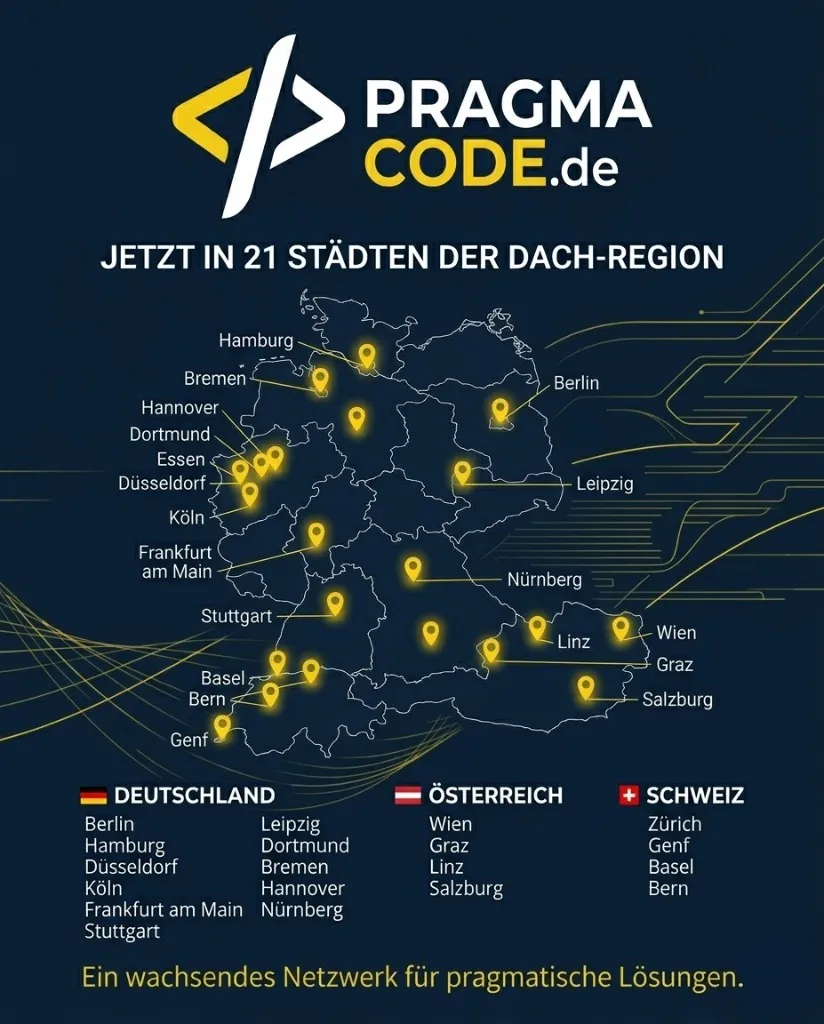
Our Regional Expertise
We are your digital partner – regionally anchored and successfully scaling across borders.
Have a vision?
Let's check together how we can make your idea take flight.
Book your free strategy call nowExtended Specialized Glossary
Concentration Risk
The dangerous over-reliance of a business on a single vendor, platform, single point of failure, or jurisdiction, where outages or sudden account suspensions threaten operations.
GEO (Generative Engine Optimization)
The deliberate optimization of digital assets and semantic entity graphs to ensure generative engines like Perplexity, ChatGPT, Claude, and Google AI Overviews cite your brand as the primary authority.
Vendor Lock-in
A proprietary trap where transitioning away from a specific software or cloud ecosystem imposes prohibitive migration costs, technical barriers, and switching penalties.
Agentic AI
Autonomous software agents built on foundation models that execute multi-step business workflows, trigger API tools, and reconcile data autonomously.