


Alarming reports on Germany's digitalization deficits dominate the headlines. For small and medium-sized enterprises (SMEs) in the DACH region, this constitutes a direct threat to international competitiveness. But where does the region actually lag behind – and how can SMEs leverage pragmatic strategies and modern technology platforms to catch up on their own? This guide provides your strategic roadmap out of the digitalization trap.
This article is an in-depth expert contribution from our content cluster. Discover the complete overview on our main page: IT Services & Digital Consulting →
- The Status Quo: The DACH region, particularly Germany, is steadily losing ground in international comparisons. Bureaucratic hurdles, sluggish administrative digitalization, and fragmented network infrastructures strain B2B value chains.
- The Consequence for SMEs: Companies waiting for government reforms endanger their business continuity. Analog processes inflate operational costs, exacerbate labor shortages, and weaken positioning in global markets.
- The Catch-up Strategy: By performing a targeted digitalization audit, adopting modular software architectures, automating workflows, and establishing tech partnerships, SMEs can turn the lag into a distinct competitive advantage.
From Digitalization Administrator to Agentic Pioneer
Simply converting paper to PDFs is obsolete: In 2026, the ability to orchestrate autonomous AI agents, API-driven workflows, and resilient cloud architectures dictates the global competitiveness of mid-market enterprises.
Germany Trapped in a Digitalization Corner? Introduction
For decades, the economic strength of Germany, Austria, and Switzerland relied heavily on engineering excellence, precision in classic machinery, and deep industrial value creation. However, in the global, software-driven 21st century, the coordinates are shifting. Companies that sleep on digitalization lose the interface to the customer, suffer from inefficient structures, and risk being decoupled from global supply chains.
Recent industry reports, such as the latest Bitkom digitalization survey or analyses by ChannelPartner, paint an alarming picture. Whether in public administration, digital infrastructure expansion, or process maturity in SME offices: the DACH region lags behind. Moreover, the vast majority of the public and businesses demand significantly faster progress, as reported by Retail-News Deutschland. We are stuck in a digitalization trap.
For small and medium-sized enterprises (SMEs) in the DACH region, this inertia is not just a political annoyance, but an existential threat to their competitiveness. Most administrative processes still require physical paperwork, media disruptions block B2B commerce, and slow data connections slow down the adoption of modern technologies such as Cloud Computing or Agentic AI.
However, this article does not stop at outlining deficits. As a pragmatic digital transformation partner, Pragma-Code shows how SMEs can take the initiative. We analyze the status quo, derive strategic countermeasures, and provide a concrete 5-step roadmap alongside a maturity matrix for self-assessment. The message is clear: do not wait for politics or network expansion – the tools for transformation are ready, and you can leverage them today.
We must understand that digitalization is not a one-off IT project, but a continuous evolution. DACH SMEs have proven in the past that they can adapt to changing market conditions. However, the current transformation requires a more radical rethink. It is no longer just about supporting existing processes with software, but about fundamentally reimagining these processes and automating them completely wherever possible. This is the only way to keep pace with global competitors and secure true digital sovereignty.
1. The Hard Facts: Where the DACH Region Lags Behind
To design an effective counter-strategy, we must locate the problem areas precisely. The digital deficit of the DACH region can be divided into three critical areas:
Key Areas Requiring Immediate Action
A. Public Administration and Legislation
The slow pace of administrative digitalization is the most prominent bottleneck. The Online Access Act (OZG), passed in Germany in 2017 to digitize all administrative services by the end of 2022, has largely failed. B2B companies spend valuable working hours weekly filling out physical forms, submitting certified paper copies, and waiting for postal replies. Compared to European pioneers like Estonia or Denmark, the German bureaucracy feels like a relic of the analog age. This inefficiency ties up valuable HR capacities and severely dampens company formations and investments. Any delay in municipal approvals for construction or business licenses costs money and weakens market positioning.
B. Digital Infrastructure and Network Deficits
Although Germany is a leading global export nation, high-speed internet coverage in rural areas – the traditional heartland of DACH manufacturing – remains a patchwork. Fiber-optic expansion is crawling forward. Many companies must make do with copper lines or unstable directional radio links. This not only prevents the high-performance execution of modern cloud systems but also makes hybrid work or real-time production data synchronization virtually impossible. Even in the mobile sector, true connectivity like 5G Standalone (SA) is often still a dream in industrial clusters, as detailed in our report on Tech Infrastructure DACH. The lack of stable bandwidth severely hampers the adoption of IoT solutions on the factory floor.
C. Internal Business Processes and Legacy Systems
A self-inflicted issue for many SMEs is their attachment to legacy IT infrastructures. Many factories still run ERP systems dating back to the early 2000s, costing fortunes to maintain. Data sits in isolated silos, departments communicate via Excel spreadsheets and email lists, and manual data entry blocks qualified personnel. This lack of process maturity makes the integration of modern interfaces (APIs) impossible and creates immense transaction costs. Copying data manually between systems is not only time-consuming but also highly error-prone.
Inflated Process Costs
Manual data transfers, order errors due to media disruptions, and tedious approval loops drive up administrative costs. Every manual touchpoint is a cost driver.
The Labor Shortage Multiplier
Young, highly qualified professionals avoid companies that work with analog or outdated tools. If recruiting processes rely on paper or slow email cycles, you lose top talent before the first interview. A modern digital workspace is a key criteria in modern employer branding.
Slow Time-to-Market
While agile, foreign competitors launch and scale new digital products or services in weeks, analog DACH companies need months for coordination and technical deployment.
Loss of Customer Interfaces
B2B buyers today expect the same seamless user experience they know from B2C: self-service portals, transparent delivery times, and automated invoicing. Those who fail to deliver are filtered out. The customer interface is being occupied digitally – those who are not present lose direct access.
Survey Insights: What Businesses and the Public Demand
Dissatisfaction in Germany has reached historic levels. Representative surveys by the digital association Bitkom paint a clear picture:
"Over 80 percent of German businesses complain that the lack of digitalization in public administration severely stalls their own transformation efforts. The business community demands radical simplification and the end of physical signature requirements."
At the same time, according to Retail-News Deutschland, nearly 90 percent of citizens and retailers demand significantly more speed and determination in infrastructure digitalization. The pressure is felt everywhere. Businesses must understand that while they cannot steer political frameworks, their internal digital transformation is 100 percent under their control. It is time to break out of passive complaints and actively build digital sovereignty.
2. From Challenge to Opportunity: Strategies for SMEs
The digital deficit paradoxically harbors a massive opportunity: those who digitalize resolutely now can leapfrog competitors in the DACH region who are still hesitating. The core principle remains: strategy beats technology. Simply introducing a new software tool does not solve structural deficits. It requires a holistic approach addressing three dimensions.
Comparison: Analog Inefficiency vs. Digital Sovereignty
- Process Flow: Paper records, manual ERP entries, high error rate.
- Customer Interaction: PDF/postal quotes, no real-time pricing, support only via telephone during office hours.
- Decision Making: Gut-feeling decisions based on outdated monthly reports.
- Employee Focus: Hours of routine work, high frustration, low appeal to new talent.
- Process Flow: Automated workflows (e.g., via n8n), seamless API integrations, real-time validation.
- Customer Interaction: Modern B2B customer portal, automated self-service, personalized GEO optimization.
- Decision Making: Decision intelligence powered by aggregated data streams and AI analytics.
- Employee Focus: Creative value creation, focus on innovation, modern digital workspace culture.
Internal First: Digitizing Core Processes (Production, Logistics, Accounting)
The foundation of any successful transformation lies in the engine room of the business:
Accounting and Finance (Mandatory E-Invoicing 2026)
With mandatory B2B e-invoicing coming into force, automated invoice ingestion (OCR validation, automated purchase order matching, and straight-through posting into the ERP) saves up to 80 percent of manual processing overhead. Learn more in our master guide on automating accounting.
Logistics and Supply Chain
Connecting suppliers via standardized APIs instead of manual emails minimizes transmission errors and optimizes inventory. Autonomous AI agents monitor stock levels in real time and trigger reorders independently, securing delivery reliability in volatile markets.
Production (Industry 4.0)
Using sensor technology and edge gateways, machine telemetry is captured to establish Predictive Maintenance. This prevents costly unplanned downtime and extends equipment lifecycles. Shopfloor data streams directly into the ERP for precise cost accounting.
External Transformation: Customer Interaction & New Business Models
Once internal homework is done, the market interface must be digitized:
B2B Customer Portals
Provide your customers with a digital portal where they can place orders, view quotes, download invoices, and manage returns 24/7. This relieves your back-office team and increases customer satisfaction by eliminating the wait for callbacks.
AI Search Visibility (GEO)
Traditional SEO is no longer sufficient in 2026. With the rise of AI engines like Perplexity, SearchGPT, and Google Gemini, your content must be structured so that AI agents understand and cite it. We call this Generative Engine Optimization (GEO) and help you establish your brand as a Single Source of Truth in your segment, ensuring visibility in the digital marketing of the future.
Data-as-a-Service (DaaS)
Think about how you can aggregate data generated in your company (e.g., machine usage data at customer sites) and offer it as a standalone service or to optimize customer processes. This creates new, Recurring Revenue streams and transforms your business from a pure manufacturer into a solution provider.
Embedding Agility & Innovation Culture
Technology is only as good as the people operating it. The biggest hurdle to digitalization is rarely budget or software, but cultural resistance (“We’ve always done it this way”).
Lead by Example
Executive management must be the driving force behind digitalization and foster a culture of experimentation. Digitalization must be a priority at the C-level, not just an IT task.
Reduce Anxiety
Communicate transparently that digitalization and AI automation do not eliminate jobs but free employees from repetitive chores, allowing them to focus on high-value tasks. The focus is on increasing value creation per employee.
Training and Enablement
Invest continuously in digital upskilling. Appoint "Digital Champions" in various departments – employees who test new tools and demonstrate the benefits to their peers, lowering barriers to daily usage of new tech.
3. Your 5-Step Roadmap to Digital Success
Developing digital excellence is a structured process, not a sprint. Pragma-Code recommends DACH SMEs adopt an iterative five-step approach to minimize financial risk and secure quick wins.
-
Step 1: Digital Maturity Assessment & Audit
Before you invest, know where you stand. Run a detailed inventory of all IT systems, data flows, and manual processes. Use the maturity matrix below for self-assessment and pinpoint your biggest efficiency killers.
-
Step 2: Digital Strategy & KPI Definition
Define clear, measurable targets (e.g., 'reduce customer inquiry response times by 50%' or 'achieve 70% straight-through processing for invoices'). Create a technology roadmap detailing which systems to modernize and which to retire. Avoid trying to change everything at once.
-
Step 3: Tech Partnerships
Avoid building everything yourself (the make-or-buy trap). Choose established standard software for non-critical workflows (e.g., HR, CRM) and build custom, high-performance solutions (e.g., with Astro or n8n integrations) where they yield a real competitive edge. Partner with experienced specialists to avoid errors and accelerate development.
-
Step 4: Enablement & Skills Development
Get your employees on board early. Offer target-oriented training and establish agile workflows. Only if the team understands and enjoys using the new systems will the transformation succeed and productivity rise.
-
Step 5: Iterative Implementation & Optimization
Apply the MVP (Minimum Viable Product) principle. Launch a basic, functional version of a new tool quickly, gather user feedback, and optimize the system in production. This avoids expensive bad investments and secures fast user adoption.
4. The Digital Maturity Matrix for SMEs
Use this matrix to assess your company’s current status and prioritize actions. Which level best describes your organization in terms of infrastructure, processes, and customer interface?
Quick-Check: Prioritize Your Action Items
Pro-Tip: Start Today
Do not wait for governments, regulations, or fiber-optic lines to reach your street. Start small: automate a single, error-prone workflow – like pushing website leads to your CRM or automating invoice verification. These 'quick wins' demonstrate immediate value to your team, building the trust and momentum required for larger transformation projects. Every step counts.
Conclusion & Outlook
The digitalization lag in the DACH region is an undeniable reality. However, instead of freezing in inaction or pointing fingers solely at politicians, the SME sector should view this as a wake-up call.
The technological tools to bridge this gap have never been more accessible, powerful, and cost-effective. By deploying integration platforms, using modern web frameworks like Astro for your B2B platforms, and implementing smart workflow automations, you can gain independence from public-sector delays. You secure digital sovereignty, durably reduce operational costs, and position yourself as a modern employer for tomorrow’s talents.
It is a matter of strategic prioritization. Saving money on digitalization today is saving on the future viability of your business model. Digital transformation is not a state you reach and then manage; it is an ongoing journey. Tomorrow’s winners are those who build structural foundations today to integrate new technologies rapidly and flexibly.
The digital leap is no longer a question of if, but of when you act. Take the first step and audit your processes. Your company’s future is decided now.
Do you have questions about digital strategy for your business?
Arrange a free initial consultationOur Regional Expertise
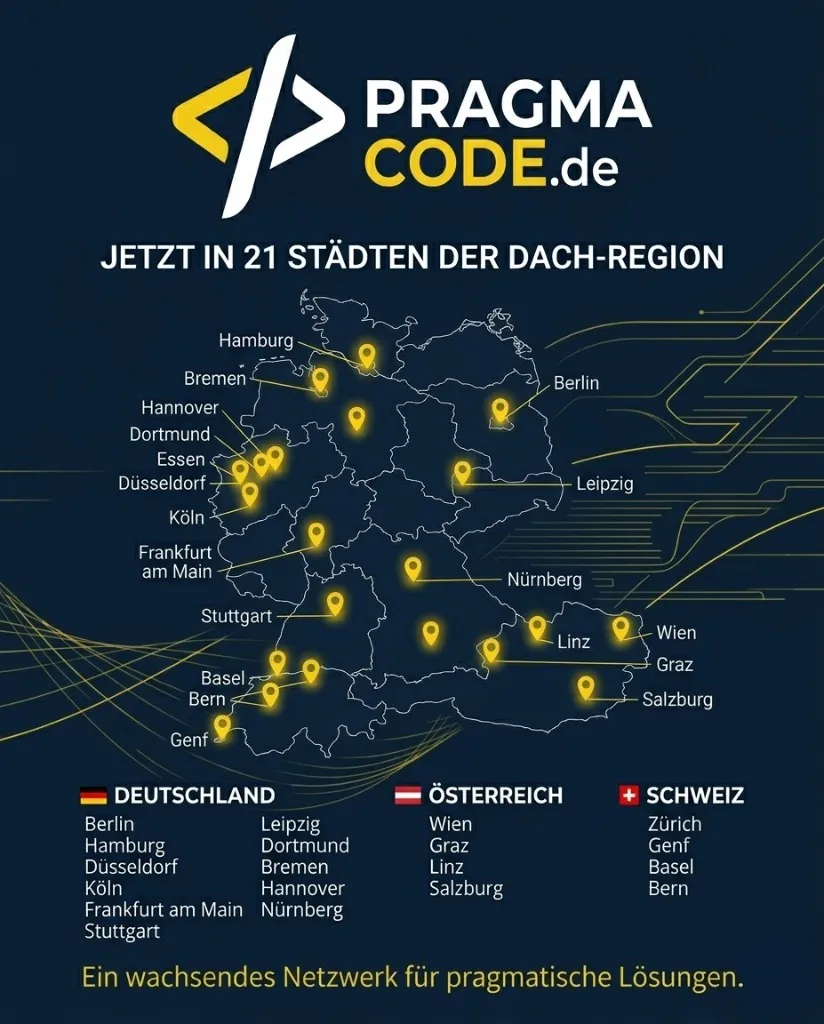
We are your digital partner – regionally anchored and successfully scaling across borders.
Have a vision?
Let's check together how we can make your idea take flight.
Book your free strategy call nowExtended Specialized Glossary
Digitalization Audit
A systematic investigation and evaluation of a company's IT systems, data flows, and business processes to identify areas for efficiency improvement.
Digital Maturity Assessment
A structured evaluation process used to determine a company's current level of digital development, typically covering infrastructure, culture, and processes.
Administrative Digitalization
The transition of public administration and governmental processes to digital formats, allowing businesses and citizens to interact with authorities online.