


Digital marketing in 2026 is facing a perfect storm. The familiar silos between organic SEO, social media, and paid advertising are collapsing. AI-powered browsers are establishing themselves as radical new gatekeepers that replace the classic click-through to the web with direct, locally synthesized answers, while deterministic campaign attribution becomes entirely fictitious. For mid-sized B2B companies, this new paradigm requires a fundamental pivot away from single-channel optimization toward a holistic strategy of brand authority.
This article is an in-depth expert contribution from our content cluster. Discover the complete overview on our main page: SEO Optimized Blog Articles →
- The New Gatekeeper Effect: AI browsers summarize websites locally and answer search queries directly. Traditional referral traffic is dropping sharply; brands must optimize themselves directly into the syntheses of these client-side agents via structured data and GEO factors.
- Channel Collapse: The borders separating SEO, SEA, social media, and PR are fading. Successful campaigns in 2026 rely on cross-channel content syndication designed to feed search algorithms with coherent entity signals rather than optimizing isolated touchpoints.
- Post-Deterministic Measurement: Cookie deprecation and conversational AI queries make exact 1-to-1 attribution impossible. The future belongs to probabilistic modeling (MMM) and a new guiding metric: "Citation Share" as the indicator of digital relevance.
1. The Era of AI Browsers: New Gatekeepers Require New Strategies
The architecture of the web as we have known it since the 1990s was built on a simple promise: search engines index web pages, the user performs a search, gets a list of links, and clicks through to the provider's website. In 2026, this model is largely obsolete. In place of the classic Google search engine results page (SERP), AI browsers and Answer Engines are establishing themselves as radical new gatekeepers.
How AI Browsers are Changing the Customer Journey
Browsers like Arc, Opera One, Edge-Copilot, and agentic extensions leveraging modern web APIs no longer navigate passively to URLs. They act as active information and execution filters. With the integration of client-side language models (such as Chrome Gemini Nano) and agentic browser protocols (WebMCP), AI browsers intercept user queries directly at the interface level. When a B2B decision-maker today searches for an "ERP integration solution for mid-sized manufacturers," they no longer click through five different blog articles. The browser intercepts the query, parses the top results in the background, analyzes the code, validates APIs, and generates a custom, consolidated answer directly within the browser interface. This Zero-Click Search shortens the customer journey radically, but cuts website operators off from direct organic traffic.
Users navigate via keywords to search results (10 blue links). Website traffic is directly proportional to search engine rankings.
Google rolls out AI Overviews; Perplexity expands. Initial noticeable drops in organic click-through rates (CTR) occur for informational queries in the B2B space.
AI browsers process contents locally at the client level and interact autonomously via agentic protocols. Search queries turn into conversational dialogues; visibility is measured through Citation Share and precise GEO source loading.
From SEO to GSO (Generative Search Optimization): Visibility in AI Answers
Companies must adapt to this new reality. Those who continue to optimize solely for traditional keywords will disappear from the search space of AI models. The transition from classic SEO to Generative Search Optimization (GSO) or Generative Engine Optimization (GEO) is inevitable (as explored deeply in our analysis of the 34% Drop in Organic CTR and the GEO Transformation). AI models and browser agents preferentially cite sources that:
Semantic Clarity
Data must be structured so that crawlers like Perplexity-Bot or GPT-Bot can parse it cleanly without noise (e.g., using Schema.org markup, semantic HTML5, and JSON-LD files).
Drive Citations
Statistics, proprietary studies, clearly articulated theses, and unique terminology increase the likelihood of being cited as a verified reference in footnotes.
Topical Authority
Topic coverage must be deep. A single superficial blog post is not enough; you need a tightly knit network of interconnected expert knowledge.
Content Strategies for the AI-First World (Re-evaluating E-E-A-T)
Google evaluates web pages and their content using its E-E-A-T guidelines (Experience, Expertise, Authoritativeness, Trustworthiness). Large language models adapt these criteria in an even stricter form. To remain relevant in the AI era, content must be exceptionally high-quality (see also our deep dive on AI-SEO and Visibility in ChatGPT & Perplexity). Shallow text that is easily replicated by generic prompts will be bypassed or summarized in a single sentence by AI browsers.
"The only currency protecting your brand against syntactic dilution by AI is unique brand authority and empirical depth."
Focus on creating content based on actual case studies, interviews with internal subject matter experts, and hard empirical data. When a B2B company publishes an article, it should not merely explain what a process is, but detail exactly how it was implemented in a real client project (including real error logs, key learnings, and detailed ROI analyses). This creates the exact signals that AI models classify as non-duplicable knowledge bases.
2. Fading Channels & the Illusion of Deterministic Measurement
For a long time, digital marketing was a game of channels: SEO managers handled organic traffic, performance marketers controlled Google and Meta ads, while the PR department pushed press releases. In 2026, these channels are completely merging. A modern B2B decision-maker moves seamlessly between LinkedIn feeds, industry portals, AI-powered queries, and direct recommendations.
Omnichannel Marketing Redefined: Unified Customer Experiences
Classic multi-channel marketing operated channels side by side. Modern Omnichannel Marketing weaves these channels into a dynamic entity. Since AI browsers act as aggregators, they pull information from far more than just your corporate website. They analyze industry forums, LinkedIn posts by your executives, customer reviews on comparison platforms, and industry news. Your brand must project an absolutely consistent image across all these touchpoints. Any discrepancy between your website's value proposition and real-world project feedback in forums will be caught by Answer Engines and factored negatively into their summaries.
The Post-Cookie Era and Privacy-Compliant Alternatives for Attribution
The elimination of third-party cookies and restrictive tracking preventions built into modern browsers have dealt a fatal blow to classic deterministic 1-to-1 tracking. The idea that you can track a user's path flawlessly from the first ad click three months ago down to the final inquiry is a fiction. Companies relying purely on last-click attribution are steering their marketing blind.
The solution for B2B marketing lies in shifting toward privacy-compliant, probabilistic attribution models (as detailed in our guide to the Post-Cookie Era 2026). These utilize mathematical models, Bayesian inference, and aggregated metrics to evaluate the overall effectiveness of the marketing mix. This includes modern Marketing Mix Modeling (MMM) powered by open-source libraries like Meta Robyn or Google Meridian, which correlate historical spends with business growth without accessing individual user profiles. Additionally, first-party data strategies are becoming critical: building a highly maintained CRM database through exclusive content (whitepapers, premium newsletters) is the most stable data asset for the future.
Comparison: Traditional Measurement vs. Future Attribution 2026
- Tracking Basis: Full reliance on third-party cookies and granular user IDs across different domains and networks.
- Attribution Logic: Simple 1-to-1 mapping (e.g., last-click or first-click) that completely ignores the value of mid-funnel touchpoints.
- Privacy: Constant friction with GDPR compliance and consent banners, which discard up to 50% of tracking data.
- AI Readability: Bypassed by Answer Engines as the system is optimized only for isolated click conversions.
- Tracking Basis: Aggregated first-party data, privacy-compliant server-side tracking, and mathematical mix modeling.
- Attribution Logic: Integrated Marketing Mix Modeling (MMM) paired with qualitative attribution (e.g., asking 'How did you hear about us?').
- Privacy: 100% compliant with privacy regulations as no individual user profiles are tracked across different domain boundaries.
- AI Readability: Highly optimized for broad 'Citation Share' and consistent entity signals across the digital landscape.
From Single-Channel Optimization to Holistic Performance
Successful marketing in 2026 does not evaluate channels in isolation. An increase in spend on LinkedIn can drive a significant lift in direct branded search queries. Similarly, an excellent PR campaign in trade magazines ensures that AI models cite your brand more frequently as a top solution. Splitting budgets into rigid silos prevents these synergy effects. B2B enterprises must learn to prioritize "Share of Voice" and Citation Share as the overarching KPIs defining long-term marketing success.
3. Your Master Plan for Digital Marketing in 2026: Agility and Innovation
To not only survive but gain a competitive advantage in this disruptive market, B2B companies must modernize their marketing operations. This requires moving away from rigid annual planning toward agile, technology-driven processes.
Digital Entity Audit (Entity Audit)
Check how AI models perceive your brand. Run API queries to see how your market positioning is described. Identify gaps in citation counts and correct conflicting company information across directories and the web.
Structure, llms.txt & Data Hardening
Implement comprehensive Schema.org markup across your website and publish machine-readable llms.txt files. Structure your articles so AI crawlers can parse them easily. Update and build out your central glossary to strengthen entity signals.
Cross-Channel Content Syndication
Build a content engine that produces high-depth technical content once and syndicates it across formats (long-form articles, LinkedIn videos, newsletters, podcast scripts). Maintain consistent messaging across the web.
First-Party Knowledge Base Construction
Focus on capturing direct customer relationships. Leverage high-value lead magnets and interactive tools (like our Automation Calculator) to drive voluntary registrations.
Building a Data-Driven Culture Beyond Classic Metrics
Traditional dashboards that track page views, bounce rates, and click volume are no longer sufficient. A data-driven culture in 2026 requires measuring qualitative engagement metrics:
How long does a user actively interact with a technical article (scroll depth and active reading time)?
How often is our brand recommended by leading Answer Engines (Perplexity, Gemini, ChatGPT) for B2B search queries?
What is the share of qualified inbound leads originating from highly specific, deep technical topics?
Tracking these KPIs requires modern data analytics integrations and connecting marketing datasets directly to closed-loop CRM pipelines.
Pro-Tip: Measure Your AI Citation Share
Set up a recurring monitoring workflow to track how often your brand is cited as a source in AI-generated summaries. Use API integrations to automate this tracking. If your Citation Share drops for core topics, it is a clear warning sign of declining E-E-A-T signals or insufficient informational depth in your content.
Investing in Brand Authority and Trust
In the era of mass AI text generation, trust is the ultimate differentiator. Users can tell if an article is a generic AI template or if it stems from real-world experience. Brands that want to lead must invest in the faces behind the company. Thought leadership programs for executives and senior engineers who share actual project insights on LinkedIn build a level of trust that no AI model can replicate.
Agile Marketing Operations and AI-Powered Workflows
Technology is moving too fast for sluggish agency structures and long approval times. Marketing teams must be able to translate new trends (such as new features in Chrome DevTools or search algorithm updates) into active campaigns within days. This is achieved by utilizing automated workflows (e.g., using n8n or automated RAG setups for pre-research) while keeping final creative and strategic control firmly in the hands of experienced professionals.
Quick Check: Your Path to Sovereignty
Conclusion: The Future is Now
The marketing disruption of 2026 is not a threat, but a historic opportunity for B2B companies in the DACH region. While competitors burn budgets in increasingly expensive Google Ads bidding wars or flood the web with low-quality AI content, innovative brands can capture the lead by building genuine authority, leveraging privacy-compliant attribution, and aligning with GSO.
By restructuring your marketing now, treating channels as a unified ecosystem, and investing in high-depth content, you secure visibility with the customers of tomorrow.
Have Questions About Your Digital Strategy for 2026?
Schedule a Free ConsultationOur Regional Expertise
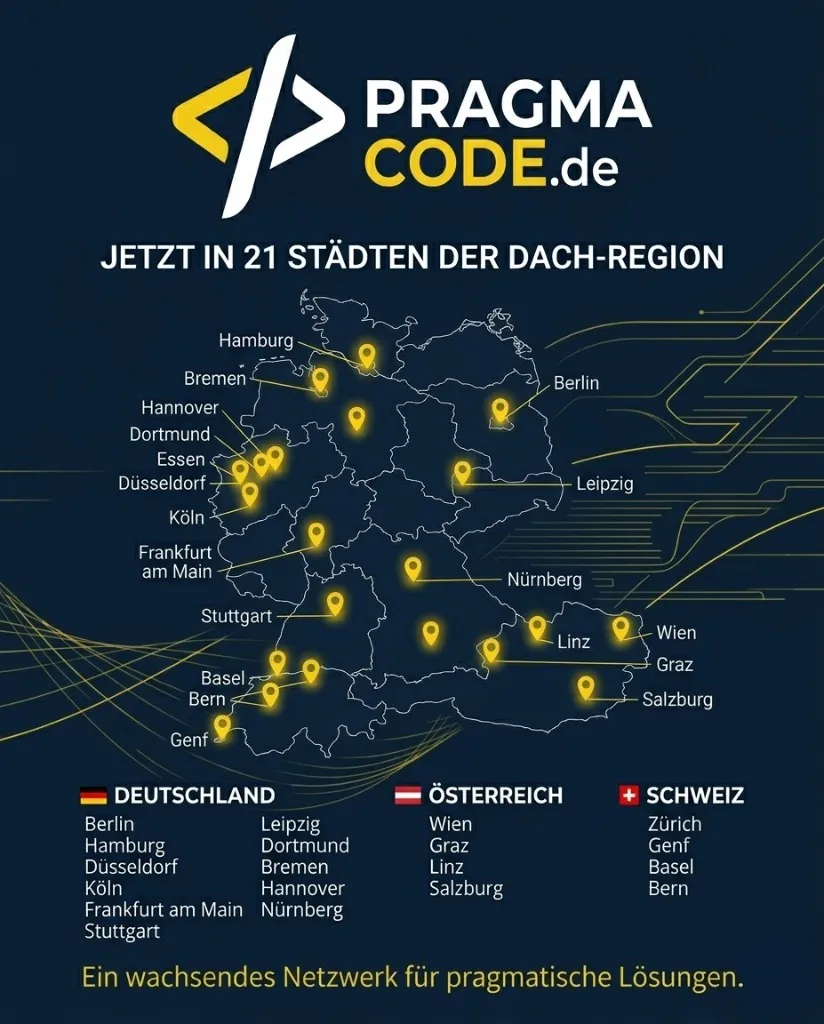
We are your digital partner – regionally anchored and successfully scaling across borders.
SEO blog articles for your business?
I deliver this for small and mid-sized businesses: at a fixed price agreed upfront, working directly with the person who builds it. Process, scope and pricing are on the service page.
See service & pricing Or request a free intro callExtended Specialized Glossary
Generative Search Optimization (GSO)
The optimization of digital content for visibility and citations within AI-based search systems and answer engines such as Perplexity, ChatGPT Search, and Google Gemini.
AI Browser
Web browsers with deeply integrated AI assistants (like Arc, Opera One, or Edge) that summarize web content in real-time, answer queries, and bypass traditional search engine results pages.
Omnichannel Marketing
A holistic marketing approach that seamlessly integrates all channels and customer touchpoints (both online and offline) to deliver a unified customer experience throughout the journey.