


In 2026, financial accounting for SMEs is undergoing a radical transformation: Outdated paper binders and manual typing are giving way to autonomous no-touch financial operations. Discover how multimodal AI, e-invoicing, and Open Banking cut processing time by up to 85% while securing 100% audit compliance.
This article is an in-depth expert contribution from our content cluster. Discover the complete overview on our main page: AI Automation & Intelligent Agents →
The Era of Autonomous Financial Agents
Legacy rule-based OCR is a thing of the past. Modern multimodal Vision LLMs and autonomous agents process unstructured receipts, reconcile bank statements in real time, and ensure seamless audit compliance with GoBD and international standards.
- Paradigm Shift to No-Touch Accounting: By 2026, up to 92% of incoming and outgoing invoices can be processed without manual human intervention from ingestion to tax sync (DATEV/ERP).
- High ROI & Time Savings: Eliminating manual data entry saves small-to-midsize enterprises (SMEs) typically 15 to 25 work hours per month, reducing overall processing costs by over 70%.
- Audit Safety & Early Payment Discounts: Automated approval workflows eliminate cash discount losses caused by payment delays while guaranteeing immutable, compliant document archiving.
- Introduction: Why Accounting is the Biggest Time Sink in SMEs
- Chapter 1: The 4 Stages of Accounting Evolution
- Chapter 2: Technological Foundation & The Modern FinTech Stack 2026
- Chapter 3: The 7 Steps to Fully Automated No-Touch Accounting
- Chapter 4: GoBD, GDPR & IT Security in Digital Finance
- Chapter 5: Economic Analysis & ROI Calculation for SMEs
- Chapter 6: The 5 Most Common Pitfalls During Implementation
- Chapter 7: The Future Beyond 2026 – Autonomous AI Agents in FinTech
Introduction: Why Accounting is the Biggest Time Sink in SMEs
When managing directors and finance leaders of medium-sized companies are asked about the biggest operational bottlenecks in daily business, the answer is almost universally the same: administrative paperwork overhead. Accounting is legally indispensable and forms the financial backbone of every business – yet in practice, it is often handled through outdated, manual processes.
In many small and medium-sized enterprises (SMEs), a fragmented workflow still prevails: paper invoices arrive by mail, digital invoices are scattered across individual email inboxes, employees submit travel expenses as physical receipt stacks, and monthly closing feels like a literal treasure hunt. The consequence: receipts are typed up manually, sorted into physical binders, and handed over to tax advisors with weeks or months of latency.
The result of this analogue way of working is a drastic waste of time and resources. Business decisions are made based on outdated figures because monthly BWAs (Business Evaluations) arrive long after the month has closed. Furthermore, manual typing errors in IBANs or invoice amounts cause unnecessary payment delays and overdue fines.
The good news: No other corporate department can be structured as seamlessly and efficiently as financial accounting through modern AI-backed systems. By combining intelligent document capture via multimodal OCR, Open Banking APIs, and automated approval workflows, "No-Touch" accounting is establishing itself as the 2026 industry standard. In this master guide, we show you step-by-step how to future-proof your financial operations.
Chapter 1: The 4 Stages of Accounting Evolution
Every organization goes through distinct developmental stages on its journey to complete process automation. To implement the right measures, you must first determine the current maturity level of your finance operations.
Comparison: Manual Tradition vs. AI-Powered No-Touch Accounting
- Capture: Manual typing of invoice details and wire transfer forms.
- Flow: Decentralized storage, paper binders, and unorganized email attachments.
- Visibility: Delayed BWAs after 4–8 weeks; no real-time cash flow overview.
- Error Rate: High vulnerability to typing mistakes, duplicate payments, and lost discounts.
- Capture: Autonomous data extraction via AI OCR and direct journal entry generation.
- Flow: Centralized API connection across mailboxes, portals, and mobile apps.
- Visibility: Real-time financial dashboard with automated bank reconciliation.
- Error Rate: Validated workflows, fraud checks, and 100% audit compliance.
Stage 1: The Paper Tiger (Analogue Manual Work)
Invoices arrive primarily by post or are printed out from emails. Receipts are physically hole-punched, filed into binders, and driven to the tax consultant at the end of the month in shuttle boxes. Risks: Extremely high personnel expense, zero transparency regarding open liabilities, high risk of lost receipts, and expensive archive storage costs.
Stage 2: Digital Chaos (Hybrid Operation)
Documents exist partly as PDFs and partly on paper. Basic cloud tools might be used to upload scans, but data still has to be typed manually into online banking software or accounting forms. Risks: Pronounced media breaks, duplicate data entries, and constant interruptions due to missing receipt queries.
Stage 3: Integrated Cloud Accounting (Partially Automated)
Invoices enter the system via central email inboxes or portal importers. An intelligent OCR recognition engine reads header and line items and proposes booking entries. Bank accounts are connected via API. Benefits: Significant time savings, rapid search functions, and daily updated overviews of open items.
Stage 4: Autonomous No-Touch Accounting (Fully Automated)
Invoices, credit notes, and credit card receipts flow automatically into the system via interfaces. AI analyzes documents, matches them with purchase orders and incoming payments, and posts compliant accounting records. Employees only intervene when exceptions occur (Management by Exception). Benefits: Maximum scalability without growing administrative headcount, real-time cash flow management.
Chapter 2: Technological Foundation & The Modern FinTech Stack 2026
Implementing an automated finance architecture does not require complex custom software development. By leveraging modern FinTech software components, a highly efficient, modular tech stack can be assembled that eliminates media breaks once and for all.
The Hidden Costs of Manual Accounting
Businesses routinely underestimate the compounding expense of analogue media breaks. Beyond raw work hours, lost early-payment discounts, overdue fees, and high tax advisor re-work charges severely impact profitability.
1. Multimodal Vision LLMs & Auto-Coding
Modern pre-accounting platforms replace rigid zonal OCR rules with multimodal Vision LLMs. These models parse handwritten hospitality slips, complex itemized matrices, and international invoices across multiple currencies with over 99% accuracy, proposing ledger accounts and tax codes automatically.
2. E-Invoicing Pipelines & Portal Ingestion
With mandatory B2B e-invoicing receipt live since 2025, structured syntax standards such as ZUGFeRD and XRechnung are the new norm. Automated web scrapers and mail parsers fetch documents directly from supplier portals and inboxes without loss of data fidelity (learn how invoice data is modeled in our technical guide to the EN 16931 E-Invoice Standard).
3. Intelligent Corporate Card Management
Next-generation corporate card solutions (such as Pleo, Moss, or Pliant) link card swipes instantly to mobile applications. Employees capture receipts right at the point of sale; AI matches the photo to the banking transaction in seconds and triggers automated follow-ups for missing receipts.
4. Open Banking & DATEV Cloud APIs
Standardized banking interfaces (PSD2/FinTS) and direct accounting connectors (like DATEV Rechnungsdatenservice 2.0) synchronize corporate accounts, payment processors, and ERPs seamlessly with your accounting firm—without manual CSV exports or batch delays.
Pro-Tip: Prioritize Open API Architectures
When selecting your accounting software, ensure the vendor provides a well-documented REST API. This allows future integrations, such as custom n8n workflows or direct ERP links, without expensive vendor lock-in.
Chapter 3: The 7 Steps to Fully Automated No-Touch Accounting
Transforming your finance department into a paperless organization requires a structured roadmap. The following 7-step process guides you from fragmented documents to a fully automated no-touch financial pipeline:
1. Centralize Ingestion Channels
Establish a dedicated email address (e.g., invoices@company.com). Instruct all suppliers to route invoices exclusively to this centralized mailbox.
2. Automate Portal Downloads
Implement importer tools that retrieve recurring monthly invoices from vendor portals (utilities, cloud hosting, software licenses, advertising platforms) automatically.
3. Multimodal AI Extraction & 3-Way Matching
The system parses invoice numbers, dates, tax rates, and line items, executing an autonomous 3-way match against internal purchase orders and physical warehouse delivery slips.
4. Digital Approval Workflows
Define value-based thresholds. Minor expenses clear automatically; larger invoices route directly to the designated department head for mobile one-click sign-off.
5. Automated Bank Reconciliation & Payment Batching
Open payables match against real-time bank statements. Payment proposal lists enable batch approval of vendor bills via SEPA wire transfers with maximum early payment discounts.
6. Seamless Tax & Advisor Sync
Booking batches and digital receipt images transfer directly to your external tax consultant or internal ERP system via secure cloud APIs (DATEV / SAP).
7. Audit-Compliant Document Archiving
All receipts—especially raw XML payloads in structured e-invoices—are archived immutably in an audit-proof cloud vault according to GoBD requirements. Under the e-invoicing mandate, preserving the machine-readable XML code is legally mandatory.
-
Phase 1 (Weeks 1–2): Process Audit & Tool Selection
Assess existing receipt sources, select the appropriate FinTech stack, and align compliance requirements with tax advisors.
-
Phase 2 (Weeks 3–4): Channel Setup & Bank Integration
Set up central email postboxes, connect corporate bank accounts via Open Banking, and roll out smart company expense cards.
-
Phase 3 (Weeks 5–6): Workflow Testing & Team Training
Test approval hierarchies, calibrate AI matching rules, validate 3-way matching routines, and train staff on mobile receipt submission.
-
Phase 4 (Week 7+): Go-Live & Continuous Optimization
Transition entirely to paperless operations and monitor the automation match rate continuously to drive the touchless ratio towards 90%+.
Chapter 4: GoBD, GDPR & IT Security in Digital Finance
While financial digitization unlocks immense efficiency, it introduces strict regulatory and security mandates. In European markets, compliance frameworks such as GoBD and GDPR set the baseline. Furthermore, the German e-invoicing mandate has made electronic invoice reception mandatory for all domestic B2B companies since January 1, 2025. By January 1, 2027, mid-sized companies with over €800k in annual turnover must issue structured e-invoices, and all transitional allowances for unstructured PDFs or paper expire definitively on January 1, 2028.
Immutability & Audit Logs
Simply saving PDFs on a local network drive fails audit standards. Invoice documents must reside in a system with cryptographic audit-trail logging that prevents retrospective alteration.
Process Documentation & ICS
Companies are legally required to maintain procedural documentation alongside an Internal Control System (ICS) detailing exactly how digital invoices are received, processed, verified, and stored.
GDPR, EU AI Act & Server Locations
Personal data contained on invoices and expense reports must comply with GDPR privacy standards. Prioritize ISO-27001 certified data centers within the EU with strict Zero Data Retention policies for AI extraction pipelines.
Fraud Prevention & IBAN Matching
Modern AI tools feature automated protection against fraudulent invoices (CEO fraud), verifying whether recipient IBANs match historical vendor master data before payment batches are released.
Chapter 5: Economic Analysis & ROI Calculation for SMEs
Investing in automated accounting infrastructure typically pays for itself within just a few months. Beyond direct work-hour savings, businesses benefit from tangible bottom-line improvements and capture 100% of available cash discounts.
Team Time Reduction
Reduction in manual labor for receipt searches, typing, and manual banking.
-85 %From ~20 hours down to under 3 hours per month.
Early Payment Discounts
Elimination of payment delays through automated approval routing.
+2–3 %Direct liquidity boost on total procurement spend.
Sample ROI Calculation for a Medium Enterprise (25 Employees)
Assume a company processes approximately 150 supplier invoices, 40 credit card transactions, and 20 travel expense claims per month.
- Internal Labor Costs: 22 hrs / month (at €55/hr) for data entry, corrections & wire transfers = €1,210
- Tax Advisor Fees: Manual receipt entry & re-work = €450
- Internal Review Time: 3 hrs supervisory review (at €55/hr) = €165
- Software Licenses: Cloud accounting, importers & expense management = €180
- Tax Advisor Fees: Advisory services & year-end statements = €200
Chapter 6: The 5 Most Common Pitfalls During Implementation
To ensure a smooth transition, avoid these common implementation mistakes:
Automating a broken process only produces bad results faster. Simplify approval chains before purchasing software.
Software fails if the team is not trained. Clearly communicate benefits and build buy-in with straightforward user guides.
Verify ahead of time that accounting software communicates natively with your ERP, CRM, or e-commerce store.
Update procedural documentation alongside software go-live to ensure full audit readiness during tax reviews.
If employees continue accepting paper receipts or storing files on local desktop drives, data silos will re-emerge.
Chapter 7: The Future Beyond 2026 – Autonomous AI Agents in FinTech
Financial accounting automation is moving rapidly beyond static rules. With the rise of Agentic AI, technology is assuming strategic and predictive financial responsibilities:
Predictive Cash Flow Forecasting: Autonomous agents evaluate historical data, customer payment behavior, seasonal patterns, and vendor terms to project real-time cash positions months ahead.
Autonomous Supplier Negotiations: AI engines detect recurring price increases or tier thresholds, suggesting optimal order timing and early-payment discount combinations.
Companies building a digital No-Touch accounting foundation today position themselves to capitalize immediately on these next-generation FinTech innovations.
Quick Check: Your Path to No-Touch Accounting
Do you have questions about automating your accounting?
Schedule a Free Initial ConsultationOur Regional Expertise
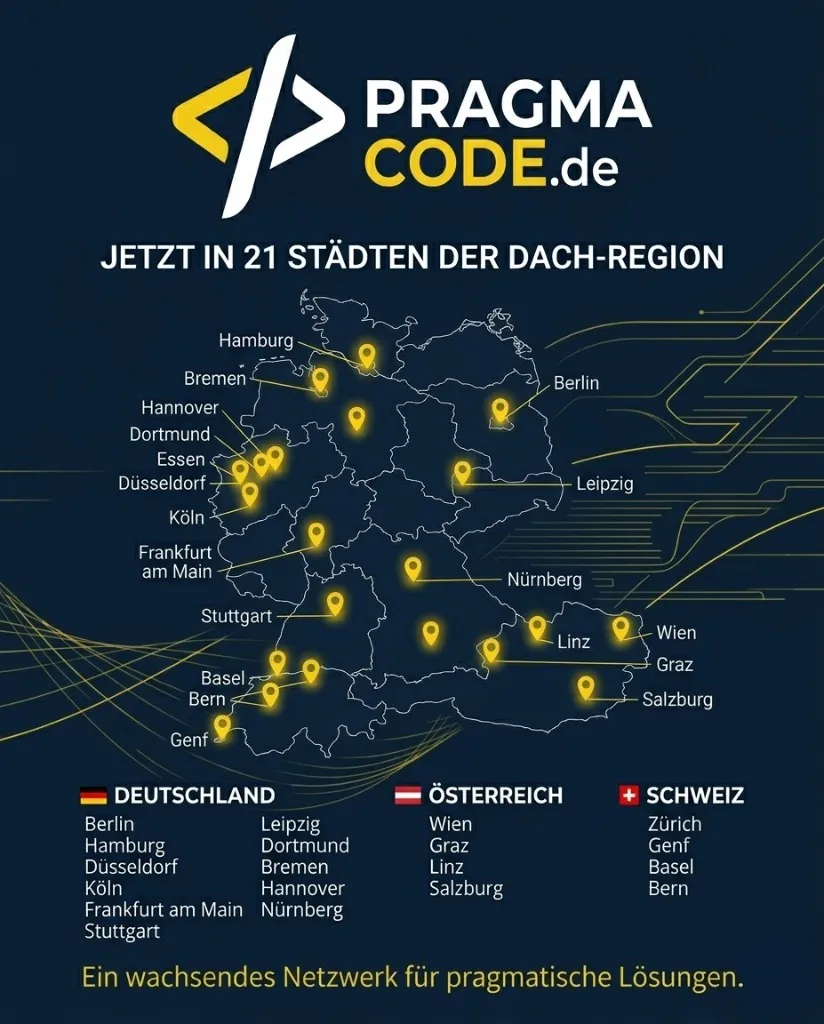
We are your digital partner – regionally anchored and successfully scaling across borders.
AI automation for your business?
I deliver this for small and mid-sized businesses: at a fixed price agreed upfront, working directly with the person who builds it. Process, scope and pricing are on the service page.
See service & pricing Or request a free intro callExtended Specialized Glossary
GoBD
German principles for the proper keeping and storage of books, records, and documents in electronic form.
DATEV
The leading software and IT service provider for tax consultants, auditors, and lawyers in Germany.
OCR (Optical Character Recognition)
Technology for automatic text recognition and data extraction from scanned documents and digital images.
BWA (Business Evaluation)
Monthly evaluation of financial data showing earnings position and liquidity.
API (Application Programming Interface)
Programming interface allowing different software systems to communicate and exchange data securely.
RPA (Robotic Process Automation)
Software robots executing structured, rule-based tasks in user interfaces autonomously.