

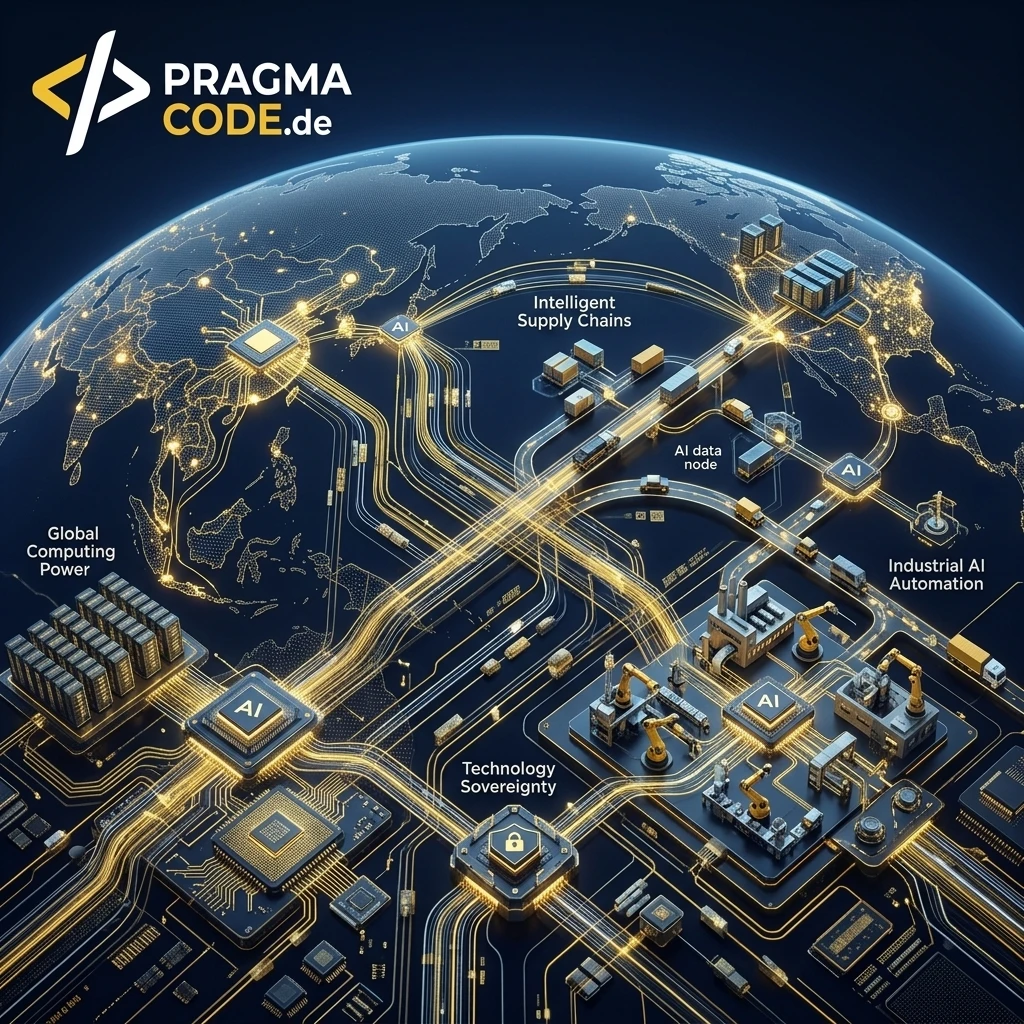
With its 15th Five-Year Plan (2026–2030), the People's Republic of China initiates the next phase of its global technology and industrial strategy. While European enterprises face regulatory burdens and high operational costs, Beijing is pushing for 'New Quality Productive Forces', state-backed AI computing infrastructure, and technological self-reliance. This strategic guide analyzes the plan based on the official EUCLERA/WKO translation and outlines key action items for European SME decision-makers.
This article is an in-depth expert contribution from our content cluster. Discover the complete overview on our main page:IT Strategy & AI Transformation →
- Paradigm Shift to High-Tech Autarky: From 2026 to 2030, Beijing is aggressively pursuing technological decoupling from Western suppliers, boosting its industrial base through New Quality Productive Forces.
- Scaling AI & Computing Grid: Under the Digital China mandate, the state is building a national network of AI supercomputers and autonomous industrial drivers, putting immense pressure on Western margins.
- Strategic Action for Executives: European leadership must rapidly adapt — diversifying critical semiconductor and IT supply chains while deploying autonomous AI workflows and sovereign on-premise infrastructure.
The Global Turning Point for Engineering & IT
The 15th Five-Year Plan presented by the National Development and Reform Commission (NDRC) and translated by EUCLERA is not a vague policy document, but an operational blueprint for China's final transformation into the world's leading technology power.
1. China's 15th Five-Year Plan (2026–2030) at a Glance
China's 15th Five-Year Plan for the period 2026 to 2030 marks the decisive phase in achieving national tech sovereignty. While previous plans emphasized quantitative GDP growth and real estate development, Chapters 4 through 14 of the 15th Five-Year Plan pivot entirely toward qualitative high-tech expansion and dominance over key global supply chains.
Under the core doctrine of New Quality Productive Forces, Beijing mobilizes state venture capital, R&D subsidies, and regulatory incentives for strategic sectors. The objective is explicit: replace foreign technology across domestic industries and export end-to-end industrial systems globally.
Expert Analysis: The Role of Dual Circulation
The Dual Circulation strategy is intensified under the 15th Five-Year Plan. Domestic markets are shielded by strict local compliance standards, while Chinese conglomerates leverage subsidized hardware and software to scale across European markets.
2. The Three Pillars of China's Tech Offensive
For European enterprise decision-makers, three specific areas of the plan hold direct operational relevance:
Pillar 1: National Computing Grid & AI Power Supply
Chapter 12 mandates the expansion of a national Computing Power Supply grid. By linking mega data center hubs in Western provinces to Eastern industrial centers, AI computing power becomes a low-cost, state-guaranteed utility for domestic firms.
Pillar 2: Autonomous Industrial AI & Humanoid Robotics
Chapter 5 prioritizes industrial robotics, agentic AI networks, and generative engineering design engines. The goal is deploying autonomous AI agents across over 80% of industrial production lines by 2030.
Pillar 3: Digital Sovereignty & Standard Dominance
Under Digital China, Beijing seeks to establish global technical standards in telecommunications, quantum cryptography, and industrial data exchange to replace Western frameworks long-term.
3. The Strategic Dilemma for European SMEs
The execution of the 15th Five-Year Plan creates a dual threat matrix for European mid-market enterprises, while opening select niche opportunities.
On one hand, Technological Decoupling is accelerating. European firms heavily dependent on Asian supply chains or software manufacturing find themselves caught between US export controls and Chinese localization mandates. Failing to establish dual-sourcing redundancies risks sudden manufacturing halts.
On the other hand, competitive pressure is surging. As Chinese manufacturers operate with subsidized computing power and automated AI workflows, traditional European engineering quality alone no longer guarantees margin protection unless matched with radical software efficiency and autonomous agent operations.
Geopolitical Risk / Decoupling
Risk of sudden disruption in semiconductor, software, and logistics supply chains.
Supply bottlenecks & local certification halts.
Competitive Risk / Margin Compression
Chinese competitors entering EU markets with AI-subsidized offerings.
Margin erosion across traditional product lines.
4. Comparison: Chinese Subsidy Drive vs. EU Status Quo
The contrasting approaches between China's state-driven industrial strategy and European regulatory practice define the operating environment for 2026–2030:
Comparison: China's Five-Year Plan Offensive vs. European Status Quo
- Focus: Aggressive scaling & global market dominance
- Infrastructure: State-funded AI supercomputers & high-speed data grid
- Regulation: Target-driven enablement of domestic tech giants
- Execution Speed: Five-year mandates enforced via provincial quotas
- Focus: High emphasis on risk mitigation, compliance & data privacy
- Infrastructure: Fragmented cloud landscape & elevated energy costs
- Regulation: Strict governance like EU AI Act, NIS2 & GDPR
- Execution Speed: Gradual adoption of generative AI systems
5. Strategic Action Plan for Leadership (2026–2030)
To safeguard market position and avoid systemic dependency, executive teams and CTOs must implement five strategic imperatives:
-
Establish Supply Chain Audits & Dual-Sourcing
Audit all hardware and software dependencies for single-source exposure to Asian monopolies. Build parallel redundancies in European or trusted partner regions.
-
Strengthen AI Sovereignty via Local Models
Avoid single-vendor lock-in to external hyper-scaler APIs. Deploy privacy-compliant on-premise or sovereign cloud LLMs to automate core enterprise workflows.
-
Drive Efficiency via Agentic AI & Automation
Counter international cost pressure by relentlessly automating administration, development, and sales processes with autonomous multi-agent systems.
-
Upgrade IP Protection & Cyber Resilience
Fortify defenses against industrial espionage and unauthorized IP transfer by implementing NIS2-compliant Zero Trust security architectures.
-
Focus on Premium Services & B2B Portals
Win competition through personalized B2B customer portals, custom software ecosystems, and high-touch local service rather than raw hardware price points.
Quick Check: Is Your Digital Strategy Resilient?
6. Conclusion & Outlook
China's 15th Five-Year Plan demonstrates that global market leadership in 2026–2030 will be determined by software agility, AI computing infrastructure, and operational speed. European enterprises possess deep domain expertise and trusted customer relationships. By uniting these strengths with modern software architecture, sovereign AI, and resilient supply chains, European leaders can thrive through this transformation.
Ready to strengthen your IT infrastructure & AI strategy?
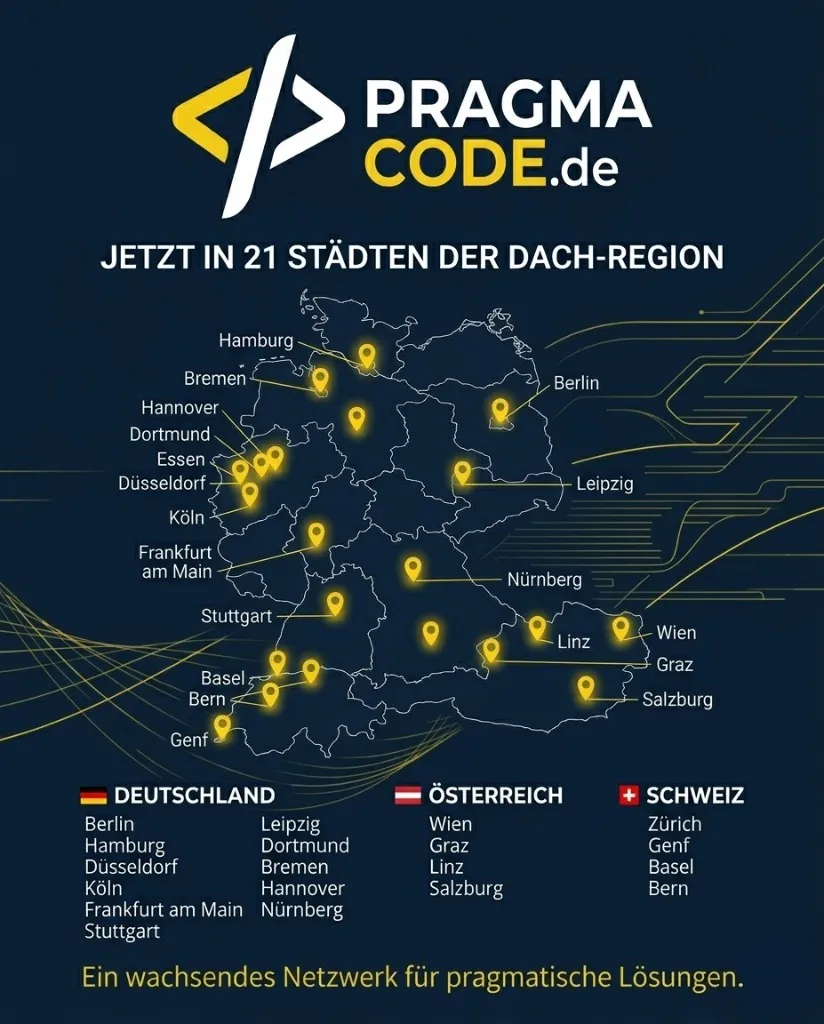
Schedule a Free Initial ConsultationOur Regional Expertise
We are your digital partner – regionally anchored and successfully scaling across borders.
Have a vision?
Let's check together how we can make your idea take flight.
Book your free strategy call nowExtended Specialized Glossary
New Quality Productive Forces
China's economic doctrine emphasizing technological self-reliance, quantum tech, and AI automation.
Dual Circulation
Economic paradigm relying on internal domestic market while expanding global foreign trade.
Digital China
National strategic initiative aimed at comprehensive digitalization of industry and infrastructure.
Technological Decoupling
Bifurcation of global high-tech ecosystems into distinct Western and Eastern spheres.
Computing Power Supply
National initiative to supply massive supercomputing and AI infrastructure.