


More than just servers in the basement: Why local business tax allocation, regional energy costs, and data sovereignty in Germany, Austria, and Switzerland strategically shape cloud, colocation, and on-premise architectures for SMEs.
This article is an in-depth expert contribution from our content cluster. Discover the complete overview on our main page:IT Strategy & Infrastructure Consulting →
- 2026 Political & Tax Dynamics: Debates surrounding local business tax allocation to municipalities, combined with Germany's revised Energy Efficiency Act (EnEfG), force operators and mid-market enterprises to strategically re-evaluate server and cloud node locations across the DACH region.
- Total Cost of Ownership (TCO): Beyond raw electricity tariffs, local municipal tax multipliers, hidden cloud data egress charges, and Power Usage Effectiveness (PUE) metrics sit right at the center of financial infrastructure evaluations.
- Strategic Hybrid & Sovereign AI Architecture: Blending regional colocation for stable baselines, on-premise edge nodes for sensitive AI workloads, and selective hyperscaler instances slashes up to 40% in operational costs while securing complete data sovereignty.
Geopolitics of Server Landscapes in the DACH Region
Choosing server infrastructure locations is no longer a purely technical decision. Situated between strict European compliance mandates, municipal tax incentives, statutory waste heat recovery obligations, and volatile energy costs, site selection has become a vital lever for corporate profitability, digital sovereignty, and operational resilience.
- 1. Introduction: Why Server Locations Are Executive Mandates
- 2. The Tax Debate: Local Business Tax Allocation & Municipal Impact
- 3. The 5 Critical Location Factors in the DACH Region
- 4. DACH Country Comparison: Germany vs. Austria vs. Switzerland
- 5. Total Cost of Ownership (TCO): What Colocation & Cloud Really Cost
- 6. Comparison: Hyperscaler Cloud vs. Regional Colocation vs. On-Premise
- 7. Sovereign AI & Dedicated GPU Infrastructure 2026
- 8. Green IT, PUE & EnEfG: Statutory Mandates as Competitive Edge
- 9. The SME Decision Matrix
- 10. Step-by-Step Implementation Roadmap
- 11. Conclusion & Outlook: Sovereign Data Infrastructure
1. Introduction: Why Server Locations Are Executive Mandates
For over a decade, enterprise IT departments operated under an almost dogmatic paradigm: "Default to the Public Cloud." Whether spinning up AWS instances in Frankfurt, Microsoft Azure in Dublin, or Google Cloud services in the Netherlands, the universal premise was that physical hardware could be outsourced entirely, administration reduced to browser dashboards, and infrastructure booked purely as operational expenditure (OPEX). However, in 2026, we are witnessing an unmistakable renaissance of physical infrastructure: the question of geographical server location has returned with tremendous urgency to boardroom agendas.
This structural transformation is accelerated by three powerful drivers that have dismantled simplistic cloud narratives:
First, Europe's regulatory architecture enforces strict data isolation and jurisdiction transparency. Frameworks such as the EU AI Act, the NIS-2 Directive, and the GDPR make generic "hosted somewhere in Europe" assurances legally insufficient. Whenever mission-critical ERP systems, personally identifiable information (PII), or proprietary engineering algorithms are involved, external compliance auditors require verifiable evidence concerning physical facility access, redundant power supplies, and immunity against extraterritorial surveillance statutes such as the US CLOUD Act.
Second, macroeconomic volatility in energy markets alongside Germany's statutory Energy Efficiency Act (EnEfG) have established rigorous cost constraints. A rack server consumes electricity not only for compute cycles, but also demands high-power cooling systems, uninterruptible power supplies (UPS), and grid interconnect capacity. The performance gap between modern, hyper-efficient facilities and aging internal corporate server closets now translates into massive multi-thousand-euro differences in annual operating expenditures.
Third, legislative reforms concerning local business tax allocation across Germany, Austria, and Switzerland (DACH) are forging new economic incentives. By recalibrating municipal tax allocation formulas and permanent establishment definitions, municipalities outside congested metropolitan corridors are emerging as high-yield hubs. Where server capacity is installed, local fiscal revenue is generated—and where municipal tax multipliers are low, colocation rack rental rates drop significantly for corporate clients.
Strategic Guidance for Executive Leadership
A resilient digital strategy does not evaluate server infrastructure solely on monthly virtual machine fees in cloud billing consoles. It synthesizes municipal tax multipliers, Power Usage Effectiveness (PUE), sub-5ms latency corridors, and legal data sovereignty into an integrated 5-year financial model.
2. The Tax Debate: Local Business Tax Allocation & Municipal Impact
To grasp the economic dynamics of contemporary data center placement, one must examine German and European municipal tax structures. Historically, hosting municipalities providing land and heavy utility connections for multi-megawatt hyperscale facilities received surprisingly meager local business tax revenues. Under traditional tax frameworks (such as Section 28 ff. of the German Trade Tax Act), corporate tax allocations between different municipal jurisdictions were apportioned almost exclusively based on the total payroll paid in each district.
For data center infrastructure, this created a striking fiscal paradox: A state-of-the-art 60-megawatt hyperscale facility covers hectares of commercial land, demands massive electrical grid capacity, and strains municipal roadways during construction—yet in standard operation requires only 20 to 40 on-site technicians and facility security personnel. Because executive headquarters, sales operations, and corporate holding entities were registered in major financial capitals (like Frankfurt, Munich) or offshore jurisdictions (such as Dublin or Amsterdam), the overwhelming share of local corporate tax revenue bypassed hosting municipalities entirely.
The Imbalance of Traditional Payroll-Based Tax Allocation
When multi-million-euro facility investments yield negligible local tax revenue, municipal resistance rises. Local councils deny zoning approvals or institute special municipal levies, while peripheral regions rich in wind power remain underutilized. The 2026 legislative revisions directly resolve this friction.
The 2026 reforms to Local Business Tax Allocation incorporate capital assets, physical equipment values, and grid power consumption into the municipal apportionment formula. This guarantees hosting municipalities that supply energy infrastructure and physical acreage a proportional and legally protected share of commercial tax revenues.
For mid-sized enterprises leasing colocation space or engineering hybrid cloud topologies, this fiscal shift generates two clear operational advantages:
Regional Diversification & Tax Arbitrage
Next-generation Tier-3 and Tier-4 facilities are decentralizing away from saturated metropolitan centers like Frankfurt am Main (where municipal tax multipliers reach approximately 460%). Instead, they establish operations in rural districts across Hesse, Brandenburg, or North Rhine-Westphalia with tax multipliers between 250% and 320%, directly lowering rental fees per rack unit.
Municipal Symbiosis & District Heating Networks
Local municipalities actively sponsor data center developments when facilities supply waste heat directly into legally mandated municipal heating networks (Kommunale Wärmeplanung). Corporate tenants benefit from subsidized industrial parks, municipal fiber incentives, and priority access to green power allocations.
A concrete financial example highlights this magnitude: A colocation operator running 500 racks in a municipality with a 280% tax multiplier saves hundreds of thousands of euros in local business taxes annually compared to operating in a 460% metropolitan hub. These cost reductions flow directly into competitive contractual terms for rack units, dedicated power quotas, and cross-connect interconnects.
3. The 5 Critical Location Factors in the DACH Region
Engineering an enterprise infrastructure architecture for the coming 5 to 10 years requires looking beyond polished sales presentations. The overall DACH Location Factor offers an exceptional combination of political stability, top-tier fiber density, and comprehensive regulatory guarantees—yet demands thorough evaluation across five decisive pillars:
1. Power Tariffs, Grid Stability & Guaranteed Green Power
Raw power availability is insufficient in 2026. The revised German Energy Efficiency Act requires verified sourcing from non-subsidized renewable power generation. While northern Germany delivers abundant onshore and offshore wind resources, the Alpine territories of Austria and Switzerland offer near-limitless hydroelectric capacity with exceptionally stable baseload power.
2. Fiber Density, Peering Points & Latency Under 5 Milliseconds
DE-CIX in Frankfurt am Main remains one of the world's highest-throughput Internet Exchange points, complemented by VIX in Vienna and SwissIX in Zurich. For modern enterprise workflows—spanning real-time SQL database replication to autonomous agentic AI pipelines—round-trip latencies below 5 milliseconds represent the operational benchmark that cross-border transatlantic clouds physically cannot match.
3. Regulatory Immunity, NIS-2 Compliance & CLOUD Act Protection
In Germany and Austria, the GDPR and national NIS-2 implementation statutes establish strict security duties. In Switzerland, the revised Federal Act on Data Protection (revFADP) guarantees equivalent standards outside European Union political institutions. Hosting enterprise data with sovereign European or Swiss providers shields corporate IP against extraterritorial access mandates under the US CLOUD Act.
4. Power Usage Effectiveness (PUE) & Waste Heat Recovery
The PUE (Power Usage Effectiveness) metric clearly separates efficient infrastructure from legacy facilities. State-of-the-art facilities achieve PUE scores of 1.12 to 1.18 by utilizing indirect evaporative cooling, cold-aisle containment, and direct liquid chip cooling. Outdated in-house server rooms frequently operate at disastrous ratios of 1.8 to 2.2—burning more energy on cooling fans than on actual compute operations.
5. Municipal Tax Multipliers & Regional Economic Incentives
The variation in local business tax multipliers across Germany, Austria, and Switzerland is substantial. Between regional development corridors offering competitive tax brackets alongside clean-tech subsidies and saturated metropolitan centers, differences exceed 200 basis points. This single variance directly impacts the bottom-line cost of multi-year hosting agreements.
4. DACH Country Comparison: Germany vs. Austria vs. Switzerland
Although Germany, Austria, and Switzerland share strong economic integration, the three territories exhibit fundamental differences regarding server facility placement. A structured cross-border comparison illuminates specific strategic advantages across different enterprise use cases:
Jurisdiction Profiles: Infrastructure & Legal Ecosystems in DACH
- Legal Framework: 100% European Union jurisdiction; GDPR, NIS-2, and the EU AI Act apply directly.
- Connectivity: World-leading peering via DE-CIX Frankfurt; Vienna serves as the primary fiber gateway into Central & Eastern Europe.
- Power Mix: Austria dominates with Alpine hydroelectricity; Germany leverages northern wind farms but faces high transmission grid tariffs.
- Statutory Mandates: Germany's EnEfG sets the world's most aggressive PUE limits and mandatory waste heat reuse quotas.
- Legal Framework: Sovereign revFADP; completely independent of EU directives, immune to foreign executive orders.
- Tax Competition: Swiss cantonal tax competition with ultra-low effective corporate tax rates (e.g. Zug, Schwyz, Lucerne).
- Power Mix: Over 65% zero-carbon hydroelectric power; exceptional grid reliability throughout the Alpine territory.
- Target Applications: Premium destination for banking, healthcare, FinTech, and sensitive proprietary research IP.
For mid-sized technology enterprises, a two-tier DACH topology is often optimal: Latency-critical customer-facing web services and day-to-day transactional ERP instances reside in certified German or Austrian data centers to guarantee full EU GDPR alignment and sub-millisecond local routing. Concurrently, highly sensitive proprietary algorithms, core AI training weights, and disaster-recovery cold storage reside securely in a hardened Swiss colocation facility.
5. Total Cost of Ownership (TCO): What Colocation & Cloud Really Cost
A prevalent executive oversight is evaluating IT infrastructure expenses exclusively through the lens of monthly virtual machine rental prices in cloud provider dashboards. Such high-level comparisons ignore the multifaceted cost structure of enterprise IT. To achieve an accurate Total Cost of Ownership (TCO), financial analyses must break down expenditures over a 5-year operational horizon into four structural dimensions:
1. Capital Expenditure (CAPEX)
Purchasing owned enterprise server nodes, high-IOPS NVMe SAN storage, enterprise switches, and hardware firewall appliances with 5-year vendor maintenance contracts. Pure public cloud models eliminate CAPEX in favor of OPEX, but subject organizations to unbudgeted annual price increases.
2. Operational Expenditure (OPEX)
Monthly rack space lease fees, contractually capped power pricing per kilowatt-hour (kWh), carrier cross-connects, and remote-hands support packages. Unlike public cloud volatility, colocation facilities offer fixed-price power contracts across multi-year terms.
3. Data Egress & Inter-Region Transfer
The notorious financial trap of US hyperscalers: Uploading corporate data into the cloud (ingress) is free of charge. However, pulling backups, database snapshots, or customer media assets back down out of the cloud (data egress) triggers steep per-gigabyte transfer penalties.
4. Compliance & Audit Documentation
Expenses for independent data protection audits, preparing NIS-2 conformity documentation, penetration testing, and ISO/IEC 27001 certifications. Certified data center partners furnish standardized physical audit certifications out of the box.
An empirical cost calculation underscores the financial impact: For a standard mid-sized enterprise workload running 50 continuous application and database servers (approximately 1,200 vCPU cores, 4.8 TB RAM, and 80 TB NVMe storage), 5-year public hyperscaler expenses range between 780,000 and 920,000 euros—largely propelled by compute hourly billing and egress fees. Running the exact same workload inside a regional DACH Tier-3 colocation facility with owned brand-name hardware totals approximately 460,000 to 530,000 euros over five years (covering hardware acquisition, rack lease, power consumption, and on-site support). This achieves a documented savings exceeding 40 percent.
6. Comparison: Hyperscaler Cloud vs. Regional Colocation vs. On-Premise
No single infrastructure model fits every operational requirement. A forward-thinking enterprise stack exploits the respective advantages of each paradigm while preventing costly vendor lock-in. The comparative matrix below provides a structured overview:
Deployment Architecture Comparison for Mid-Sized Enterprises
- Scalability: Virtually boundless; provision compute instances globally within seconds.
- Financial Model: 100% OPEX; prone to uncontrolled billing escalation during untracked compute usage.
- Sovereignty: Fundamentally compromised by US CLOUD Act obligations and opaque global routing.
- Management: Zero physical maintenance, but requires significant FinOps, IAM, and policy oversight.
- Optimal Fit: Unpredictable spikes, global consumer-facing web layers, rapid temporary sandbox environments.
- Scalability: Highly modular via additional rack units and reserved power capacity.
- Financial Model: Predictable CAPEX/OPEX hybrid; drastically reduced TCO for steady baseline workloads.
- Sovereignty: Maximum; 100% compliant with GDPR, NIS-2, and statutory German EnEfG standards.
- Management: Physical security and utility uptime guaranteed; hardware managed internally or via managed partner.
- Optimal Fit: Enterprise ERP, relational databases, sensitive customer archives, and local AI model inference.
Traditional In-House Server Rooms (On-Premise) within corporate office buildings round out this picture: While common a decade ago, by 2026 they have become economically and contractually unviable for 90 percent of mid-sized companies. The capital investments required for redundant fiber loops, inert gas fire suppression systems, high-capacity uninterruptible power supplies (UPS), and statutory PUE monitoring exceed typical SME budgets by a wide margin.
7. Sovereign AI & Dedicated GPU Infrastructure 2026
A major contemporary catalyst driving enterprises back toward regional data centers is the exponential adoption of generative and agentic AI. In 2026, forward-thinking organizations are not merely testing chat prompts in web browsers; they are integrating autonomous AI agents directly into corporate inventory, engineering CAD, and ERP systems.
This development presents CIOs with a critical security and cost conundrum: Sending confidential CAD schematics, patient health records, corporate financial sheets, or legal agreements to public cloud APIs exposes proprietary intellectual property to leakage risks and creates an unpredictable token expense model. When autonomous agents process millions of tokens per hour across multi-step execution graphs, monthly cloud API bills skyrocket.
The Strategic Rise of Sovereign AI Racks
Modern open-weights models (such as DeepSeek-R1, Llama 3, or Mistral Large) deliver reasoning performance on par with proprietary commercial models for specialized corporate tasks. By running dedicated GPU servers (equipped with NVIDIA H100/H200 or cost-effective L40S arrays) inside a regional DACH colocation center, all corporate IP stays entirely within sovereign enterprise boundaries—at predictable, fixed monthly costs regardless of token volume.
Positioning dedicated AI inference clusters inside certified regional colocation facilities with low-latency interconnects to company branch offices cuts latency dramatically. Autonomous enterprise agents respond in real time, while sensitive trade secrets never leave the audited data center perimeter.
8. Green IT, PUE & EnEfG: Statutory Mandates as Competitive Edge
Information technology sustainability has completely outgrown its past role as superficial corporate marketing. Across the DACH region in 2026, Green IT stands as a legally enforceable and commercially decisive factor, anchored by two powerful statutory pillars:
First, the European CSRD (Corporate Sustainability Reporting Directive) mandates that tens of thousands of mid-sized companies report their indirect carbon footprint according to the Greenhouse Gas Protocol. This explicitly includes Scope 3 emissions generated by outsourced cloud services and external hosting providers. Enterprises unable to provide certified sustainability metrics from their infrastructure partners face downgraded ESG ratings, higher corporate loan interest rates, and disqualification from public procurement tenders.
Second, Germany's reformed Energy Efficiency Act (EnEfG) imposes rigorous efficiency standards directly upon data center facilities:
Statutory PUE Thresholds (≤ 1.20)
For data centers entering operation from 2026 onward, the law mandates a maximum PUE ratio of 1.20. Existing facilities must prove measurable, phased efficiency improvements under strict oversight.
Mandatory Waste Heat Recovery
New data centers must deliver significant shares of server waste heat (at least 10% to 20%) to municipal district heating grids or nearby industrial facilities at regulated rates.
Furthermore, facilities with connected electrical loads exceeding 300 kW must register verified power and consumption data into the German Federal Energy Efficiency Register. For enterprise tenants, this delivers unprecedented auditability: The environmental performance of their Green IT Infrastructure can be audited on demand and exported directly into corporate CSRD sustainability reports.
9. The SME Decision Matrix
How do executive teams and IT architects select the optimal deployment model? Practical architecture rejects dogma in favor of differentiated workload mapping. Reference the decision matrix below:
Scenario 1: Dynamic Web Frontends & Global Reach
Use Cases: International e-commerce stores, SaaS marketing websites, rapid seasonal traffic surges.
Recommendation: Serverless Edge & Public CloudDeploy high-speed modern frameworks such as Astro across global edge distribution networks to deliver content globally with single-digit millisecond response times.
Scenario 2: Steady B2B Baseline, Core ERP & Databases
Use Cases: SAP S/4HANA, relational SQL databases, confidential customer archives, HR databases.
Recommendation: Regional DACH ColocationLease dedicated rack units inside an ISO/IEC 27001 certified Tier-3 facility providing certified low PUE ratings and absolute GDPR regulatory compliance.
For specialized use cases, two additional principles apply: High-frequency industrial manufacturing controls (OT) and sub-millisecond plant robotics belong on hardened on-premise edge hardware directly on the factory floor. Sovereign enterprise AI clusters for autonomous agent systems find their natural home in high-density GPU racks inside regional colocation centers.
10. Step-by-Step Implementation Roadmap
Modernizing enterprise IT infrastructure must never be executed as an unstructured "Big Bang" migration. It demands disciplined, phased execution to ensure business continuity throughout the transition:
-
Step 1: Workload Audit & TCO Baseline Evaluation
Catalogue every active server instance, cloud contract, and internal data pipeline. Calculate comprehensive historical expenses—including hidden cloud egress surcharges—and categorize data under GDPR and NIS-2 criticality levels.
-
Step 2: DACH Site & Facility Provider Evaluation
Screen colocation providers against strict criteria: Certified PUE below 1.20, local municipal tax multipliers of the hosting township, direct interconnection to DE-CIX, VIX, or SwissIX, and proof of 100% renewable power contracts.
-
Step 3: Hybrid Architecture Topology & Redundancy Design
Design encrypted point-to-point network tunnels (dark fiber or redundant high-throughput IPsec circuits) interconnecting corporate offices, the primary colocation facility, and selective public cloud gateways.
-
Step 4: Phased Migration & Continuous Compliance Auditing
Transfer non-critical secondary systems and disaster-recovery mirrors first, followed by primary production databases. Institute automated performance telemetry and integrated ESG reporting pipelines.
11. Conclusion & Outlook: Sovereign Data Infrastructure
The contemporary debate surrounding data centers, municipal tax structures, and energy-efficient facilities across Germany, Austria, and Switzerland marks a fundamental turning point in digital strategy. The era when infrastructure planning could be resolved by simply entering a corporate credit card into an overseas cloud console is permanently over. Executive leaders who proactively address the physical reality of their server environments today secure tangible cost advantages, absolute compliance certainty, and decisive organizational resilience.
A disciplined hybrid strategy—grounding sensitive enterprise databases and sovereign AI clusters inside energy-efficient, tax-optimized DACH colocation facilities while deploying dynamic frontends across modern edge fabrics—provides mid-sized businesses with the best of both worlds: complete data sovereignty, predictable TCO, and impeccable ESG credentials.
Quick Check: 2026 Infrastructure Action Items
Need independent guidance on optimizing your IT infrastructure in the DACH region?
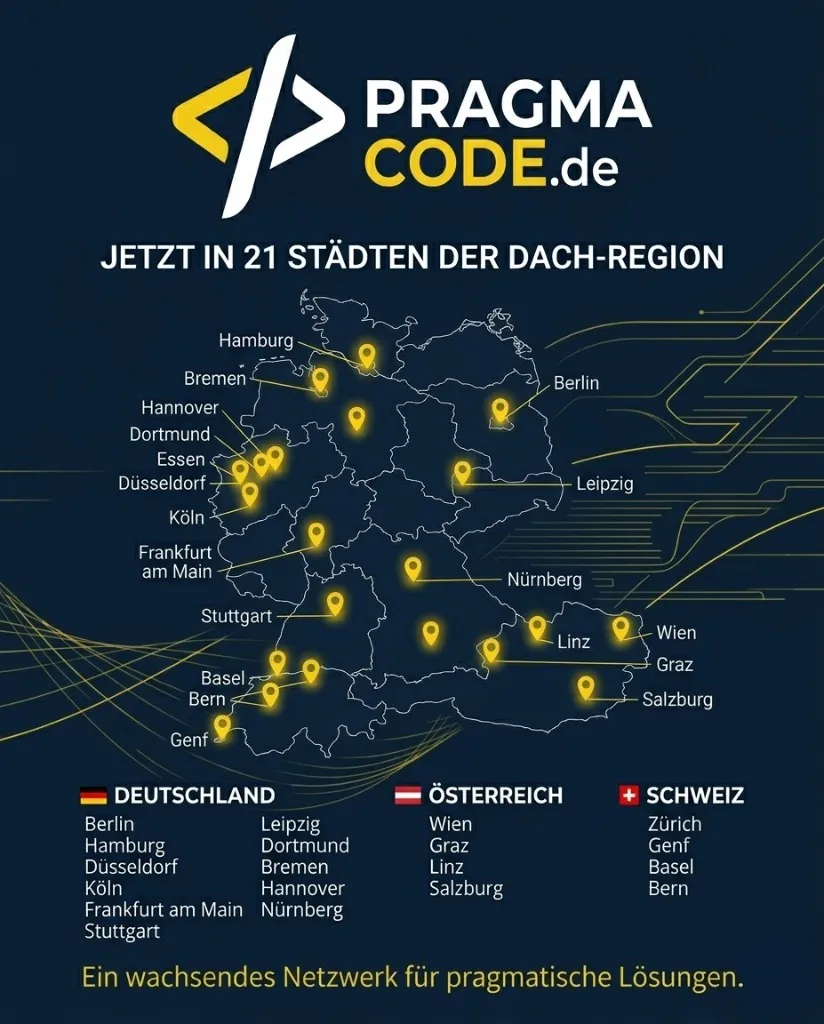
Schedule Free Initial ConsultationOur Regional Expertise
We are your digital partner – regionally anchored and successfully scaling across borders.
Have a vision?
Let's check together how we can make your idea take flight.
Book your free strategy call nowExtended Specialized Glossary
Local Business Tax Allocation
Legal allocation mechanism distributing local business taxes to municipalities hosting data centers or operational facilities.
PUE (Power Usage Effectiveness)
Standardized metric measuring data center energy efficiency, calculated as the ratio of total facility energy to energy consumed by IT equipment.
DACH Location Factor
The aggregate of economic, tax, infrastructural, and regulatory conditions for IT infrastructure investments in Germany, Austria, and Switzerland.
Green IT Infrastructure
Resource-conscious and energy-efficient architecture of server environments, cooling systems, and software stacks to minimize corporate carbon footprints.
Energy Efficiency Act (EnEfG)
German statutory framework mandating strict data center PUE thresholds (≤ 1.2 for new facilities from 2026), mandatory waste heat reuse quotas, and federal efficiency register reporting.