


From reactive crisis firefighting to self-steering supply chains: How mid-sized enterprises leverage autonomous multi-agent systems, n8n, and the Model Context Protocol (MCP) to predict logistics bottlenecks 72 hours ahead and autonomously negotiate spot freight rates.
This article is an in-depth expert contribution from our content cluster. Discover the complete overview on our main page: AI & Automation Solutions →
The Era of the Resilient Supply Chain
In 2026, rigid supply chains have officially become obsolete. In a volatile global economy shaped by geopolitical disruptions, extreme weather conditions, and stringent statutory compliance mandates (LkSG, CSDDD, NIS-2), mid-sized manufacturing and logistics leaders gain a decisive competitive edge through Agentic Logistics. Autonomous multi-agent systems no longer merely flag delays – they anticipate bottlenecks days in advance and resolve them proactively.
- Proactive Risk Management: By continuously evaluating real-time AIS maritime data, river gauge levels, weather simulations, and global news, AI agents forecast logistical disruptions up to 72 hours before they manifest.
- Autonomous Freight Rate Negotiation: Negotiation agents communicate directly with freight carriers via standardized protocols (Model Context Protocol, AP2), settling spot freight rates through game-theoretic concession strategies within strict budget limits.
- End-to-End Enterprise Orchestration: Rather than maintaining isolated data silos, n8n connects core ERP systems (SAP, Navision), telematics, freight exchanges, and frontier LLMs into an audit-proof, GDPR-compliant execution pipeline.
- Introduction: The Evolution of the Supply Chain
- 1. Predictive Risk Management: Predicting Disruptions Instead of Managing Them
- 1.1 Deep Dive: Data Sources and Mathematical Buffer Calculation
- 2. Multi-Agent Systems & Enterprise Architecture in Logistics
- 2.1 Agent Protocols: Model Context Protocol (MCP) and Structured Handshakes
- 2.2 The 4-Tier Architecture for Autonomous Supply Chain Control
- 3. Autonomous Negotiation Agents in Practice
- 3.1 Negotiation Strategies and Game Theory in the B2B Freight Market
- 3.2 Real-World Scenario: Strike at the Port of Hamburg
- 4. Comparison: Traditional Logistics vs. Agentic Logistics
- 5. Technical Integration with n8n, ERP Systems, and Compliance
- 5.1 Error Handling, API Rate Limits, and GDPR Data Masking
- 5.2 Regulatory & ESG Compliance: CSDDD, LkSG, and Scope 3 Audits
- 6. Roadmap: Implementing Agentic Logistics in B2B SMEs
- 7. Conclusion & Quick-Check for Logistics Directors
Introduction: The Evolution of the Supply Chain
For decades, supply chain management relied on static master agreements, historical averages, and reactive firefighting. When a container vessel grounded in the Suez Canal or industrial strikes paralyzed major North Sea terminals, it often took mid-market dispatch teams days to identify alternate routings, request spot quotes, and secure replacement transport. The inevitable outcome: missed production deadlines, costly assembly halts, and exorbitant spot freight rates.
With the emergence of Agentic AI, this operating model is shifting fundamentally. We are no longer discussing passive analytics dashboards that merely report historical delays or fragile Robotic Process Automation (RPA) bots that crash on the slightest unmapped schema variation. Today's standard builds upon autonomous multi-agent networks equipped with sophisticated cognitive faculties (Reasoning): They digest unstructured operational signals, model multi-step alternatives, and execute remediation workflows via system APIs.
"The most resilient supply chain is not defined by its rigid long-term contracts, but by its cognitive decision speed. Autonomous agents reduce disruption mitigation times from days to seconds."
In this guide, we break down how this technology operates in commercial logistics, how specialized agents autonomously negotiate spot freight, and how manufacturing enterprises bridge legacy systems (SAP, Navision, AS400) to modern autonomous agent pipelines.
1. Predictive Risk Management: Predicting Disruptions Instead of Managing Them
The foundation of resilient logistics is predictive risk detection. A modern Risk Agent functions as an automated digital sentry. It continuously ingests and correlates heterogeneous global data streams with internal production schedules:
Global Weather Satellite & River Level Data
Continuous monitoring of meteorological anomalies such as typhoons, extreme rainfall, or critical Rhine drought water levels for proactive transit and draft adjustments.
Geopolitical News & Early Warning Signals
Automated sentiment and event extraction across news wires, trade union bulletins, and social channels to detect looming strikes, terminal blockades, or customs shifts.
Real-Time Vessel Tracking via AIS & Telematics
Direct positioning and telemetry verification of cargo vessels via the Automatic Identification System (AIS) to capture route deviations and anchorage wait times.
By pairing frontier language models with RAG (Retrieval-Augmented Generation), the agent evaluates external signals against internal ERP datasets in milliseconds. The system immediately pinpoints which customer orders or material batches are loaded on delayed carriers and flags specific assembly lines facing imminent shutdown.
Pro-Tip: Calculating Causal Downstream Impact
A conventional alert tool merely broadcasts a warning. Agentic risk management instantly computes the full causal impact chain: If container MSKU-847291 is delayed by 36 hours, subassembly line 2 halts on Thursday at 2:00 PM. The agent automatically queries three verified carriers for alternate capacity, comparing live transit times and spot quotes.
A real-world example highlights the advantage: A severe storm system develops over the North Sea, threatening to close the Port of Rotterdam to deep-sea container vessels for 36 hours. Legacy telematics platforms send automated status notices hours after port closure. The autonomous Risk Agent identifies the forecast 48 hours prior to landfall, detects four critical semiconductor shipments for a manufacturing hub, and executes a rerouting via express road haulage from Antwerp before maritime corridors freeze.
1.1 Deep Dive: Data Sources and Mathematical Buffer Calculation
To make reliable operational decisions, the Risk Agent synthesizes telemetry across standardized vectors. At the geopolitical layer, it queries structured event repositories like GDELT to model labor dispute probabilities. At the physical tracking layer, it monitors AIS transponder streams to track actual vessel knots.
When a container vessel cuts speed by 15% to conserve fuel (slow steaming) or maneuver around storm swells, the agent dynamically calculates the Estimated Time of Arrival (ETA) via the following formulation:
ETAnew = Remaining_DistanceActual_Speed × Current_Factor + Predicted_Port_Wait_Time + Customs_Buffer
The predicted port wait time is calculated from historical anchorage records adjusted for live berth congestion. Whenever the revised ETA threatens to breach the safety stock threshold defined in the ERP, the agent initiates the dispatch and negotiation pipeline autonomously.
2. Multi-Agent Systems & Enterprise Architecture in Logistics
Enterprise supply chains cannot be managed by a single monolithic model. Instead, modern implementations deploy a coordinated Multi-Agent System. Individual agents possess strictly defined role profiles, dedicated authorization boundaries, and specialized toolsets. In Supply Chain Execution (SCE) environments, three core agents collaborate continuously:
Risk Agent
Monitors global sensor streams, meteorological feeds, and geopolitical dispatches. Models potential route and terminal delays.
Dispatch Agent
Evaluates ERP inventory levels, balances bills of materials, and calculates necessary reroutings and replacement quantities.
Negotiation Agent
Interfaces with logistics providers via APIs or email, solicits freight bids, and settles spot rates within set budgets.
2.1 Agent Protocols: Model Context Protocol (MCP) and Structured Handshakes
The operational reliability of a multi-agent framework depends entirely on standardized communication. Whereas earlier generations relied on brittle, custom REST webhooks, the open Model Context Protocol (MCP) has established itself in 2026 as the universal enterprise standard.
Through specialized MCP servers, core business systems such as SAP S/4HANA, Microsoft Dynamics 365, telematics platforms, and freight marketplaces expose standardized tools that agents invoke with semantic context:
{
  "jsonrpc": "2.0",
  "method": "tools/call",
  "params": {
    "name": "sap_query_production_schedule",
    "arguments": {
      "plant_id": "DE01_STGT",
      "material_number": "RAW-ST-9982",
      "safety_stock_threshold_days": 3
    }
  }
}
If the Dispatch Agent determines that safety stock levels will breach critical limits, it dispatches an automated directive to the Negotiation Agent. The payload contains maximum spend thresholds, strict delivery timeframes, and preferred carrier certifications.
2.2 The 4-Tier Architecture for Autonomous Supply Chain Control
To satisfy enterprise governance, data security, and high availability requirements, the operational architecture is partitioned into four distinct layers:
1. Ingestion & Event-Stream Layer
Ingests global AIS ship coordinates, river gauges, traffic choke points, and meteorological alerts via webhooks and Kafka event streams every minute.
2. Cognitive Decision Engine
Employs frontier LLMs with extended reasoning trajectories to simulate downstream impacts on production schedules and customer delivery SLAs.
3. Negotiation & Contracting Engine
Executes game-theoretic rate negotiations across email, chat, and spot exchange APIs within predefined enterprise financial guardrails.
4. ERP & Compliance Gateway
Handles transactional writes to SAP/Navision, validates ESG/NIS-2 compliance rules, and sanitizes personal data under strict GDPR principles.
3. Autonomous Negotiation Agents in Practice
The most economically impactful discipline within Agentic Logistics is the autonomous negotiation of spot market freight rates. Spot freight pricing fluctuates by the hour depending on equipment positioning, regional backhaul balances, and fuel surcharges. Historically, dispatch teams spent hours manually soliciting bids, haggling on phone calls, and reviewing email proposals.
An autonomous Negotiation Agent manages this process methodically via standard B2B protocols, carrier APIs, or natural conversational email:
The agent receives an order from the ERP: Transport of 18 metric tons of stainless steel from Duisburg to Linz. Maximum budget: €1,450, target rate: €1,180, required delivery: Friday by 12:00 PM.
The agent contacts six pre-vetted carrier partners simultaneously via their booking APIs or structured email inquiry templates.
Carrier A quotes €1,380. The agent responds autonomously with a data-backed counter of €1,220, referencing regional backhaul market averages. Carrier A lowers the offer to €1,260.
Because €1,260 falls below the maximum ceiling, the agent tentatively locks the freight rate, issues a one-click approval alert to the logistics lead, and confirms the booking upon sign-off.
The breakthrough: Modern reasoning models parse unstructured conversational nuances with ease. If a carrier replies: "We can do €1,150 if our driver can unload Saturday morning instead," the agent evaluates the production buffer and determines whether this delivery window aligns with assembly shift plans.
3.1 Negotiation Strategies and Game Theory in the B2B Freight Market
Commercial freight negotiations are game-theoretic optimization problems. The agent therefore operates strictly under the principle of BATNA (Best Alternative to a Negotiated Agreement). It never treats an offer in isolation, but benchmarks every incoming rate against historical lane data and concurrent counter-offers.
Furthermore, the system executes a Monotonic Concession Protocol: It opens with an aggressive yet commercially reasonable bid and advances in diminishing concession steps (e.g., +4%, then +2%, then +0.8%). This conveys a credible signal that the reservation price is near, prompting carriers to close the transaction.
3.2 Real-World Scenario: Strike at the Port of Hamburg
The tangible power of this setup is demonstrated in high-pressure scenarios: Trade unions announce an unexpected 48-hour warning strike across Hamburg container terminals. The initial press release hits news outlets at 06:12 AM.
By 06:14 AM, the Risk Agent scrapes the bulletin and correlates the disruption with open shipments in the ERP: 12 containers bound for a Bavarian assembly facility are blocked.
At 06:17 AM, the Dispatch Agent isolates four critical containers loaded with semiconductors whose absence would trigger an assembly stoppage in 48 hours. It directs the Negotiation Agent to book direct road freight from the alternate terminal in Antwerp immediately.
By 06:22 AM, the Negotiation Agent has collected quotes across freight exchanges, successfully haggled the price down from an initial €1,800 to €1,550 per vehicle, and pushed an alert to the logistics director's phone: "4 express trucks secured from Antwerp for €6,200. Production run protected. Please authorize." The director approves at 06:25 AM – resolving the bottleneck before most personnel have arrived at the facility.
4. Comparison: Traditional Logistics vs. Agentic Logistics
A side-by-side analysis highlights the tangible operational shift between traditional freight management and autonomous architectures:
Comparison: Traditional Logistics vs. Agentic Logistics
- Reactive Firefighting: Disruptions are caught only when trucks fail to arrive at the factory gates.
- High Manual Labor: Comparing bids, chasing carriers by phone, and maintaining spreadsheets consumes hours.
- Rigid Rule Sets: RPA scripts fail whenever an API schema alters or unstructured emails arrive.
- Data Silos: Telematics, ERP production schedules, and external risk feeds remain completely fragmented.
- Proactive Forecasting: AI forecasts choke points up to 72 hours in advance and recalculates alternate routes.
- 24/7 Autonomy: Negotiation agents settle spot quotes continuously overnight and over weekends in real time.
- Cognitive Adaptability: Interprets free-text emails, calculates trade-offs, and applies game theory dynamically.
- Unified Fabric: n8n and MCP unify ERP, WMS, telematics, and exchanges into a cohesive operational mesh.
5. Technical Integration with n8n, ERP Systems, and Compliance
The principal implementation barrier for mid-sized manufacturers is integration with entrenched systems. No enterprise will replace a functioning SAP, Navision, or Infor backbone merely to introduce an AI layer.
This is precisely where n8n excels. Acting as an agile open-source integration middleware, n8n orchestrates transactions between legacy ERPs, frontier language models, and external carrier communication channels:
Trigger & Event Monitoring
A webhook ingests external meteorological alerts or industrial strike bulletins in the shipment corridor.
ERP Inventory Check
n8n queries scheduled purchase orders and bills of materials via standard SQL or OData connectors.
Cognitive Agent Call
The Risk Agent models assembly halt probabilities and evaluates remedial actions using reasoning LLMs.
Autonomous Action & Booking
If risk levels exceed thresholds, the Negotiation Agent solicits bids from carriers and settles the lane.
By hosting n8n on self-managed infrastructure or in European sovereign clouds, mid-sized enterprises retain complete data sovereignty. Proprietary supply chain data is never transmitted unencrypted to external multi-tenant infrastructure.
5.1 Error Handling, API Rate Limits, and GDPR Data Masking
Real-world transportation operations are fraught with edge cases: carrier portals experience latency spikes, emails contain malformed attachments, and exchange APIs throttle request volume. A production-grade n8n pipeline therefore includes exponential backoff strategies and fallback handlers.
GDPR & Data Masking in Practice
From a compliance standpoint, isolating commercial operational metadata from Personally Identifiable Information (PII) is mandatory. Prior to querying external model providers, n8n sanitizes sensitive personal attributes:
"Delivery to Mr. John Miller, Main St. 10, 70173 Stuttgart"
"Delivery to Recipient_ID_883, Region_ZIP_70, Weight: 18t"
This guarantees 100% compliance with European GDPR regulations while allowing the reasoning engine to optimize routes and freight rates effectively.
5.2 Regulatory & ESG Compliance: CSDDD, LkSG, and Scope 3 Audits
Beyond spot freight pricing, regulatory compliance requirements have surged. Under the European Corporate Sustainability Due Diligence Directive (CSDDD) and national supply chain acts, manufacturing enterprises are legally mandated to continuously audit their transportation tiers. Similar to the strict requirements for NIS2 in the supply chain, regulators require comprehensive audit documentation.
The Negotiation Agent embeds ESG requirements natively into its decision criteria: When benchmarking rates, the system factors in carrier compliance certifications, sanction registry checks, and Scope 3 greenhouse gas emissions (g CO₂e per ton-kilometer). When statutory emissions thresholds are exceeded, the agent automatically surfaces intermodal rail or barge alternatives.
6. Roadmap: Implementing Agentic Logistics in B2B SMEs
Adopting autonomous agents does not require a disruptive big-bang overhaul. A phased rollout delivers rapid ROI while mitigating operational risk:
-
Phase 1: Read-Only Risk Monitoring (Weeks 1–4)
Implement n8n event monitors to ingest weather, choke-point, and strike signals. Deliver instant notification alerts to dispatchers without automated booking authority.
-
Phase 2: Rate Comparison & Tender Sourcing (Weeks 5–8)
Deploy the Negotiation Agent in an advisory capacity. The agent gathers bids from verified transport partners, structures proposals, and presents side-by-side reviews for human decision-makers.
-
Phase 3: Autonomous Negotiation with Human-in-the-Loop (Weeks 9–12)
Grant the agent autonomous negotiation boundaries within strict spend limits (e.g., up to €500 deviation). The final contract is confirmed via a one-click dashboard approval.
-
Phase 4: Fully Autonomous Execution for Standard Lanes (From Month 4)
Standard freight lanes run autonomously end-to-end, writing confirmed bookings directly into the ERP. Dispatchers step in exclusively for critical exceptions.
7. Conclusion & Quick-Check for Logistics Directors
Agentic Logistics is no longer an experimental research concept. In 2026, it represents the indispensable strategic answer to acute labor shortages and compounding supply chain volatility. Mid-sized industrial enterprises that embrace n8n and collaborative multi-agent architectures compress response times by over 90% and secure continuity while competitors remain stranded in phone queues.
Quick-Check: Is Your Logistics Ready for AI Agents?
Do you have questions about Agentic Logistics?
Schedule a free consultationOur Regional Expertise
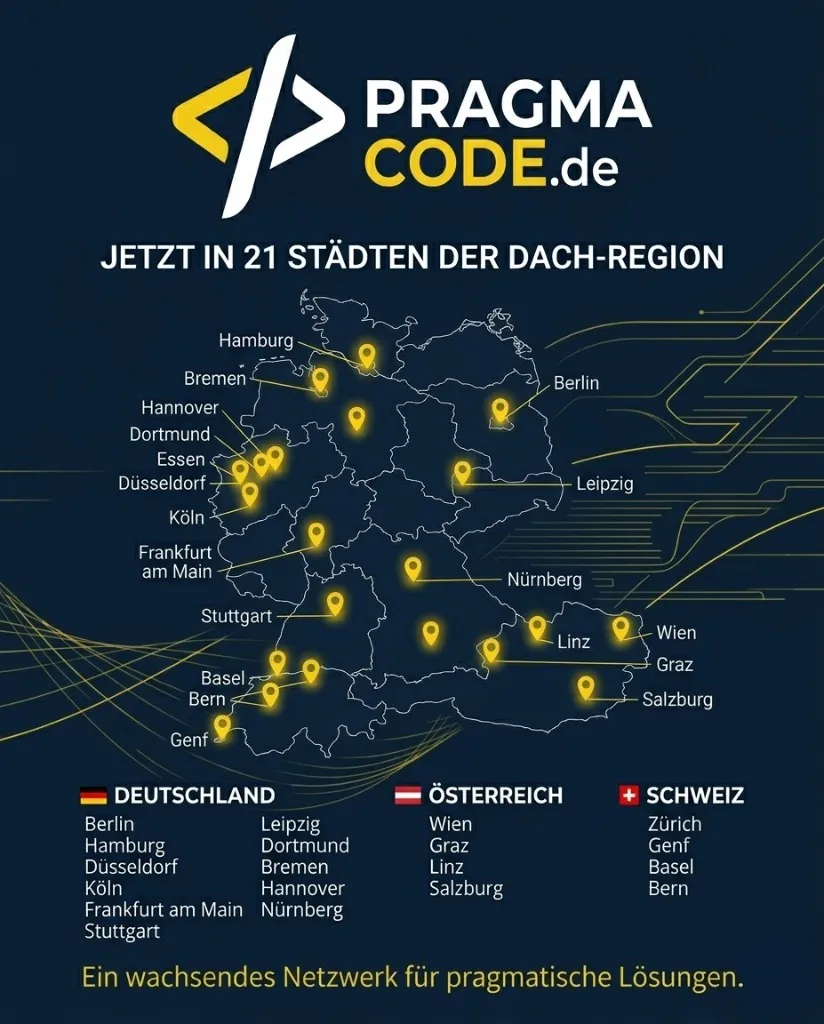
We are your digital partner – regionally anchored and successfully scaling across borders.
AI automation for your business?
I deliver this for small and mid-sized businesses: at a fixed price agreed upfront, working directly with the person who builds it. Process, scope and pricing are on the service page.
See service & pricing Or request a free intro callExtended Specialized Glossary
Agentic Logistics
The application of autonomous AI agents and multi-agent systems to control, optimize, and monitor logistics processes and supply chains.
Negotiation Agent
An autonomous AI agent specialized in independently negotiating contracts, prices, or freight rates based on predefined parameters and negotiation strategies.
Supply Chain Execution (SCE)
The phase of supply chain management focused on the operational execution and control of physical goods flows, warehousing, and transportation.
Agentic AI
Autonomous software systems that, based on large language models, independently pursue goals, plan, and utilize external tools.
n8n
An extremely flexible open-source workflow automation tool that allows connecting various web services, APIs, and databases seamlessly.