


From unplanned conveyor breakdowns to AI-orchestrated precision maintenance: How medium-sized enterprises maximize intralogistics uptime using predictive maintenance, IoT sensors, and automated n8n workflows.
This article is an in-depth expert contribution from our content cluster. Discover the complete overview on our main page:AI Automation & Process Optimization →
- Paradigm Shift in Maintenance: Transitioning from rigid calendar-based servicing to AI-powered Predictive Maintenance eliminates up to 90% of unplanned downtime across automated warehouse operations.
- Accessible IoT & AI Technology 2026: Modern plug-and-play wireless vibration sensors, edge gateways, and open-source automation engines (n8n) allow SMEs across Europe to enter predictive maintenance without million-euro CAPEX or operational shutdowns.
- Measurable ROI Impact: Increases equipment uptime (MTBF) by an average of 25%, reduces spare parts holding costs by 30%, and delivers complete capital payback in under 8 months.
The Era of Self-Diagnosing Material Handling
Reactive repairs following a conveyor failure cost medium-sized logistics operations an average of €12,000 to €18,000 per hour. Multimodal AI telemetry and edge computing detect microscopic bearing degradation and mechanical misalignments weeks before failure—autonomously generating service tickets in your ERP.
- 1. Introduction: The Hidden Cost of Unplanned Downtime
- 2. From Firefighting to AI Predictive Maintenance
- 3. Multimodal Telemetry: What Modern AI Models Capture
- 4. The 4 Core Use Cases in AI Intralogistics
- 5. Technical Architecture: From IoT Sensor to ERP Ticket
- 6. Agentic Maintenance: Autonomous Agents vs. Alert Fatigue
- 7. Strategy Comparison: Reactive vs. Preventive vs. Predictive
- 8. Brownfield Retrofitting: Upgrading Legacy Lines Without PLC Alterations
- 9. OT Cybersecurity & NIS-2 Compliance in Smart Logistics
- 10. Commercial Benefits & ROI Calculation for SMEs
- 11. Implementation Pitfalls & How SMEs Avoid Them
- 12. Step-by-Step Implementation Roadmap: 4 Phases to Success
- 13. Conclusion & Outlook: The Failure-Proof Warehouse
1. Introduction: The Hidden Cost of Unplanned Downtime
In modern distribution hubs, e-commerce fulfillment centers, and automated factory warehouses throughout Europe, precision timing dictates commercial survival. Autonomous guided vehicles (AGVs), miles of belt and roller conveyor networks, automated storage and retrieval systems (ASRS), and high-bay stacker cranes interact like interlocking gearwheels. In this hyper-synchronized environment, the unexpected failure of a single electromechanical component—such as a seized bearing on an incline conveyor drive—instantly paralyzes fulfillment across downstream picking and dispatch lanes.
The operational and financial fallout of reactive repairs is devastating for medium-sized enterprises. Missed carrier dispatch cut-offs, punitive contractual SLA penalties from key retail accounts, emergency technician overtime rates, and exorbitant express courier costs for replacement components quickly compound. Empirical data from modern European fulfillment centers indicates that an unplanned conveyor stoppage incurs between €12,000 and €18,000 per hour in idle labor, backlog mitigation, and customer churn. In 2026, Intralogistics Automation has arrived at a pivotal turning point: equipment health no longer requires subjective guesswork or rigid calendar routines. Using cutting-edge Industry 4.0 telemetry and machine learning, machine degradation is measured continuously and predicted with mathematical precision.
Core Takeaway for Logistics Executives
Predictive maintenance is no longer reserved for aerospace giants or automotive conglomerates. Thanks to non-invasive wireless sensors, standard open protocols such as MQTT, and open-source workflow automation powered by n8n, predictive maintenance is highly profitable for SMEs starting from their very first critical conveyor line or shuttle aisle.
By connecting robust sensor hardware with continuous Condition Monitoring and agentic workflow orchestration, maintenance transforms from an unpredictable cost center into a proactive driver of operational resilience.
2. From Firefighting to AI Predictive Maintenance
To appreciate the structural advantages of artificial intelligence in maintenance engineering, consider the three evolutionary stages defined under European maintenance standard DIN EN 13306:
Servicing occurs strictly after catastrophic failure. The consequences include chaotic emergency shifts, extensive secondary damage to gearboxes and drive shafts, and high unplanned downtime.
Mechanical parts such as bearings, V-belts, and contactors are replaced at fixed operational intervals (e.g. every 3,000 operating hours). While this prevents some breakdowns, it destroys capital: roughly 70% of parts discarded on schedule were in pristine operating condition.
Physical telemetry data (vibration, ultrasound, thermal gradients, motor current) is streamed in real time. AI algorithms calculate Remaining Useful Life (RUL) and schedule servicing precisely before failure occurs.
The decisive breakthrough of Stage 3 is the coupling of real-time diagnostic telemetry with remaining useful life forecasting. Instead of discarding a perfectly functional bearing due to a calendar alert or waiting until it catastrophically seizes during peak holiday shipping, predictive maintenance enables surgical planning—scheduling repairs during scheduled weekend or off-shift maintenance windows when lines are naturally idle.
3. Multimodal Telemetry: What Modern AI Models Capture
Historical attempts at condition monitoring frequently faltered due to relying on a single telemetry dimension. A pure temperature sensor only registers an alert when bearing lubrication has already completely broken down and extreme frictional heat has developed—leaving maintenance teams mere minutes before mechanical seizure. In 2026, leading industrial solutions employ multimodal sensor fusion, acquiring and cross-referencing multiple physical phenomena concurrently:
1. High-Frequency 3-Axis Vibration Telemetry
Piezoelectric and triaxial MEMS accelerometers sample mechanical vibrations up to 10 kHz. Fast Fourier Transforms (FFT) deconstruct the waveform into spectral components, pinpointing outer race (BPFO) and inner race (BPFI) defects months before human ears can detect them.
2. Acoustic AI & Ultrasonic Emission Sensing
Ultrasonic acoustic transducers monitor high-frequency stress waves (20 kHz to 100 kHz). Microscopic friction spikes and early lubrication starvation generate distinct acoustic signatures long before heat or gross vibration develops.
3. Dynamic Thermal Gradient Tracking
Infrared and surface contact probes record thermal curves on gearboxes and drum motors. The AI evaluates dynamic temperature delta relative to live line speed and motor load, rather than relying on crude static heat thresholds.
4. Motor Current Signature Analysis (MCSA)
Non-invasive split-core current transformers on inverter feeder cables measure harmonic modulations in phase currents. Stator eccentricities, rotor bar micro-fissures, and mechanical binding reflect immediately in the electrical waveform.
Fusing these four data streams inside a unified time-series machine learning model reduces false positive alert rates to under 2%, while ensuring mechanical anomalies are caught with over 98% diagnostic accuracy.
4. The 4 Core Use Cases in AI Intralogistics
Where inside the modern warehouse does predictive maintenance yield the highest operational leverage? Field implementations across European logistics hubs highlight four primary areas of application:
1. Belt, Roller & Spiral Curve Conveyor Systems
Wireless vibration telemetry on drive pulleys, tensioning drums, and geared motors monitors belt tracking and bearing degradation. Subtle belt misalignment is identified and adjusted before sidewalls abrade against guide rails.
2. Autonomous Guided Vehicles (AGVs & AMRs)
Fleet-wide telemetry tracks battery cell impedance, drive wheel polyurethane wear, and steering motor thermals. When degradation exceeds baseline tolerances, fleet management software autonomously routes vehicles to maintenance bays during low-throughput hours.
3. Stacker Cranes & Shuttles in High-Bay Storage
Vertical lift and horizontal travel drives operating at heights of 30 meters represent high-risk maintenance assets. Vibration models detect rail wear, cable elongation, and drive gear backlash, averting dangerous shuttle derailments.
4. Automated Pick-and-Pack Robotic Cells
Pneumatic and vacuum pressure telemetry identifies micro-leaks in robotic suction cups and pneumatic grippers. Pressure fluctuations trigger preventative nozzle servicing before dropped payloads disrupt packaging lines.
SME rollouts should always follow a criticality ranking: instrument assets with single-point-of-failure profiles (such as the main induction sorter or central merge line) first, validating ROI before expanding to redundant feeder belts.
5. Technical Architecture: From IoT Sensor to ERP Ticket
Many SME operational leaders hesitate to pursue predictive maintenance out of concern over excessive IT complexity. A modern architecture built on industry best practices neatly separates physical telemetry, edge preprocessing, AI inference, and enterprise workflow execution into four decoupled layers:
1. Non-Invasive Wireless Telemetry
Battery-powered wireless sensors (BLE Mesh, LoRaWAN) or IO-Link modules attach magnetically or via stud mounts to gearboxes. They operate independently, without electrical connection to the sensitive PLC.
2. Local Ingestion & FFT Processing
An industrial IIoT Gateway ingests raw telemetry, executes edge Fast Fourier Transforms, and filters out factory ambient noise, forwarding only enriched feature sets (RMS, Peak, Kurtosis).
3. Anomaly Scoring & RUL Forecasting
Time-series anomaly models benchmark operational telemetry against the machine's calibrated baseline. When drift occurs, the AI model calculates Remaining Useful Life (RUL) with confidence intervals.
4. n8n Automation & ERP Workflows
The open-source automation engine n8n receives anomaly webhooks, queries spare parts inventory in the ERP/WMS, reserves required items, and dispatches maintenance work orders.
The end-to-end data processing lifecycle executes across four synchronized stages from mechanical vibration to actionable digital ticket:
Mechanical Vibration Sampling
Triaxial sensors mounted on the motor housing capture 10,000 raw telemetry samples per second and transmit them wirelessly to the warehouse edge gateway.
Frequency Filtering & Noise Isolation
The edge gateway isolates environmental disturbances (such as passing forklifts) and constructs a clean spectral harmonic profile of the mechanical drive train.
AI Pattern Matching & RUL Calculation
The machine learning model identifies an emerging defect on the outer ring of the drive bearing, projecting a remaining operating life of 14 days before failure.
Automated Dispatch & Parts Allocation
n8n retrieves the component part number, verifies stock in the spare parts depot, and schedules replacement for the planned maintenance window this Saturday.
This decoupled architectural pattern provides robust protection against vendor lock-in: enterprises avoid becoming trapped in proprietary machine builder clouds, and as machine learning models improve, physical sensor assets remain untouched.
6. Agentic Maintenance: Autonomous Agents vs. Alert Fatigue
Traditional monitoring tools often swamp operations managers with hundreds of static threshold alerts daily. The predictable result is alert fatigue: critical warnings become buried in white noise until catastrophic mechanical failure occurs. In 2026, intralogistics is advancing from passive alarms to agentic maintenance systems (Agentic Logistics).
An AI maintenance agent does not stop at flagging an anomaly. Functioning as an autonomous digital technical assistant, it independently executes multi-step investigation and operational workflows:
Contextual Telemetry Correlation
The agent evaluates whether elevated gearbox thermals reflect genuine mechanical breakdown or simply an ambient heatwave across the warehouse coinciding with peak sorting volumes.
Autonomous ERP Inventory Verification
Upon discovering bearing wear, the agent autonomously queries ERP systems (SAP, Dynamics 365, Odoo) to verify whether identical replacement bearings are in stock.
Automated Supplier Inquiries
If spare parts are depleted, the agent issues automated purchase requisitions or verifies lead times via supplier B2B APIs.
Intelligent Shift & Skill Matching
Cross-referencing maintenance rosters, the agent locates available technicians certified for high-voltage drive systems and schedules the intervention into optimal shift slots.
Multimodal SOP Generation
The agent compiles a pre-flight technical dossier for the floor technician's mobile tablet—including 3D exploded diagrams, exact bolt torque specifications, required tools, and step-by-step assembly instructions.
This automated preparation cuts technician diagnostic and preparation time by an average of 45%, while completely preventing incorrect spare part selections.
7. Strategy Comparison: Reactive vs. Preventive vs. Predictive
How do maintenance methodologies differ in operational execution and balance sheet impact? The comparison below illustrates the strategic leverage:
Comparison of Maintenance Strategies in Intralogistics
- Predictability: Low – Disruptions occur unannounced during high-throughput shipping hours.
- Spare Parts Costs: High – Expensive rush freight and premature disposal of functional parts.
- Equipment Availability: Suboptimal due to cascading conveyor stoppages and collateral damage.
- Team Stress: Chaotic emergency repairs, employee burnout, and unpredictable overtime.
- Predictability: Maximum – Servicing is scheduled cleanly during planned off-peak hours.
- Spare Parts Costs: Minimal – Maximizes component lifespan safely based on live RUL data.
- Equipment Availability: Increases overall equipment effectiveness (OEE) by 15–25%.
- Team Stress: Structured, scheduled maintenance performed during standard working shifts.
The measurable performance divergence between strategies across equipment availability (MTBF), annual downtime hours, and maintenance budgets is demonstrated in the interactive benchmark below:
8. Brownfield Retrofitting: Upgrading Legacy Lines Without PLC Alterations
The primary barrier to adoption among SMEs is their established machinery base. European logistics facilities are dominated by equipment that is 10, 15, or even 25 years old: heavy-duty conveyor assets manufactured by Dematic, Vanderlande, SSI Schäfer, or TGW, driven by legacy Siemens S7-300 or S7-1200 PLCs. Replacing functional hardware is economically unfeasible, and legacy PLC ladder logic is frequently locked by the original equipment vendor or poorly documented.
This is where non-invasive brownfield retrofitting delivers massive value. Telemetry sensors are installed in parallel with existing electrical controls without modifying a single line of PLC code or splicing existing cabling:
1. Zero-Downtime Mechanical Attachment
Wireless vibration sensors mount magnetically or via M6/M8 threaded studs onto motor bearing end-shields. Installation requires less than 5 minutes per measurement node while conveyor belts continue operating normally.
2. Wireless Mesh Telemetry via BLE / LoRaWAN
Sensors transmit telemetry over Bluetooth Low Energy (BLE Mesh) or LoRaWAN across distances of up to 100 meters to central hall gateways. Long-life internal batteries deliver 3 to 5 years of maintenance-free operation.
3. Complete Preservation of CE Markings & Warranties
Because there is zero galvanic connection to the control cabinet or safety circuits (E-stops, light curtains), the machinery's CE conformity remains intact, and existing OEM service contracts remain unaffected.
4. Scalable Pilot-to-Production Rollout
Pilots deploy on 10 to 20 critical conveyor bottlenecks. Once data quality and ROI are confirmed, operations teams scale the architecture across hundreds of drives seamlessly.
This non-intrusive approach eliminates the primary reservation of operations directors: nobody has to halt live fulfillment operations to modernize their warehouse for Industry 4.0.
9. OT Cybersecurity & NIS-2 Compliance in Smart Logistics
As industrial sensor networks expand, so does the potential attack surface. Logistics hubs and supply chain infrastructure fall squarely under the scope of the European NIS-2 Directive. Poorly configured IoT gateways risk serving as entry points for cybercriminals seeking lateral movement into corporate ERP systems or deploying ransomware onto operational networks.
At Pragma-Code, we design and architect predictive maintenance deployments strictly according to the Purdue Enterprise Reference Architecture and IEC 62443 cybersecurity standards:
Strict Network Segmentation
Sensor telemetry (OT Level 1/2) and edge gateways communicate inside dedicated, physically or VLAN-isolated subnets. Direct TCP/IP communication between sensors and the corporate LAN is strictly prohibited.
DMZ with Protocol Decoupling
The IIoT gateway terminates local OT protocols (Modbus, OPC UA) and forwards telemetry strictly as encrypted MQTT messages over TLS 1.3 with mutual certificate authentication (mTLS) into the DMZ.
Unidirectional Data Flow
Telemetry flows exclusively upward from physical machinery to analytical engines. Remote motor actuation or PLC command override via the monitoring pipeline is architecturally prevented.
Hardened n8n Workflow Runtime
The n8n orchestration platform runs inside hardened, isolated Docker containers with read-only filesystems and scoped API credentials, logging all activities into immutable audit trails.
This security-first architecture satisfies rigorous auditor and insurance requirements without impeding telemetry throughput.
10. Commercial Benefits & ROI Calculation for SMEs
What is the bottom-line financial return on investment? Consider this operational case model based on an actual mid-sized European logistics facility:
Eliminating Unplanned Downtime Costs
Radical reduction in conveyor and shuttle stoppages.
-75% DowntimeReliably protects against SLA penalties, missed carrier cut-offs, and emergency overtime.
Optimized Spare Parts Inventory
Capital liberation through on-demand procurement.
-30% Inventory CostsJust-in-time replenishment replaces idle emergency stock sitting on depot shelves.
- Machinery Base: 420 drives, 16 AGVs, 6 stacker cranes (35,000 m² warehouse)
- Unplanned Downtime: Ø 14 hours annual stoppage across lines
- Downtime Costs: €14,000 per downtime hour (idle crews & late fees)
- Parts Inventory: High capital locked in bloated buffer stock
- Setup Investment: €46,000 (120 sensors, 4 gateways, n8n workflows)
- Downtime Reduction: -80% downtime (under 3 hours / year)
- Direct Savings: €154,000 avoided stoppage costs annually
- Inventory Efficiency: +€18,000 liberated capital in spare parts
Additionally, predictive maintenance unlocks an often neglected sustainability dividend: electric motors running with degraded bearings, contaminated grease, or improper belt tension consume up to 8% more electrical power. Eliminating frictional drag reduces facility power consumption noticeably, providing verifiable data for corporate Scope 2 ESG emissions reporting.
11. Implementation Pitfalls & How SMEs Avoid Them
In industrial implementations, theory meets operational reality. Experience shows that three common traps account for the majority of stalled predictive maintenance projects:
Pitfall 1: Unfiltered "Data Graveyards" in the Cloud
Streaming gigabytes of high-frequency raw vibration data directly to cloud providers incurs massive bandwidth and storage fees. Solution: Intelligent edge gateways process FFT spectra and compute statistical indicators locally before sending data upstream.
Pitfall 2: Neglecting the Floor Maintenance Crew
When experienced maintenance technicians perceive AI as a surveillance mechanism, adoption stalls. Solution: Position the AI as an empowering assistant that eliminates tedious manual vibration logging and provides actionable repair guidance.
A third frequent mistake is committing to monolithic, six-figure enterprise asset management software suites before proving value. Modular architectures utilizing n8n and open IIoT sensors allow organizations to start small, validate ROI, and scale at their own pace.
12. Step-by-Step Implementation Roadmap: 4 Phases to Success
A structured 4-phase roadmap spanning 8 to 12 weeks provides a dependable framework for implementing predictive maintenance:
-
Phase 1: Bottleneck Analysis & Sensor Deployment (Weeks 1–2)
Identify single points of failure across your warehouse layout. Select 10 to 20 pilot drives, mount wireless vibration sensors, and configure the local gateway.
-
Phase 2: Baseline Calibration & Noise Isolation (Weeks 3–5)
The system gathers operational telemetry for 2 to 3 weeks during standard production shifts. The machine learning model calibrates the unique vibration signature of each drive under varying loads.
-
Phase 3: n8n Workflow Automation & ERP Integration (Weeks 6–8)
Connect anomaly triggers to n8n workflows. Configure automated work order generation in your maintenance tool or ERP and establish dispatch notifications via Teams or email.
-
Phase 4: Full Operational Commissioning & Scaling (Week 9+)
Transition live monitoring into daily operational routines. Review initial avoided downtime incidents, fine-tune alert thresholds, and scale sensors across remaining conveyor lines.
13. Conclusion & Outlook: The Failure-Proof Warehouse
In 2026, artificial intelligence in intralogistics has matured from an experimental pilot concept into a mission-critical competitive capability for modern SMEs. Predictive maintenance eliminates the operational and financial menace of sudden conveyor stoppages, protects maintenance budgets, and guarantees high delivery reliability for demanding customers.
Combining non-invasive wireless sensors, edge preprocessing, agentic AI workflows, and flexible n8n automation creates a high-yield, low-risk entry path into smart warehousing. By acting now, logistics leaders modernize existing machinery assets for the next decade of industrial high availability.
Quick Check: Predictive Maintenance Readiness
Ready to eliminate machinery downtime across your logistics operations?
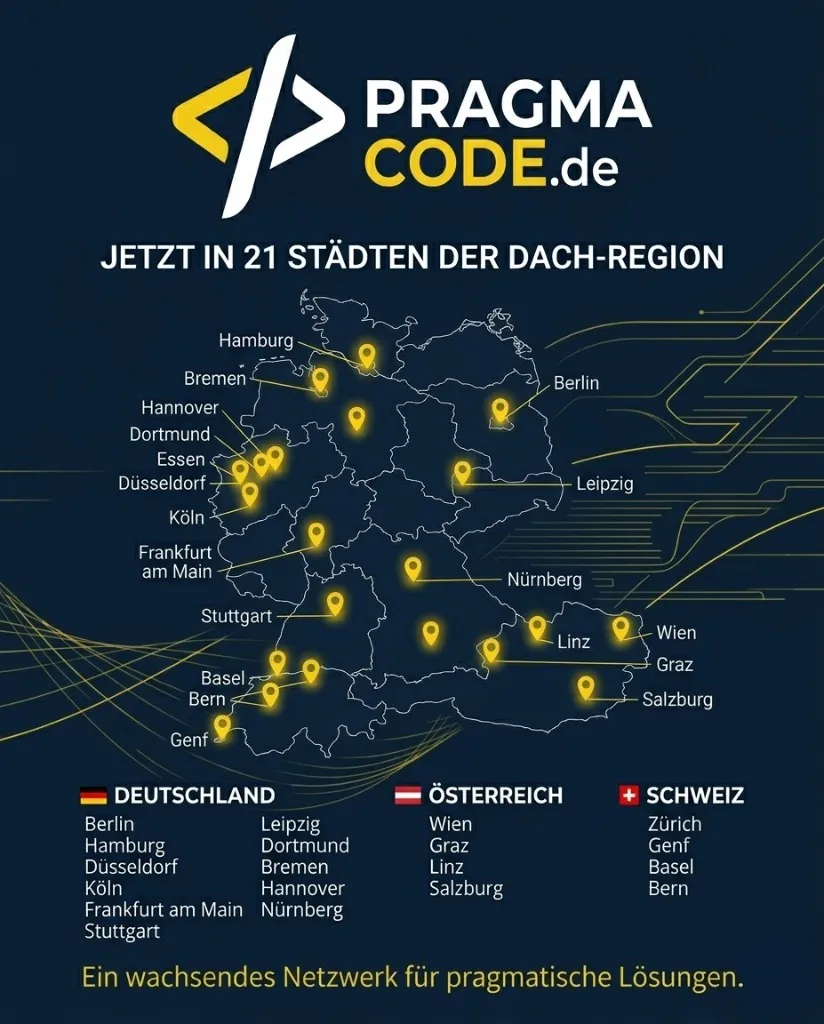
Schedule Free ConsultationOur Regional Expertise
We are your digital partner – regionally anchored and successfully scaling across borders.
Have a vision?
Let's check together how we can make your idea take flight.
Book your free strategy call nowExtended Specialized Glossary
Intralogistics Automation
Deployment of autonomous guided vehicles (AGVs), smart warehousing, and sensor-driven controls to optimize internal material flows.
Condition Monitoring
Continuous acquisition of operational state metrics (e.g. vibration, temperature, pressure) on machinery to detect wear and tear early.
MTBF (Mean Time Between Failures)
Average operating duration between system failures, serving as a primary metric for industrial machinery reliability.
Predictive Maintenance
Proactive maintenance strategy using AI sensor data analysis to predict machine failures accurately and schedule service on demand.
Digital Twin
Virtual real-time representation of physical machinery or conveyor lines mirroring live operational telemetry for predictive simulations.