


Manually completing RFP questionnaires drains senior engineering and sales bandwidth. Discover how a local RAG pipeline with pgvector and AI agents automates 80% of drafting while preserving complete corporate data sovereignty.
This article is an in-depth expert contribution from our content cluster. Discover the complete overview on our main page:AI & Workflow Automation →
The Future of B2B Bidding
Why traditional, manual answering of requirements specifications in the era of Agentic AI is a major competitive disadvantage and how you can multiply your conversion rates in B2B sales through semantically structured knowledge bases and autonomous agents.
- 80% Time & Cost Reduction: Pairing local RAG with autonomous AI agents slashes the drafting time for comprehensive RFP questionnaires from 40 hours down to under 4 hours.
- 100% GDPR Compliance & Zero Data Leakage: Running dedicated on-premise LLMs (such as Llama 3) and local PostgreSQL vector databases (pgvector) completely prevents sensitive trade secrets, pricing formulas, and PII from leaving your firewall.
- Deterministic Responses Over Hallucinations: Implementing a hybrid retrieval architecture (BM25 full-text + pgvector HNSW) combined with a strict Human-in-the-Loop (HITL) interface guarantees factual accuracy, citations, and compliance.
- 1. Introduction: The RFP Bottleneck in B2B Sales
- 2. The Anatomy of an RFP and the Pitfalls of Manual Workflows
- 3. The Security Dilemma: Why Cloud LLMs Pose Massive Risks
- 4. The Solution Architecture: Local Hybrid RAG + Autonomous AI Agents
- 5. Step-by-Step Implementation of the RFP Automation Pipeline
- 6. Deep Dive: Complex Excel Catalogs, Dropdowns & Structured Outputs
- 7. Comparison: Manual Processing vs. AI-Assisted Automation
- 8. The 3 Biggest Cost Traps and How to Avoid Them
- 9. Security Framework & RBAC for Sensitive Bid Data
- 10. Strategic Roadmap for Enterprise Deployment
- 11. Conclusion: Securing an Unfair Competitive Advantage in B2B Sales
1. Introduction: The RFP Bottleneck in B2B Sales
Answering RFPs (Request for Proposal) and detailed requirements specifications is a central yet highly inefficient workflow for B2B sales teams in tech, IT, and manufacturing. Every week, sales leaders receive massive catalogs with hundreds of questions spanning technical architectures, security standards, compliance requirements, and past project references.
The core bottleneck is that while many questions are highly repetitive across various tenders—often sharing 70% to 90% conceptual overlap—answering them remains an exhausting manual task. Sales staff waste days hunting down past proposals scattered across shared network drives. Senior software architects, security officers, and principal engineers are frequently pulled out of revenue-generating client projects to rewrite the same descriptions of server infrastructure, encryption protocols, or service-level agreements (SLAs).
This dynamic creates immense opportunity costs, burns out top talent, and causes proposals to be submitted under severe time pressure with elevated error rates. Fortunately, by combining local RAG (Retrieval-Augmented Generation), an enterprise Vector Database, and autonomous AI agents, companies can automate 80% of this workload while preserving absolute data sovereignty and GDPR compliance.
"Manually copying and pasting answers into spreadsheets is a relic of the past. The future belongs to AI-assisted bid management, allowing sales teams to focus on client relationships rather than paperwork."
2. The Anatomy of an RFP and the Pitfalls of Manual Workflows
Understanding why RFP processing takes so long requires analyzing a typical B2B Requirements Specification document. Usually delivered as multi-tab Excel workbooks or lengthy Word templates, tenders are structured around four distinct operational pillars:
Corporate Background
Financial stability metrics, company history, organizational charts, reference customers, and industry-specific credentials.
Functional Specifications
Explicit software features, API capabilities, third-party integrations, data migration procedures, and workflow customizations.
Non-Functional Specifications
High-level system architecture, on-premise vs. cloud hosting, latency boundaries, disaster recovery plans, and high-availability SLAs.
Security & Compliance
GDPR compliance proofs, ISO/IEC 27001 certifications, TISAX audit logs, encryption protocols, and data processing agreements (DPAs).
In a traditional manual workflow, the bid manager slices these questionnaires into sections and forwards them across departments via email or team chats. Answers return asynchronously over days in varying writing styles, depths, and formats. The resulting consolidation process is tedious: version conflicts arise, clerical errors slip into legal clauses, and valuable organizational knowledge remains trapped in personal silos rather than being indexed as machine-readable corporate assets.
3. The Security Dilemma: Why Cloud LLMs Pose Massive Risks
Under tight bid deadlines, sales reps and engineers frequently resort to public cloud-based LLMs like ChatGPT, Microsoft Copilot, or web interfaces of commercial frontier models. From an IT security, risk management, and legal perspective, this shadow AI creates severe enterprise vulnerabilities.
The European General Data Protection Regulation (GDPR) strictly prohibits transferring personally identifiable information (PII) to third-country cloud environments without adequate safeguards and binding Data Processing Agreements. RFP questionnaires, however, are packed with PII: project manager contact details, organizational charts, security personnel rosters, and detailed CVs of proposed delivery leads.
Even more critical is the risk of intellectual property (IP) leakage. Public cloud AI terms often reserve the right to incorporate user prompts into training corpora for future model iterations. Submitting proprietary system designs, source code snippets, unreleased product capabilities, or internal margin models to public cloud APIs risks exposing confidential data to competitors. Since B2B procurement is almost universally protected by stringent Non-Disclosure Agreements (NDAs), data leaks can trigger contractual penalties, immediate disqualification from the tender, and catastrophic reputational damage.
4. The Solution Architecture: Local Hybrid RAG + Autonomous AI Agents
The only viable enterprise strategy is a private, sovereign on-premise infrastructure. This architecture pairs an internal PostgreSQL database—extended into a vector store via pgvector—with the open-source automation platform n8n and local open-weight language models like Llama 3 served through Ollama or vLLM.
1. Multimodal Document Extraction
Historic bid submissions, technical whitepapers, architectural blueprints, and security policies are automatically parsed, cleaned, and split into overlapping chunks.
2. Hybrid pgvector Database
PostgreSQL combines dense vector embeddings via HNSW indexing with traditional BM25 full-text search for exact matching of standards, codes, and numerical metrics.
3. Autonomous Generation & Audit Agents
Local open-source models analyze incoming questions, execute hybrid retrieval, synthesize professional drafts, and assign a verifiable confidence score.
4. Human-in-the-Loop Cockpit
An interactive review interface enables bid managers to inspect AI drafts side-by-side with original source quotes, make adjustments, and sign off.
Why Pure Vector Retrieval Fails in Enterprise RFPs: The Power of Hybrid Search
A frequent pitfall in enterprise RAG deployments is relying solely on cosine similarity over dense vector embeddings (Dense Retrieval). While dense vectors excel at understanding semantic intent—matching a query about "server reliability" to an answer discussing "geographically redundant active-active clusters"—they struggle with exact keyword lookups.
In B2B tenders, procurement teams frequently test vendors on specific industry acronyms and compliance levels, such as ISO/IEC 27001:2022, TISAX AL 3, or specific hardware model numbers. Pure vector search often retrieves conceptually related generic security sections while failing to pinpoint the chunk containing the exact standard number. We resolve this by implementing Hybrid Search with Reciprocal Rank Fusion (RRF) in PostgreSQL: we merge native PostgreSQL full-text search (using tsvector with BM25 ranking) with the semantic HNSW Index of pgvector. Both ranked lists are fused algorithmically, ensuring that documents that both match semantic meaning and contain exact alphanumeric keywords rise to the top rank.
5. Step-by-Step Implementation of the RFP Automation Pipeline
Building this sovereign enterprise RFP automation pipeline requires five sequential implementation phases. The entire system is built upon proven open-source technology and runs self-hosted within your corporate data center.
Document Preparation and Semantic Chunking
Historical bid documents (PDF, Word, Excel) are parsed and split into overlapping chunks. A Chunking window of 800 characters with 150 characters of overlap preserves semantic context across sentence boundaries. Complex tables are converted into Markdown tables to maintain cell hierarchies.
Generating Embeddings & Full-Text Lexical Tokens
Each chunk is processed by a local Embedding model (such as mxbai-embed-large via Ollama) to compute high-dimensional vectors. Concurrently, the text is tokenized into a PostgreSQL full-text search vector (to_tsvector('english', content)).
Persistence in PostgreSQL with pgvector & HNSW
Vectors, raw content, and structured metadata (document origin, category, last audit date) are saved into PostgreSQL. The HNSW index ensures sub-10ms query execution across repositories exceeding 100,000 document chunks.
Agentic Retrieval, RRF Fusion & Drafting
The AI agent processes new procurement questionnaires row-by-row. It triggers hybrid queries, calculates reciprocal rank fusion scores, verifies source relevance, and drafts responses in the company's corporate identity using a local LLM.
Human-in-the-Loop Validation & Memory Feedback
The bid team reviews draft answers within an intuitive dashboard, verifying generated text against highlighted source citations. Approved modifications automatically update the vector store as fresh canonical reference material.
Database Setup: Hybrid Table for Vector & Full-Text Retrieval
Execute the following SQL schema in your PostgreSQL instance to activate pgvector and configure a high-performance hybrid index structure:
-- 1. Enable the pgvector extension
CREATE EXTENSION IF NOT EXISTS vector;

-- 2. Create the RFP knowledge table with vector and full-text columns
CREATE TABLE IF NOT EXISTS rfp_knowledge (
    id BIGSERIAL PRIMARY KEY,
    source_document TEXT NOT NULL,
    category TEXT NOT NULL, -- e.g., 'Security', 'Compliance', 'Architecture', 'Pricing'
    content TEXT NOT NULL,
    tsv_content TSVECTOR GENERATED ALWAYS AS (to_tsvector('english', content)) STORED,
    embedding VECTOR(1024), -- Dimensions matching mxbai-embed-large
    metadata JSONB DEFAULT '{}'::jsonb,
    created_at TIMESTAMP WITH TIME ZONE DEFAULT CURRENT_TIMESTAMP
);

-- 3. HNSW index for ultra-fast vector cosine similarity
CREATE INDEX IF NOT EXISTS idx_rfp_knowledge_embedding
ON rfp_knowledge USING hnsw (embedding vector_cosine_ops);

-- 4. GIN index for lexical full-text keyword matching
CREATE INDEX IF NOT EXISTS idx_rfp_knowledge_tsv
ON rfp_knowledge USING gin (tsv_content);
Pro Tip: Reciprocal Rank Fusion (RRF) Query Logic
Combine vector similarity and full-text ranking using reciprocal rank fusion in your backend logic. By assigning weights via 1.0 / (60 + rank), chunks that satisfy both exact compliance acronyms and overarching semantic context consistently achieve top rankings.
Local Model Deployment via Ollama
To maintain sub-two-second latency without sending a single byte over the public internet, deploy models on internal GPU servers using Ollama or vLLM:
# 1. Download the high-accuracy embedding model (1024 dimensions)
ollama pull mxbai-embed-large

# 2. Download the instruction-tuned Llama 3 model
ollama pull llama3:8b

# 3. Verify local endpoint health
curl -s http://localhost:11434/api/tags | grep -q "llama3" && echo "Models Ready"
6. Deep Dive: Complex Excel Catalogs, Dropdowns & Structured Outputs
Real-world B2B procurement questionnaires rarely arrive as straightforward text documents. Over 90% are distributed as complex, multi-column Excel workbooks featuring strict validation drop-down menus ("Compliant", "Partially Compliant", "Custom Development Required", "Non-Compliant") and mandatory explanation columns. Standard conversational chatbots completely fail when tasked with filling out these formats.
Our agentic pipeline solves this through strictly enforced Structured Outputs via JSON Schema. The orchestration agent reads the spreadsheet cell-by-cell, extracts column headers, and prompts the local LLM using a rigid output schema:
{
  "compliance_status": "Compliant | Partially Compliant | Non-Compliant",
  "technical_rationale": "Concise 2-3 sentence technical justification citing operational architecture.",
  "source_references": ["Security_Whitepaper_2026.pdf (Page 14)", "ISO27001_Certificate.pdf"],
  "confidence_score": 0.94
}
The integrated Confidence Score is pivotal: if the retrieval agent calculates a source similarity score below 0.80 or identifies contradictory statements in past proposals, the row is highlighted in yellow and flagged for manual review by a senior architect. This ensures that the bid team maintains complete oversight on critical edge cases while routine compliance questions are filled autonomously with zero friction.
7. Comparison: Manual Processing vs. AI-Assisted Automation
Quantifying the return on investment (ROI) of an agentic RFP workflow illustrates why manual questionnaire completion is no longer viable in competitive enterprise markets:
Comparison: Traditional Manual vs. AI Agent RFP Pipeline
- Time Spent: 20–40 hours per complex RFP. Heavy cross-departmental coordination overhead.
- Quality: Highly variable. Dependent on individual writer seniority and fatigue.
- Opportunity Costs: Severe. High-cost software architects and technical leads are blocked from billable work.
- Knowledge Retention: Zero. Knowledge remains locked in fragmented proposal PDFs on local drives.
- Time Spent: 2–4 hours total. High-fidelity initial draft generated in minutes; humans only review.
- Quality: Uniformly high. Synthesizes the enterprise's validated canonical proposal history.
- Opportunity Costs: Minimal. Runs on open-source software and existing hardware with zero per-token SaaS fees.
- Knowledge Retention: Continuous. Every human-reviewed proposal updates the centralized vector repository.
8. The 3 Biggest Cost Traps and How to Avoid Them
While an open-source architecture eliminates expensive SaaS recurring fees, common architectural mistakes can derail deployment timelines and budgets:
Trap 1: Underpowered GPU Infrastructure
Attempting to run LLMs solely on server CPUs results in response times of several minutes per question. This destroys team adoption. Equip your internal infrastructure with modern GPU accelerators (such as NVIDIA RTX 4090 or L4 cards) to guarantee latencies below 2 seconds.
Trap 2: Poor Data Ingestion ("Garbage In, Garbage Out")
Ingesting outdated sales decks, unverified technical promises, or draft proposals into the vector database inevitably leads to inaccurate generations. Curate your historical data rigorously: only approved, accurate, and current materials belong in the vector index.
Trap 3: Lacking a Review Interface (Skipping HITL)
Autonomous systems that generate proposals and submit them directly to procurement officers will eventually fail due to unexpected hallucinations. Establishing a reliable Human-in-the-Loop validation gateway is the single most critical factor for operational success.
9. Security Framework & RBAC for Sensitive Bid Data
Given the highly confidential nature of procurement bids, security must be embedded into every layer of the architecture:
Network Isolation & VPC Hosting
Deploy the entire application stack inside an isolated corporate VLAN or Virtual Private Cloud without inbound internet exposure. Service-to-service communication between n8n, PostgreSQL, and Ollama is encrypted in-transit.
Role-Based Access Control (RBAC)
Every vector database record is tagged with access clearance attributes. The retrieval agent is strictly constrained to query chunks accessible to the active user's permissions, preventing unauthorized access to sensitive financial margins or HR data.
Automated Pre-Processing PII Anonymization
Run all source documents through an automated redaction pipeline before embedding. Named Entity Recognition (NER) models detect and mask employee names, direct phone numbers, and customer IDs before storage.
10. Strategic Roadmap for Enterprise Deployment
To successfully integrate an agentic RFP workflow into corporate sales operations, follow a structured three-phase rollout:
Proof of Concept & Data Curation
Weeks 1–3Deploy a local Docker stack with n8n, PostgreSQL/pgvector, and Ollama. Clean and ingest a pilot dataset of 50 to 100 historical RFP questions to calibrate retrieval precision and hybrid RRF thresholds.
Infrastructure Scaling & Excel Integration
Weeks 4–6Provision dedicated GPU hardware to ensure fast generation times. Connect system authentication to corporate Active Directory (LDAP/SSO) and finalize automated Excel import and export pipelines in n8n.
Team Onboarding & Feedback Loops
Weeks 7–9Train bid managers on the review dashboard. Formalize the automated continuous learning loop: every human-validated response is saved as fresh canonical reference material in the vector database.
Quick-Check: Is Your Organization RFP-Automation Ready?
11. Conclusion: Securing an Unfair Competitive Advantage in B2B Sales
In highly competitive B2B sales cycles, speed, precision, and consistency determine win rates. Organizations that continue to manually answer tender questionnaires exhaust their top technical talent, miss tender deadlines, and submit fragmented proposals.
By implementing a sovereign, GDPR-compliant RAG architecture with PostgreSQL, pgvector, and autonomous AI agents, you can automate up to 80% of drafting effort. You protect corporate intellectual property, liberate engineering bandwidth, and quadruple the volume of proposals your team can submit without adding headcount. Organizations that embrace this transformation now establish an insurmountable operational advantage in enterprise sales.
Have Questions About RFP Automation?
Schedule a Free Strategy CallOur Regional Expertise
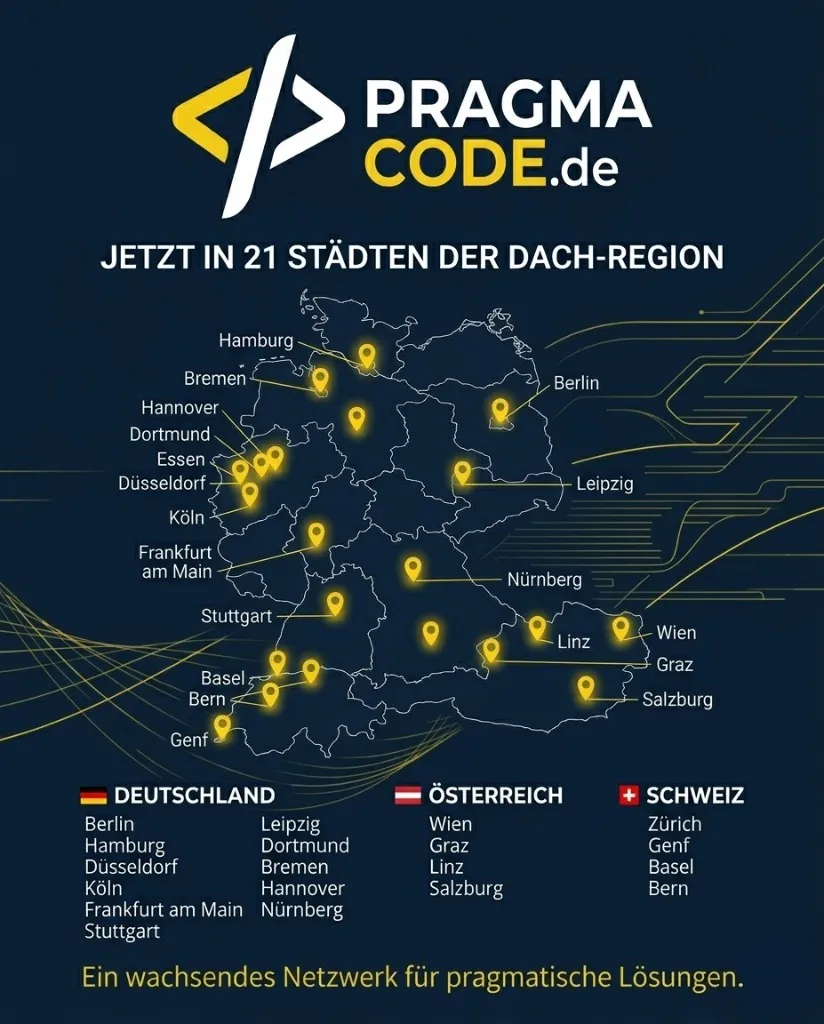
We are your digital partner – regionally anchored and successfully scaling across borders.
Have a vision?
Let's check together how we can make your idea take flight.
Book your free strategy call nowExtended Specialized Glossary
RFP (Request for Proposal)
A structured business process where an enterprise requests bids from vendors for software, systems, or services.
Requirements Specification
A detailed document that describes the technical, operational, and functional specifications required for a B2B project.
Human-in-the-Loop (HITL)
An operational model that integrates human feedback and validation directly into automated AI pipelines to ensure the accuracy and quality of generated outputs.
RAG
Retrieval-Augmented Generation - A technique enabling AIs to access proprietary corporate data for generation.
pgvector
An open-source vector similarity search extension for PostgreSQL, enabling database-level similarity queries.