

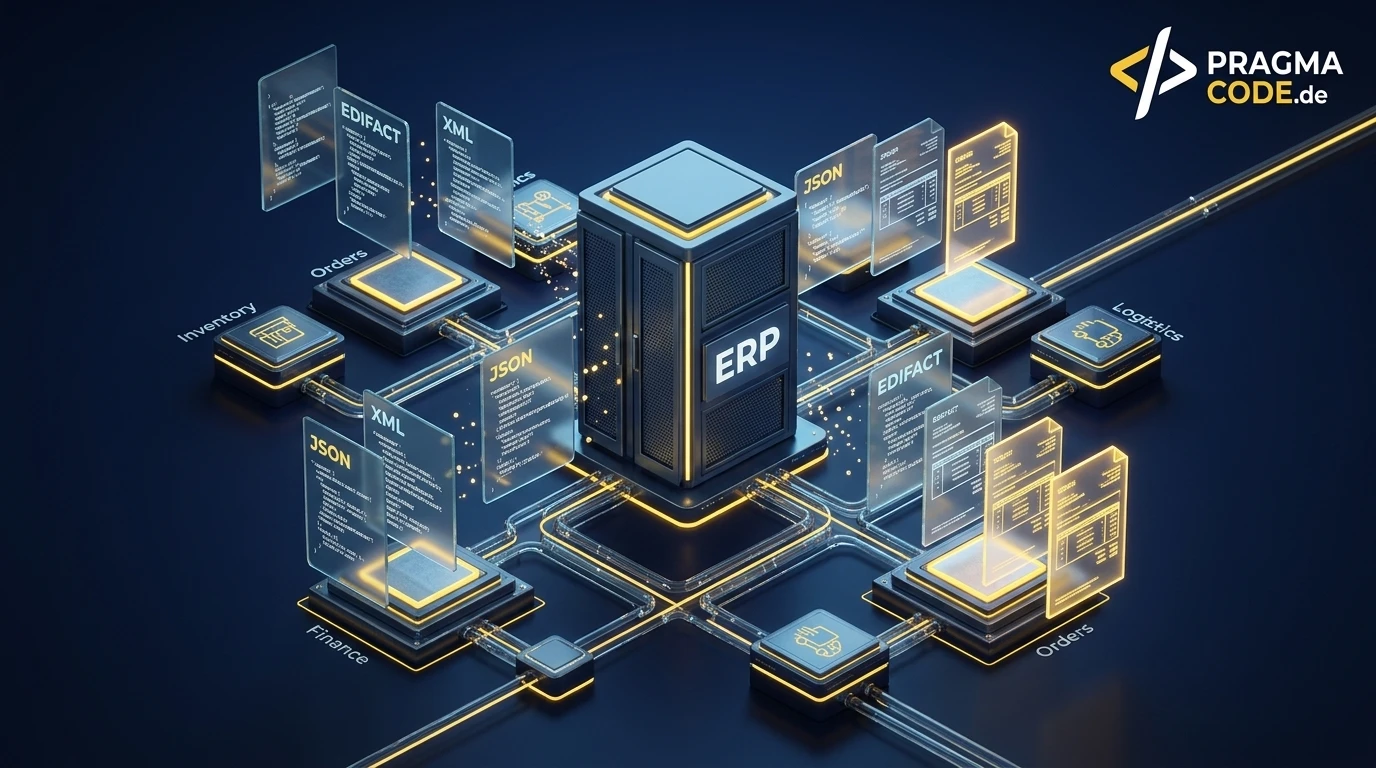
For medium-sized suppliers, distributors, and manufacturing enterprises, Electronic Data Interchange (EDI) is no longer an optional luxury—it is the mandatory ticket into global supply chains. Discover how modern EDI systems, hybrid API connectors, and AI-driven data mapping are revolutionizing B2B transactions.
This article is an in-depth expert contribution from our content cluster. Discover the complete overview on our main page: AI Automation & Intelligent Agents →
- Enterprise Supplier Mandates: Automotive OEMs, wholesale giants, and retail networks enforce strict EDI compliance. Missing integration deadlines leads to heavy non-compliance penalties or immediate disqualification.
- The 2026 Paradigm Shift: Legacy on-premise EDI converters and costly third-party clearing centers are being superseded by modern hybrid integration platforms combining EDIFACT, REST APIs, and generative AI parsers.
- ROI & Error Elimination: Direct integration between EDI (Electronic Data Interchange) and the corporate ERP eliminates manual re-keying of orders, despatch advices and invoices – cutting per-document processing costs and transcription errors significantly. How much depends on your document volume, so model it with your own figures before the project starts.
- 1. What Is Electronic Data Interchange (EDI) for SMEs?
- 2. How a Modern EDI System Operates in Practice
- 3. Core EDI Standards and Transmission Protocols
- 4. The Top 5 Essential EDI Transactions in Mid-Market B2B
- 5. System Comparison: Legacy Converters vs. Hybrid API Platforms
- 6. Critical Cost Traps and Hidden Implementation Expenses
- 7. EDI vs. Modern APIs and Autonomous AI Agents
- 8. A 5-Step Roadmap to Successful EDI Implementation
- 9. Quick-Check: Assessing Your B2B Integration Readiness
- 10. Conclusion & Strategic Recommendations
1. What Is Electronic Data Interchange (EDI) for SMEs?
In everyday B2B commerce between industrial manufacturers, component suppliers, logistics carriers, and wholesale distributors, thousands of business transactions take place daily. When purchase orders, order acknowledgments, delivery slips, and invoices are transmitted as PDF email attachments or printed paperwork, manual data entry becomes an expensive operational bottleneck. Clerks must transcribe figures, verify inventory records manually, and reconcile delivery notes. This process consumes valuable team capacity, introduces typographical errors, and delays fulfillment schedules.
This is where Electronic Data Interchange (EDI) provides a decisive solution: it represents the fully automated, asynchronous, and structured computer-to-computer data exchange between independent enterprises without any human intervention. When a major industrial buyer generates a purchase order inside SAP, that transaction is converted into a standard format in a fraction of a second, transmitted over secure encrypted channels, and recorded directly as a binding sales order inside the supplier's ERP system.
For mid-sized enterprises (SMEs), establishing EDI capability is rarely just an internal efficiency project—it is an existential commercial imperative. Automotive OEMs, supermarket groups (such as Rewe, Edeka, or Carrefour), retail platforms like Amazon, and global manufacturing giants require contractual trading partners to connect directly to their EDI pipelines. Suppliers unable to support these protocols risk immediate disqualification during vendor tenders or face punitive chargebacks for non-compliant paperwork.
2. How a Modern EDI System Operates in Practice
The execution of an end-to-end EDI transaction consists of four primary technical phases: data extraction, translation (EDI Mapping), encrypted transport, and ingestion into the destination ERP. To illustrate this mechanism, consider the standard procurement cycle of an automotive Tier-2 component supplier:
1. Data Extraction from the Buyer's ERP
The enterprise customer creates a purchase order in their enterprise software. An automated trigger exports the transaction data into an internal intermediate staging format (such as SAP IDoc, XML, CSV, or relational database tables).
2. Standardization and Mapping (EDI Translation)
The EDI integration layer ingests the raw ERP export and executes predefined transformation mappings (EDI Mapping) to generate a compliant target document, such as an EDIFACT ORDERS message adhering strictly to version D96A.
3. Encrypted Transport & Cryptographic Receipts
The validated EDI document is encrypted and digitally signed before transmission via secure AS2 or a Value-Added Network (VAN). The recipient system issues a signed Message Disposition Notification (MDN) confirming unaltered receipt.
4. Ingestion & Automated Sales Order Creation
The supplier's EDI receiver validates the syntax, maps the message attributes into the supplier's ERP format, and creates an active sales order without requiring human intervention from back-office staff.
Through this continuous digital pipeline, the operational turnaround time for B2B order processing collapses from days to milliseconds. Inventory levels synchronize in real time, delivery schedules are automatically validated against warehouse capacity, and data mismatches immediately route to designated dispatchers via exception alerts.
3. Core EDI Standards and Transmission Protocols
A common misconception among SME executives is the assumption that a single, universal EDI format exists. In reality, decades of technological evolution have produced distinct regional, industry-specific standards and transport protocols. A future-proof EDI platform must navigate this heterogeneous landscape with agility:
1. UN/EDIFACT
The United Nations international standard for global commerce, transport, and manufacturing. Utilizes compact segment structures with standardized delimiters to exchange orders (ORDERS), invoices (INVOIC), and dispatch notices (DESADV) with minimal bandwidth.
2. VDA, ODETTE & ANSI X12
Specialized standards built for regional industrial ecosystems. VDA (German Automotive) utilizes fixed-length positional records (e.g. VDA 4905 for delivery call-offs), while ANSI X12 dominates North American manufacturing and logistics networks.
3. AS2, AS4 & OFTP2
Point-to-point Internet communication protocols. AS2 leverages S/MIME encryption over HTTP/S. OFTP2 (Odette File Transfer Protocol 2) provides European automotive security with native TLS handshakes, digital certificate exchange, and file compression.
4. ZUGFeRD, Peppol & XRechnung
Modern XML-based hybrid and pure XML specifications complying with European standard EN 16931 and statutory B2B electronic invoicing mandates. Combines human-readable PDF presentations with machine-readable XML cores.
Managing these diverse formats requires an integration layer capable of bidirectional translation. While legacy systems rely on custom scripts for each customer, modern integration platforms use unified data pipelines that map any incoming syntax into standardized JSON or XML objects before routing them to ERP databases.
4. The Top 5 Essential EDI Transactions in Mid-Market B2B
In day-to-day operations, five core document types account for the bulk of B2B transactional traffic. Implementing these five transaction sets establishes a closed-loop automated order-to-cash workflow:
1. ORDERS (Purchase Order)
Transmits electronic purchase requisitions specifying part numbers, quantities, agreed commercial prices, delivery destinations, and requested delivery dates directly into the vendor ERP.
2. ORDRSP (Order Response)
The vendor acknowledgment confirming order receipt, validating delivery dates, or notifying the buyer of backordered quantities, pricing adjustments, or alternative fulfillment schedules.
3. DESADV (Dispatch Advice / ASN)
The advance shipping notice alerting the buyer's receiving dock to exact parcel hierarchies, batch numbers, serial items, and pallet identifiers (NVE/SSCC barcodes) prior to physical delivery.
4. INVOIC (Commercial Invoice)
The digital invoice containing tax items, line calculations, payment terms, and discount details, facilitating automated 3-way matching against purchase orders and warehouse receiving logs.
5. INVRPT (Inventory Report)
Communicates real-time warehouse stock levels and consumption rates for Vendor-Managed Inventory (VMI) arrangements, triggering replenishment orders autonomously.
The automated Dispatch Advice (DESADV) is especially critical for manufacturing supply chains. By transmitting pallet barcode hierarchies ahead of delivery, inbound warehouse teams can scan entire truckloads at the dock door in minutes rather than spending hours unboxing pallets for manual item checks.
5. System Comparison: Legacy Converters vs. Hybrid API Platforms
Historically, mid-sized businesses deployed on-premise EDI servers or outsourced all mappings to closed clearing centers. In 2026, technology architecture has shifted toward agile, hybrid platforms. Here is how traditional approaches compare against modern cloud-native solutions:
Comparison: Traditional EDI Converters vs. Modern Hybrid Integration Platforms
- Architecture: Monolithic on-premise software or opaque clearing center charging variable per-kiloByte fees.
- Connectivity: Limited to proprietary database drivers and batch file transfers (FTP, SFTP, shared directories).
- Partner Onboarding: 4 to 12 weeks per trading partner due to manual scripting and protracted certification testing.
- Observability: Unstructured error logs; transmission failures are often noticed only after customer delivery complaints.
- Cost Predictability: High initial licensing capex combined with escalating usage-based transaction fees.
- Architecture: Containerized microservices (Docker/Kubernetes) or resilient cloud infrastructure with unified pipelines.
- Connectivity: Unified orchestration of EDIFACT, webhooks, REST APIs, GraphQL, and direct ERP connectors.
- Partner Onboarding: Days rather than months via reusable mapping libraries and automated syntax validators.
- Observability: Real-time visual monitoring dashboards, automated error alerts, and self-healing retries.
- Cost Predictability: Transparent monthly flat rates or managed services without punitive per-document penalties.
Forward-thinking organizations adopt hybrid designs: external enterprise partners connect via standardized EDIFACT over direct AS2 or OFTP2 channels, while internal microservices, ecommerce storefronts, and warehouse management tools interact through high-speed REST APIs.
6. Critical Cost Traps and Hidden Implementation Expenses
When budgeting for an EDI integration initiative, mid-market executives frequently encounter severe cost overruns. These expenses rarely originate from core software licenses; instead, they stem from opaque fee structures common among legacy providers:
Cost Trap 1: Variable Clearing Center "Pay-per-KiloByte" Tolls
Traditional VAN brokers charge variable fees per message or per kiloByte of transmitted data. As transaction counts expand with business growth, ongoing communication overhead escalates dramatically.
Cost Trap 2: Customer Onboarding as a Continuous Consulting Drain
Every tier-1 buyer maintains specific Message Implementation Guidelines (MIGs). System integrators frequently charge between 2,500 and 6,000 Euros to script and test each individual trading partner mapping.
Cost Trap 3: Delayed Certification & Non-Compliance Penalties
If testing periods stall due to mismatched digital certificates or missing syntax qualifiers, suppliers face contract delays and punitive chargeback deductions from buyers for non-compliant paperwork.
Expert Tip: Prioritize Direct AS2 Over VAN Mailboxes
Wherever acceptable to your trading partners, establish direct AS2 connections over HTTPS rather than paying recurring mailbox fees to third-party clearing centers. AS2 carries zero variable per-document transaction tolls, utilizes your existing corporate internet bandwidth, and is universally supported across enterprise ERPs.
7. EDI vs. Modern APIs and Autonomous AI Agents
In an era driven by OpenAPI specifications, webhooks, and generative artificial intelligence, technical architects often ask: "Is EDI with its compact, obscure syntax from the 1980s not obsolete? Why not replace it entirely with RESTful APIs?"
The persistence of EDI lies in global standardization. Large corporations transacting with tens of thousands of global suppliers cannot maintain individualized REST APIs for every vendor. A standardized UN/EDIFACT or ANSI X12 document provides deterministic certainty: every party understands precisely where item numbers, currency codes, and VAT totals reside.
Rather than competing, modern APIs and artificial intelligence are augmenting EDI pipelines:
AI-Assisted Automated Mapping Generation
Instead of manual line-by-line coding across 200-page customer implementation manuals, LLM-powered integration engines analyze buyer PDF guidelines and synthesize robust transformation mappings (XSLT, JSON, Python) in minutes.
Intelligent Exception Handling
When an incoming purchase order contains an obsolete product number or ambiguous delivery code, AI validation routines inspect historical ERP transaction logs, identify the intended SKU, and present a verified recommendation for one-click human approval.
WebEDI Portals for Non-EDI Partners
Small suppliers unable to run dedicated EDI software enter purchase confirmations and dispatch details via a lightweight browser portal, which automatically injects compliant EDIFACT documents into your central processing queue.
8. A 5-Step Roadmap to Successful EDI Implementation
Executing an EDI project without clear scoping risks organizational paralysis. We recommend a focused, five-phase rollout plan designed to produce fast operational wins:
-
Phase 1: Partner Assessment & Volume Prioritization
Rank your top 20 customers and vendors by monthly invoice and order volume. Request their official EDI guidelines (MIGs) and define pilot document scopes—typically starting with ORDERS and INVOIC.
-
Phase 2: Architectural Selection & ERP Connectors
Select your deployment model: managed cloud SaaS, containerized middleware, or on-premise gateways. Verify native connectivity with your primary ERP (SAP Business One, Microsoft Dynamics 365, ProAlpha, Datev).
-
Phase 3: Data Cleanse & Master Data Harmonization
EDI reliability hinges on pristine master data. Standardize product GTIN/EAN identifiers, UN/CEFACT units of measure (KGM, PCE), and Global Location Numbers (GLNs) across all shipping and receiving facilities.
-
Phase 4: Structured Partner Testing & Validation
Conduct end-to-end sandbox testing with trading partners. Validate edge cases including cancellations, partial shipments, price variances, and ensure digital signatures (MDNs) verify successfully.
-
Phase 5: Cutover, Go-Live & Phased Partner Expansion
Execute parallel runs for several business days before completing cutover to autonomous processing. Replicate established mapping templates to onboard additional partners rapidly.
9. Quick-Check: Assessing Your B2B Integration Readiness
Evaluate your enterprise's technical and organizational prerequisites using this operational readiness checklist:
Quick-Check: Enterprise EDI Readiness
10. Conclusion & Strategic Recommendations
In 2026, Electronic Data Interchange represents the core digital backbone of global supply chain networks. Treating EDI merely as a burdensome customer mandate overlooks a profound competitive advantage. Automating procurement, dispatch, and billing operations reduces administrative overhead, eliminates fulfillment errors, and positions mid-sized enterprises as highly dependable partners for global industry leaders.
The key to economic integration is avoiding legacy proprietary converters that lock companies into extortionate onboarding consulting fees. By adopting hybrid architectures that utilize open transport protocols like AS2, bridge EDIFACT with modern web APIs, and leverage artificial intelligence for mapping and exception handling, mid-market enterprises turn B2B integration into a high-ROI engine of long-term commercial growth.
Official Sources & Primary Documentation
- UNECE (United Nations Economic Commission for Europe): "UN/EDIFACT Standard Directory & Syntax Rules" – The definitive repository of international electronic document standards and segment rules.
- VDA (German Association of the Automotive Industry): "VDA Recommendations for Electronic Data Interchange" – Specifications for production call-offs, shipping manifests, and logistics records in the automotive sector.
- GS1 International: "GS1 EDI Standards (EANCOM & GS1 XML)" – Global supply chain and retail messaging guidelines.
- IETF (Internet Engineering Task Force): "RFC 4130: MIME-Based Secure Peer-to-Peer Business Data Interchange Using HTTP (AS2)" – Official technical specification for AS2 data transport.
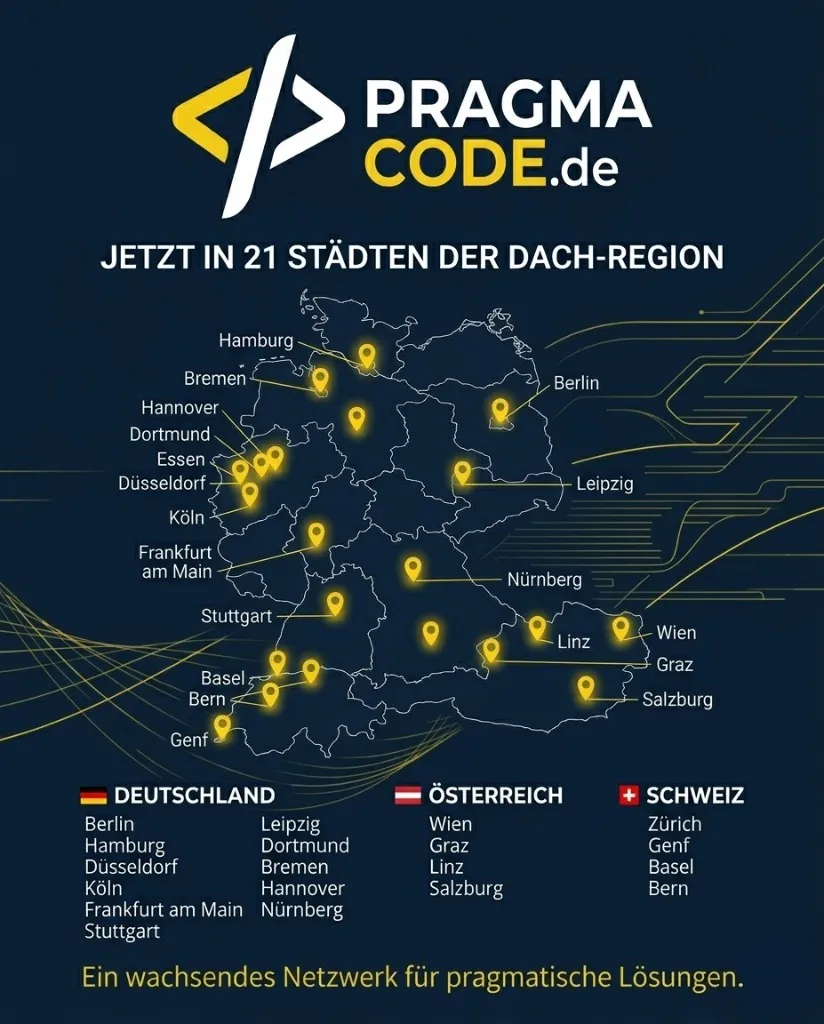
Our Regional Expertise
We are your digital partner – regionally anchored and successfully scaling across borders.
Have a vision?
Let's check together how we can make your idea take flight.
Book your free strategy call nowExtended Specialized Glossary
EDI (Electronic Data Interchange)
The automated, computer-to-computer exchange of standard business documents between business partners without human intervention.
EDIFACT
The United Nations international standard comprising a set of internationally agreed standards, directories, and guidelines for electronic data interchange.
AS2 (Applicability Statement 2)
A universal specification for securely transporting business data, such as EDI documents, over the Internet using HTTP/S and digital certificates.
EDI Mapping
The software-driven process of translating data from an external EDI standard into the internal data structures of an ERP system, and vice versa.