

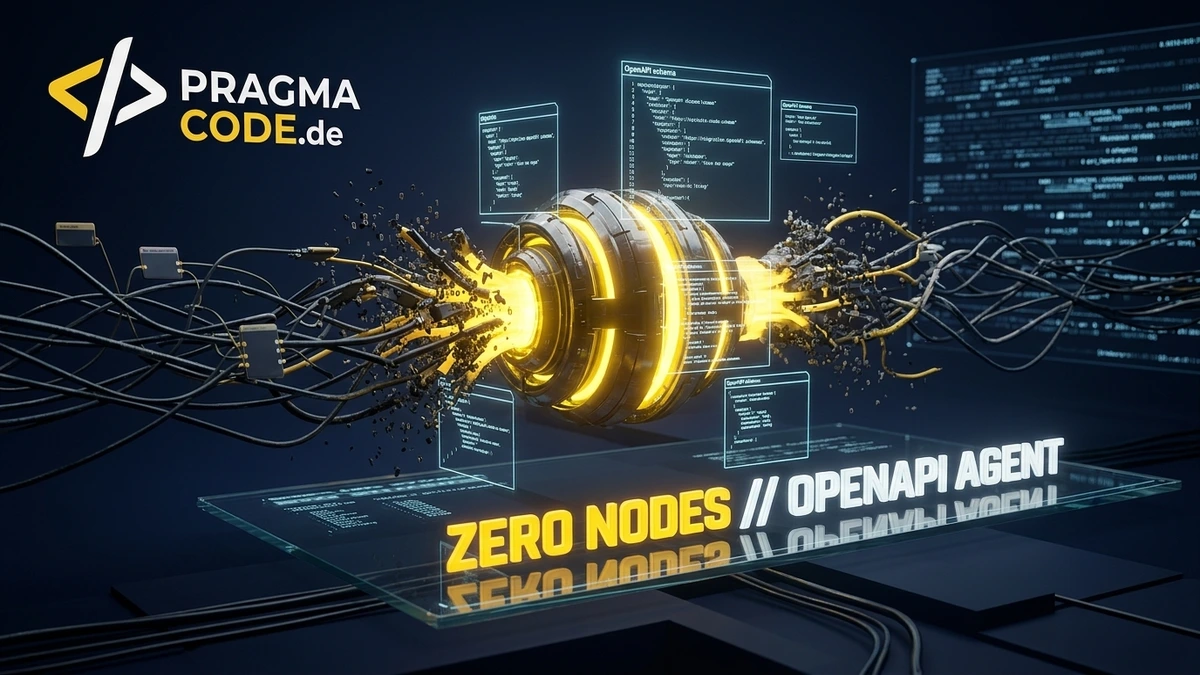
Traditional integration platforms like n8n and Zapier struggle as enterprise API ecosystems scale. Autonomous AI agents revolutionize system integration by interpreting OpenAPI specifications at runtime, dynamically synthesizing tool calls, and self-healing breaking changes without manual node configurations.
This article is an in-depth expert contribution from our content cluster. Discover the complete overview on our main page: AI Automation for Enterprises →
- Eliminating Node Maintenance: While traditional iPaaS platforms like n8n, Make, or Zapier require manually wired nodes for every single API endpoint, modern AI agents consume standardized OpenAPI 3.1 definitions to autonomously navigate REST interfaces at runtime.
- Dynamic Tool Calling & Self-Healing: Leveraging Dynamic Tool Calling and Self-Healing API Pipelines, Agentic AI systems detect schema drift and autonomously correct failing HTTP payloads instead of crashing workflow executions.
- Context Scalability via Tool-RAG: Through Semantic Tool-RAG and protocols like the Model Context Protocol (MCP), enterprises can orchestrate thousands of endpoints without context bloat, backed by Zero-Trust governance and Human-in-the-Loop guardrails.
- 1. The Integration Crisis in Modern Enterprise Stacks
- 2. The Fragility of Visual No-Code Nodes in n8n & Zapier
- 3. How Autonomous AI Agents Parse and Execute OpenAPI Specs
- 4. Semantic Tool-RAG: Scaling Without Context Window Bloat
- 5. B2B Comparison: n8n Workflow Nodes vs. Autonomous Agents
- 6. Enterprise Security, Zero-Trust & Human-in-the-Loop (HITL)
- 7. 5-Step Implementation Roadmap for Enterprise Architecture
- 8. Conclusion and Strategic Recommendations
1. The Integration Crisis in Modern Enterprise Stacks
Over the past five years, enterprise software landscapes have expanded exponentially. A typical mid-market company now operates anywhere between 40 and 120 distinct SaaS tools, bespoke applications, and internal microservices: From core ERP platforms like SAP S/4HANA or Microsoft Dynamics to CRM solutions like Salesforce or HubSpot, right through to specialized e-commerce gateways and financial systems.
To connect these fragmented operational silos, IT organizations heavily adopted Integration Platform as a Service (iPaaS) solutions such as n8n, Zapier, or Make. While low-code workflow builders initially accelerated basic automations, they have increasingly created a massive maintenance bottleneck. Every new data flow demands manually wired node graphs, hardcoded JSON path transformations, dedicated webhook listeners, and fragile authentication management.
With the rapid maturity of frontier reasoning models and agentic architectures, we are entering the era of Zero-Node Integration. Instead of human developers manually configuring individual nodes for each API route, autonomous agents ingest standardized machine specifications (OpenAPI 3.1 / Swagger) to discover, synthesize, and execute REST calls dynamically. This paradigm replaces rigid flowchart pipelines with a flexible, self-healing integration layer that shrinks development cycles from weeks to minutes.
2. The Fragility of Visual No-Code Nodes in n8n & Zapier
Visual workflow engines remain highly capable for deterministic, linear batch tasks – such as recurring SFTP database backups scheduled at 2:00 AM. However, when workflows encounter dynamic business decisions, unstructured customer data, or branching logic across dozens of microservices, node-based architectures expose critical structural limitations.
The foremost operational challenge is API Drift: Whenever an upstream SaaS provider renames a payload parameter, introduces a mandatory field, or alters response types during a version release, the entire n8n workflow halts. Execution stops immediately until a developer investigates the failure, rewires the node mapping, and redeploys the workflow.
Fragile Data Mappings
Any minor schema modification on third-party APIs breaks hardcoded JSON path expressions, causing silent pipeline failures and developer fire drills.
Sprawling Workflow Complexity
Edge cases and branching exceptions turn workflows into unwieldy spiderwebs with hundreds of nodes that become impossible to audit or refactor.
High Ongoing Maintenance Costs
Engineering teams spend up to 35% of their development capacity maintaining broken connectors, expired tokens, and schema mismatches across iPaaS platforms.
As we analyzed in our strategic guide on Make or Buy 2026: n8n vs. Custom Integrations, visual workflow builders quickly reach diminishing returns when scaling complex multi-system logic. Autonomous OpenAPI agents resolve this bottleneck by decoupling the definition of an API from its runtime execution.
3. How Autonomous AI Agents Parse and Execute OpenAPI Specs
The foundation of agentic API integration is the OpenAPI 3.1 standard. Modern cloud architectures and REST services automatically expose machine-readable OpenAPI specifications (JSON or YAML). These schemas describe available endpoints, HTTP methods, required headers, query parameters, request bodies, and expected status codes with full type validation.
When an autonomous agent receives an integration goal, it processes the OpenAPI documentation through a 5-stage dynamic execution and self-healing lifecycle:
Specification Ingestion & Schema Parsing
The agent reads the OpenAPI document and converts route declarations into structured JSON Schema / Pydantic tool definitions.
Intent Resolution & Endpoint Selection
Based on the prompt or upstream event, the LLM determines the exact required route (e.g., POST /api/v2/orders).
Dynamic Tool Calling & Payload Synthesis
The agent dynamically maps context data into a strictly typed JSON payload conforming to the endpoint's schema requirements.
Sandboxed HTTP Execution
A secure HTTP execution proxy dispatches the request using managed OAuth2 or API key credentials inside an isolated network perimeter.
Self-Healing Feedback Loop
If the server returns a 4xx error (e.g., 422 Unprocessable Entity), the agent parses the response error detail and autonomously refines the payload.
Production Architecture: Dynamic Tool Calling in TypeScript
The following reference implementation illustrates how an autonomous agent dynamically converts OpenAPI specifications into LLM tool signatures at runtime, eliminating the need to pre-build manual workflow nodes:
import { GoogleGenAI } from '@google/genai';
import { OpenAPIV3_1 } from 'openapi-types';

interface DynamicToolRegistry {
  name: string;
  description: string;
  parameters: Record<string, any>;
  handler: (args: Record<string, any>) => Promise<any>;
}

// Converts raw OpenAPI endpoints into executable LLM tool definitions
export function convertOpenAPIToTools(
  spec: OpenAPIV3_1.Document,
  apiBaseUrl: string,
  apiKey: string
): DynamicToolRegistry[] {
  const tools: DynamicToolRegistry[] = [];

  for (const [path, pathItem] of Object.entries(spec.paths || {})) {
    for (const [method, operation] of Object.entries(pathItem || {})) {
      if (['get', 'post', 'put', 'delete', 'patch'].includes(method)) {
        const op = operation as OpenAPIV3_1.OperationObject;
        const toolName = op.operationId || `${method}_${path.replace(/[^a-zA-Z0-9]/g, '_')}`;

        const properties: Record<string, any> = {};
        const required: string[] = [];

        // Parse query and path parameters
        op.parameters?.forEach((param: any) => {
          properties[param.name] = {
            type: param.schema?.type || 'string',
            description: param.description || `Parameter ${param.name}`,
          };
          if (param.required) required.push(param.name);
        });

        // Parse request body JSON schema
        if (op.requestBody && 'content' in op.requestBody) {
          const jsonContent = op.requestBody.content['application/json'];
          if (jsonContent?.schema) {
            properties['requestBody'] = jsonContent.schema;
            required.push('requestBody');
          }
        }

        tools.push({
          name: toolName,
          description: op.summary || op.description || `Call ${method.toUpperCase()} ${path}`,
          parameters: {
            type: 'OBJECT',
            properties,
            required,
          },
          handler: async (args: Record<string, any>) => {
            return await executeSecureHttpRequest({
              baseUrl: apiBaseUrl,
              path,
              method: method.toUpperCase(),
              args,
              apiKey,
            });
          },
        });
      }
    }
  }

  return tools;
}
Whenever an enterprise system updates its API endpoints, the agent simply fetches the fresh OpenAPI specification and adapts its operational capabilities immediately, without human refactoring.
4. Semantic Tool-RAG: Scaling Without Context Window Bloat
Enterprise ecosystems like SAP S/4HANA, ServiceNow, or Salesforce provide thousands of API endpoints. Injecting a massive 10 MB OpenAPI definition directly into an LLM context window causes severe operational issues:
Token Inefficiency & Cost Surge
Every single API execution burns tens of thousands of input tokens, dramatically driving up cloud inference costs and introducing high latency.
Model Distraction & Hallucination ("Lost in the Middle")
Even frontier reasoning models with massive context windows experience severe degradation in tool-calling precision when overwhelmed with hundreds of simultaneous endpoints.
To overcome this bottleneck, enterprise architectures apply Semantic Tool-RAG. Instead of loading every endpoint into memory, the agent stores vectorized endpoint metadata inside a vector database (e.g., pgvector, Qdrant, or Pinecone).
1. OpenAPI Vector Store
Every endpoint path, HTTP method, parameter schema, and natural language description is embedded and indexed in a vector database.
2. Semantic Endpoint Retriever
When an agent receives a prompt, the retriever performs semantic similarity search to extract only the top 3-5 relevant endpoints.
3. Dynamic MCP Tool Injection
The retrieved endpoints are registered as lightweight tools via the Model Context Protocol (MCP) for immediate execution.
4. Pre-Flight Type Validator
A deterministic JSON Schema proxy validates synthesized arguments against the OpenAPI specification before dispatching network requests.
This hybrid retrieval model reduces LLM token consumption by over 90%, lowers request latency, and ensures pristine execution reliability across expansive enterprise software catalogs.
5. B2B Comparison: n8n Workflow Nodes vs. Autonomous Agents
Does the rise of autonomous OpenAPI agents make platforms like n8n obsolete? Not necessarily. Rather, each technology excels in distinct operational paradigms. For deterministic, repetitive ETL operations, n8n remains highly effective. For adaptive, cross-system workflows with unstructured data, autonomous agents offer unparalleled agility.
Architecture Comparison: Static n8n Nodes vs. Autonomous OpenAPI Agents
- Integration Overhead: Every single API route requires manual node configuration, authentication linking, and visual wiring.
- Fault Tolerance: API schema shifts cause hard workflow failures requiring manual developer fixes.
- Data Transformation: Requires hardcoded JSONata expressions or custom JavaScript transformation scripts.
- Maintenance Burden: Maintenance overhead scales linearly with every added third-party software integration.
- Optimal Domain: Scheduled batch cron jobs, static database syncs, fixed 1-to-1 webhook forwarding.
- Integration Overhead: Instant ingestion of OpenAPI specifications; all endpoints become immediately callable.
- Fault Tolerance: Self-Healing analyzes HTTP error codes and refines payloads autonomously.
- Data Transformation: LLMs naturally bridge semantic mismatches and transform unstructured data formats on the fly.
- Maintenance Burden: Near-zero maintenance when upstream APIs release backward-compatible updates.
- Optimal Domain: Multi-system enterprise queries, autonomous customer support actions, ad-hoc integrations.
Pro-Tip: The 2026 Hybrid Architecture
Forward-thinking IT teams combine both approaches: n8n serves as a high-throughput, event-driven gateway for webhook ingestion and compliance audit logging, while delegating complex reasoning and dynamic multi-API routing to autonomous Agentic AI microservices.
6. Enterprise Security, Zero-Trust & Human-in-the-Loop (HITL)
Granting autonomous AI agents programmatic access to core enterprise databases and financial services requires robust security controls. Without rigorous boundaries, organizations risk prompt injection vulnerabilities, unauthorized data leaks, or unintentional destructive API calls (such as an unvetted DELETE /api/v1/customers).
Enterprise-grade agentic frameworks enforce comprehensive Zero-Trust architecture and governance layers:
Scoped Credential Vaults & RBAC
API keys and OAuth2 tokens reside inside secure hardware security modules. Agents receive only ephemeral, least-privilege tokens scoped to specific endpoints.
Human-in-the-Loop (HITL) Gateways
Read-only queries (GET) execute autonomously. High-impact operations (POST, PUT, DELETE) above monetary or record thresholds require 1-click human approval via Slack or Microsoft Teams.
Deterministic Pre-Flight Validation
Before any request is transmitted across the network, a proxy validates synthesized payloads against strict Zod or JSON Schema definitions to block invalid parameter structures.
Immutable Agentic Audit Trails
Every reasoning chain, tool selection, generated payload, and raw server response is cryptographically logged for full GDPR and ISO 27001 compliance auditing.
By pairing autonomous execution with strict deterministic guardrails, enterprises unlock maximum automation velocity without compromising cybersecurity or regulatory compliance.
7. 5-Step Implementation Roadmap for Enterprise Architecture
Transitioning from traditional workflow automation to autonomous OpenAPI agents should follow a structured, phased implementation roadmap:
-
Phase 1: API Discovery & OpenAPI Standardization
Audit all internal and external software interfaces. Ensure core enterprise applications provide typed, validated OpenAPI 3.0/3.1 specifications.
-
Phase 2: Semantic Tool Registry Setup
Deploy a vector database to index endpoint schemas and expose them via the Model Context Protocol (MCP) for dynamic tool retrieval.
-
Phase 3: Read-Only Pilot Deployment
Launch agentic integrations in safe, read-only domains: automated multi-system customer service lookups, ERP inventory queries, and cross-platform analytics.
-
Phase 4: Transactional Integration with HITL
Enable state-modifying endpoints (order creation, address updates, ticket resolution) backed by automated Slack/Teams confirmation workflows.
-
Phase 5: Self-Healing Multi-Agent Orchestration
Activate autonomous error-correction loops and multi-agent coordination for end-to-end adaptive enterprise operations.
Quick-Check: Is Your Organization Ready for Autonomous API Agents?
8. Conclusion and Strategic Recommendations
Autonomous API integrations powered by OpenAPI specifications and dynamic tool calling represent the next major paradigm shift in enterprise software architecture. Just as low-code iPaaS disrupted traditional Enterprise Application Integration (EAI) over the last decade, intelligent Agentic AI pipelines are redefining how systems communicate in 2026.
Organizations that modernize their API ecosystem today and adopt schema-driven agentic architectures will establish a decisive competitive edge: integrating new software in minutes, eliminating recurring connector maintenance, and building the foundational infrastructure for self-orchestrating business operations.
Ready to modernize your enterprise API integration with AI agents?
Schedule a Free Integration ConsultationOur Regional Expertise
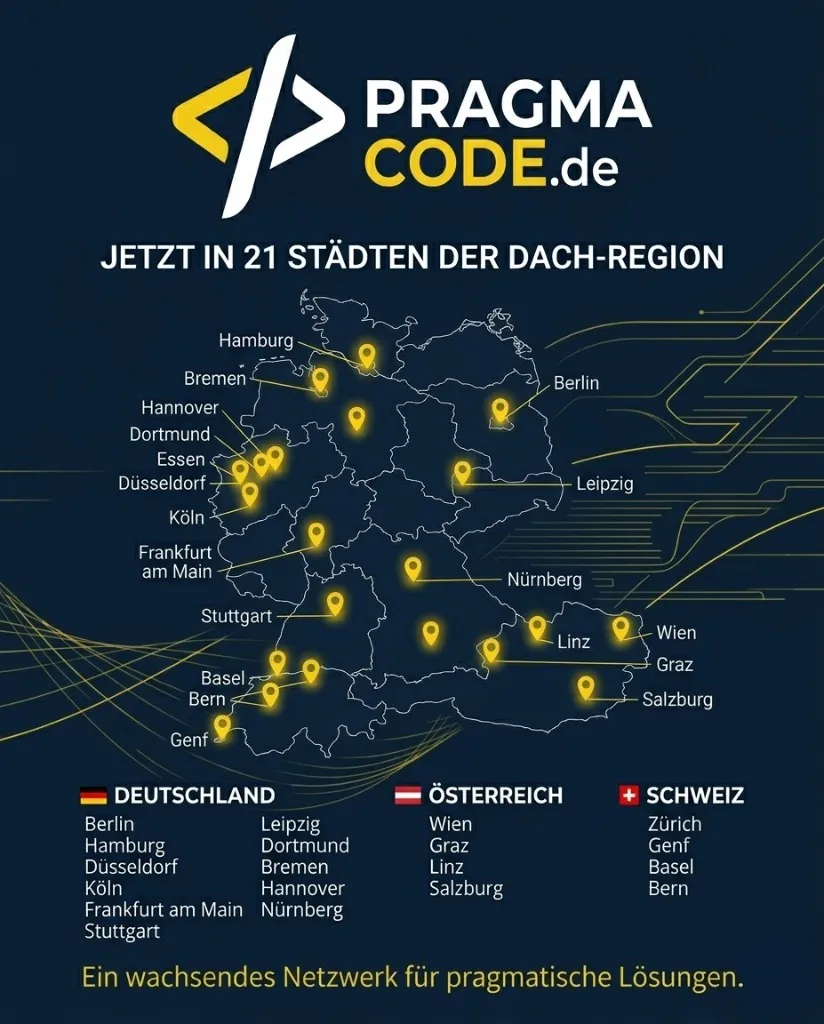
We are your digital partner – regionally anchored and successfully scaling across borders.
Have a vision?
Let's check together how we can make your idea take flight.
Book your free strategy call nowExtended Specialized Glossary
OpenAPI 3.1
Open standard for machine-readable interface descriptions of REST APIs based on JSON Schema, enabling AI agents to autonomously perform payload validation and tool synthesis.
Dynamic Tool Calling
The ability of an LLM-based agent to dynamically instantiate and execute function signatures and API specifications at runtime instead of relying on statically predefined software connectors.
Semantic Tool-RAG
Architectural pattern for semantic vectorization and dynamic filtering of API endpoints, loading only the tool schemas relevant to a specific task into the LLM context window.
Self-Healing API Pipeline
A fault-tolerance mechanism in agentic integration systems where HTTP error codes (like 400 Bad Request or schema drifts) are parsed by the LLM and payloads are autonomously corrected on the fly.
Zero-Node Integration
Integration architecture that eliminates manual visual dataflow nodes in iPaaS tools, relying instead on autonomous LLM agents with direct schema interpretation.