


Pragma Code participates in the official Google WebMCP Origin Trial. With our token active on pragma-code.de, we test the Model Context Protocol for the Web for the next generation of autonomous AI browser agents.
This article is an in-depth expert contribution from our content cluster. Discover the complete overview on our main page:High-Performance Web Development & Agentic Web Systems →
The Agentic Web in Practice
The era of passive web crawling is giving way to autonomous browser agents. By participating in the official Google WebMCP Origin Trial, Pragma Code equips its platform for direct AI interactions – setting new benchmarks for modern web engineering and Generative Engine Optimization (GEO).
- Paradigm Shift in the Web: AI agents no longer just read websites as flat text documents; they invoke interactive software tools directly. The Model Context Protocol for the Web (WebMCP) bridges the gap between browser engines and frontier large language models.
- Google Origin Trial Live: On
www.pragma-code.de, the official Chromium Origin Trial token is active, exposing structured tool functions viadocument.modelContextand declarative HTML annotations under real production conditions. - Competitive Advantage for B2B & SMEs: Platforms providing machine-readable WebMCP tools and maintaining a strictly compliant Accessibility Tree are parsed with superior precision and prioritized by generative search engines like ChatGPT Search, Perplexity, and Google AI Overviews.
- 1. Introduction: Why the Traditional Web Hits Its Limits
- 2. What is WebMCP? Model Context Protocol for the Web
- 3. The Two Faces of WebMCP: Declarative HTML vs. Imperative JavaScript
- 4. The Google Origin Trial Token on pragma-code.de
- 5. Technical Inner Workings & API Evolution: document.modelContext
- 6. Architecture & Security Model: Sandboxing, Human-in-the-Loop & Permissions
- 7. Comparison: Conventional DOM Scraping vs. WebMCP Protocol
- 8. Developer Tooling & Testing: WebMCP Inspector & Chrome DevTools
- 9. Step-by-Step Guide: Activating WebMCP in Your Web Projects
- 10. Outlook: GEO, AI Visibility, and the Future of B2B Web Engineering
- 11. Conclusion & Call to Action
1. Introduction: Why the Traditional Web Hits Its Limits
For the past two decades, World Wide Web communication followed a simple, linear two-dimensional rule: frontend engineers and designers created visual layouts, brand aesthetics, and copy for human visitors, while search engine crawlers (such as Googlebot) parsed raw HTML to index keywords for centralized ranking engines.
However, with the rapid rise of autonomous AI browser agents and multimodal frontier models (such as Google Gemini 3.8 Flash, Anthropic Claude 3.5 Sonnet, or OpenAI GPT-4o), user behavior has fundamentally evolved. Modern users do not just ask AI assistants to present a list of search links—they instruct them to complete complex, multi-step workflows on their behalf:
"Find a suitable fixed-price package for n8n workflow automation on Pragma Code and calculate the annual investment including volume discounts."
"Check available consultation slots on the site, verify calendar availability, and prepare the submission payload for an initial discovery call."
"Compare legacy CMS migration paths to modern Astro architectures on pragma-code.de and outline the top three performance and security advantages."
"Verify whether pragma-code.de complies with WCAG AAA accessibility standards and inspect available WebMCP machine tools."
When an autonomous AI agent accesses a conventional website built exclusively for human eyes, it must fall back on computer vision screening or fragile DOM scraping. The agent continuously takes viewport screenshots, calculates clickable coordinate boxes, or parses deeply nested <div> hierarchies. This workflow is not only computationally sluggish and expensive in terms of token budgets, but routinely breaks when encountering client-side JavaScript rendering, modal dialogs, shadow DOM boundaries, or missing ARIA labels.
To eliminate this systemic bottleneck, the Chromium engineering team, incubating under the W3C Web Machine Learning Community Group, introduced the Model Context Protocol for the Web (WebMCP). At Pragma Code, we decided from day one to actively participate in evaluating and implementing this standard on our production platform.
Expert Tip: The Era of Native Machine-to-Machine Browser Interfaces
Just as Schema.org JSON-LD became indispensable for search engine rich snippets starting in 2011, WebMCP is establishing itself in 2026 as the decisive standard for interactive AI interfaces directly inside the browser engine.
2. What is WebMCP? Model Context Protocol for the Web
The core Model Context Protocol (MCP) was originally created by Anthropic to provide large language models with a standardized, protocol-driven bridge to local filesystems, enterprise databases, and internal backend services. The server-side implementation of this protocol — an in-house MCP server on company data with strict tool boundaries, permission schemas, and audit logging — represents the architectural foundation for enterprise AI integrations.
With WebMCP, this proven architectural paradigm moves natively into the web browser (Google Chrome and Chromium derivatives such as Microsoft Edge or Brave). Websites transform from passive information catalogs into dynamic tool surfaces. Rather than requiring browser agents to guess button selectors or parse rendered pixels, the website registers its functional capabilities as machine-readable Tool Schemas. When an AI agent navigates to a WebMCP-enabled domain, the browser engine immediately exposes these declared tools for deterministic, schema-validated execution.
1. HTML Form Annotations
Zero-JS tool declaration directly on semantic HTML5 form elements via WebMCP attributes for static sites and SSR platforms.
2. JavaScript Tool API
Programmatic tool registration via document.modelContext with comprehensive JSON Schema validation for inputs and response payloads.
3. Sandboxed Permission Model
Strict tab-level origin scoping with user confirmation prompts for state-mutating actions and full prompt-injection sanitization.
4. A11y & Dispatcher Layer
Seamless alignment between the browser accessibility tree and AI orchestration models for robust contextual navigation.
3. The Two Faces of WebMCP: Declarative HTML vs. Imperative JavaScript
A crucial milestone in the evolution of WebMCP throughout the Chromium project (specifically highlighted in Chrome 149 and 150 releases) is the bifurcation into two specialized integration modalities: declarative HTML annotations and the imperative JavaScript runtime API.
A. Declarative WebMCP: Instant Tool Exposure with Zero JavaScript
For content-driven platforms, documentation hubs, and server-rendered architectures (such as Astro, Next.js SSR, or headless CMS setups), Chromium provides native HTML attributes. The browser synthesizes valid tool schemas directly from semantic markup without requiring custom client bundles:
<!-- Declarative WebMCP Tool Annotation on a B2B Search Form -->
<form
    action="/search"
    method="GET"
    webmcp-tool="searchKnowledgeBase"
    webmcp-description="Searches technical B2B articles and engineering guides on Pragma Code by keywords.">
    <label for="search-input">Search Query:</label>
    <input
        type="search"
        id="search-input"
        name="query"
        required
        webmcp-param="query"
        webmcp-param-description="Technical topic, architecture pattern, or keyword" />
    <button type="submit">Search</button>
</form>
When an AI browser agent encounters this form, the browser recognizes the webmcp-tool and webmcp-param annotations. The agent invokes the form as a structured tool, feeds validated parameters into the action endpoint, and parses clean server responses without simulating DOM clicks.
B. Imperative WebMCP: Dynamic Tools for Complex Applications
For interactive Single Page Applications, pricing calculators, and enterprise customer dashboards, the imperative JavaScript interface delivers maximum flexibility. Here, the web application registers executable functions, asynchronous endpoints, and complex business logic directly with document.modelContext.
Comparison: Declarative vs. Imperative WebMCP
- Zero-JS Overhead: Operates without client JavaScript, preserving zero-byte script budgets.
- SSR & Jamstack Friendly: Ideal for static sites built with Astro, Hugo, or traditional backend CMS.
- Rapid Onboarding: Existing forms can be marked up for AI agents in a matter of minutes.
- Limited Interactivity: Constrained to standard HTTP GET/POST form submission semantics.
- Full Programmability: Direct access to local application state, IndexedDB, WebAssembly, and fetch APIs.
- Structured Payloads: Returns rich, compact JSON objects and custom metadata directly to the LLM context.
- Granular Validation: Supports complex JSON Schema constraints, enums, regex patterns, and nested objects.
- Client Runtime Dependency: Requires active client JavaScript and proper lifecycle hook handling.
4. The Google Origin Trial Token on pragma-code.de
Before cutting-edge browser capabilities achieve W3C standardization or ship enabled by default across stable Chrome distributions, the Chromium project runs Origin Trials. Origin Trials allow engineers to test experimental browser APIs on live production domains with real-world traffic, without forcing end users to modify obscure developer flags.
To prepare our platform pragma-code.de for agentic browser interactions, we applied for an official cryptographic trial token for our primary domain https://www.pragma-code.de:443 from Google and embedded it into our global layout template src/layouts/Layout.astro:
<!-- Official WebMCP Origin Trial Token in the HTML Head of pragma-code.de -->
<meta http-equiv="origin-trial" content="A0Qf1GleWumT42M8u/PGVU5/qlcCyXaQQKhoxr4JfPI+sWxwZjG2ykpBKDzjuZOPHbNO8vxNabWEXgLYnW7DfwkAAAB5eyJvcmlnaW4iOiJodHRwczovL3d3dy5wcmFnbWEtY29kZS5kZTo0NDMiLCJmZWF0dXJlIjoiV2ViTUNQIiwiZXhwaXJ5IjoxNzk0ODczNjAwLCJpc1N1YmRvbWFpbiI6dHJ1ZSwiaXNUaGlyZFBhcnR5Ijp0cnVlfQ==" />
Following approval from the Origin Trials Support Team (origin-trials-support@google.com), our domain was officially enrolled in the WebMCP trial. This participation grants us direct channels into Chromium issue trackers, enabling us to contribute real-world engineering feedback to the browser developers shaping future web standards.
document.modelContext interface.
5. Technical Inner Workings & API Evolution: document.modelContext
In early experimental drafts of the specification (early 2026), trial builds referenced namespaces like navigator.webmcp or navigator.modelContext. In modern Chromium implementations (Chrome 149 and 150+), the API was unified into the document hierarchy as document.modelContext.
Production-grade software architectures must implement resilient feature detection that seamlessly handles modern specifications while offering graceful degradation on unsupported clients.
Code Example: Production Tool Registration with Multi-Tier Feature Detection
The architecture snippet below demonstrates how we expose our B2B service discovery tool and budget estimator to autonomous agents visiting pragma-code.de:
// Resilient initialization of the WebMCP interface
function initializePragmaWebMCP() {
  // 1. Feature detection across current and experimental Chromium namespaces
  const contextApi = (typeof document !== 'undefined' && document.modelContext)
    || (typeof navigator !== 'undefined' && (navigator.modelContext || navigator.webMCP));

  if (!contextApi) {
    // Unsupported browser: silent fallback with zero overhead
    return;
  }

  try {
    // 2. Register the 'searchPragmaServices' tool
    contextApi.registerTool({
      name: "searchPragmaServices",
      description: "Discovers tailored B2B service packages (e.g. n8n workflow automation, Astro development, accessibility audits) with fixed pricing and scope details.",
      parameters: {
        type: "object",
        properties: {
          category: {
            type: "string",
            enum: ["automation", "webdev", "seo-content", "it-security"],
            description: "Primary technical focus area of the requested IT service."
          },
          budgetMax: {
            type: "number",
            description: "Optional maximum budget ceiling in EUR for fixed-price projects."
          }
        },
        required: ["category"]
      },
      execute: async (args) => {
        // Query verified service data from application cache
        const services = await window.queryPragmaCatalog(args.category, args.budgetMax);

        return JSON.stringify({
          status: "success",
          timestamp: new Date().toISOString(),
          matches: services.map(s => ({
            name: s.title,
            fixedPrice: s.priceEUR,
            scope: s.summary,
            url: "https://www.pragma-code.de/en" + s.permalink
          }))
        });
      }
    });

    console.log("[WebMCP] Tool 'searchPragmaServices' registered successfully.");
  } catch (error) {
    console.warn("[WebMCP] Error registering tool schema:", error);
  }
}

// Execute once DOM content is fully loaded
if (document.readyState === 'loading') {
  document.addEventListener('DOMContentLoaded', initializePragmaWebMCP);
} else {
  initializePragmaWebMCP();
}
When an AI agent is instructed: "Find IT security audits and maintenance packages on Pragma Code," it no longer struggles with unstable DOM selectors. The agent cleanly invokes searchPragmaServices({ category: "it-security" }), receiving a validated JSON payload containing verified prices, delivery timelines, and direct links.
6. Architecture & Security Model: Sandboxing, Human-in-the-Loop & Permissions
Permitting autonomous AI models to invoke client-side tools introduces severe security vectors unless protected by uncompromising isolation. The Chromium WebMCP specification relies on four robust protective pillars:
1. Same-Origin & Tab Isolation
Tools are strictly confined to their origin execution context. An agent cannot utilize tools on one domain to siphon data or execute requests across adjacent tabs or third-party origins.
2. Granular Permission Tiers
Chromium categorizes tools into safe read-only operations (such as catalog lookups) and state-mutating actions (such as booking submissions, payments, or account modifications).
3. Human-in-the-Loop Confirmation
For mutating actions, the browser enforces explicit user consent via system-level confirmation dialogs ("Allow the agent to submit this booking request?").
4. Anti-Prompt-Injection Validation
All tool arguments pass through strict JSON Schema validation before dispatch, thwarting prompt-injection payloads embedded within adversarial user inputs.
7. Comparison: Conventional DOM Scraping vs. WebMCP Protocol
To grasp why WebMCP is essential for future-proof B2B platforms, consider the stark contrast between legacy scraping/vision methods and native machine-readable protocols:
Cost Trap 1: Severe Token Inflation from Raw DOM Trees
Feeding massive HTML hierarchies or multi-megapixel viewport images into vision models drives API inference costs up 20x to 50x compared to compact, structured JSON payloads.
Cost Trap 2: Extreme Fragility During Frontend Releases
Minor CSS adjustments, utility class changes, or dynamic modals frequently cause vision-based scraping agents to fail mid-task, aborting critical customer transactions.
Cost Trap 3: Phantom Clicks & Erroneous Submissions
Vision models miscalculating touch targets often trigger unintended form submissions, corrupting CRM lead pipelines with broken data payloads.
In contrast, WebMCP operates with total determinism: The tool signature strictly governs expected inputs and output formats. The LLM focuses on high-level reasoning and orchestration, while the web platform acts as a secure, typed execution engine.
8. Developer Tooling & Testing: WebMCP Inspector & Chrome DevTools
Engineering teams preparing their web properties for agentic interactions can leverage a comprehensive suite of developer tools provided across the Chromium ecosystem:
1. Local Testing Flags in Chromium
Developers can enable WebMCP in Chrome Canary or Dev releases via chrome://flags#enable-webmcp-testing to simulate tool interactions locally prior to acquiring an Origin Trial token.
2. Chrome WebMCP Inspector Extension
The official WebMCP Inspector extension lists all active tools declared on the current page, inspects their parameter schemas, and enables manual test executions directly in the browser tab.
3. Gemini Integration in Chrome DevTools
With the latest Chrome DevTools AI assistant, engineers can simulate real agentic workflows and profile tool execution timings in the Performance panel.
4. Automated PageSpeed Insights Agentic Audits
New audit checks in PageSpeed Insights evaluate tool schema validity, accessibility tree conformance, and response latencies.
9. Step-by-Step Guide: Activating WebMCP in Your Web Projects
Integrating WebMCP into corporate web applications follows a structured engineering workflow from initial token enrollment to production verification. Follow our 6-step implementation roadmap:
-
Step 1: Domain Enrollment in the Chrome Origin Trials Dashboard
Register your production domain in the official Chrome Origin Trials Dashboard for the WebMCP trial and retrieve your unique cryptographic key.
-
Step 2: Global Meta Tag Integration in HTML Headers
Embed the token as
<meta http-equiv="origin-trial" content="...">inside the<head>element across your website pages or master template. -
Step 3: Audit Accessibility & A11y Trees
Ensure all form elements, buttons, and semantic landmarks comply with WCAG standards and the European Accessibility Act (EAA). A pristine Accessibility Tree is the foundational orienting mechanism for AI agents.
-
Step 4: Declarative Markup on Existing Forms
Annotate search inputs, quote calculators, and contact forms with
webmcp-toolandwebmcp-paramattributes to enable instant machine discovery without custom scripts. -
Step 5: Imperative Tool Registration for Dynamic Logic
Register interactive tools via
document.modelContext.registerTool(), enforcing strict JSON Schema types, error boundaries, and sanitized response payloads. -
Step 6: End-to-End Verification & Monitoring
Test tool execution across real agent sessions using the WebMCP Inspector and Chrome DevTools, monitoring server response latencies and payload sizes.
10. Outlook: GEO, AI Visibility, and the Future of B2B Web Engineering
WebMCP is not an isolated experiment by a single browser vendor, but part of a structural realignment in digital discoverability: the migration from traditional Search Engine Optimization (SEO) to Generative Engine Optimization (GEO).
In a landscape where business decision-makers query AI engines rather than wading through organic link lists, machine readability and interactive accessibility dictate commercial success. Autonomous AI agents prioritize websites that provide clear, accessible, and programmatically callable interfaces.
Combined with machine-readable specifications like llms.txt and comprehensive Schema.org metadata, WebMCP completes the triad of modern digital presence in the AI era.
Quick-Check: Is Your Website Ready for AI Agents?
11. Conclusion & Call to Action
Our active participation in the Google WebMCP Origin Trial on pragma-code.de reflects our core engineering principle: implementing transformative web standards not when they become mandatory, but when they deliver tangible competitive advantages for our clients.
Forward-thinking B2B enterprises that align their digital platforms with human UX, full accessibility compliance, and agentic AI interfaces today are securing digital leadership for the decade ahead.
Ready to Prepare Your Website for the Agentic Web & AI Agents?
As a specialized engineering agency, we support you with modern web development, accessible frontends, and GEO optimization.
Schedule a Free Initial ConsultationOur Regional Expertise
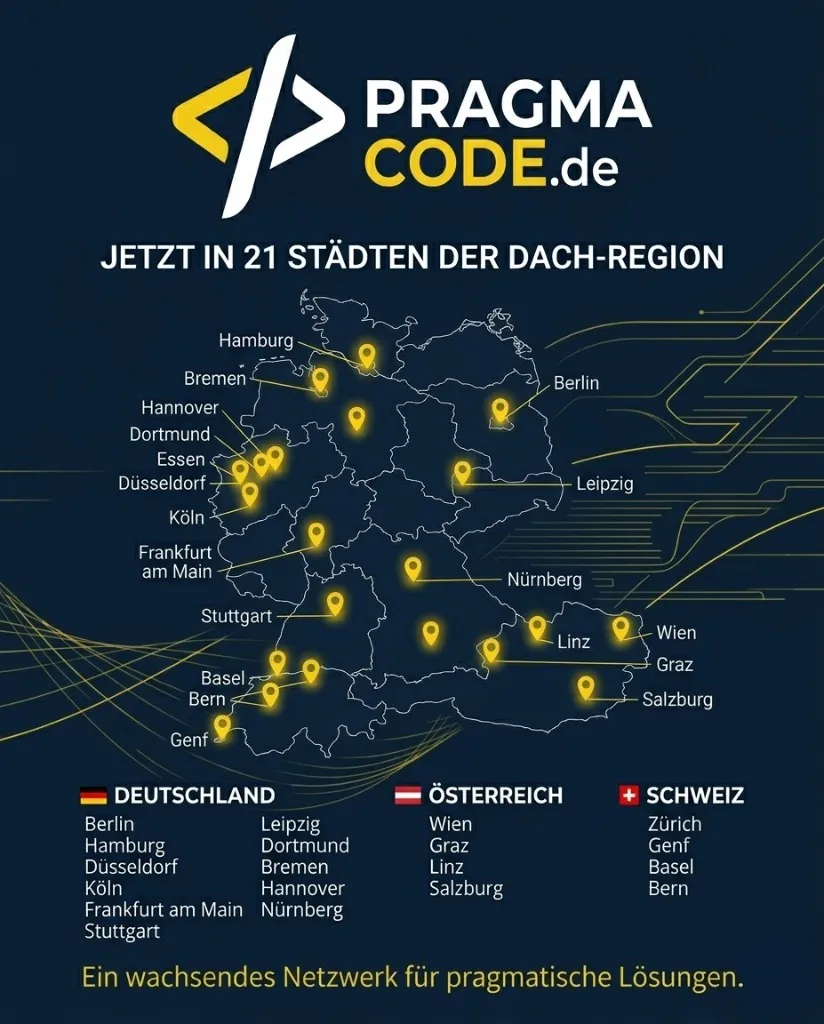
We are your digital partner – regionally anchored and successfully scaling across borders.
Have a vision?
Let's check together how we can make your idea take flight.
Book your free strategy call nowExtended Specialized Glossary
WebMCP (Model Context Protocol for the Web)
A standardized browser protocol by Google allowing websites to expose interactive functions and forms via document.modelContext or declarative HTML attributes as machine-readable tools for autonomous AI agents.
Origin Trial
A Chromium developer program enabling new browser APIs to be tested on live web domains using a cryptographic token in the HTML header before full standardization.
Agentic Browsing
The automated navigation and goal-oriented interaction of AI agents (e.g. Gemini in Chrome) on web pages to autonomously perform complex tasks like form submissions or bookings.
Accessibility Tree
The browser-generated accessibility representation used by screen readers and AI agents to understand page structure, roles, and controls.
Tool Schema
A structured definition (based on JSON Schema) describing a function's name, input parameters, and return format for machine consumption by AI models.