

Why the era of isolated IT projects and rigid software licensing is coming to an end: Learn how enterprise leaders and mid-market innovators build scalable digital assets, autonomous agentic systems, and sustainable corporate value with Software as a Product (SaaP).
This article is an in-depth expert contribution from our content cluster. Discover the complete overview on our main page: E-Commerce Solutions →
The Paradigm Shift from One-Off Project to Appreciating Software Asset
In the era of autonomous generative AI, intelligent agent systems, and dynamic platform ecosystems, classical IT project contracts are rapidly losing relevance. Organizations that treat custom software as a strategic product secure full IP sovereignty, automated operating margins, and substantial valuation premiums on capital markets.
- Paradigm Shift: SaaP (Software as a Product) replaces rigid requirements specifications and short-term project work with reproducible, highly scalable product engineering.
- Economic Leverage: Proprietary intellectual property (IP) and software-driven business models command multiples of traditional service or trading company valuations (6x–12x EBITDA multiples).
- Technological Symbiosis 2026: High-performance frameworks like Astro and Next.js merge with Agentic AI and API-first architectures into autonomous, self-optimizing software ecosystems.
- 1. What is Software as a Product (SaaP)?
- 2. SaaS vs. SaaP – Strategic Differences
- 3. Economic Leverage: How SaaP Multiplies Enterprise Value
- 4. Technical Architecture Excellence: Scale-by-Design in 2026
- 5. The Crucial Role of Agentic AI in Modern SaaP Engineering
- 6. The 4-Phase Roadmap to Your Own Software Product
- 7. The Pragma Product Engineering Workflow
- 8. Field-Proven B2B Case Studies
- 9. Avoiding Common Cost Traps and Strategic Pitfalls
- 10. Conclusion & Strategic Outlook
1. What is Software as a Product (SaaP)?
In the modern commercial landscape, viewing IT infrastructure merely as a cost center or maintenance function is no longer viable. For decades, corporate IT was trapped between two suboptimal extremes: organizations either purchased rigid standard commercial off-the-shelf software with escalating licensing fees that forced business processes into inflexible molds, or they commissioned software development agencies to build isolated custom projects using waterfall or rudimentary agile models.
Both models fail to meet the dynamic requirements of the year 2026. The Software as a Product (SaaP) paradigm breaks with this outdated dichotomy. In SaaP, every line of code, every data schema, and every API endpoint is conceived from day one as an independent, scalable product. A true software product possesses an ongoing lifecycle, continuous value iteration, measurable return on investment (ROI), and serves as an appreciating intangible balance sheet asset.
Treating software development as a dedicated product discipline requires a fundamental transformation in both engineering and executive management. Instead of passively checking off tickets against rigid specifications, Pragma Code under the leadership of Alexander Ohl establishes a continuous product value chain. We identify market opportunities, construct resilient core architectures, and engineer robust Minimum Viable Products (MVPs) that validate their Product-Market Fit with maximum speed and precision.
2. SaaS vs. SaaP – Strategic Differences
In technical discussions and board-level strategy sessions, the acronyms Software as a Service (SaaS) and Software as a Product (SaaP) are frequently conflated. This represents a serious strategic misunderstanding. While SaaS primarily describes a distribution and billing model, SaaP embodies the underlying engineering, architectural, and ownership philosophy.
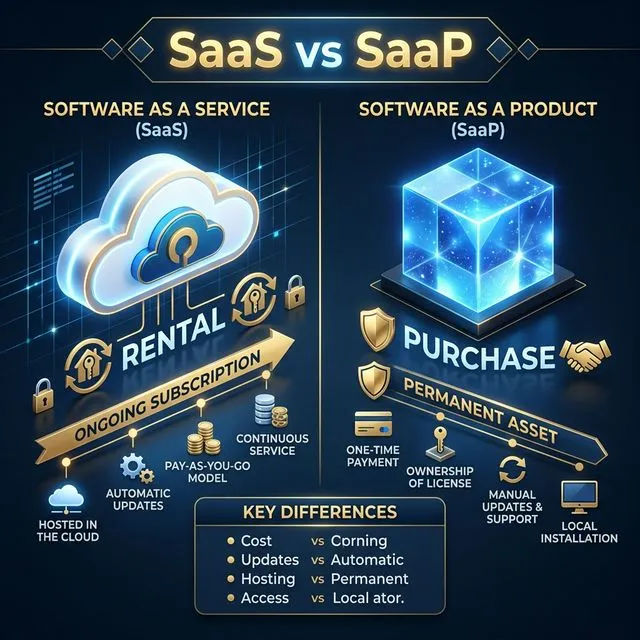
SaaS answers the operational question: "How is the software delivered to the end user and how is it billed?" (via cloud hosting, subscription fees, or managed services). SaaP, by contrast, addresses the foundational strategic question: "How is the software engineered, who retains the intellectual property (IP), and how does it generate a defensible competitive moat?"
Strategic Comparison: Project vs. SaaP vs. Standard SaaS
- Value Creation: One-off expense or ongoing rental fees without asset accumulation.
- Architecture: Monolithic silos for single use cases or closed third-party blackboxes.
- Control & IP: Vulnerability to external vendor price hikes, roadmap shifts, and API limits.
- Scalability: Every new feature requires costly change requests or is technically impossible.
- Data Sovereignty: Data resides in vendor-owned proprietary cloud silos.
- Value Creation: Construction of an appreciating, balance-sheet-valuable software asset.
- Architecture: Modular microservices, cloud-native design, multi-tenancy, and headless APIs.
- Control & IP: 100 % ownership of source code, algorithms, data schemas, and product roadmap.
- Scalability: Zero-marginal-cost scaling for thousands of parallel tenants and workloads.
- Data Sovereignty: Complete GDPR and NIS2 compliance in your dedicated cloud environment.
A masterfully engineered SaaP asset can naturally be commercialized as a SaaS solution. In fact, SaaP serves as the indispensable technological foundation for any successful B2B SaaS business. Yet SaaP reaches much further: it empowers industrial, commercial, and service enterprises to transform internal core competencies (such as complex dynamic pricing algorithms, logistics routing engines, or automated diagnostics) into standalone proprietary software products that boost internal productivity while unlocking profitable new digital revenue streams.
3. Economic Leverage: How SaaP Multiplies Enterprise Value
From a corporate finance perspective, adopting the SaaP model is one of the most powerful levers for enterprise value expansion. In mergers and acquisitions (M&A), traditional service, consulting, and trading firms typically trade at conservative EBITDA multiples between 4x and 7x. In stark contrast, technology enterprises and forward-thinking businesses with proprietary software assets, recurring revenue engines (B2B Subscription Commerce), and high operational scalability consistently command valuation multiples of 10x to 25x EBITDA or 4x to 8x Annual Recurring Revenue (ARR).
Capital markets reward the SaaP approach decisively due to four interconnected structural value drivers:
1. Intellectual Property (IP) Moat
Proprietary source code, defensible algorithms, and specialized workflow automation build an insurmountable technical barrier to entry against competitors.
2. Zero Marginal Cost Scaling
Once engineered to SaaP standards, software components can serve thousands of concurrent clients without proportional increases in headcount or operational overhead.
3. Predictable Cash Flows (ARR / MRR)
Productization allows organizations to deploy tiered subscriptions, usage-based metering, or SLA contracts, eliminating reliance on volatile project cycles.
4. Network Effects & Customer Lock-in
Open developer interfaces (APIs) and deep partner integrations embed customers firmly into your digital ecosystem, slashing churn rates.
4. Technical Architecture Excellence: Scale-by-Design in 2026
A digital product can only deliver sustainable economic returns if its architectural foundation is engineered for extreme performance, security, and long-term maintainability. At Pragma Code, we utilize composable, cloud-native architectures coupled with modern web frameworks:
1. Hybrid Frontend Architecture with Astro & Next.js
We leverage Astro for content-driven product zones, landing environments, and technical documentation with zero JavaScript overhead for flawless Core Web Vitals. Dynamic, stateful customer portals and dashboards are engineered using the Next.js App Router and React Server Components (RSC).
2. Cloud-Native Microservices & Edge Runtime Execution
Core business logic is encapsulated within lightweight, type-safe microservices (Go and Node.js/TypeScript). High-throughput operations, security validation, and intelligent caching execute serverless across global edge nodes (Cloudflare Workers, Vercel Edge) to maintain sub-millisecond latencies worldwide.
3. Enterprise Multi-Tenancy & Data Isolation
Robust database-level tenant isolation (utilizing Row Level Security in PostgreSQL or dedicated schema partitions) guarantees uncompromising data protection, GDPR compliance, and tenant-specific encryption keys while optimizing compute resources.
4. Zero-Trust Security & End-to-End Observability
All service-to-service communication is verified through mutual TLS (mTLS) and scoped JWT tokens. Distributed telemetry via OpenTelemetry, Prometheus, and structured logging provides real-time operational transparency and automated incident remediation before SLAs are impacted.
Expert Tip from Alexander Ohl: The Power of Loose Coupling
Never introduce tightly coupled monolithic dependencies during the early stages just for short-term speed. Structuring domain models, authorization layers, and UI components behind versioned OpenAPI and gRPC interfaces allows you to swap individual sub-systems with specialized AI agents or high-throughput microservices later without re-architecting your entire platform.
5. The Crucial Role of Agentic AI in Modern SaaP Engineering
Prior to 2024, artificial intelligence in software applications was largely confined to superficial chatbots or basic text completion. In 2026, the paradigm has shifted: Agentic AI constitutes the foundational core of modern SaaP ecosystems.

Autonomous agents operate as goal-oriented software actors with direct execution access to tools, relational databases, and enterprise workflows (Tool Calling & Model Context Protocol). They endow SaaP products with capabilities that were previously unattainable:
1. Autonomous Workflow Execution
Agents resolve multi-step operational tasks independently—from automated invoice reconciliation and master data hygiene to proactive supplier matchmaking.
2. Self-Healing Frontends & Workflows
When recurring UI friction or user drop-offs occur, observability agents detect patterns, construct code pull requests, and optimize interactive user journeys in real time.
3. Dynamic Personalization & Pricing
AI agents analyze real-time usage telemetry, market fluctuations, and competitor benchmarks to configure customer-specific feature tiers and dynamic pricing.
4. Intelligent Contextual Synthesis
In place of static dashboards, agents generate natural-language executive briefings and actionable strategic recommendations for leadership teams.
By embedding Agentic AI natively into the core architecture of your software product, Pragma Code delivers a platform that grows smarter, more autonomous, and more valuable with every day of operation—establishing an unassailable competitive advantage.
6. The 4-Phase Roadmap to Your Own Software Product
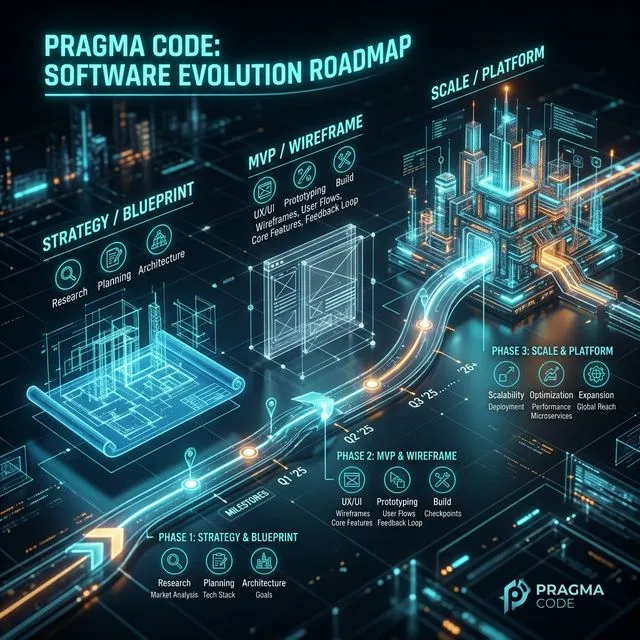
Transforming a strategic vision or an internal tool into a market-ready software product demands a disciplined, transparent execution cycle. At Pragma Code, we guide our enterprise partners through a proven 4-phase product roadmap:
-
Phase 1: Strategic Discovery & Architectural Blueprint
In structured product discovery workshops, we refine the core value proposition, segment the target user personas, and validate commercial viability. We formulate the comprehensive architecture blueprint, select the optimal tech stack, and establish clear security and compliance parameters.
-
Phase 2: MVP Development & Rapid Prototyping
We focus strictly on the 20 % of core features that generate 80 % of user value. Within an 8- to 12-week development sprint, we build a fully operational, test-driven Minimum Viable Product deployed under real market conditions for pilot validation.
-
Phase 3: Iteration, User Telemetry & Scale-by-Design
Informed by qualitative customer feedback, real-time telemetry, and conversion analytics, we optimize user experience and harden backend services. We implement automated testing pipelines, zero-downtime deployment workflows, and database indexing for rapid tenant scaling.
-
Phase 4: Ecosystem, Platform Expansion & Monetization
The product expands into a comprehensive platform: we roll out public REST and GraphQL APIs, webhook event systems, developer portals, and agentic add-ons. Your software matures from a standalone application into an essential industry ecosystem.
7. The Pragma Product Engineering Workflow
Software excellence does not happen by accident—it is the result of strict engineering rigor and automated delivery pipelines. Our development workflow ensures every release adheres to highest standards of performance, security, and accessibility:
Domain-Driven Architecture Design
Rigorous modeling of business domains before code execution begins. Clear schema definitions and end-to-end type safety across the entire technology stack.
Test-Driven Development (TDD)
Automated unit, integration, and end-to-end testing guard every pull request. No regressions, no unexpected production outages during live deployments.
Automated CI/CD & Canary Rollouts
Fully automated delivery pipelines with ephemeral branch previews, static code security analysis, secret scanning, and phased canary rollouts for uninterrupted uptime.
Agentic Quality & Security Audits
Continuous AI-assisted code reviews, automated performance profiling, and proactive enforcement of WCAG accessibility guidelines.
8. Field-Proven B2B Case Studies
The power of the SaaP model is best evidenced through real-world enterprise transformations. Below are two case studies from Pragma Code's engineering practice:
Case Study 1: Logistics Routing – From Legacy Internal Script to Profitable B2B SaaS
A mid-sized contract logistics operator relied on an internally developed, 7-year-old legacy script for route and load optimization. While critical to operations, the system suffered from sluggish execution, security vulnerabilities, and zero third-party integration capability.
Architectural Modernization
Pragma Code re-engineered the mathematical routing core into high-throughput Go microservices, delivered a reactive Next.js dashboard, and secured multi-tenancy via PostgreSQL RLS.
Commercial Outcome
Following a 34 % internal efficiency gain, the tool was commercialized as a standalone SaaS solution for industry peers. Today, it generates over €1.4 million in annual recurring software revenue (ARR).
Case Study 2: B2B Wholesale – From Static Excel Spreadsheets to an Autonomous Ordering Platform
A technical distributor managing over 45,000 SKUs distributed monthly static price catalogs via PDF and spreadsheets. Wholesale orders arrived unstructured via fax and email, causing severe fulfillment bottlenecks and high error rates.
SaaP Solution with Self-Service Portal
Development of a high-speed B2B customer portal built with Astro and Next.js, featuring direct ERP synchronization, personalized price lists, and instant bulk ordering.
Autonomous AI-Powered Reordering
Integrated Agentic AI agents forecast reorder requirements based on seasonal consumption telemetry and propose automated purchase orders to buyers.
9. Avoiding Common Cost Traps and Strategic Pitfalls
Developing your own proprietary software product presents strategic hurdles that can result in significant capital waste without experienced leadership:
Pitfall 1: Feature Overload Prior to Market Validation
Months spent engineering secondary features in isolation without live customer validation. Solution: Strict MVP scoping with market launch within 90 days.
Pitfall 2: The Proprietary Low-Code Dead End
Over-reliance on closed low-code environments that can neither be scaled nor exported when complexity increases. Solution: Open standards, clean code, and cloud-agnostic architecture.
Pitfall 3: Neglecting Multi-Tenancy from Day One
Engineering software for a single client that requires manual cloning for subsequent tenants. Solution: Architect multi-tenancy and data isolation into the foundation from day one.
Quick Check: Your Path to a Proprietary Software Product
10. Conclusion & Strategic Outlook
Embracing Software as a Product (SaaP) is not merely a technical choice—it is a transformative business strategy for the decade ahead. Organizations that transition from passive software consumers or project commissioners into product owners convert recurring IT operational expenses into appreciating, highly scalable digital assets.
Combining strategic clarity, resilient cloud-native engineering, intuitive user interfaces, and native agentic AI integration enables you to build software that not only optimizes internal workflows but creates new revenue streams and commands major valuation multiples.
Pragma Code is your specialized product engineering partner throughout this journey—from initial discovery workshops and MVP delivery to full-scale platform scaling. Let us build your next digital asset together.
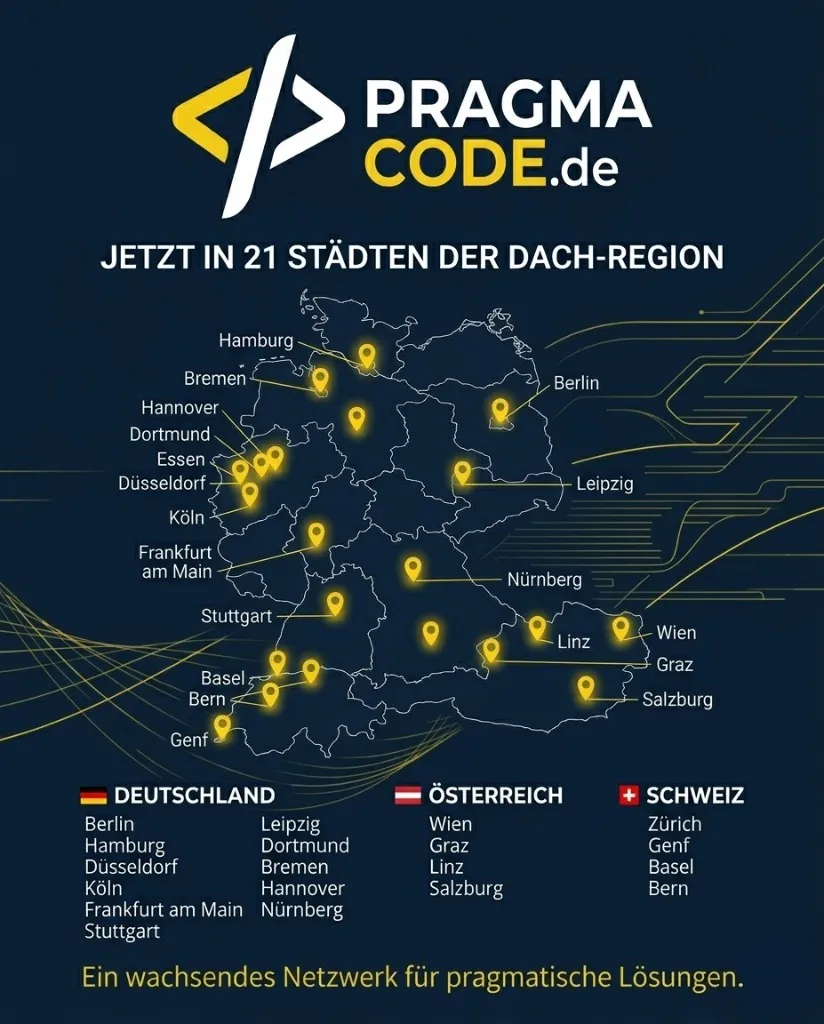
Our Regional Expertise
We are your digital partner – regionally anchored and successfully scaling across borders.
E-commerce for your business?
I deliver this for small and mid-sized businesses: at a fixed price agreed upfront, working directly with the person who builds it. Process, scope and pricing are on the service page.
See service & pricing Or request a free intro callExtended Specialized Glossary
SaaP (Software as a Product)
An approach where software is developed as an independent, scalable product with a focus on marketability.
MVP (Minimum Viable Product)
The smallest functional version of a product for maximum learning about customer needs.
Product-Market Fit
The point where a product fulfills a significant market need.
Scalability
The ability of a system to function efficiently as the load increases.
Multi-Tenancy
A software architecture pattern where a single instance serves multiple tenants.