

In the dynamic startup environment of 2026, market validation speed determines victory or defeat. Learn how modern startups leverage AI-native engineering, serverless architectures, and radical focus to transition from idea to scalable Minimum Viable Product (MVP) in record time.
This article is an in-depth expert contribution from our content cluster. Discover the complete overview on our main page:All Services Overview →
- Radical Focus Over Feature Creep: A successful 2026 MVP solves exactly one core problem exceptionally well. Users expect instant usability and polish („Minimum Lovable Product“).
- AI-Native Development: Utilizing AI coding agents and modular serverless building blocks accelerates time-to-market from months to just weeks.
- Future-Proof Architecture: Scalability and compliance (GDPR, EU AI Act) must be architecturally anchored from day one to eliminate costly rewrites.
MVP Engineering in the Era of Agentic Coding & Serverless Edge
While legacy software projects required months for basic boilerplate and server setup, autonomous coding agents, spec-driven development, and serverless edge platforms have fundamentally transformed startup execution. Founders in 2026 can validate market hypotheses ten times faster – provided their architecture adheres to robust engineering guardrails.
- 1. Why an MVP is the Critical Success Factor for Your Startup
- 2. The Philosophy of the MVP: More Than Just „Minimum“
- 3. Strategic Preparation: MoSCoW & User Story Mapping
- 4. Technology Stacks for Startups in 2026
- 5. The Role of AI & Automation in the Startup Ecosystem
- 6. Structured Engineering Process: 4 Phases to Release
- 7. Cloud Architecture: Serverless vs. Containers Comparison
- 8. Common Mistakes & Cost Traps in MVP Development
- 9. The 12-Week MVP Roadmap
- 10. Product-Market Fit, Fractional CTO & Scaling
- 11. Security, GDPR & EU AI Act Compliance for Startups
- 12. Case Studies: Real-World Market Success Through MVP Focus
- 13. The Ultimate MVP Launch Checklist
- 14. Conclusion: The Foundation for Sustainable Business Growth
1. Why an MVP is the Critical Success Factor for Your Startup
In the dynamic world of technology-driven startups, time is the most valuable currency. Founders who spend too long developing in an ivory tower without customer contact risk building solutions that miss actual market demand and burn essential venture capital. The Minimum Viable Product (MVP) is far more than an unfinished prototype: it is a systematic scientific framework for validating business hypotheses under real market conditions.
In 2026, the expectations of both B2B decision-makers and modern consumers have evolved dramatically. Static mockups or simple landing pages are no longer enough to convince early adopters or institutional investors. In contemporary product engineering, we focus on the Minimum Lovable Product (MLP): a product with a strictly prioritized feature set, where the core functionality delivers outstanding user experience (UX), intuitive interaction, and instantaneous load times.
2. The Philosophy of the MVP: More Than Just „Minimum“
Pioneered by Eric Ries and the Lean Startup movement, the „M“ in MVP is frequently misunderstood. It does not mean substandard or bug-ridden. It means building the absolute minimum amount of code and complexity required to generate measurable customer value and gather reliable quantitative user data.
The continuous Build-Measure-Learn feedback loop is the operational engine of this methodology:
Build: Rapid, hypothesis-driven development of core capabilities using modern frameworks and AI coding assistants.
Measure: Gathering authentic interaction data using privacy-first telemetry (such as PostHog, Mixpanel, or Plausible) to track activation metrics and user retention.
Learn: Data-backed decision making: do you persevere with your current roadmap or execute a strategic pivot based on real feedback?
Pro-Tip: Accelerating Cycle Time
In 2026, a startup's competitive edge is measured not by total lines of code written, but by the velocity of its Build-Measure-Learn cycle. Teams that validate hypotheses weekly rather than quarterly achieve Product-Market Fit four times faster.
3. Strategic Preparation: MoSCoW & User Story Mapping
Before writing the first line of production code, the strategic foundation must be thoroughly established. Many founding teams jump prematurely into coding without having mapped the end-to-end user journey. At Pragma-Code, we employ User Story Mapping coupled with rigorous feature prioritization.
The MoSCoW framework provides crystal-clear boundaries for MVP scoping and shields the development budget from runaway scope creep:
Must-Have (Non-Negotiable Core)
Fundamental capabilities without which the product cannot deliver its primary value proposition. These must work flawlessly from launch day.
Should-Have (High-Priority Extensions)
Significant features that are not strictly blocking for initial user validation but are queued for immediate implementation in version 1.1.
Could-Have (Desirable Polish)
Convenience features and UI enhancements that are only tackled if core development is running ahead of schedule.
Won't-Have (Strict Boundaries for v1.0)
Explicitly excluded features for initial launch. Establishing this boundary upfront prevents unproductive debates within the engineering team.
„Quality in an MVP does not mean having every conceivable feature; it means the core features you ship work impeccably and deliver instant, undeniable value.“
4. Technology Stacks for Startups in 2026
Selecting your startup's Tech Stack is one of the most consequential decisions you will make. It dictates development speed, developer recruitment, platform stability, and long-term scalability. In 2026, an architecture combining TypeScript, server-side rendering, modular APIs, and intelligent data layers has emerged as the definitive industry standard.
1. Next.js 15, React 19 & Astro
Astro for high-performance marketing and content platforms with Zero-JS architecture; Next.js 15 with React Server Components for complex authenticated web applications with optimal LCP performance.
2. Node.js (TypeScript), Go & FastAPI
Type-safe REST and GraphQL APIs via Node.js/Fastify, or Python FastAPI for machine learning pipelines. Go for lightweight, high-throughput microservices.
3. PostgreSQL, Neon & Vector Stores
PostgreSQL as the rock-solid relational foundation with JSONB flexibility. Serverless databases (Neon, Supabase) for instant auto-scaling and integrated vector extensions (pgvector) for semantic AI search.
5. The Role of AI & Automation in the Startup Ecosystem
In 2026, Artificial Intelligence is no longer an optional novelty; it is deeply embedded in competitive software products. For startups at the MVP stage, the golden rule is: integrate frontier models via API rather than building custom foundation models from scratch. Providers like OpenAI, Anthropic, and Google offer production-ready APIs that allow founders to incorporate advanced multimodal language, visual processing, and reasoning capabilities in days.
By leveraging Retrieval Augmented Generation (RAG), startups can connect proprietary corporate knowledge and customer datasets directly into AI reasoning without exposing sensitive intellectual property to public training runs. This enables intelligent B2B copilots, automated document processing, and deep domain intelligence out of the box.
AI-Native Engineering: 40% Faster Delivery
AI transforms not just product capabilities, but the software development lifecycle itself. By deploying autonomous coding agents and spec-driven development methodologies, we at Pragma-Code engineer robust MVPs in a fraction of traditional development timelines.
6. Structured Engineering Process: 4 Phases to Release
Agile development does not mean chaotic development. Launching a fully functional, production-grade MVP in 8 to 12 weeks requires a disciplined engineering roadmap with clear deliverables:
Discovery & User Journey Mapping
Refining the problem definition, analyzing target user pain points, and drafting interactive high-fidelity Figma prototypes to validate the user experience upfront.
Architecture Setup & CI/CD Pipeline
Configuring the monorepo, initializing automated test suites, and provisioning continuous integration and deployment (CI/CD) on Cloudflare, AWS, or Vercel.
Agile Sprint Engineering (Core Features)
Executing focused 1-to-2-week sprints to implement Must-Have features with continuous demos, unit tests, and code reviews.
QA, Security Audit & Production Launch
Conducting end-to-end user acceptance tests, automated vulnerability scans, telemetry wiring, and rolling out the platform to initial beta cohorts.
7. Cloud Architecture: Serverless vs. Containers Comparison
For early-stage startups, operational overhead is the enemy of rapid iteration. While large enterprises manage massive Kubernetes clusters, this approach introduces steep DevOps complexity and idle hosting costs for early-stage products. In 2026, modern startups prioritize Serverless-First architectures.
Comparison: Serverless-First vs. Containers / Kubernetes
- DevOps Overhead: Requires dedicated infrastructure engineers and continuous cluster maintenance.
- Fixed Costs: Constant baseline expenses for master nodes, load balancers, and reserved virtual instances.
- Time-to-Market: Longer initial setup periods for Helm charts, ingress controllers, and networking layers.
- Best For: Mature platforms with steady, high baseline traffic and custom operating system dependencies.
- Zero Server Management: Automatic scaling from zero to millions of requests without manual intervention.
- Pay-per-Use: Negligible baseline costs during launch; pay strictly for actual CPU execution time.
- Global Edge: Millisecond latency via edge middleware and globally distributed edge caching networks.
- Best For: Startups and MVPs demanding rapid release cycles and elastic scalability.
8. Common Mistakes & Cost Traps in MVP Development
Years of product engineering reveal that software MVPs rarely fail due to technical limitations, but almost invariably due to strategic missteps during planning and execution:
1. Feature Creep & Perfectionism Trap
Founders often attempt to build every secondary edge-case feature before welcoming their first user. This delays market launch by months and drains capital. Non-essential ideas belong strictly in the version 2.0 backlog.
2. Missing Telemetry & Feedback Blindness
An MVP launched without granular event tracking (funnel conversions, retention, error logging) is navigating in the dark. Without quantitative telemetry, data-driven iteration is impossible.
3. Niche Exotic Tech & Dead Ends
Adopting obscure, hype-driven frameworks makes finding and onboarding replacement engineers extremely difficult. Choose proven, mature industry standards for your platform infrastructure.
9. The 12-Week MVP Roadmap
A transparent timeline gives founders and investors predictability. The following 12-week roadmap represents the proven delivery framework refined across numerous client engagements at Pragma-Code:
-
Weeks 1–2: Discovery, User Stories & Prototyping
Aligning the core value proposition, wireframing user flows in Figma, confirming technical feasibility, and finalizing the MoSCoW priority matrix.
-
Weeks 3–4: Infrastructure, Database Architecture & APIs
Provisioning the serverless cloud environment, defining PostgreSQL schemas, setting up authentication, and configuring core API endpoints.
-
Weeks 5–8: Core Feature Sprint Engineering
Building core business logic, connecting reactive frontends with Next.js/React, and integrating external payment and AI gateways.
-
Weeks 9–10: Security Audit, Telemetry & E2E Testing
Running user acceptance testing, patching edge-case bugs, embedding privacy-first analytics, and conducting load simulations.
-
Weeks 11–12: Soft Launch, Feedback Iteration & Public Release
Deploying to private beta cohorts, monitoring telemetry metrics, eliminating friction points, and executing public go-to-market rollout.
10. Product-Market Fit, Fractional CTO & Scaling
Early-stage startups frequently face the dilemma of requiring high-level strategic technology guidance without having the budget or necessity for a full-time executive CTO. In these scenarios, Pragma-Code operates as a Fractional CTO: steering product architecture, selecting tech stacks, and helping build the internal engineering squad.
Once initial traction is proven and the product achieves clear Product-Market Fit, the scaling phase begins:
Refactoring & Technical Debt Paydown
Conscious trade-offs made during rapid prototyping are upgraded with optimized database indexing and dedicated caching layers.
Automated Quality Assurance
Expanding end-to-end test coverage (e.g., Playwright) to prevent regressions as development velocity increases.
Engineering Team Onboarding
Standardizing developer documentation and establishing clean Git-flow pull request guidelines for rapid team scaling.
11. Security, GDPR & EU AI Act Compliance for Startups
The outdated mantra „Move fast and break things“ represents an existential liability in modern software engineering. Startups operating in the European B2B sector must embed security and regulatory compliance into their engineering DNA from day one:
Privacy-by-Design
Strict data minimization, AES-256 encryption at rest, and enforced TLS 1.3 encryption in transit for all user communications.
EU AI Act Alignment
Automated transparency indicators for AI-generated assets, avoiding prohibited scoring mechanics, and maintaining audit logs of AI inference calls.
Data Sovereignty & DACH Hosting
Utilizing European data center regions (e.g., Frankfurt or Zurich) across cloud providers to guarantee full GDPR compliance.
12. Case Studies: Real-World Market Success Through MVP Focus
The tech industry's greatest success stories illustrate the power of disciplined MVP execution:
Dropbox: The 3-Minute Video MVP
In 2007, Drew Houston didn't begin by engineering a massive global cloud storage infrastructure. Instead, he released a simple 3-minute video explaining the concept, which grew their waiting list from 5,000 to 75,000 signups overnight.
Airbnb: Validation in the Living Room
The founders initially hosted guests on air mattresses in their own apartment during a design conference, booking them via a simple webpage. This minimal test confirmed customer willingness to pay before investing millions into platform engineering.
B2B AI Copilots 2026: 4-Week Time-to-Market
Modern startups in vertical sectors (e.g., legal tech or architecture) launch enterprise copilots within 4 weeks by orchestrating frontier LLM APIs with custom RAG pipelines, concentrating entirely on workflow optimization.
13. The Ultimate MVP Launch Checklist
Before launching your platform to real paying customers, verify all critical operational vectors against this launch checklist:
Quick-Check: Your Roadmap to a Successful MVP Launch
14. Conclusion: The Foundation for Sustainable Business Growth
In 2026, every successful enterprise is fundamentally a software enterprise. The ability to transform innovative concepts into functional, scalable, and delightful digital products in record time dictates market leadership. A well-architected MVP is not a substandard compromise; it is the most strategic competitive advantage for modern startup founders.
By uniting robust architecture, AI-native development workflows, and an unwavering focus on solving genuine customer pain points, you minimize market risk while maximizing your growth trajectory.
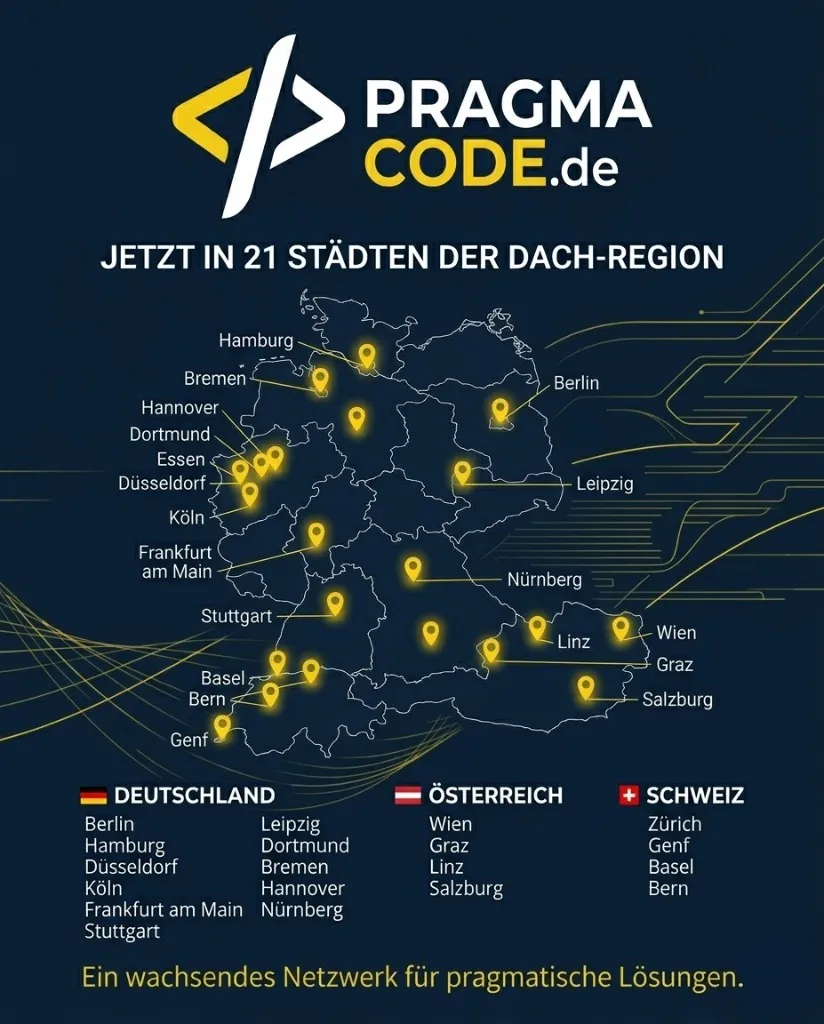
Our Regional Expertise
We are your digital partner – regionally anchored and successfully scaling across borders.
Have a vision?
Let's check together how we can make your idea take flight.
Book your free strategy call nowExtended Specialized Glossary
API (Application Programming Interface)
The interface through which different software systems communicate with each other. For startups, the backbone of modern system integration.
CI/CD (Continuous Integration / Deployment)
Automated processes that ensure code changes are immediately tested, built, and flawlessly deployed to production servers.
LCP (Largest Contentful Paint)
A key Google Core Web Vital that measures how quickly the main content element of a page is loaded. Critical for SEO and conversion.
RAG (Retrieval Augmented Generation)
An AI architecture that augments language models with proprietary business data without requiring costly and complex model retraining.
SaaS (Software as a Service)
The leading digital business model where users access cloud-based software flexibly via recurring subscriptions.
Tech Stack
The complete set of harmonized programming languages, frameworks, databases, and cloud tools used to build a software product.