

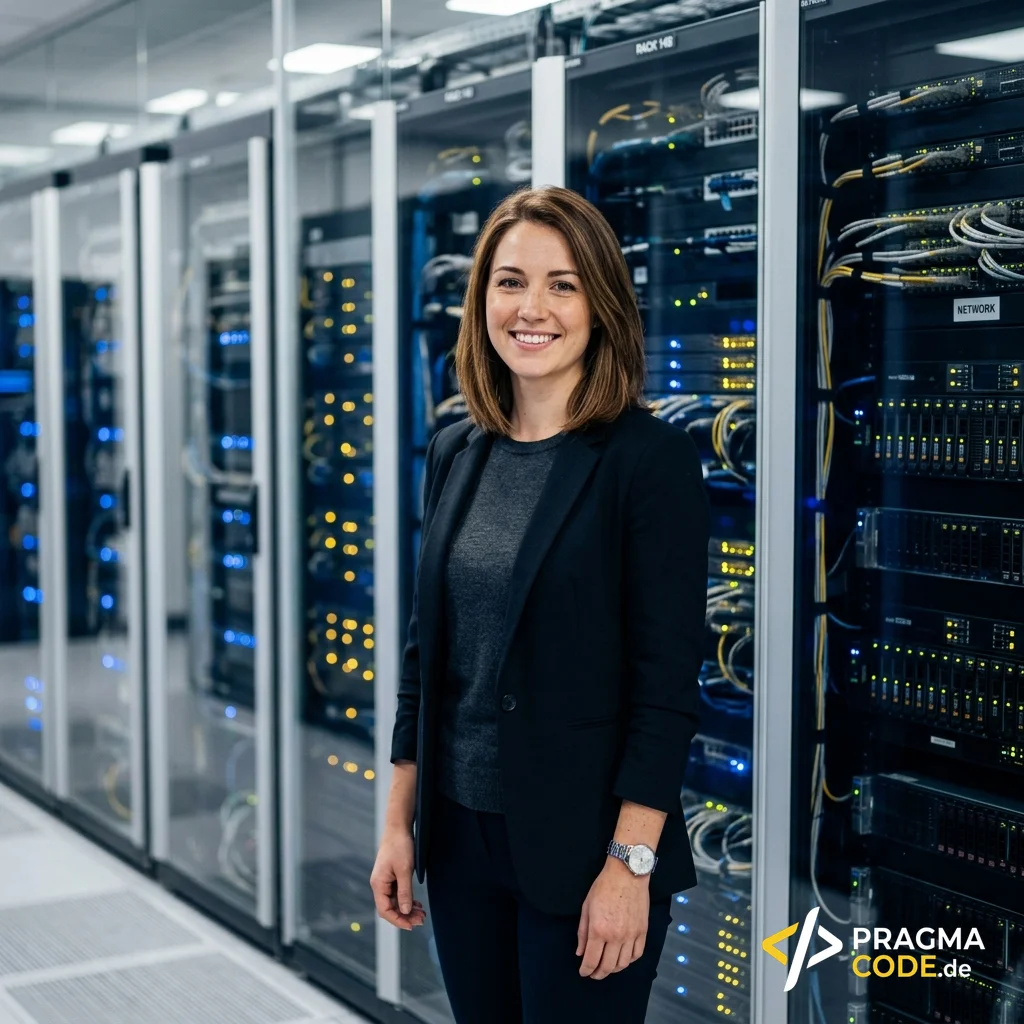
In the era of dynamic reasoning models, agentic workflows, and the Model Context Protocol (MCP), the Frontier Engineer has emerged as a cornerstone role in the tech industry: bridging the gap between massive research lab training clusters and productive, secure enterprise deployment.
This article is an in-depth expert contribution from our content cluster. Discover the complete overview on our main page:AI Automation & Intelligent Agents →
The Architecture of the Future
In the era of modern reasoning models and Agentic Workflows, the Frontier Engineer is the most critical architect. They bridge the gap between unimaginable computing power and real business value.
Introduction: The New Age of Software Engineering
"Software engineering is no longer just writing deterministic code. It is the taming of probabilistic systems that possess near-limitless world knowledge, yet remain extremely complex to handle."
With the rapid rise of Frontier Models like Claude 3.7 Sonnet, Gemini 3.7 Flash, DeepSeek-R1, and modern open-weight architectures like Llama 3.3, the technology landscape has irrevocably changed. In this dynamic environment, an entirely new profession has emerged: the Frontier Engineer (often referred to as an AI Automation Engineer or Frontier Deployment Engineer). But who exactly are they? What makes this role so special, and why are these specialists currently the most sought-after minds in the tech industry – from Silicon Valley research labs to the innovative mid-market across Europe?
What is a Frontier Engineer?
The term Frontier Engineer describes highly specialized engineers working directly at the "frontier" of what is technologically possible in artificial intelligence. Unlike traditional software developers who use established frameworks (like React, Next.js, or Spring Boot) to map deterministic business logic, Frontier Engineers work with probabilistic models and paradigms for which standardized textbooks rarely exist yet.
- The Supercomputing Architect: Develops, trains, and scales gigantic hardware clusters and foundation models at leading AI research labs (OpenAI, Anthropic, Google DeepMind).
- The Deployment Expert: Integrates these models securely, compliantly, and automatically via Agentic Workflows, MCP, and RAG into real enterprise workflows (B2B focus).
- The Missing Link: Both disciplines require deep physical, mathematical, and algorithmic understanding to eliminate resource bottlenecks, latency spikes, and inefficiencies.
The profession can be fundamentally divided into two main categories: Infrastructure & Supercomputing (Model Creation) on the one hand, and Implementation & Operations (Frontier Deployment) on the other.
Pillar 1: Infrastructure and Supercomputing (AI/Software)
The first category of Frontier Engineers works directly in the engine rooms of the world's leading AI labs. Their task is to create and optimize the hardware and software foundation for the most powerful AI models on the planet. This is the world of High-Performance Computing (HPC) and massive distributed systems.
The Challenge of Extreme Scaling
When training a foundation model with hundreds of billions or trillions of parameters, a single server is not remotely sufficient. Frontier Engineers orchestrate clusters of tens of thousands of GPUs (such as Nvidia H100, H200, or B200) connected via ultra-fast networks (InfiniBand running at 800 Gbps per port). An undetected network failure during a months-long training run can destroy millions of dollars in compute time.
Distributed Training Paradigms and Network Synchronization
To minimize training failures and achieve maximum GPU efficiency (MFU – Model Flops Utilization), Frontier Engineers deploy advanced distributed computing paradigms. These include Tensor Parallelism (splitting individual model layers across multiple GPUs), Pipeline Parallelism (distributing sequential layers across different server nodes), and Data Parallelism utilizing techniques like ZeRO (Zero Redundancy Optimizer). Coordinating these computational steps requires microsecond-level synchronization over high-speed interconnects like NVLink within a server chassis and InfiniBand connections between racks. If a single network port drops a packet (Packet Loss), it causes a cluster-wide stall – wasting massive amounts of compute time.
Hardware Optimization
Squeezing every last FLOPS (Floating Point Operations per Second) out of the silicon architecture using low-level CUDA and Triton kernels to drastically reduce training cycles.
Network Topology
Designing non-blocking fat-tree network topologies that move petabytes of data without latency between GPU compute nodes.
Memory Management & Checkpointing
Managing asynchronous checkpointing pipelines on NVMe storage to guarantee zero-loss recovery of training progress during inevitable hardware failures.
The Interplay of Physics and Code
In this domain, the boundaries between software and hardware blur. These engineers must not only master Python, C++, Rust, or CUDA, but also understand the physical limits of power consumption, heat dissipation, and liquid cooling. Building a modern AI data center often requires a dedicated electrical substation handling hundreds of megawatts. The software written by these Frontier Engineers controls thermal management across server racks just as much as bit-level error correction.
Expert Tip: The Buffer Paradigm
In large GPU clusters, raw computing power is rarely the primary bottleneck—data transport is. Frontier Engineers in supercomputing often invest 80% of their time optimizing memory bandwidth and data transfers between High Bandwidth Memory (HBM3e) and cache hierarchies.
Pillar 2: Implementation and Deployment (Frontier Deployment)
While the first pillar creates the foundation models, the second pillar focuses on deploying them productively in the real economy. This is where Frontier Deployment Engineers operate. They are the essential bridge builders between theoretical AI research and concrete, operational enterprise applications.
From Raw Language Models to Resilient Value
A raw language model is impressive, but without operational context and integration, it is worthless to an enterprise. It neither knows internal ERP database tables nor customer records, lacks access to live operational interfaces, and is prone to Hallucinations without guardrails. The Frontier Deployment Engineer takes cutting-edge models, tames them, and integrates them so they reliably, reproducibly, and compliantly generate business value.
Building robust systems like Retrieval Augmented Generation (RAG) and hybrid vector search to synchronize models with internal enterprise ground truth.
Designing multi-agent systems (using frameworks like n8n, LangGraph, or DSPy) where AI agents securely interact with enterprise tools and databases via standardized Model Context Protocol (MCP) servers.
Ensuring data sovereignty (e.g., through Local Deployment with vLLM / Ollama) and protecting sensitive corporate data from leaking into public training pools.
The Structured Workflow of the Deployment Engineer
To understand the complexity of this integration work in practice, let us examine the standardized process a Frontier Deployment Engineer follows when introducing a new model or agentic workflow:
Evaluation & Benchmarking
Benchmarking reasoning quality, thinking budgets, and latencies against proprietary enterprise eval test sets to identify the optimal price-performance ratio.
Prompt & System Engineering
Structuring systemic prompts, integrating with Vector Databases, and optimizing via prompt caching for dramatic cost reductions.
Infrastructure & Tool Integration via MCP
Connecting securely via REST APIs, GraphQL, or Model Context Protocol servers to CRM, ERP (SAP), and databases for autonomous tool usage.
Monitoring, Drift Detection & Guardrails
Establishing deterministic safety guardrails and continuous eval pipelines against model drift and unannounced upstream API changes.
The B2B Comparison: Lab vs. Enterprise
It is crucial to understand that both sides of Frontier Engineering are highly specialized but pursue entirely different metrics. One side maximizes parameter count and broad intelligence benchmarks; the other side maximizes operational reliability, data privacy, and measurable business ROI.
Comparison: Supercomputing vs. Frontier Deployment
- Goal: Training the smartest foundation model.
- Hardware: 100,000+ GPUs, massive cluster data centers.
- Technologies: C++, CUDA, Triton, PyTorch, InfiniBand.
- Metrics: MFU, FLOPS, Loss curves, HumanEval Score.
- Cost Focus: Megawatt power consumption, hardware failure rates.
- Goal: Reliable automation of core business processes.
- Hardware: Hybrid cloud APIs, local inference servers (vLLM).
- Technologies: Python, TypeScript, MCP, n8n, DSPy, PostgreSQL.
- Metrics: Latency, token efficiency, accuracy, business ROI.
- Cost Focus: Token Optimization, Prompt Caching, API budgets.
However, both roles require exceptional mental agility. In the world of generative AI, frameworks and best practices often become outdated within months. Frontier Engineers are pioneers who thrive in this constant dynamism and provide strategic orientation.
Infrastructure Failure
A bug in training or checkpointing code.
Cost: Millions LostA hardware or network failure in the GPU cluster can ruin weeks of training and burn millions in compute costs.
Deployment Failure
Missing guardrails or unvalidated outputs.
Reputational & Liability RiskIf an autonomous agent sends incorrect quotes or leaks GDPR-protected customer data, severe legal consequences and customer churn follow.
B2B Practical Use Case: Frontier Integration in the DACH Mid-Market
What does the daily work of a Frontier Deployment Engineer look like in a real-world industrial enterprise? To illustrate this with practical experience, let us examine a concrete case study of a leading industrial filtration systems manufacturer based in Baden-Württemberg, Germany. The company's goal was to fully digitize and accelerate their manual, error-prone RFQ (Request for Quote) process for custom-built filtration solutions.
Previously, sales engineers had to manually review incoming customer inquiries, which often consisted of hundreds of pages of technical specifications, DIN standards references, and CAD drawings. They then had to map these requirements to internal product catalogs and calculate pricing using a legacy spreadsheet tool. This process took an average of five business days per request, tying up valuable engineering talent.
The Frontier Deployment Engineer designed and built an automated, securely guarded pipeline based on four synchronized architectural pillars:
1. Specification Parsing
A modern multimodal frontier model parses unstructured PDF inquiries, analyzes technical drawings, and extracts required parameters such as pressure tolerances, flow rates, and material standards into a structured JSON schema.
2. Hybrid Catalog Mapping
Using a local Vector Database with hybrid search (Dense Vectors + BM25), the system matches requirements against tens of thousands of standard components and historical quotes in milliseconds.
3. Validated Calculation Engine
Pricing and margins are never left to a stochastic language model. The AI delivers structured bill-of-materials, which are calculated by a deterministic Python calculation engine following strict business rules.
4. Human-in-the-Loop (HITL)
The validated quote is automatically drafted in the ERP system (SAP). The responsible sales engineer reviews the draft and approves the quote with a single click.
By implementing this system, the average processing time for custom quotes fell from five days to under ten minutes. The rate of incompatible part matching dropped to near zero because the system automatically flags DIN compliance conflicts semantically before the quote is finalized.
The 5 Golden Rules of Frontier Deployment for Enterprises
Deploying frontier models successfully requires a fundamental mindset shift compared to standard software development projects. Drawing from numerous enterprise implementations, we can summarize five foundational golden rules:
1. Hybrid Inference & Data Sovereignty
Process highly sensitive customer data, financial metrics, and proprietary blueprints on local open-source models (e.g., via Local Deployment with vLLM). Utilize external cloud APIs exclusively for complex reasoning tasks with pseudonymized data.
2. Consistent Token Optimization & Prompt Caching
Every unoptimized token creates latency and costs. Utilize modern prompt caching (which saves up to 90% of token costs on recurring system prompts and extensive documentation) and structure payload data precisely before dispatch.
3. Human-in-the-Loop (HITL) as a Core Guardrail
AI models are probabilistic and can generate Hallucinations in edge cases. Let agents analyze documents, draft proposals, or write code—but keep final approval before customer delivery strictly in human hands.
4. Dynamic Semantic Model Routing
Use ultra-fast, cost-efficient models (like Gemini Flash or Llama 8B) to classify incoming request intent. Only route to expensive frontier models with thinking budgets when a complex logical problem or deep mathematical reasoning is required.
5. Continuous Drift Monitoring & Evals
Model providers update model weights periodically in the background, which can cause subtle behavioral shifts (Model Drift). Establish automated integration evals (e.g., with DSPy) to benchmark prompt outputs and tool calls regression-free upon every API update.
Future Outlook: The Agentic Web 2027
The role of the Frontier Engineer is set to undergo a profound evolution. While today we primarily build human-to-machine interfaces like chat assistants or copilots, we are moving rapidly toward a machine-to-machine ecosystem: the Agentic Web.
By 2027, autonomous AI agents will not just search information for users; they will negotiate contracts, coordinate supply chains in real time, and execute financial transactions independently. In this environment, corporate agents will interact directly with agents representing suppliers and partners. The Frontier Engineer will no longer build graphical user interfaces, but rather cryptographically secured, semantic communication protocols and MCP interfaces that allow AI systems to negotiate, transact, and validate operations in milliseconds.
Conclusion & Outlook
The Frontier Engineer is undoubtedly one of the most exciting and demanding professions of our time. Whether building gigantic data centers that serve as the physical foundation for the next generation of artificial intelligence, or in the delicate art of safely integrating these models into business value streams—these specialists are shaping the digital backbone of the coming decade.
Quick Check: Frontier Engineering
While global AI labs expand the boundaries of what is possible in supercomputing, specialized partners support enterprises in the equally critical discipline of Frontier Deployment. Ultimately, the true value of Artificial Intelligence is determined at the interface with operational business practice.
Do you have questions about Frontier Deployment for your company?
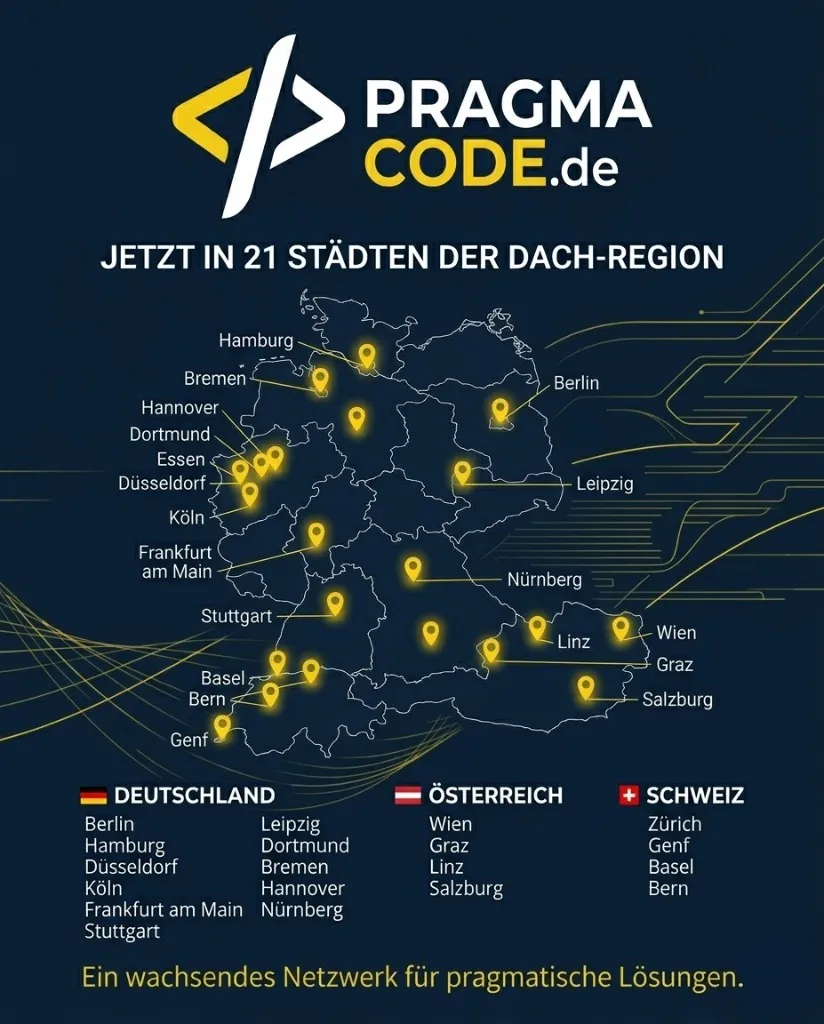
Schedule a Free Initial ConsultationOur Regional Expertise
We are your digital partner – regionally anchored and successfully scaling across borders.
Have a vision?
Let's check together how we can make your idea take flight.
Book your free strategy call nowExtended Specialized Glossary
Frontier Models
The most powerful AI models worldwide, standing at the edge of current technical capabilities (e.g., Claude 3.7 Sonnet, Gemini 3.7 Flash, DeepSeek-R1, GPT-4o).
Agentic Workflow
A process where AI agents make autonomous decisions and use tools (APIs, browsers, scripts) to achieve a predefined goal.
Retrieval Augmented Generation (RAG)
An architecture where LLMs are augmented with external data (e.g., from a database) before answering to ensure factual accuracy.
Local Deployment
The installation and operation of AI models on your own servers or private clouds to ensure maximum data sovereignty.
Token Optimization
Techniques to reduce the input data (tokens) sent to an AI model to lower API costs and increase processing speed.
Vector Database
Specialized databases that store information as mathematical vectors to enable rapid semantic similarity searches.
Hallucination
A phenomenon where an AI invents facts that sound plausible but are false. RAG is an effective countermeasure.