

Salesforce's acquisition of Fin (formerly Intercom) for $3.6 billion marks a turning point in enterprise IT. Autonomous AI agents (Agentic AI) are leaving the realm of niche applications to become the core of future B2B software architectures. For small and medium-sized enterprises (SMEs) in the DACH region, this mega-acquisition is not an abstract market event, but an unmistakable wake-up call: autonomous process optimization has arrived in everyday business.
This article is an in-depth expert contribution from our content cluster. Discover the complete overview on our main page: AI Automation for Business →
- The Mega-Acquisition: Salesforce's acquisition of Fin (formerly Intercom) for $3.6 billion confirms the rapid transition from static chatbots to autonomous, goal-oriented AI agents (Agentic AI) in the enterprise workspace.
- Leverage for SMEs: Mid-sized companies in the DACH region stand to benefit from the democratization of this tech. Sophisticated, ready-to-deploy customer service agents and sales assistants are becoming widely accessible, drastically lowering implementation barriers.
- Strategic Advantage: The combination of modular open-source systems (such as n8n or LangGraph) and major enterprise platforms offers businesses maximum flexibility while preventing expensive vendor lock-in.
Multi-Agent Orchestration Replaces Isolated Chat Widgets
With its Summer 2026 release, Salesforce has enabled Agentforce by default and integrated Fin's Apex model into cross-departmental multi-agent teams. For SMEs, this marks a decisive shift: the era of reactive text assistants is over – what matters now are deeply integrated, autonomous process agents with direct ERP and CRM integration.
- 1. The Mega-Acquisition of Fin by Salesforce – A Signal for the B2B AI Revolution
- 2. Fin in Detail: What Makes the Autonomous AI Agent Platform Stand Out?
- 3. Comparison: Autonomous AI Agents vs. Rule-Based Systems in B2B
- 4. Salesforce's Strategic Motivation: Why a CRM Giant Invests Billions
- 5. TCO & Pricing Models: What Do Autonomous AI Agents Really Cost?
- 6. Implications for SMEs in the DACH Region: 4 Concrete Action Areas
- 7. Successful Implementation: Step-by-Step to Deploying Your First AI Agent
- 8. Expert Tip: Data Privacy and RAG Infrastructure in the DACH Region
- 9. Conclusion: The Future is Agentic – Position Your Business Today
1. The Mega-Acquisition of Fin by Salesforce – A Signal for the B2B AI Revolution
On June 15, 2026, the global technology landscape was shaken by an announcement that cements the priorities of enterprise IT for the years to come: CRM giant Salesforce has signed a definitive agreement to acquire Fin (formerly Intercom) for approximately $3.6 billion. This acquisition is not just another consolidation in the software market; it is a clear strategic statement. The era in which Artificial Intelligence served merely as a neat add-on for generative text suggestions or simple search prompts is officially over. We are currently experiencing the breakthrough of Agentic AI – autonomous systems that do not just assist in describing problems, but solve them independently.
The timing of the acquisition comes as no surprise. Only a month prior, in May 2026, Intercom underwent a radical rebranding to Fin, named after its flagship AI agent. This signaled a complete alignment of the company’s vision toward autonomous software agents. Salesforce, which has already been investing heavily in its own agentic solutions through its Agentforce platform, is securing one of the most technologically mature platforms in autonomous customer service with this acquisition.
For small and medium-sized enterprises in the DACH region, this transaction highlights one key fact: autonomous agents are market-ready. Salesforce’s backing will accelerate the adoption and standardization of agentic workflows across the B2B sector. SMEs must now ask themselves how they can leverage this new generation of digital employees to stay competitive in an increasingly automated market. This transition is not only about cost-saving; it is about scaling processes, raising service quality, and freeing up human talent for high-value strategic work.
2. Fin in Detail: What Makes the Autonomous AI Agent Platform Stand Out?
To understand why Salesforce was willing to spend $3.6 billion on Fin, we must look closer at the platform’s technical architecture and capabilities. Fin is not a typical chatbot that relies on matching keyword inputs to hardcoded answers. Instead, it is a highly integrated platform for autonomous AI agents that features a deep understanding of context, user intent, and workflow execution.
The Cognitive Architecture of Fin
The core intelligence of Fin is built on a hybrid approach, combining state-of-the-art foundation models (such as GPT-4o, Gemini, and Claude) with a proprietary model called Apex. Apex was developed specifically for support and customer service operations. It features an exceptionally low hallucination rate and achieves an autonomous resolution rate averaging 76 percent in live production environments, without requiring human agent intervention.
A key differentiator from legacy systems is Fin’s capacity for autonomous problem resolution. When a customer submits a request – such as requesting a refund or changing shipping details – Fin proceeds like a human agent:
Understanding the Problem: The agent analyzes the input, filters out irrelevant details, and identifies the core problem (e.g., an address mismatch combined with an unpaid balance).
Planning: Instead of immediately writing a canned response, the agent creates a multi-step execution plan.
Tool Execution: The agent interacts autonomously with connected systems via APIs. It checks shipping statuses in the ERP, verifies billing details in the CRM, and updates records.
Verification: Before finalizing the task, the agent verifies if all steps succeeded and if the result aligns with the company's business rules.
Communication: Only after successful execution does the agent inform the customer of the outcome in natural, polite language.
Seamless Knowledge Integration via RAG
The foundation for this accuracy is a highly optimized RAG (Retrieval-Augmented Generation) architecture. Fin accesses internal knowledge bases, product documentation, ticket histories, and databases in real-time. This prevents the agent from fabricating information and ensures it always operates on the most current data. The knowledge base is updated dynamically, meaning any changes to product specs or company policies are immediately reflected in the agent’s behavior.
Furthermore, Fin features an intuitive integration layer that connects third-party systems like Shopify, Stripe, Jira, HubSpot, or Salesforce with minimal developer effort. This deep integration turns Fin into an action-based agent rather than just a conversational tool.
3. Comparison: Autonomous AI Agents vs. Rule-Based Systems in B2B
For many business leaders, the distinction between traditional chatbots and modern autonomous AI agents can seem blurry. However, the technological gap has a massive impact on return on investment (ROI) and customer satisfaction.
Comparison: Autonomous AI Agents vs. Rule-Based Chatbots
- Decision Making: Follow rigid, hardcoded decision trees. They fail whenever a user inputs unexpected phrasing or complex issues.
- Process Integration: Mostly isolated. They can display FAQs but cannot execute actions across ERP or CRM databases autonomously.
- Maintenance Cost: Very high. Any change in internal business logic requires developers to manually rewrite the decision tree paths.
- Context Awareness: No true language comprehension. They respond to simple keywords and lose track of the conversation if interrupted.
- Decision Making: Leverage LLMs and the Apex model to analyze goals and dynamically generate plans to resolve user tasks.
- Process Integration: Deeply integrated into CRM and database environments; they use APIs autonomously to resolve tickets end-to-end.
- Maintenance Cost: Minimal. The agent learns continuously from live documents, structured knowledge bases, and user feedback loops.
- Context Awareness: Understand complex, multi-turn contexts, recognize sentiment, and autonomously correct execution errors.
This side-by-side comparison shows why traditional bots often frustrate B2B users: they lack flexibility and require constant, expensive code updates. Autonomous AI agents adapt dynamically, act proactively, and relieve service teams by resolving up to 80% of routine inquiries without human intervention.
4. Salesforce's Strategic Motivation: Why a CRM Giant Invests Billions
Spending $3.6 billion on Fin is a strategic power play by Salesforce in an increasingly competitive market. Microsoft, with its Copilot integration, and niche providers of specialized AI frameworks are aggressively targeting B2B enterprises. Salesforce CEO Marc Benioff recognizes that the future of enterprise software lies not in just storing customer data (traditional CRM) but in providing turn-key operational intelligence.
Integrating Fin into Agentforce and Multi-Agent Teams
With its Summer 2026 update, Salesforce made Agentforce an out-of-the-box standard across enterprise accounts. The overarching goal is the deployment of complete Multi-Agent Systems: specialized agents operate in cross-departmental harmony – a support agent resolves a customer dispute, a finance agent reconciles the refund in the ERP, and a sales agent updates customer lifetime scoring in real time.
Immediate Out-of-the-Box Value
Fin brings a ready-to-use customer support solution that integrates into communication channels in minutes. This enables Salesforce to offer instant value to SMEs without requiring custom development cycles.
Capturing the SME Market
While Salesforce is a dominant player in the enterprise sector, Intercom (now Fin) was the go-to choice for fast-growing startups, scale-ups, and mid-sized businesses. Acquiring Fin expands Salesforce's reach in this high-growth market.
The Apex Model as a Proprietary AI Asset
With Fin, Salesforce gains ownership of the specialized Apex model. Integrating this into the Einstein AI ecosystem will boost the precision and efficiency of all Salesforce agents.
Winning the B2B AI Platform War
By consolidating these capabilities, Salesforce positions itself as the central hub for autonomous business operations. Instead of building custom agents by wiring together APIs from OpenAI or Anthropic, businesses can use an all-in-one suite. Storing customer records, communication histories, and agent intelligence in a single platform reduces security risks, minimizes integration costs, and delivers a consistent user experience.
5. TCO & Pricing Models: What Do Autonomous AI Agents Really Cost?
For SME decision-makers, Total Cost of Ownership (TCO) is a critical decision metric. While large corporations negotiate pricing inside expansive enterprise agreements, commercial models in the AI agent market diverge significantly.
Salesforce Agentforce
Enterprise interaction-based model
$2.00 / ConversationBilled via Flex Credits per user conversation. Ideal for enterprises heavily invested in Salesforce, but requires diligent budget monitoring during high-volume periods.
Fin (Standalone)
Outcome-driven resolution pricing
$0.99 / ResolutionCosts are charged exclusively for successfully and autonomously resolved issues. If the agent fails or hands off to a human agent, the inquiry remains free.
Open-Source Alternative: Full Cost Sovereignty with n8n & LangGraph
For mid-market companies in the DACH region, these pricing benchmarks create a compelling alternative: Instead of paying $2.00 per conversation to US cloud platforms, custom agent workflows based on self-hosted n8n connected to European LLM endpoints become cost-efficient at just 300 to 500 inquiries per month. At Pragma-Code, we help companies design architectures that balance platform convenience with cost control and digital sovereignty.
6. Implications for SMEs in the DACH Region: 4 Concrete Action Areas
It is common for mid-sized businesses in the DACH region to view Silicon Valley acquisitions as hype with little relevance to their day-to-day operations. That would be a major mistake here. Salesforce’s acquisition of Fin will democratize how SMEs manage customer interactions and automate backend tasks.
The Democratization of Agentic AI
In the past, deploying high-performing autonomous AI required data science teams and large budgets. Now, these tools are built directly into standard business software. A mid-sized engineering firm in Germany or an e-commerce retailer in Austria can activate AI agents with a few clicks, instantly accessing capabilities that were previously restricted to global enterprises.
Practical B2B Use Cases for SMEs
24/7 First-Level Without Burnout
E-commerce and manufacturing companies resolve return requests, order statuses, and invoices directly in the ERP. Only complex corner cases are routed through a structured Human Handoff.
Lead Qualification & Scheduling
The agent qualifies incoming leads via web chat or email based on project budget, tech specs, and timelines, booking vetted meetings straight into account managers' calendars.
Automated Proposal Drafting
Leveraging past proposals, technical product datasheets, and compliance records, the agent drafts highly detailed tender responses in minutes rather than days.
Bridging ERP & Legacy Stacks
Using open automation engines like n8n, autonomous agents parse unstructured invoices, order documents, and PDFs, validating and writing entries directly into ERP databases.
Deploying these applications allows SMEs to reduce response times to near zero, boost customer satisfaction, and keep operating costs stable.
7. Successful Implementation: Step-by-Step to Deploying Your First AI Agent
Building an autonomous agent ecosystem does not require a multi-year plan. SMEs should take a pragmatic, step-by-step approach to secure quick wins and build internal confidence.
Analyze Processes & Use Cases
Identify repetitive, high-volume workflows in your support or sales operations. Great starting points include FAQ responses, return processing, or standard lead qualification.
Structure the Knowledge Base (RAG)
Prepare your internal data. AI agents are only as good as the information they access. Organize product catalogs, FAQs, and internal guidelines into a structured, machine-readable format.
Select the Platform & Integrate APIs
Choose the right infrastructure. Use pre-built options like Fin/Agentforce for direct CRM workflows, or deploy flexible low-code tools like n8n to maintain full data control.
Pilot Phase with Human-in-the-Loop
Start with a supervised pilot. Run the agent in a 'Human-in-the-Loop' setting, where staff review and approve every action. Move to full automation once the agent demonstrates consistent accuracy.
This structured rollout minimizes risks and helps employees view the AI agent as a helpful tool rather than a threat to their roles.
8. Expert Tip: Data Privacy and RAG Infrastructure in the DACH Region
Expert Tip: GDPR Compliance & EU AI Act in B2B Deployments
When deploying B2B AI agents in Europe, GDPR compliance and EU AI Act transparency rules must be your top priority. Many US cloud solutions process data outside the EU. To avoid compliance risks, SMEs should implement a hybrid RAG architecture. In this setup, personal data is processed, filtered, and anonymized locally or on EU-based servers (such as an n8n instance hosted in Europe) before passing queries to external LLM APIs. As specialists in AI automation, Pragma-Code helps businesses build secure, fully compliant agent architectures.
Maintaining control over your customer data is essential. A well-designed system architecture lets you exploit the efficiency of AI agents without compromising on privacy regulations.
9. Conclusion: The Future is Agentic – Position Your Business Today
Salesforce’s $3.6 billion acquisition of Fin shows that autonomous AI agents are becoming the standard operating model for B2B enterprises. For SMEs in the DACH region, this trend is a major opportunity to accelerate administrative tasks and counter labor shortages through smart automation.
Companies that hesitate risk falling behind competitors who can resolve customer inquiries in seconds and scale their sales operations around the clock.
Quick-Check: Your Path to AI Agent Success
The future of work is collaborative – humans and AI agents working side-by-side. Take action today to prepare your business for the era of autonomous software.
Do you have questions about integrating AI agents into your business processes?
Schedule a Free ConsultationOur Regional Expertise
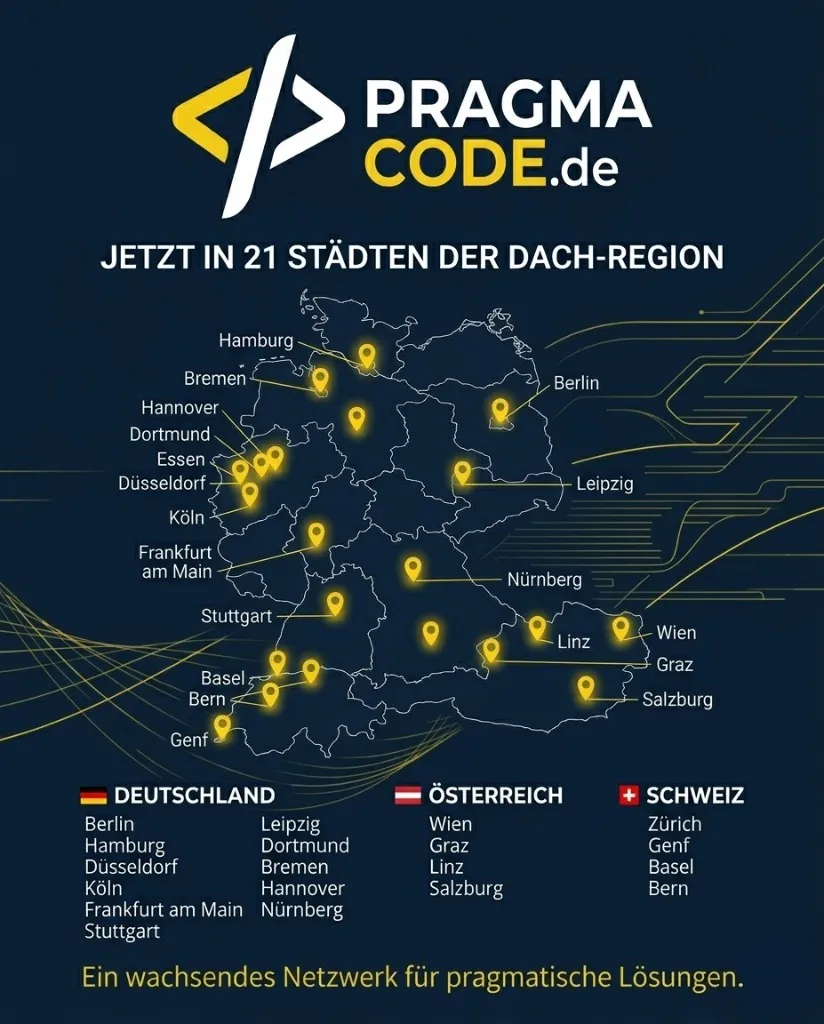
We are your digital partner – regionally anchored and successfully scaling across borders.
Have a vision?
Let's check together how we can make your idea take flight.
Book your free strategy call nowExtended Specialized Glossary
Agentforce
Salesforce's autonomous AI platform that enables businesses to build and manage self-active AI agents for customer service, sales, and marketing.
Fin (Company)
The AI customer service platform (formerly Intercom) acquired by Salesforce in June 2026 for approximately $3.6 billion. Fin specializes in autonomous AI agents for B2B applications.
Apex (AI Model)
The specialized foundation model developed by Fin (formerly Intercom) for B2B customer service and support automation, characterized by an exceptionally low hallucination rate and high autonomous resolution rates.
Multi-Agent System (MAS)
An ecosystem of multiple specialized AI agents that interact and cooperate with each other to achieve a common, highly complex goal. Each agent has a specific 'role' and specific tools at its disposal.