

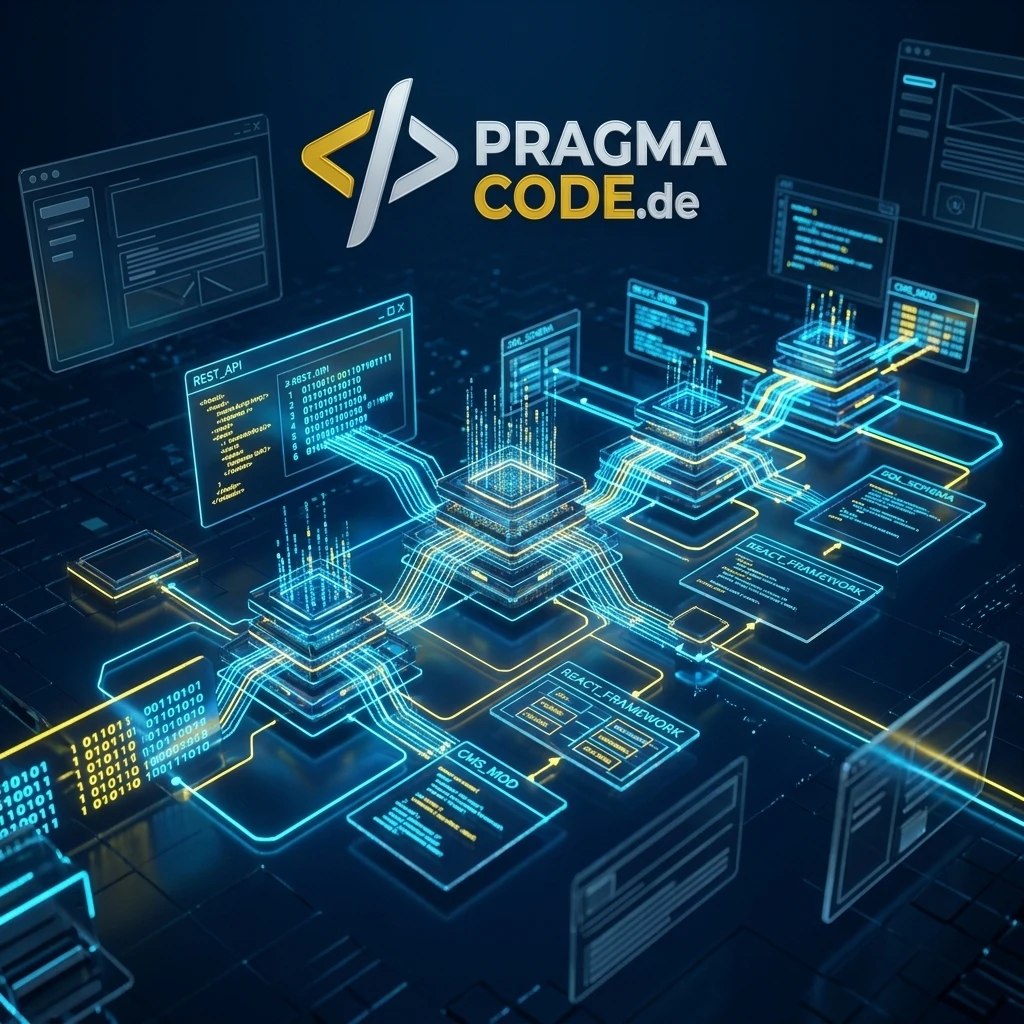
From basic autocomplete snippets to autonomous UI architects: How specialized AI models like Kimi K3 and agentic workflows redefine frontend development in 2026, granting companies unprecedented speed advantages.
This article is an in-depth expert contribution from our content cluster. Discover the complete overview on our main page:Web Development & Headless Frontend Solutions →
- Paradigm Shift in Frontend: Artificial intelligence evolves from line-by-line autocomplete into autonomous Agentic Coding architects that structure complex UI state, type safety, and accessibility independently.
- 2026 Benchmark Breakthroughs: Specialized frontier models like Kimi K3 outperform general LLMs in the Frontend Code Arena, reducing design-to-code turnaround times by up to 70%.
- Human-AI Synergy for Businesses: Developers elevate into system architects and quality assurance leads. Automated syntactic verification reduces technical debt while slashing time-to-market.
The Era of Synthetic UI Architecture
While 2024 centered around whether AI-generated code was maintainable, leading development teams in 2026 rely on specialized frontend models. Teams still manually writing UI components line by line risk falling behind the pace of digital transformation.
- 1. Introduction: Quantum Leap in Frontend Architecture
- 2. From Copilot to Architect: Evolution of Dev Tools
- 3. Benchmark Breakthroughs: Why Kimi K3 Dominates the Arena
- 4. The Automated Design-to-Code Pipeline in Detail
- 5. Manual Coding vs. AI Agentic Frontend Architecture
- 6. Strategic B2B Benefits for European SMEs
- 7. Syntactic Verification & Quality Assurance
- 8. Step-by-Step Implementation Roadmap
- 9. Conclusion & Outlook: The Agile Frontend Future
1. Introduction: Quantum Leap in Frontend Architecture
Modern web development has undergone a breathtaking transformation over recent years. Just a few years ago, building a complex web application meant developers spent weeks constructing HTML structures, manually coordinating CSS grid layouts, and wiring up intricate state management logic in JavaScript or TypeScript. Modern frameworks like React, Vue, and Next.js introduced modular component architectures, yet simultaneously increased the demand for specialized technical knowledge.
In 2026, we are witnessing the birth of a brand-new category: AI Models as Frontend Code Architects. It is no longer just about inline code completion. Instead, autonomous systems understand, architect, and refactor complete user interfaces end-to-end. By combining vision models, deep comprehension of component hierarchies, and Agentic Coding, web applications are built in a fraction of previous development cycles.
Expert Insight for Tech Decision Makers
AI does not replace frontend developers—it fundamentally elevates their role. Focus shifts away from syntax busywork toward system architecture, UX orchestration, and strategic API design.
Especially for small and medium-sized enterprises (SMEs) facing persistent developer shortages and accelerating time-to-market demands, this paradigm shift unlocks competitive advantages. Companies capable of deploying digital products, customer portals, or e-commerce storefronts in half the time gain market dominance.
2. From Copilot to Architect: Evolution of Dev Tools
To understand our position in 2026, it is worth analyzing the development milestones of the past five years. Developer assistance through artificial intelligence evolved across three distinct phases:
Tools like GitHub Copilot v1 suggested single code lines or basic functions based on local file context. Error rates for complex UI state were high because models lacked overall system awareness and design specs.
Developers uploaded screenshots of wireframes to discuss UI components with AI chatbots like Claude 3.5 Sonnet or GPT-4o. Whole files could be generated, yet required heavy manual tuning to fit project rules and design systems.
Specialized models parse full repositories, inspect Figma design tokens, verify accessibility (WCAG), and generate fully typed, modularized production code with automated test suites.
The decisive breakthrough in Phase 3 is contextual reasoning. A modern AI code architect does not merely perceive an isolated component; it analyzes the surrounding ecosystem: What props are expected by the parent container? How is global state managed? Are Core Web Vitals respected?
3. Benchmark Breakthroughs: Why Kimi K3 Dominates the Arena
A primary driver behind industry interest in mid-2026 is the performance of Kimi K3. In independent developer benchmarks (such as the Frontend Code Arena), Kimi K3 emerged at the top of global coding models. But what sets specialized frontend models apart from general-purpose LLMs?
General LLMs were trained on vast text corpora. They excel at essay writing and logical reasoning puzzles. However, when pushed for visual precision, complex CSS grid layouts, reactive hydration handling, or accessibility, generic models frequently hallucinate deprecated utility classes or inefficient re-renders.
Visual Layout Understanding (Pixel-Perfect Alignment)
Kimi K3 does not merely translate UI mockups into basic HTML; it calculates exact Flexbox and CSS Grid relationships while respecting breakpoints and dark mode variables.
Precise State Management & Re-Render Prevention
The model possesses deep framework internals. In React or Next.js environments, it leverages the React Compiler or signal primitives to prevent unnecessary re-renders.
Native Accessibility (WCAG 2.2 Compliance)
Code is generated with valid ARIA attributes, keyboard navigation handlers, and contrast ratios from day one—a strict requirement under the European Accessibility Act (EAA).
Benchmarks reveal that Kimi K3 delivers production-ready code on the first attempt in over 88% of test cases, passing build checks cleanly. This reduces the prompt-to-product feedback loop from hours to mere minutes.
4. The Automated Design-to-Code Pipeline in Detail
What does a modern 2026 frontend workflow look like in practice? The days of UI designers preparing static handoff specs for developers to manually recreate pixel-by-pixel in CSS are gone. Today's pipeline connects design systems directly to the codebase.
Figma Token Ingestion
The AI model connects via the Figma API to inspect design files, reading color tokens, typography scales, and spacing variables as structured JSON.
Component Decomposition
The AI decomposes complex screens into reusable atomic components (buttons, input fields, cards) while cross-referencing existing repository components.
Code Generation & State Wiring
Generation of clean TypeScript code including typed props, event handlers, and API integrations (REST, GraphQL, or Serverless SQL).
Syntactic Verification & Test Execution
An Agentic Coding runner compiles the code, mocks API dependencies, and runs Playwright E2E visual regression tests automatically.
This 4-step pipeline slashes the cycle time from design concept to staging deployment. Developers focus their expertise on business logic, security validations, and performance optimization.
5. Manual Coding vs. AI Agentic Frontend Architecture
To quantify the economic impact for businesses, compare traditional manual frontend engineering against modern agentic architecture:
Comparison: Traditional Engineering vs. AI Agentic Frontend Architecture
- Velocity: Slow – Manual implementation of all layout structures and styles.
- Design Fidelity: Variable – Subject to manual interpretation of design handoff specs.
- Accessibility: Often patched retroactively (high remediation cost).
- Refactoring: High effort – Framework upgrades require tedious manual changes.
- Maintainability: Inconsistent code quality across diverse developer coding styles.
- Velocity: Ultra-fast – Up to 70% time reduction through automated code synthesis.
- Design Fidelity: Exact – Direct parsing of Figma design tokens into CSS variables.
- Accessibility: Native compliance via automated ARIA injection and WCAG verification.
- Refactoring: Automated – AI agents refactor components to new versions seamlessly.
- Maintainability: Uniform clean code adhering to strict linting and type-safety rules.
6. Strategic B2B Benefits for European SMEs
Why is this development critical for mid-sized enterprises across Europe? While major tech corporations build custom in-house AI tools, SMEs previously faced the challenge of spreading limited developer resources across too many initiatives.
Drastic Time-to-Market Acceleration
New features, landing pages, or customer portals deploy in days rather than months.
-70% Dev TimeDramatically increases business agility in fast-changing market conditions.
Developer Empowerment
Frees engineering teams from repetitive UI boilerplate to focus on core architecture.
Higher OutputBoosts team morale while maximizing long-term code value.
Furthermore, scalability is enhanced. When executing a rebrand or design refresh, AI models like Kimi K3 can adapt hundreds of UI components across entire design systems in a single automated pass.
7. Syntactic Verification & Quality Assurance
A common concern among engineering leads involves quality: "Does AI generate messy code that leads to technical debt?"
While early AI assistants suffered from sloppy outputs, 2026 workflows address this through syntactic verification. Before AI-generated pull requests merge into main branches, code must pass a rigorous verification pipeline:
Strict TypeScript Verification
Zero `any` types permitted. All props, internal states, and API contracts undergo strict compiler checks.
Automated Performance Linting
Enforces optimal image formats, minimal JavaScript bundle footprints, and prevents re-render loops via the React Compiler.
Visual Regression Testing
Playwright compares rendered component screenshots against Figma specs at the pixel level.
8. Step-by-Step Implementation Roadmap
Ready to introduce AI-driven frontend workflows into your organization? Follow this implementation roadmap:
-
Step 1: Audit & Design System Standardization
Consolidate your UI components inside a unified Figma design system, establishing tokens for colors, typography, and spacing scales.
-
Step 2: Tooling & Model Routing Setup
Integrate specialized models such as Kimi K3 or Anthropic Claude into developer IDEs (Cursor, Antigravity IDE) or Agentic Coding CLI pipelines.
-
Step 3: Verification Pipeline Configuration
Set up GitHub Actions with strict linting, TypeScript compilation, accessibility checks, and visual regression tests.
-
Step 4: Developer Training & Empowerment
Train engineers in architectural prompt formulation, code review of AI PRs, and high-level system design.
9. Conclusion & Outlook: The Agile Frontend Future
The rise of AI models as code architects marks a new chapter in web engineering. The era of manual HTML, CSS, and JavaScript assembly is behind us. In 2026, AI enables a seamless synergy between visual creativity, technical precision, and execution speed.
Organizations embracing this transition and gearing development teams with specialized models like Kimi K3 gain sustainable efficiency advantages. At Pragma-Code, we help businesses combine cutting-edge web technologies (Astro, Next.js, Headless architectures) with tailored AI development pipelines.
Quick Check: Modernizing Your Frontend Architecture
Ready to accelerate your frontend development with AI?
Schedule Free ConsultationOur Regional Expertise
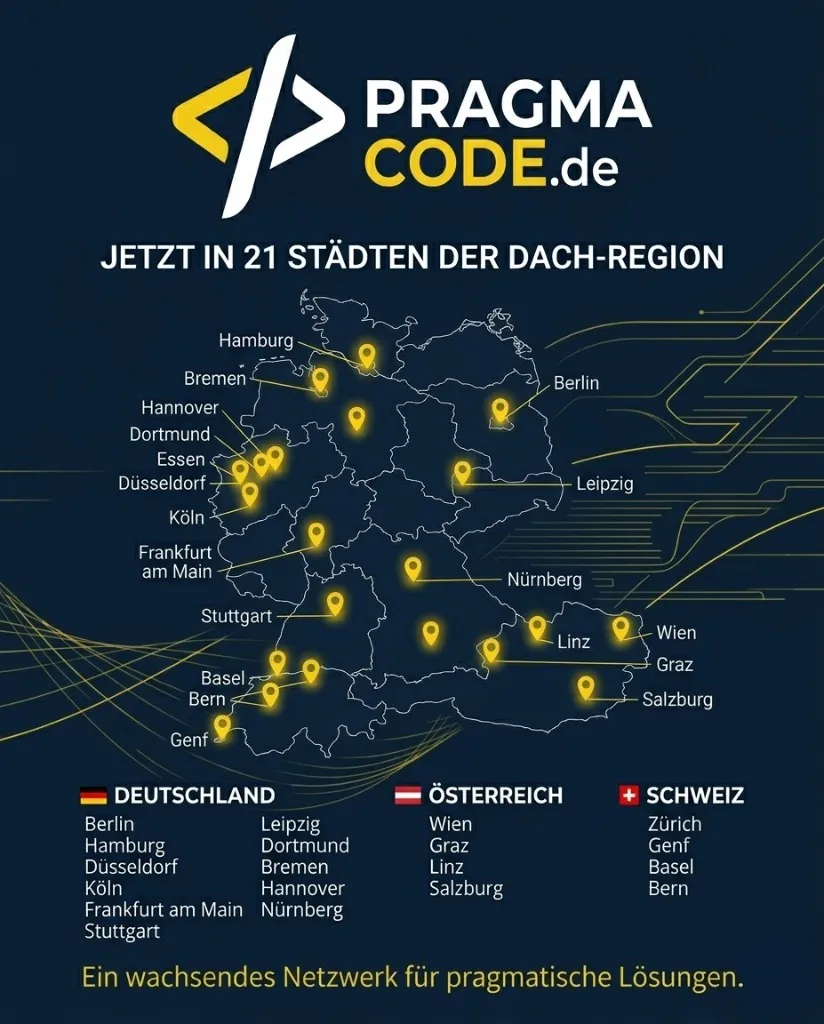
We are your digital partner – regionally anchored and successfully scaling across borders.
Have a vision?
Let's check together how we can make your idea take flight.
Book your free strategy call nowExtended Specialized Glossary
Kimi K3
Next-generation specialized AI model achieving top benchmarks in frontend code generation and complex UI state modeling.
Agentic Coding
Development paradigm where autonomous AI agents perform multi-step programming tasks, code refactoring, and testing independently within the developer workflow.
Design-to-Code
Automated generation of production-ready, accessible framework code (e.g. React, Astro, Next.js) directly from Figma or UI design specs.
Syntactic Verification
Automated verification of AI-generated frontend code for type safety, accessibility standards (WCAG), and framework conventions prior to code merging.