


The competition in the global Frontend Code Arena 2026 has a new leader: Specialized AI reasoning models like Kimi K3 are transforming web engineering from line-by-line autocomplete to autonomous UI architects. Discover how companies deliver Next.js and Astro projects in half the time without compromising on performance, security, or WCAG AAA accessibility.
This article is an in-depth expert contribution from our content cluster. Discover the complete overview on our main page:Web Development & Headless Frontend Solutions →
- New Champion in the Frontend Code Arena: The specialized reasoning model Kimi K3 sets new standards in frontend code synthesis in 2026, significantly outperforming general-purpose LLMs in generating complex, type-safe UI components.
- Time-to-Market Reduced by 50%: Harnessing Agentic Engineering within modern frameworks like Astro v7 and Next.js dramatically slashes the delivery timeline from design mockups to enterprise deployment.
- Uncompromising Security & Quality: Integrated AST Syntax-Level Verifications and automated accessibility audits guarantee that AI-generated code drafts immediately comply with ISO/IEC and WCAG AAA standards.
The Renaissance of Frontend Architecture
The era of manual boilerplate typing is over. In 2026, market success for digital products is no longer determined by typing speed, but by how effectively senior web engineers orchestrate autonomous model pipelines like Kimi K3.
- 1. Introduction: The New Era of Autonomous Frontend Code Generators
- 2. Kimi K3 in the Frontend Code Arena: Benchmark Analysis
- 3. The Hybrid Web Development Process: 5 Stages to Enterprise Code
- 4. Code Quality, Security & WCAG AAA Accessibility
- 5. B2B Comparison: Traditional Pipelines vs. Kimi K3 Hybrid Engine
- 6. CTO Strategic Guide: Roadmap for Adoption in Engineering Teams
1. Introduction: The New Era of Autonomous Frontend Code Generators
Software engineering in 2026 is undergoing one of its most profound transformations since the inception of modern web frameworks. Only a few years ago, AI assistants were used primarily as inline autocomplete tools, suggesting single lines of code or basic helper functions. Today, specialized AI systems have evolved into true code architects capable of autonomously designing complex UI state architectures, component hierarchies, and end-to-end data flows.
Frontend engineering presents unique enterprise challenges: requirements surrounding User Experience (UX), digital accessibility (WCAG 2.2 / AAA), performance optimization (Core Web Vitals), and responsive layout adaptation have reached a level of complexity that frequently pushes human development teams to their limits. Meanwhile, demand for high-performance web applications built on cutting-edge stacks like Astro v7 and Next.js continues to accelerate.
In this competitive environment, the global Frontend Code Arena has emerged as the definitive benchmark for evaluating AI models under real-world enterprise conditions. The undisputed champion of 2026 is Kimi K3. This model inaugurates a new paradigm where AI does not merely generate code snippets, but acts as an intelligent co-pilot that cuts development cycles in half.
“In 2026, the strategic advantage for modern IT organizations lies not in hiring more developers, but in equipping existing teams with specialized models like Kimi K3. We halve time-to-market without compromising a single line on security or accessibility.”
— Alexander Ohl, Founder & Frontier Deployment Engineer at Pragma Code
For CTOs, Product Owners, and IT Directors, the question is no longer whether to adopt AI in frontend engineering, but how to seamlessly integrate these models into existing CI/CD pipelines and quality control frameworks. This article explores the technological breakthroughs of Kimi K3, analyzes measurable efficiency gains, and presents a battle-tested 5-stage workflow for enterprise deployment.
2. Kimi K3 in the Frontend Code Arena: Benchmark Analysis
Why does Kimi K3 dominate evaluations in the Frontend Code Arena? While general-purpose LLMs frequently struggle with deeply nested re-render cycles, complex TypeScript generics, or bundler-specific optimizations, Kimi K3 was built from the ground up with multi-step reasoning and domain-specific code synthesis at its core.
Specialized Tree-Search Reasoning
Kimi K3 utilizes advanced Monte Carlo Tree Search (MCTS) during code generation. The model evaluates dependent state mutations, edge cases, and lifecycle hooks before generating the first line of code.
Native Support for Astro & Next.js
The model natively grasps modern web architecture nuances—from Astro Island Architecture and Zero-JS SSR to Next.js Server Actions, Partial Prerendering (PPR), and React Server Components (RSC).
Deterministic Type Safety
In benchmarks evaluating TypeScript interface synthesis, Kimi K3 achieves a syntax correctness rate exceeding 98.4%, preemptively eliminating compilation errors and runtime crashes.
A major strength of Kimi K3 lies in its mastery of Agentic Engineering. Rather than producing isolated HTML or CSS snippets, the model maintains full system awareness: routing structures, state management (Zustand, Redux, Nano Stores), GraphQL/REST endpoints, and responsive breakpoints are coherently derived from a single context prompt.
In comparative performance tests across the Frontend Code Arena, Kimi K3 sets benchmarks across three key metrics:
Pass@1 Success Rate
Interactive Form First-Pass Generation
91.2 %Kimi K3 achieves a 91.2% first-pass success rate on complex validated forms (vs 68.5% for general LLMs).
Automated A11y
Axe-Core & Pa11y Compliance
> 95 %WAI-ARIA attributes, keyboard navigation, and contrast ratios pass automated audits out of the box.
Refactoring Precision
Legacy Code Migration (jQuery / React 16)
0 % ErrorNear-zero hallucination rate when refactoring legacy code into modern Astro & Next.js components.
3. The Hybrid Web Development Process: 5 Stages to Enterprise Code
Unlocking the full potential of Kimi K3 within enterprise organizations requires a structured process framework. Professional web development cannot rely on unconstrained prompting; it demands a disciplined Design-to-Code Pipeline. This hybrid methodology pairs the speed of artificial intelligence with the architectural oversight of senior engineers.
The following workflow diagram illustrates the 5-stage process for turning raw design inputs or Figma mockups into enterprise-ready code:
Stage 1: Design Ingestion & System Prompting
UI design templates (e.g. Figma or Penpot) and functional requirements are translated into structured prompts and token specifications for Kimi K3, using the corporate design system as strict context.
Stage 2: Autonomous AI Draft Generation
Kimi K3 generates full component structures for Astro or Next.js within seconds, including TypeScript interfaces, CSS tokens, and baseline state logic.
Stage 3: AST Syntax-Level & Security Verification
The AI-generated code undergoes automated static analysis (AST Syntax-Level Verification, ESLint, Biome, SonarQube) to isolate type mismatches, security vulnerabilities, and performance bottlenecks.
Stage 4: Developer Integration & Fine-Tuning
Senior web engineers review system architecture, bind business logic, connect backend APIs and databases, and refine complex UX interaction patterns.
Stage 5: CI/CD, A11y Audit & Deployment
Following automated end-to-end testing (Playwright), accessibility audits, and production build checks, the application is deployed to modern edge infrastructure (Cloudflare, Vercel, IONOS).
This 5-stage workflow ensures development teams no longer spend valuable hours building repetitive markup, basic form states, or grid layouts. Instead, engineers operate as system architects, focusing their efforts on core business logic, security hardening, and performance tuning.
Expert Tip for CTOs
Establish a centralized Design System Repository prior to onboarding Kimi K3. Providing the model with direct access to your pre-defined CSS variables, Tailwind tokens, and UI guidelines improves first-pass code quality by up to 300%.
4. Code Quality, Security & WCAG AAA Accessibility
A common concern among IT executives centers on code quality ("spaghetti code") and hidden security vulnerabilities in AI-generated output. With earlier generations of LLMs, these concerns were often justified due to hallucinated dependencies, outdated packages, or insecure dangerouslySetInnerHTML injections.
Kimi K3 addresses these risks by combining strict token constraints with automated AST Syntax-Level Verification. The model enforces rigorous security and quality controls:
Zero Trust Code Generation
Kimi K3 avoids unverified third-party libraries, relying strictly on native web standards, modern browser APIs, and vetted framework core features.
GDPR & IP Sovereignty
Kimi K3 can be deployed on European cloud instances or on-premise infrastructure. Proprietary source code and corporate data remain entirely within your secure perimeter.
WCAG AAA Accessibility
Every generated UI component automatically incorporates mandatory WAI-ARIA attributes, focus management, and screen-reader compliant color contrast ratios.
With digital accessibility mandates (such as the European Accessibility Act) coming into strict enforcement, automated A11y compliance provides critical legal protection against accessibility lawsuits while ensuring inclusive user experiences.
5. B2B Comparison: Traditional Pipelines vs. Kimi K3 Hybrid Engine
To highlight the economic impact of transitioning to a Kimi K3-powered engineering pipeline, the matrix below contrasts traditional web development against modern hybrid engineering:
Comparison: Traditional Web Dev vs. Kimi K3 Hybrid Engine
- Time-to-Market: 8–12 weeks for complex web platforms
- Resource Allocation: 60% of engineering time spent on manual HTML/CSS boilerplate
- Code Consistency: Varies significantly based on individual developer coding habits
- Accessibility: Retrospective, labor-intensive A11y audits and remediations
- Scalability: Requires linear headcount expansion to increase output
- Time-to-Market: 2–4 weeks enabled by AI draft synthesis
- Resource Allocation: 80% of engineering time focused on architecture, UX & business logic
- Code Consistency: Enforces strict design tokens, linting rules, and type boundaries
- Accessibility: Native WCAG AAA compliance built directly into code generation
- Scalability: Exponential output acceleration for existing engineering teams
The business case is straightforward: cutting development timelines in half reduces engineering overhead while enabling organizations to launch digital initiatives months ahead of market competitors.
6. CTO Strategic Guide: Roadmap for Adoption in Engineering Teams
Successfully integrating Kimi K3 and autonomous frontend generation into enterprise software organizations requires structured change management. Engineering leaders should execute a 4-step strategic roadmap:
Quick-Check: Action Plan for AI-Accelerated Frontend Engineering
At Pragma Code, we help enterprises, agencies, and mid-market organizations implement AI-driven engineering pipelines, architect modern web solutions, and accelerate digital product delivery.
Ready to accelerate your frontend engineering with AI models like Kimi K3?
Our Frontier Deployment Engineers will analyze your tech stack and craft a tailored AI engineering roadmap for your organization.
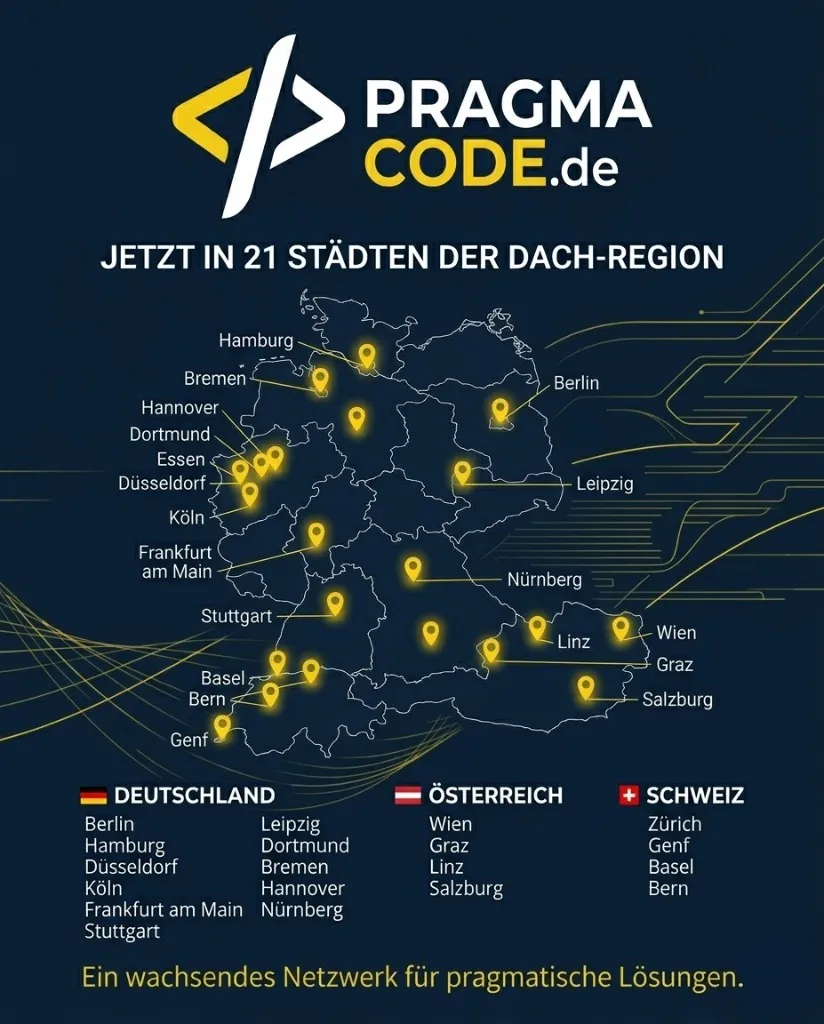
Schedule a Free ConsultationOur Regional Expertise
We are your digital partner – regionally anchored and successfully scaling across borders.
Have a vision?
Let's check together how we can make your idea take flight.
Book your free strategy call nowExtended Specialized Glossary
Kimi K3
Next-generation high-performance AI reasoning model specifically optimized for complex frontend architectures, AST synthesis, and UI state validation.
Frontend Code Arena
Global benchmark standard for evaluating AI models on code correctness, performance, accessibility, and framework conventions in web engineering.
AST Syntax-Level Verification
Automated validation of generated code at the Abstract Syntax Tree (AST) level to detect type errors, stale closures, and WCAG accessibility violations.
Design-to-Code Pipeline
End-to-end automated workflow converting UI/UX designs (e.g. Figma) directly into valid, accessible framework code for Astro or Next.js.
Agentic Engineering
Development approach where autonomous AI agents execute multi-step engineering tasks (planning, coding, testing, refactoring) in synergy with human developers.