

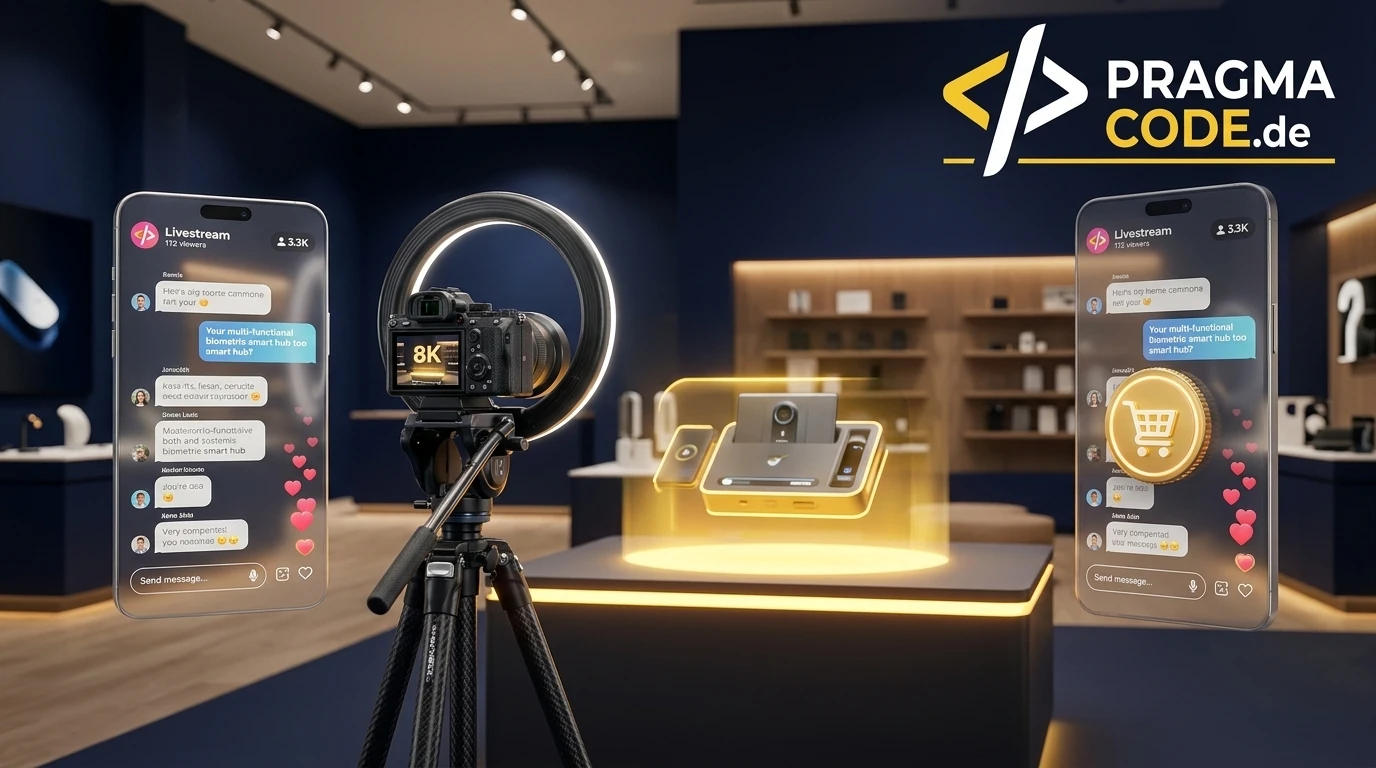
Static product detail pages (PDPs) suffer from chronic conversion friction: sterile specification sheets and isolated studio photographs provide technical descriptions, yet they fail to trigger emotional conviction or resolve real-life usage doubts. Groundbreaking insights from China's mature e-commerce ecosystem prove why interactive live commerce is the superior retail paradigm: conversion rates soaring between 9% and 30%, accompanied by a 40% collapse in return rates, are redefining digital commerce. In this strategic deep dive, we decode the five foundational drivers of live commerce, examine the operational 'Store as a Studio' model, and outline a robust headless architecture roadmap for European retailers.
This article is an in-depth expert contribution from our content cluster. Discover the complete overview on our main page: E-Commerce Solutions →
From Static Specification Sheets to Interactive Live Stages
While traditional online stores grapple with diminishing user attention spans, escalating customer acquisition costs (CAC), and suffocating return logistics, global pioneers in Asia showcase the undeniable power of live commerce: dynamic video formats turn passive viewers into active buyers—delivering 9% to 30% conversion rates and reducing product returns by 40%.
- The Demise of Passive Reading: Traditional product detail pages (PDPs) burden shoppers with tedious manual research across text-heavy specification tables and sanitized gallery photos. Live commerce demonstrates real-world product utility within seconds (demo over data sheet).
- Friction Removal via Real-Time Dialog: Interactive live chats dismantle purchase hesitations (fit, texture, ingredients, durability) instantaneously during the broadcast, elevating conversion rates from typical 2–3% baselines to between 9% and 30%.
- Radical Return Rate Reduction (-40%): Transparent, unedited product demonstrations and authentic human reactions calibrate buyer expectations realistically, curbing accidental mispurchases before packages ever ship.
- Hybrid Real Estate Monetization ("Store as a Studio"): Physical retail flagships are transformed into broadcast hubs outside normal trading hours, maximizing commercial space return on investment.
- 1. The Crisis of the Traditional Product Detail Page (PDP)
- 2. The 5 Drivers of Live Commerce: Anatomy of a Sales Phenomenon
- 3. China as the Global Pioneer: How Douyin and Taobao Reshaped Commerce
- 4. Systematic Comparison: Static PDP vs. Interactive Live Commerce
- 5. Modern Live Commerce Technology Stack for European Retailers
- 6. Step-by-Step Implementation Roadmap for Enterprise & Mid-Market
- 7. The 3 Costliest Traps in Live Commerce Deployments
- 8. Strategic Conclusion & Executive Readiness Checklist
1. The Crisis of the Traditional Product Detail Page (PDP)
Since the advent of commercial web shopping in the mid-1990s, digital retail has adhered to an essentially unchanged design blueprint: a vendor photographs merchandise in a sterile studio against a white backdrop, extracts technical dimensions and part numbers from an ERP database, drafts promotional copy, and assembles these elements onto a static product detail page (PDP). The shopper navigates via category trees or search bars, skims tabs, compares tables, and attempts to evaluate in isolation whether the brand's promises hold water.
In 2026, this paradigm has reached a dead end economically and cognitively. The modern digital consumer experiences acute information exhaustion. At the same time, trust in static e-commerce storefronts has deteriorated substantially. Hyper-polished hero images are routinely suspected of synthetic manipulation, purchased star ratings populate major marketplaces, and sanitized bullet lists routinely fail to answer the shopper's most critical practical questions: How does this fabric genuinely feel on skin? How loud is this vacuum motor under load? Does this garment drape naturally on someone with my body type? How does this cosmetic formula interact with sensitive complexions?
The Cognitive Friction of Static Pages
On a static PDP, the consumer must perform substantial mental labor: translating abstract numbers (e.g., "72 dB operating volume, 1200W motor, brushed stainless steel") into an experiential reality. When this cognitive translation fails, uncertainty emerges. In e-commerce, uncertainty triggers two immediate responses: shopping cart abandonment or defensive multi-size ordering with pre-planned product returns.
The operational metrics across European online retail reflect this structural stagnation: average conversion rates hover stubbornly between 2% and 3% across sectors. Conversely, apparel, consumer electronics, and home goods merchants confront return rates reaching 30% to over 50%. Every returned package erodes gross margin through reverse logistics, inspection overhead, re-packaging, and rapid inventory depreciation. An operational channel where 97 out of 100 visitors leave without buying, and nearly every second purchaser returns their goods, is structurally flawed. This is precisely where Live Commerce rewrites the rules.
2. The 5 Drivers of Live Commerce: Anatomy of a Sales Phenomenon
Live commerce is by no means a simple digital replica of traditional 1980s television shopping channels. While legacy TV shopping relied on scripted one-way monologues and manufactured artificial scarcity, modern live shopping thrives on bidirectional real-time discourse, radical transparency, and community co-creation. Unpacking high-converting live streams reveals five foundational drivers that explain why interactive video converts while static copy merely describes.
1. Demo Over Data Sheet
Products are proven live in unedited action. Real utility, operation, and results become instantly intelligible within seconds—eliminating the need to decipher complex spec sheets.
2. Real-Time Q&A
Interactive live chats dismantle buyer hesitation on the spot. The host answers sizing, fit, and compatibility inquiries instantaneously, propelling conversion rates from 2–3% to 9% to 30%.
3. Trust Through Humans
Authentic handling, visible texture, and unscripted human reactions generate undeniable credibility. Accurate expectation management reduces costly returns by up to 40%.
4. Entertainment Drives Reach
Charismatic moderation, audience community spirit, and creator collaborations (Shoppertainment) captivate massive organic traffic across social media and on-site storefronts simultaneously.
5. Frictionless In-Stream Checkout
With In-Stream Checkout, a single tap moves items directly from the video into the cart. Spontaneous emotional impulse is instantly converted into settled revenue without leaving the broadcast.
Driver 1: Demo Over Data Sheet – Visual Proof Trumps Abstract Text
The human brain decodes visual information and kinetic movement up to 60,000 times faster than written prose. When a live host demonstrates how a wet-dry vacuum cleans up thick coffee grounds and spilled oil in a single effortless pass over porcelain tile, viewers do not require watt ratings or air-watt diagrams. They see the tangible outcome, hear the motor rhythm, and understand the ergonomic handle balance instinctively. Live demonstrations unburden the buyer's cognitive capacity, creating immediate sensory evidence.
Driver 2: Real-Time Q&A – Quashing Objections at the Point of Genesis
In standard e-commerce, the majority of prospective buyers abandon purchase journeys whenever an unanswered question lingers: "Does this smartphone case support wireless MagSafe charging?", "Can the wool blend be machine-washed on a cold cycle?", "Does size M run slim or oversized across the shoulders?". Relying on customer support tickets or buried FAQ accordions breaks the emotional buying momentum. In live commerce, the shopper types their doubt into the chat stream. The host reads the query aloud, holds the item directly into a macro zoom lens, flips it over, tries it on, or executes the demonstration live. This immediate feedback loop resolves hesitation the moment it forms. Empirical findings by McKinsey & Company indicate that interactive live streams consistently lift conversion rates to between 9% and 30%—nearly tenfold higher than traditional web shops.
Driver 3: Trust Through Humans – The Collapse of Return Rates
One of the heaviest drains on digital retail margins is the gap between digital expectation and physical delivery. Over-lit photo studios, post-production color grading, and hyper-posed professional models foster inevitable disappointment during at-home unboxing. During a live stream, shoppers inspect merchandise under ambient lighting, in natural motion, from varied angles, and modeled by diverse human bodies. Expectations become realistically anchored. This is not anecdotal luck; it is measurable operational efficiency: live commerce drives up to 40% fewer returns because consumers receive precisely what they observed and understood prior to checkout.
Driver 4: Entertainment Generates Organic Reach (Shoppertainment)
Traditional web stores are functional digital catalogs. Very few consumers voluntarily spend a leisure evening clicking through static hardware store categories or apparel matrices without an urgent, pre-existing need. Live commerce, by contrast, transforms shopping into cultural entertainment (Shoppertainment). Engaging hosts, limited product drops, surprise giveaways, and lively audience banter cultivate genuine event dynamics. Audiences tune in to be entertained, inspired, and engaged—and purchase organically along the way.
Driver 5: Frictionless In-Stream Checkout (Zero Disruption)
Every additional click, page reload, or redirect throughout a digital checkout funnel induces measurable drop-offs. If a consumer discovers a recommended product inside a video, has to open a separate browser tab, navigate to the shop, search for the SKU, select sizing, and endure an arduous form-filling funnel, momentum evaporates. Professional live commerce integrates checkout directly into the video canvas (In-Stream Checkout): clicking the overlay drawer brings up variant selectors and Apple Pay, Google Pay, or 1-Click payment without interrupting stream audio or video playback. The social connection remains unbroken.
3. China as the Global Pioneer: How Douyin and Taobao Reshaped Commerce
To anticipate the trajectory of Western digital commerce over the coming years, industry leaders must observe China's retail ecosystem. What Western brands often treat as an exploratory pilot project has evolved in China into the primary engine of modern commercial transactions. Platforms such as Taobao Live (Alibaba), Douyin (ByteDance's Chinese counterpart to TikTok), Kuaishou, and WeChat Video Channels have structurally absorbed traditional catalog e-commerce.
Market Scale of Live Commerce in China
Reports published by McKinsey & Company and retail intelligence firm iResearch indicate that live commerce accounts for more than 20% of all national e-commerce transactions in China—surpassing 500 billion USD in annual gross merchandise volume (GMV). By comparison, Western adoption currently remains below 3% to 5%, yet is accelerating at a rapid compound annual growth rate.
Two strategic operational models from Chinese practice hold profound implications for European merchants and brand manufacturers:
Operational Model 1: "Store as a Studio" (Hybrid Omnichannel Retail)
A transformative trend across commercial centers like Shanghai, Shenzhen, and Hangzhou is the reimagination of physical retail storefronts. Rather than treating prime commercial real estate solely as pedestrian walk-in inventory depots, global brands such as Adidas, Nike, and Uniqlo convert flagship stores into persistent broadcasting stages (Store as a Studio).
During evening hours after storefront closing—or within designated acoustic zones during regular trading—in-store retail associates operate mobile streaming stations outfitted with ring lights, wireless lavalier microphones, and 4K cameras directly on the retail floor. The commercial advantages are evident:
Authentic Store Backdrop
No artificial greenscreens or clinical TV sets: authentic retail architecture, fully stocked wall displays, and tactile merchandising exude grounded brand credibility.
Sales Associates as Brand Ambassadors
Experienced floor personnel possess intimate product knowledge and understand customer hesitations from years of personal consulting. They communicate with higher authority than external actors.
Direct Access to Physical Inventory
If an online viewer requests a specific color variation or styling pairing, the host reaches directly to adjacent display racks, presenting the combination within seconds.
Operational Model 2: Rigorous Endurance Testing in Live Streams
In China, live streaming is far from limited to fashion or beauty items. A massive share of stream volume is driven by heavy-duty appliances, power tools, kitchen robotics, and automotive maintenance. Brands prove product durability via demanding unedited stress tests: floor cleaners tackle stains of dried soy sauce and mud; blenders crush solid timber; weatherproof outerwear is subjected to commercial pressure washers. This raw, unedited validation creates consumer conviction that polished marketing copy can never replicate.
4. Systematic Comparison: Static PDP vs. Interactive Live Commerce
To illustrate the fundamental divergence between traditional e-commerce architectures and interactive live streaming, we compare the key operational dimensions:
Systematic Comparison: Static PDP vs. Interactive Live Commerce
- Shopper Role: Passive reader; compelled to manually search, cross-reference, and interpret specification data.
- Product Display: Sanitized photographs, 360-degree digital renders, and isolated spec tables without kinetic proof.
- Objection Handling: Asynchronous via ticketing, generic chatbots, or email—frequently resulting in cart abandonment.
- Conversion Rate: Industry baseline averaging between 2% and 3% across Europe.
- Return Rate: High (routinely 30% to over 50%), driven by fit, tactile, and color discrepancies.
- Buyer Motivation: Purely functional, utilitarian price-comparison through search engines.
- Shopper Role: Active participant; asks questions in live chat, votes in polls, and interacts with peers.
- Product Display: Kinetic live demonstrations in realistic usage environments; unedited proof-of-performance.
- Objection Handling: Instantaneous verbal and physical host demonstration within seconds before thousands of viewers.
- Conversion Rate: Extraordinary 9% to 30% driven by social validation, scarcity, and trust.
- Return Rate: Significantly curtailed (an average 40% reduction in returns according to McKinsey).
- Buyer Motivation: Emotional impulse buying, discovery, and shared participation in an exclusive brand experience.
5. Modern Live Commerce Technology Stack for European Retailers
Successful live commerce implementation in European retail rarely fails due to a lack of ambition; it falters because of outdated monolithic e-commerce platforms. Retailers attempting to force heavy video streaming onto legacy CMS plugins or restricting their streaming efforts solely to third-party social apps forfeit their greatest strategic asset: direct customer ownership (first-party data) and full cart control.
The Limitations of Pure Social Media Streaming
While social networks like Instagram and TikTok offer substantial audience pools, enterprise retailers face acute trade-offs:
Algorithmic Volatility
The platform algorithm dictates notification distribution. Merchant broadcast reach remains fundamentally volatile and unpredictable.
Loss of First-Party Customer Data
Audience viewing behavior, dwell times, and engagement metrics remain locked inside closed platform walled gardens.
Constrained Checkout Architectures
Regional payment methods (e.g., Klarna, invoice billing), B2B tier pricing, and loyalty point systems cannot be embedded into native social apps.
The Solution: On-Site Live Shopping with Headless Architecture
The architectural gold standard for ambitious retailers is hosting live shopping directly on their own web domain (On-Site Live Commerce). This approach aligns seamlessly with modern Headless Commerce architectures, as detailed in our analysis of Shopify Plus vs. Headless Next.js.
A production-ready live shopping stack comprises four integrated architectural layers:
1. Sub-Second Latency Video Pipeline (WebRTC over HLS)
Standard HTTP Live Streaming (HLS) incurs broadcast lags between 10 and 30 seconds. If an attendee poses a question in chat and the host responds 25 seconds later, the social interaction rhythm collapses. True live commerce mandates WebRTC (sub-500ms ultra-low latency) to preserve real-time synchronicity between host speech and chat messages.
2. Specialized Live Commerce Engine (API-First SaaS)
Specialized enterprise platforms such as Bambuser, Livescale, LiSA, or Spiketip provide lightweight client SDKs. They orchestrate interactive video overlays, chat sentiment moderation, interactive viewer polls, product spotlight triggers, and automated post-event archiving for on-demand shoppable video replay.
3. E-Commerce Backend & Real-Time ERP Sync
The merchant backend (e.g., Shopify Plus, Shopware 6, MedusaJS, or Commercetools) links with the streaming engine via GraphQL or REST webhooks. Real-time inventory synchronization guarantees that high-velocity flash sales do not trigger overbooking. Promotional discount vouchers are toggled dynamically with second-level precision.
4. In-Stream Drawer Cart & Express Checkout
The checkout interface renders as an unobtrusive drawer overlay atop the streaming canvas. Deep integration with payment rails (Stripe, Apple Pay, PayPal One-Click) allows consumers to complete purchases in two taps while the broadcast continues running in Picture-in-Picture (PiP) mode without interruption.
6. Step-by-Step Implementation Roadmap for Enterprise & Mid-Market
Launching a live commerce initiative does not demand seven-figure studio investments or lengthy multi-quarter planning. High-performing retail brands adopt an agile approach, running low-overhead proof-of-concepts, validating customer responsiveness, and scaling infrastructure iteratively. The following 4-phase rollout roadmap provides a tested enterprise path:
-
Phase 1: The Agile MVP Pilot (Social Channel Discovery)
Commence operations without purchasing studio setups. Identify 3 to 5 core flagship products characterized by functional complexity or distinct tactile attributes. Task two articulate retail associates or customer service specialists with hosting a 30-minute test stream on Instagram Live or TikTok. The primary objective is establishing an inventory of recurring shopper questions and evaluating camera performance dynamics.
-
Phase 2: On-Site Integration & Headless Embedding
Incorporate an API-driven live shopping software engine (e.g., Bambuser or LiSA) directly into your brand store frontend. Feature the broadcast prominently across your homepage, category hubs, or a dedicated live event landing page. Hosting the stream on-site ensures 100% of generated conversions flow directly into your proprietary checkout while capturing valuable first-party analytics on viewing dwell time and click-through rates.
-
Phase 3: Operationalizing the "Store as a Studio" Model
Transform a designated zone within your retail flagship store, showroom, or warehouse into a permanent streaming studio equipped with directional shotgun microphones, softbox lighting, and a motorized 4K camera rig. Institutionalize recurring broadcast slots in your corporate marketing cadence (e.g., every Thursday at 7:00 PM). Train internal staff hosts in consultative sales psychology and integrate live audience polls into the show format.
-
Phase 4: Automation & Shoppable Video Content Recycling
Maximize return on content spend by repurposing stream recordings systematically: edit broadcast highlights into bite-sized 15- to 30-second clips and embed them as interactive "Shoppable Video Widgets" on static product pages. In this manner, standard catalog PDPs benefit persistently from the higher conversion rate of live demonstrations—serving shoppers who missed the live event.
7. The 3 Costliest Traps in Live Commerce Deployments
Despite the immense conversion upside, some retailers falter in their initial streaming attempts. These failures almost universally trace back to outdated conceptual models or flawed technical choices. Watch for these three primary pitfalls:
Trap 1: Replicating 1990s TV Infomercial Tone
Employing loud, aggressive presenters who rely on synthetic countdowns and high-pressure sales banter alienates contemporary digital consumers immediately. Modern live commerce demands conversational authenticity, genuine product transparency, and peer-to-peer advisory tone.
Trap 2: High Broadcast Latency (HLS Delay)
Relying on standard video distribution CDNs with 15 to 30 seconds of lag paralyzes live chat engagement. Viewers expect immediate verbal acknowledgments. Answers arriving half a minute late feel disconnected and disrupt the organic conversational flow.
Trap 3: Clunky Checkout Redirects
Forcing the viewer to navigate away from the broadcast, log in through separate browser tabs, or negotiate a five-step registration form triggers up to an 80% abandonment rate. Without seamless in-stream one-click purchasing, emotional buying intent evaporates.
8. Strategic Conclusion & Executive Readiness Checklist
The era of passive, text-heavy catalog pages in digital retail is drawing to a close. What already commands one-fifth of the world's largest e-commerce market in China is set to redefine competitive dynamics across European digital retail. Brands and merchants that demonstrate products in unedited action, resolve buyer hesitations in real time, and reinstate authentic human advisory into digital purchasing secure distinct commercial advantages: triple to tenfold conversion rate lifts and substantially reduced return logistics costs.
Live commerce is not an ephemeral social media trend; it is the natural convergence of digital entertainment, community discourse, and modern e-commerce into a unified buying experience. Powered by headless store architectures and agile API solutions, this technology is accessible today to mid-market and enterprise retailers alike.
Executive Quick-Check: Is Your Store Ready for Live Commerce?
Ready to Integrate Live Commerce into Your Digital Storefront?
We architect and engineer bespoke, high-performance e-commerce platforms powered by Headless Next.js, Shopify Plus, and modern video streaming APIs—engineered for maximum conversion efficiency and minimal product return overhead.
Schedule a Free Strategy ConsultationOfficial Sources & Primary Documentation
- McKinsey & Company (July 2021 / ongoing market analysis): "It’s showtime! How live commerce is transforming the shopping experience" – Comprehensive empirical research on live conversion multipliers (9–30%), return rate reductions (-40%), and market growth trajectory.
- iResearch China / E-Commerce Industry Report: Comprehensive benchmark data on gross merchandise volume (GMV) across Douyin, Taobao Live, and Kuaishou within the Chinese retail economy.
- IFH Cologne (E-Commerce Retail Benchmark): Research analyzing product return causes, cart abandonment rates, and friction points across traditional static product detail pages in European retail.
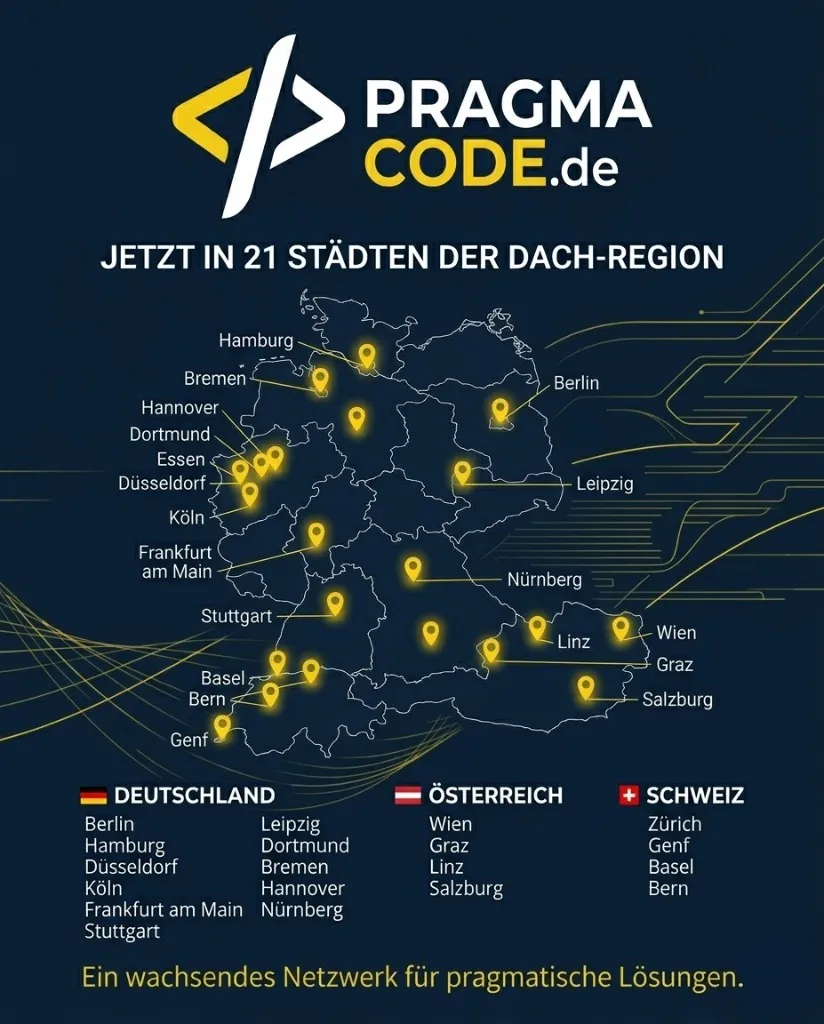
Our Regional Expertise
We are your digital partner – regionally anchored and successfully scaling across borders.
Have a vision?
Let's check together how we can make your idea take flight.
Book your free strategy call nowExtended Specialized Glossary
Live Commerce
The seamless fusion of interactive live video streaming and real-time digital checkout capabilities (also known as Live Video Shopping).
Shoppertainment
The combination of content entertainment, community engagement, and direct e-commerce, where entertaining content drives consumer purchasing intent.
Store as a Studio
A hybrid retail strategy where physical storefronts and flagship stores are utilized as live broadcasting stages to engage online audiences globally.
In-Stream Checkout
A frictionless purchasing flow allowing consumers to add items to their shopping cart and finalize payment directly inside the active video stream without navigating away.
Sub-Second Latency (WebRTC)
Streaming transmission protocol delivering video feeds with delays under 500 milliseconds, enabling true real-time synchronous Q&A between hosts and viewers.