


For years, editing Photoshop files (PSD) was a purely manual, tedious task. Designers spent hours doing repetitive clicks, swapping text layers, and manually exporting dozens of format variants. In 2026, a new era begins: Agentic AI (like AntiGravity) takes over fully automated PSD editing – completely without the need for Adobe Photoshop on local machines. In this comprehensive guide, you will learn how AI agents analyze PSD structures, manipulate contents, and generate print-ready exports, revolutionizing your design and marketing workflow.
This article is an in-depth expert contribution from our content cluster. Discover the complete overview on our main page: AI Automation & Intelligent Agents →
The Paradigm Shift: From Pixel Assembly Lines to Autonomous Asset Generation
While traditional scripts fail at the slightest layout anomaly, modern agentic architectures combine in-memory binary PSD parsing with multimodal vision models. Photoshop documents evolve from static desktop graphics into dynamic, programmable API endpoints, empowering B2B enterprises to generate personalized creative assets 24/7 in real time.
- Zero Desktop Overhead: Modern AI agents manipulate PSD files directly on server levels, utilizing headless libraries like
ag-psdand cloud APIs to completely bypass desktop application dependencies. - Intelligent Layout Balancing via LMMs: Multimodal vision models act as autonomous digital art directors. They detect text clipping, verify color contrast ratios, and dynamically adjust font sizes and image croppings in closed feedback loops.
- Enterprise Scaling: From localized franchise personalization to high-precision print exports (CMYK Color Space, 300 DPI, TIFF), repetitive manual design steps are completely eliminated.
- 1. The Manual Bottleneck in Modern Marketing and Design
- 2. Technical Foundations: Headless Architectures for PSD Files
- 3. The 4 Pillars of Agentic PSD Automation
- 4. Multimodal Visual QA: LMM Preflight & Autonomous Layout Verification
- 5. Enterprise Security, Font Licensing, and Data Privacy
- 6. Step-by-Step System Integration Roadmap
- 7. Manual Cost Traps vs. Agentic ROI in B2B Operations
- 8. Conclusion: The Era of Agentic Creative Operations
1. The Manual Bottleneck in Modern Marketing and Design
In modern B2B marketing, franchise commerce, and global digital advertising, the demand for visual content has surged exponentially. Targeted advertising campaigns, dynamic creative optimization (DCO), location-specific promotional banners for regional dealer networks, and physical print assets for points of sale require hundreds to thousands of unique graphic variants per campaign. Furthermore, each creative variation demands distinct aspect ratios: 1:1 for social feeds, 9:16 for vertical stories and video reels, 16:9 for display networks and LinkedIn, and 4:5 for mobile advertising.
Historically, satisfying this asset hunger leads directly into an operational dead end. A senior art director creates an immaculate master design in Adobe Photoshop (.psd). However, the moment the master layout receives client sign-off, creative problem-solving stops, and monotonous digital assembly-line labor takes over: production designers open the file hundreds of times sequentially, copy-paste store addresses, swap product photos inside Smart Objects, manually re-break lengthy headlines, tweak paragraph spacing, and export each file in multiple resolutions. Across a batch of 500 variants, experienced creatives lose entire workweeks to mind-numbing mouse clicks.
This manual workflow creates severe operational liabilities for businesses. First, production expenses for purely mechanical labor spiral out of control. Highly paid designers are utilized as human copy-paste machines rather than dedicating their skills to strategic branding, visual storytelling, or conversion optimization. Second, the human error rate during repetitive batch editing is extraordinarily high: incorrect pricing figures, forgotten layer visibilities, misaligned corporate logos, or truncated text in translated layouts frequently bypass quality control, causing expensive reprint cycles or brand compliance penalties.
"Creative professionals should design brand identities and design systems, not push pixels on repetitive digital assembly lines."
This critical operational gap is solved through the convergence of Agentic AI and Headless Photoshop architectures. An autonomous AI agent does not behave like a fragile legacy script that crashes at the first unexpected character count. Instead, it operates like a tireless digital production artist: it analyzes the semantic hierarchy of layers, understands the visual relationship between text containers and background imagery, and applies typography rules autonomously to preserve the aesthetic equilibrium of the master design across every single permutation.
2. Technical Foundations: Headless Architectures for PSD Files
Processing Photoshop documents programmatically at enterprise scale requires a headless server architecture. This means the binary PSD/PSB file format is parsed and manipulated directly in server memory without launching an Adobe desktop application or rendering a graphical user interface. For modern creative operations pipelines in 2026, three complementary architectural paths have emerged:
Node.js & ag-psd In-Memory Engine
The TypeScript/JavaScript engine ag-psd parses and serializes binary PSD structures entirely within RAM. Combined with server-side rasterization tools like Canvas or Sharp, image layers, vector clipping masks, and text properties can be manipulated without requiring Adobe software on Linux servers.
Adobe Photoshop API & Firefly Services v2
Adobe's official cloud microservices execute operations natively within the Adobe Creative Cloud. This architecture guarantees 100% rendering parity with desktop Photoshop, supports advanced layer styles, and connects generative AI tools such as Generative Fill for automated background expansion.
Agentic Orchestration (AntiGravity Engine)
The autonomous AI agent serves as the cognitive intelligence layer. It bridges structured enterprise data sources (SQL, ERP, PIM, CSV) with headless rendering pipelines, dynamically computes typographical constraints, and supervises visual quality verification.
Programmatic PSD manipulation using headless libraries transforms binary files into structured object trees. Layer groups, bounding coordinates, opacity levels, blend modes, and typographical attributes become fully accessible as JSON-like data models. The following TypeScript snippet illustrates how an AI agent loads a master PSD in a Node.js backend, updates dynamic text fields, swaps smart objects, and exports the rendered asset:
import * as fs from 'fs';
import { readPsd, writePsd } from 'ag-psd';

// 1. Load the binary PSD file directly into server RAM
const psdBuffer = fs.readFileSync('templates/master-franchise-ad.psd');
const psd = readPsd(psdBuffer, { skipLayerImageData: false });

// 2. Locate dynamic text layers using structured naming conventions
function updateTextLayer(children: any[], layerName: string, newText: string) {
  for (const layer of children) {
    if (layer.name === layerName && layer.text) {
      layer.text.text = newText;
      return true;
    }
    if (layer.children) {
      if (updateTextLayer(layer.children, layerName, newText)) return true;
    }
  }
  return false;
}

// 3. Inject location and pricing data dynamically
updateTextLayer(psd.children || [], '[TXT_BRANCH_NAME]', 'London West End Branch');
updateTextLayer(psd.children || [], '[TXT_PROMO_PRICE]', 'From £499 Today');

// 4. Serialize and write the modified PSD for batch rendering
const outputBuffer = writePsd(psd);
fs.writeFileSync('dist/rendered-ad-london.psd', Buffer.from(outputBuffer));
The critical distinction between basic scripting (like ExtendScript or legacy Photoshop Actions) and agentic automation is cognitive flexibility. When a product title contains 45 characters instead of the allocated 20, a traditional script blindly overflows the text box, clipping critical copy. An agentic system, conversely, evaluates the text container dimensions, calculates the overflow ratio, and programmatically decreases font size, tightens tracking, or inserts hyphenation breaks to preserve layout integrity.
Comparison: Traditional PSD Workflows vs. Agentic Automation
- High Labor Overhead: Every single creative variant demands opening, editing, and re-exporting in Photoshop.
- Script Breakage: Static automation scripts fail immediately when text lengths or image ratios diverge.
- Desktop Bound: Dependent on expensive localized workstation hardware with graphical desktop environments.
- Blind Exporting: Zero automated validation for font overflows, margin collisions, or contrast degradation.
- Batch Scalability: Seamless generation of 500+ assets in minutes directly from PIM, ERP, or CSV pipelines.
- Cognitive Typography: Dynamic recalculation of font size, leading, tracking, and padding for clean text flow.
- Cloud-Native Headless: Operates 24/7 autonomously in Docker containers and serverless microservices.
- Multimodal Inspection: Visual QA using vision-language models to guarantee brand compliance and legibility.
3. The 4 Pillars of Agentic PSD Automation
Deploying AI agents across creative production pipelines unlocks immense operational leverage across four primary enterprise domains:
1. Mass Personalization & DCO
Autonomous batch generation of thousands of audience-specific creatives from CRM or PIM systems for dynamic creative optimization.
2. Dynamic Asset Refreshing
Automated repository audits that replace outdated regulatory disclosures, customer support contact data, and corporate brand logos.
3. Automated Prepress & CMYK
Lossless color space conversion into the CMYK Color Space with verified ICC profiles, 300 DPI, and bleed margins.
4. Localization & Auto-Fit
Multilingual campaign rollouts featuring programmatic compensation for language expansion across international target markets.
In mass personalization and DCO, the agentic architecture delivers unmatched speed. Consider a national franchise enterprise with 250 store branches launching an omni-channel seasonal sale. Every location requires custom visuals for Facebook, Instagram Reels, Google Display, and local news print advertisements. Instead of repeating 250 manual edits for branch addresses, regional manager portraits, and local phone numbers, the AI agent connects directly to an enterprise database. It replaces the portrait inside the designated Smart Object, updates address overlays, aligns the vector location badge, and exports 1,000 ready-to-publish assets within 15 minutes into a cloud bucket.
With dynamic asset refreshing, organizations eliminate a pervasive operational pain point: outdated creative archives. When legal terms, WhatsApp support QR codes, or compliance footers change, marketing operations previously had to manually locate, open, and modify hundreds of legacy PSD files. The AI agent scans the asset library semantically, indexes layer metadata, and performs targeted replacements headlessly. Crucially, the agent verifies text alignment rules: if an updated phone number changes character width, the agent re-computes right-aligned anchors relative to the logo bounding box.
In prepress and print output, headless automation wipes out classic production pitfalls. Incorrect color modes (RGB rather than CMYK), low-resolution image layers below 300 DPI, or missing bleed zones regularly generate costly print rejections. An agentic prepress service manages conversion using the target printer's exact ICC profile (e.g., ISO Coated v2 or PSO Coated v3). It verifies vector path retention, scales raster elements safely, and exports uncompressed TIFF or standardized PDF/X-4 print containers ready for production.
Regarding intelligent localization, the agent resolves the text expansion challenge. Sentences translated into German, French, or Finnish expand by 20% to 35% compared to English source copy. Rigid scripts inevitably produce unsightly line wraps or force text over button boundaries. The AI agent inspects translation length, computes container ratios, and delicately adjusts typography properties (font size, tracking, leading) so that the finished creative retains the refined visual aesthetic of the original design across every language.
4. Multimodal Visual QA: LMM Preflight & Autonomous Layout Verification
The greatest barrier to automated graphics production has historically been visual blindness. Standard libraries like ImageMagick can replace pixels or modify text, but they possess zero aesthetic cognition. They cannot determine whether a design looks visually compelling, whether contrast is sufficient, or whether headline text awkwardly cuts across the face of a model in the background. Spotting broken renders previously required labor-intensive human proofreading.
In 2026, this vulnerability is solved by integrating Large Multimodal Models (LMMs). Advanced vision models act as autonomous digital art directors inside the rendering pipeline, establishing a real-time feedback loop:
1. Headless Intermediate Rendering
Following layer manipulation, the server engine renders a high-resolution preview of the graphic as a lossless PNG or WebP buffer in memory.
2. Multimodal Visual Inference
The vision model audits the preview against structured brand rules: Are headlines legible? Are logo clearance zones preserved? Does the copy meet WCAG 2.2 color contrast standards against the underlying imagery?
3. Autonomous Correction Loop
If the vision model detects that white subtitle text blends into a light product highlight, the agent triggers the headless engine to insert a subtle gradient scrim or reposition the text container 20 pixels upward.
This closed feedback mechanism guarantees consistent quality, even when publishing 10,000 localized variants. Only creatives passing the automated LMM preflight with a confidence score exceeding 98% are dispatched to advertising networks or print queues, while marginal edge cases are routed to a human designer's review dashboard.
Pro Tip: Establish Automated Preflight Quality Gates
Pair binary PSD metadata inspection with multimodal Preflight auditing. Beyond checking DPI and color spaces, configure a vision model to explicitly verify corporate design clearance zones and text readability before files are transferred to print vendors or ad platforms.
5. Enterprise Security, Font Licensing, and Data Privacy
Building automated creative operations pipelines within enterprise environments requires rigorous attention to cybersecurity and compliance. Photoshop documents frequently contain confidential business intelligence: unreleased product schematics prior to global launch, proprietary financial charts for annual reports, or personally identifiable customer data in direct mail campaigns.
Zero Data Retention on AI APIs
All connected language and vision models must be accessed via enterprise endpoints with strict zero data retention agreements, ensuring proprietary brand assets are never stored or used for external model training.
Compliant Server Font Licensing
Standard desktop font licenses rarely permit automated server-side rasterization. Headless rendering pipelines require server or OEM licenses (OpenType, WOFF2) bundled within isolated container images.
GDPR-Compliant Asset Processing
Personalized marketing data (customer names, regional member IDs) must be processed within secure European cloud facilities and purged from server memory immediately after render completion.
C2PA & Content Provenance
Automated asset pipelines should inject cryptographic C2PA metadata into exported files, documenting content provenance and automated processing history in full compliance with the EU AI Act.
Font licensing compliance is an especially prevalent legal risk. Utilizing commercial corporate typefaces on an automated headless render node without a dedicated server license violates standard foundry agreements. Enterprises must secure appropriate multi-core server licenses or establish approved fallback pairings with premium open-source typefaces (such as Inter, Outfit, or Roboto) pre-compiled within the container image.
6. Step-by-Step System Integration Roadmap
Successfully integrating an agentic PSD pipeline into an established marketing workflow demands structured execution. The following 4-phase implementation roadmap outlines the path from initial template auditing to autonomous production:
-
1. Master Template Standardization
Establish unified layer naming conventions across creative teams. Prefix dynamic copy with identifiers such as
[TXT_TITLE]or[TXT_PRICE], and ensure interchangeable image layers are structured as Smart Objects labeled[SO_HERO], allowing automated parsers to index layers unambiguously. -
2. Headless Infrastructure & Container Setup
Deploy an isolated Docker-based server runtime. Install Node.js with
ag-psd, Sharp, licensed typography files, and target ICC color profiles. Configure secure REST and webhook endpoints to ingest rendering commands and structured payload data. -
3. Agent Logic & Multimodal Feedback Integration
Connect the AI agent to enterprise data pipelines (ERP, PIM, or marketing databases). Define typography constraint rules for font boundaries and line heights, and connect a multimodal vision model to execute visual quality verification on rendered frames.
-
4. Pilot Batch, Preflight Auditing & Rollout
Execute an initial batch test across 100 to 500 test records. Inspect output variances using the preflight dashboard. Following creative director approval, transition the architecture into 24/7 autonomous live production.
By decoupling creative art direction (crafted once by senior designers) from mechanical batch rendering (executed 24/7 by headless AI agents), design teams retain full aesthetic authority while eliminating production bottlenecks permanently.
7. Manual Cost Traps vs. Agentic ROI in B2B Operations
While custom automation pipelines require upfront development and configuration investments, they rapidly amortize against recurring agency fees and delayed campaign schedules:
The Cost Trap: Linear Agency Hours
Every additional banner variation, price adjustment, or language translation incurs linear labor costs. Producing 500 monthly asset variants requires over 100 hours of manual production time from external agencies or in-house staff.
The ROI: Near-Zero Marginal Costs
Once deployed, generating additional asset variants costs fractions of a cent in server compute. Thousands of creatives are rendered in minutes, allowing marketing departments to launch campaigns on demand.
A concrete financial calculation illustrates the operational savings in a side-by-side comparison:
Traditional Manual Process
500 banner variations × 15 minutes of manual layout and export time (125 labor hours at €85/hour):
€10,625Linear production cost per campaign cycle when relying on external agencies or internal design staff.
Agentic Batch Pipeline
Master template configured once (~2 hours). Fully autonomous batch render of all 500 variants in approx. 4 minutes compute time:
< €5Marginal cloud infrastructure and API costs per campaign – slashing production overhead by over 95%.
This represents a production cost reduction exceeding 95% per campaign cycle. Crucially, the competitive advantage lies in velocity: while competitors wait weeks for agency deliverables, businesses running agentic workflows launch personalized creatives same-day, capturing immediate market share.
Quick-Check: Your Path to PSD Automation
8. Conclusion: The Era of Agentic Creative Operations
The future of creative production is not about designers performing manual click-work on local workstations; it is about intelligent, agentic orchestration. AI agents transform static Photoshop files into living, programmable endpoints within an agile marketing technology stack. Enterprises adopting headless workflows and multimodal visual quality assurance gain unprecedented operational agility, slash production overhead, and liberate creative talent for true strategic innovation.
Ready to automate your creative design workflows?
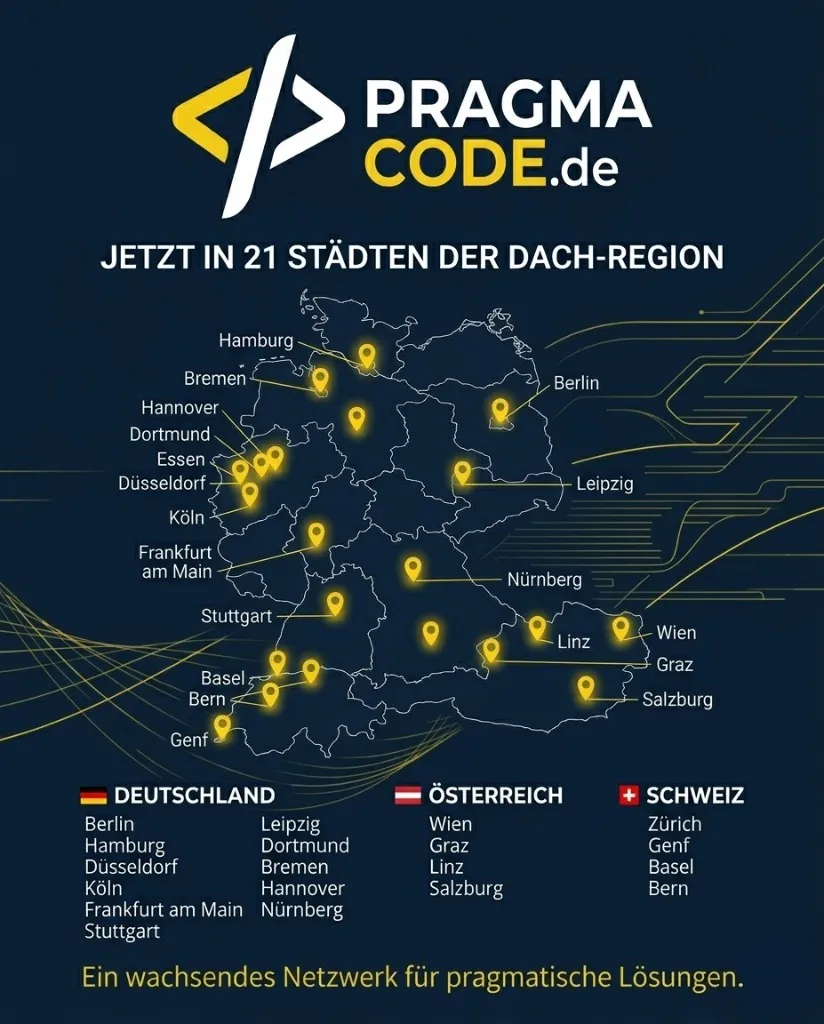
Schedule a Free Strategy ConsultationOur Regional Expertise
We are your digital partner – regionally anchored and successfully scaling across borders.
AI automation for your business?
I deliver this for small and mid-sized businesses: at a fixed price agreed upfront, working directly with the person who builds it. Process, scope and pricing are on the service page.
See service & pricing Or request a free intro callExtended Specialized Glossary
Smart Object
A Photoshop layer that contains image data from raster or vector images, enabling non-destructive editing, scaling, and dynamic content swapping.
CMYK Color Space
A subtractive color model (Cyan, Magenta, Yellow, Key/Black) that serves as the technical standard for physical color printing.
Headless Photoshop
The programmatic reading, editing, and rendering of PSD files on server environments without a graphical user interface (GUI) or active desktop application.
Preflight
The automated quality and compliance verification of digital graphics and print files prior to final output, preventing color profile, resolution, or bleed errors.