


In modern SMEs, the efficiency of marketing and sales operations directly determines competitiveness and scalability. Learn in this guide how intelligent marketing automation, AI agents, and n8n eliminate routine tasks, quadruples qualified leads, and drives sustainable revenue growth.
This article is an in-depth expert contribution from our content cluster. Discover the complete overview on our main page: AI Automation & Intelligent Agents →
- Efficiency Leap: Marketing automation and autonomous AI agents take a large share of repetitive manual work off the team, freeing capacity for strategy and closing deals.
- Scalable Lead Generation: Structured drip and nurturing workflows make sure no prospect slips through and hand sales pre-qualified contacts.
- Data Sovereign Integration: Seamlessly connecting CRM, website, 24/7 AI phone reception, and ERP via n8n & modern APIs creates a consistent, GDPR-compliant customer journey.
Introduction: The Marketing Trap of SMEs
It's Monday morning in a typical medium-sized company. The marketing manager sits in front of her screen and works through a list of 200 new newsletter signups from the past week. Every single contact has to be entered manually into the CRM system. At the same time, 15 unprocessed contact form inquiries are waiting, the social media channels are crying out for new posts, and somewhere in an Excel spreadsheet lie leads that showed interest three months ago and have since been forgotten.
Does this sound familiar? Then you are in good company. In many marketing teams, a considerable share of working time goes into manual, repetitive tasks instead of strategy and customer acquisition. That is not only frustrating for employees, it also costs money, week after week.
The solution is modern marketing automation. But while large corporations have long relied on sophisticated automation platforms and autonomous AI colleagues, many SMEs shy away from getting started. Too complex, too expensive, too difficult to integrate – these are the most common reservations. In this comprehensive guide, we clear up these myths and show you how you can put your marketing on autopilot with the right strategies, n8n workflows, and AI agents, without losing the personal touch that characterizes the middle market.
- Introduction: The Marketing Trap
- Chapter 1: What is Marketing Automation Really?
- Chapter 2: The Most Common Automation Workflows
- Chapter 3: Integration into Existing Systems & n8n
- Chapter 4: ROI and Cost Savings
- Chapter 5: Step-by-Step Implementation
- Chapter 6: Common Mistakes and How to Avoid Them
- Conclusion: The Time to Act is Now
- Frequently Asked Questions (FAQ)
Why it works
Automation does not win through magic but through consistency: every prospect gets the right message at the right time, no contact is left sitting in an inbox, and every decision can be checked against data instead of gut feeling. How large the effect is in your company depends on your starting point and process, which is why it pays to measure it before and after.
Chapter 1: What is Marketing Automation Really?
More than just automatic emails
When most people think of marketing automation, they picture newsletters that send themselves automatically. While this is a piece of the puzzle, it's far from the complete picture. Modern marketing automation is a strategic ecosystem that intelligently orchestrates all touchpoints with potential and existing customers.
At its core, it's about letting software execute recurring marketing tasks based on predefined rules, behavioral patterns, and intelligent AI agents. This starts with simple triggers ("When a user fills out the form, send a welcome email") and extends to autonomous multi-channel journeys that dynamically adapt to the individual behavior of each contact and compose contextual B2B proposals in real time.
The Three Pillars of Marketing Automation
Successful marketing automation is based on three fundamental pillars that must interlock perfectly:
Clean data is the foundation of every automated workflow. All touchpoints – website, social media, WhatsApp, 24/7 AI phone reception, CRM, and ERP – flow together into a central database, creating a 360-degree view of each prospect.
Aggregated customer data enables granular audience clustering. Instead of generic mass messaging, each contact receives tailored content matching their exact interest profile and buying stage.
Event-driven action sequences and autonomous AI colleagues operate 24/7 without manual intervention – from initial onboarding sequences to adaptive multi-channel funnels with dynamic intent routing.
The Distinction: Automation vs. Mass Marketing
A critical misunderstanding needs to be cleared up: Marketing automation is the opposite of impersonal mass marketing. It's not about sending more spam more efficiently. It's about delivering the right message to the right person at the right time – and doing so on a scale that would never be achievable manually.
Well-done automation doesn't feel automated to the recipient. It feels like attentive, personal service. The difference: Behind the service is not a human working 24/7, but an intelligent system that executes operational tasks seamlessly in the background.
Comparison: Traditional Mass Marketing vs. Intelligent Marketing Automation
- Communication: Generic blast newsletters sent to all contacts without personalization
- Lead Tracking: Disconnected spreadsheets and forgotten inquiries after trade shows
- Workload: Many working hours lost in manual data entry and routine admin
- Sales Handoff: Unfiltered leads without buyer intent overwhelm sales teams
- Communication: Individually timed trigger journeys based on behavior and intent
- Lead Tracking: Seamless CRM synchronization with real-time interaction history
- Workload: Autonomous workflows free up capacity for strategic growth
- Sales Handoff: Automated lead scoring routes only sales-ready prospects
Chapter 2: The Most Common Automation Workflows
1. Lead Nurturing: From Prospect to Customer
Probably the most effective use case for marketing automation. Lead Nurturing refers to the process of systematically "warming up" new contacts and guiding them to a purchasing decision. In B2B markets, months often pass between the first contact and the closing of the deal. Without automation, most leads are lost during this time.
A typical lead nurturing workflow progresses across structured, behavioral milestones:
Whitepaper Download / ROI Calculator
Immediate welcome email delivering the requested asset and initial context.
Follow-up Email
Deep-dive expert content expanding on the topic with practical best practices.
Webinar Invitation
Exclusive invitation to a live webinar or an in-depth customer case study.
Engagement Check
Automated evaluation: Did the prospect open emails, click links, or visit pricing pages?
High Engagement
Automated task creation and personal outreach by a designated sales representative.
Low Engagement
Transition into a long-term value nurturing sequence with monthly educational insights.
The best part: This workflow runs individually for each prospect, tailored to their entry point and behavior. All completely without manual effort.
2. Email Marketing Workflows
Email remains one of the most cost-effective marketing channels: sending costs almost nothing, and you reach people who gave you their address themselves. With thoughtful workflows, this channel becomes even more effective.
Typical automated email campaigns are built upon five core proven sequences:
Welcome Series
3–5 structured emails introducing new subscribers to your brand, values, and core solutions.
Abandoned Cart Recovery
Targeted reminders for abandoned shopping carts – often the single biggest immediate revenue driver.
Re-Engagement Sequences
Reactivating dormant contacts through exclusive incentive offers, audits, or feedback loops.
Anniversary & Milestone Automations
Personalized greetings and loyalty incentives celebrating customer milestones and anniversaries.
Post-Purchase Customer Journey
Onboarding guides, complementary accessory recommendations, and automated review collection.
Quick Win: The Welcome Series
The welcome email arrives at the moment interest is highest: right after sign-up. Companies that leave new subscribers to themselves miss a lot. A well-designed series of several emails guides new contacts step by step to a first conversation or purchase.
3. Omnichannel & Social Media Automation
Modern marketing is no longer confined to email. Four core mechanisms connect social media, WhatsApp, and AI phone reception into a unified ecosystem:
Advance Scheduling & Editorial Calendars
Editorial calendars with posts and rich media assets planned and queued weeks ahead of time.
Cross-Posting & Channel Adaptation
Distributing optimized content across LinkedIn, X, and Meta platforms in native formatting.
24/7 AI Phone Switchboard & WhatsApp
Voice assistants handle inbound phone calls around the clock, pre-qualify leads, and sync contacts into the CRM via webhooks.
Autonomous AI Sales Agents
Intelligent AI agents research company background data, answer complex inquiries contextually, and draft initial proposals.
4. Lead Scoring: Automated Qualification
Not all leads are created equal. Lead Scoring assigns numerical values to each prospect based on their attributes, intent signals, and interactions. A higher score indicates higher purchase readiness.
A battle-tested lead scoring model divides evaluation into three clear dimensions:
Demographic Fit
+20 to +40 PtsVerification of hard facts in CRM:
- C-Level / Managing Director / Senior Decision Maker
- Target B2B Industry (Engineering, Manufacturing, IT)
- Company Size 20–500 Employees
Intent & Behavioral Signals
+30 to +60 PtsReal-time engagement & intent indicators:
- Repeated pricing page visits & ROI calculator use
- Interaction with AI web chatbot or 24/7 AI phone agent
- Whitepaper download & case study time on page > 3 mins
Decay & Risk Filters
-20 to -50 PtsQuality and inactivity penalties:
- No activity for 30+ consecutive days (Score Decay)
- Email hard bounces or invalid contact details
- Freemail domains (@gmail, @yahoo) on B2B inquiries
As soon as a lead reaches a defined threshold (e.g., 100 points), it is automatically handed over to sales. This ensures that sales only spends time with the most promising contacts, while marketing continues to "warm up" the others.
Chapter 3: Integration into Existing Systems & n8n
Building the Data Bridges
Marketing automation only unleashes its full power when it is seamlessly integrated into your existing system landscape. Isolated tools are data silos – and data silos are the enemy of every automation strategy.
The four essential integration pillars for modern businesses:
CRM System
HubSpot, Salesforce, Pipedrive – bidirectional synchronization for complete contact histories and automated deal routing to sales reps.
Website & Headless CMS
Astro, WordPress, Next.js – event-driven tracking of form fills, interactive calculator inputs, and dynamic personalized page elements.
E-Commerce & Store
Shopify, WooCommerce, Shopware – checkout abandonment triggers, replenishment alerts, and automated customer lifecycle journeys.
ERP & Accounting
SAP, DATEV, NetSuite – syncing invoice and transaction data to adjust communication strategies based on customer payment status.
APIs, Middleware & n8n: Data Sovereignty for SMEs
In practice, integration often means API Integration. While companies historically relied on closed US SaaS platforms like Zapier, n8n has established itself as the leading open-source middleware standard.
The decisive advantage: n8n can be hosted entirely on European infrastructure or on-premise. Customer data never leaves the protected environment – an indispensable asset for GDPR compliance and EU AI Act conformity. A typical setup: When a user completes a website form → an n8n workflow validates the data → an AI agent enriches company records → a deal is logged in the CRM → real-time notifications alert sales in seconds.
Expert Tip: Data Hygiene as the Foundation
The biggest bottleneck in automation is rarely the software – it is data quality. Garbage In, Garbage Out. Cleanse your CRM databases, eliminate duplicate records, and standardize mandatory fields before deploying intricate trigger sequences.
Chapter 4: ROI and Cost Savings
The Math Works Out
Whether marketing automation pays off comes down to two levers: routine work saved and additional revenue from better-handled leads. Both can be measured in your own company:
Direct Cost Reduction
Savings on manual labor hours & external agencies
Timeless time spent on repetitive manual marketing tasks.
Lead & Revenue Growth
Higher conversion rates & shortened sales cycles
Leadsmore pre-qualified contacts for sales without a higher effort per lead.
How to measure the effect yourself
Industry averages say little about your company. A simple before-and-after comparison with your own figures is far more telling. Record four values before you start and measure them again after three and after six months:
- Hours per week spent on manual marketing tasks
- New enquiries and leads per month
- Share of leads that sales accepts as qualified
- Cost per lead, including software and support
Chapter 5: Step-by-Step Implementation
A successful rollout follows a structured 5-phase roadmap designed to minimize risk while delivering quick, measurable milestones:
-
Phase 1: Strategy & KPI Definition (Weeks 1–2)
Establish clear business objectives (lead velocity, conversion rates), map the end-to-end Customer Journey, and pinpoint the most time-draining manual processes across teams.
-
Phase 2: Tool Selection & Architecture (Weeks 3–4)
Evaluate platform compatibility with existing CRM/ERP systems, select the optimal tech stack, and design unified data models.
-
Phase 3: Data Cleansing & Integration (Weeks 5–6)
Cleanse CRM databases, remove duplicates, and build reliable integrations using webhooks, REST APIs, and middleware engines like n8n or Make.
-
Phase 4: Quick-Win Workflow Rollout (Weeks 7–10)
Deploy high-impact foundational campaigns: automated welcome series (Drip Campaign), inbound lead routing, and activity-based lead scoring.
-
Phase 5: Scaling & Multi-Channel Optimization (Ongoing)
Execute systematic A/B testing on subject lines and CTAs, build executive reporting dashboards, and expand automation into additional customer touchpoints.
Choosing the Right Platform for Your Business
Selecting the appropriate automation platform establishes the foundation for long-term scalability:
HubSpot Marketing Hub
Unified all-in-one suite with integrated CRM, CMS, and analytics. Perfect for mid-market companies seeking a consolidated ecosystem.
ActiveCampaign
Industry-leading visual workflow builder with deep email segmentation and CRM capabilities at a highly competitive price point.
Brevo (formerly Sendinblue)
GDPR-compliant European solution featuring reliable transactional email deliverability and intuitive automation builders.
Salesforce Marketing Cloud
Enterprise powerhouse designed for massive datasets, complex multi-brand environments, and global multi-region deployments.
Chapter 6: Common Mistakes and How to Avoid Them
In practice, automation initiatives rarely fail due to technology, but rather due to classic execution missteps:
Mistake 1: Overengineering from Day One
Attempting to launch massive multi-channel journeys immediately overwhelms teams and delays ROI. Start lean with 1–2 quick-win sequences and expand iteratively.
Mistake 2: Neglecting Content Quality
Automation simply amplifies your input. Subpar messaging leads to unsubscribe waves. Invest proactively in authoritative copy and high-value collateral.
Mistake 3: The Set-and-Forget Mindset
Customer needs and market dynamics shift continuously. Review and fine-tune your automated funnels quarterly to eliminate bottlenecks.
Mistake 4: Skipping A/B Testing
Running campaigns without structured split tests leaves substantial double-digit Conversion Rate gains on the table.
Conclusion: The Time to Act is Now
Marketing automation is not hype and not a vision of the future. It is a proven, accessible technology that also offers significant advantages for medium-sized companies. The question is no longer whether you should automate, but when – and the answer is: as soon as possible.
Your competition never sleeps. While you are still manually maintaining lists, your competitors are building scalable lead machines with n8n and autonomous AI agents. The head start you build today will be hard to catch up with tomorrow.
With Pragma Code, you have a partner at your side who not only understands the technology but also knows the specific challenges of the middle market. We implement marketing automation that fits your business – not enterprise solutions in SME clothing. Pragmatic, data-sovereign, results-oriented.
Quick-Check: Getting Started with Marketing Automation
Frequently Asked Questions (FAQ)
Costs vary depending on company size and the selected tools. Entry-level packages often start between €500 and €1,000 per month, while professional setup by experts can range from €5,000 to €15,000 as a one-time investment.
For many SMEs, a combination of CRM (HubSpot or Pipedrive) and data-sovereign middleware like n8n is ideal, providing maximum flexibility and GDPR compliance without getting locked into expensive all-in-one tiers.
Classic automation follows static if-then rules. Autonomous AI agents understand unstructured inquiries, research internal knowledge via APIs, and draft tailored, context-aware responses in real time.
Quick wins like automated welcome series and phone call reception often show results within a few weeks. Complex lead nurturing cycles typically take 3-6 months to produce statistically significant increases in conversion rates.
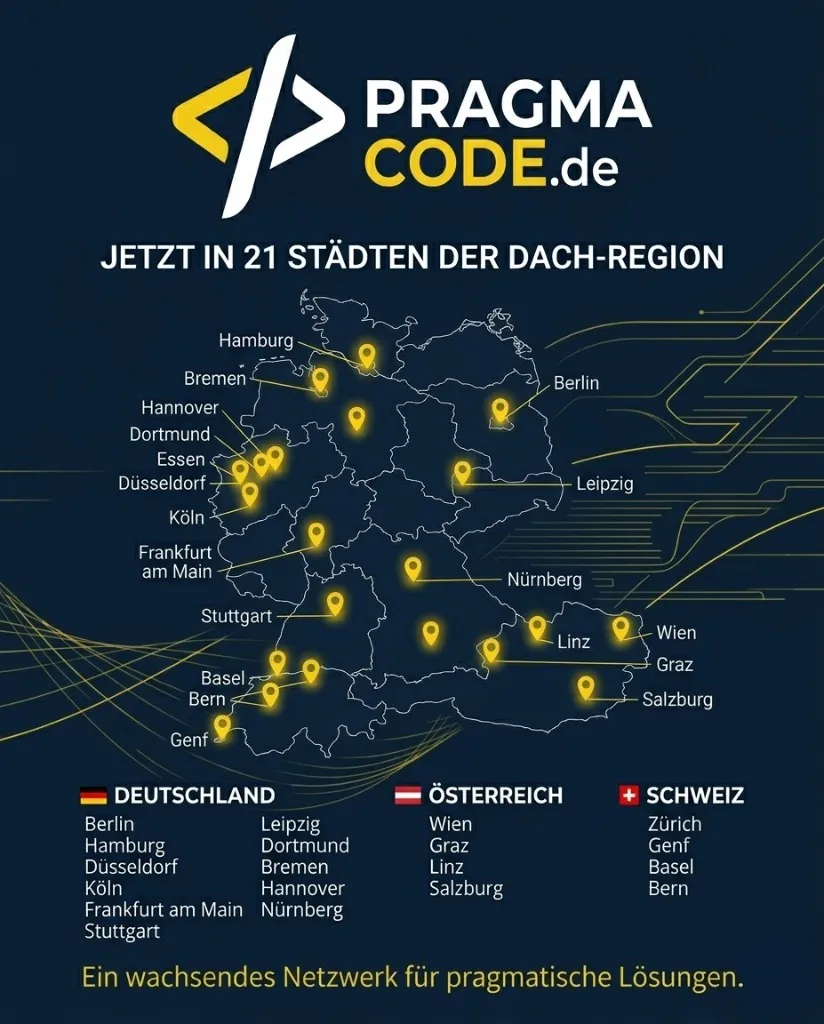
Our Regional Expertise
We are your digital partner – regionally anchored and successfully scaling across borders.
AI automation for your business?
I deliver this for small and mid-sized businesses: at a fixed price agreed upfront, working directly with the person who builds it. Process, scope and pricing are on the service page.
See service & pricing Or request a free intro callExtended Specialized Glossary
Lead Scoring
Automated evaluation of contacts based on behavior and characteristics. Higher score = more ready-to-buy lead.
Drip Campaign
Email series sent automatically over a defined period of time to gradually lead prospects to a purchase.
CRM
Customer Relationship Management. Software for managing all customer interactions and data in a central location.
Customer Journey
The sum of all touchpoints a customer has with your company – from the first contact to purchase and beyond.
Conversion Rate
Percentage of visitors/contacts who perform a desired action (e.g., purchase, registration, download).
Lead Nurturing
Systematic process of guiding prospects to a purchase decision through relevant content and communication.
Multi-Channel Marketing
Coordinated marketing activities across multiple channels (Email, Social, Web, Ads) for a consistent customer experience.
API Integration
Technical interface that allows different software systems to exchange data and communicate with each other.