

Humanoid robots are working in 2026 – but at a handful of sites, in narrowly defined tasks and almost only at large corporations. This article separates documented facts from vendor promises and shows what a mid-sized company can realistically do today.
This article is an in-depth expert contribution from our content cluster. Discover the complete overview on our main page: AI & Automation for Businesses →
Between Showreel and Shop Floor
Humanoid robots are making real progress in 2026 – but at a handful of sites, in narrowly defined tasks and almost exclusively at large corporations. For SMEs, 2026 is a year to prepare, not to buy. This article shows what is documented, what it costs and what you can sensibly do now.
- Real deployments exist – but few: Documented projects include Figure at BMW and Agility Digit at GXO and Schaeffler. They run at individual sites and for single tasks, such as loading sheet metal parts or moving totes.
- Cheap does not mean industrial-grade: Humanoids under $25,000 exist, but they are mainly development and research platforms. Industrial models are allocated through pilot contracts without public prices.
- Prepare rather than buy: If you document your processes cleanly, modernise network and ERP interfaces and clarify safety, you benefit today – with cobots and autonomous mobile robots now, and with humanoids later.
Hardly any technology topic produces as many impressive videos in 2026 as humanoid robots: backflips, kung fu, folding laundry. For managing directors of mid-sized companies, however, the decisive question is a different one: Can such a robot take over a task in my company reliably and economically? For most businesses, the honest answer in 2026 is: not yet – but the groundwork can be laid now, and it pays off even without humanoids.
The driver behind this development is so-called Physical AI: AI models that understand camera images and language and derive movements from them (Vision-Language-Action models). They are meant to make robots trainable by demonstration and instruction instead of programming every single path. That is real – but still far from a robot taking over any given workplace.
1. Where humanoid robots really work in 2026
The most robust data comes from two manufacturers that document their deployments with figures:
- Figure at BMW (Spartanburg, USA): In an eleven-month pilot, the Figure 02 robot loaded sheet metal parts into welding fixtures – in ten-hour shifts from Monday to Friday, with around 1,250 operating hours, more than 90,000 parts loaded and a cycle time of 84 seconds. Its successor, Figure 03, now sorts components into sequencing trolleys there. At its Leipzig plant, BMW has also been testing a humanoid robot since 2026 – the first time in Germany: the AEON model assembles battery modules in a pilot project.
- Agility Digit in logistics: According to the manufacturer, Digit has logged more than 65,000 operating hours at several customer sites, including GXO, Schaeffler and Toyota. The task is almost always the same: moving totes. At GXO near Atlanta, Digit moved 100,000 totes with around 98 percent accuracy.
Just as important is what is not documented. In January 2026, Tesla CEO Elon Musk himself said that Optimus was not in use in Tesla's factories "in a material way". Circulating figures about tens of thousands of productive humanoids do not come from the manufacturers. And the successor Digit 5, built explicitly for work close to people, was unveiled in September 2026 but is not yet working in any factory.
The pattern: In 2026, humanoids take over individual, clearly defined tasks at sites with high volumes, their own engineering teams and close contact with the manufacturer. That is genuine progress – but not the starting point of a typical company with 80 employees.
2. What humanoid robots cost
The price range is enormous, and the number alone says little. What matters is what a model is built for:
| Model | Price (as of 2026) | Classification |
|---|---|---|
| Unitree G1 | from approx. $13,500 (base); with hands and developer access around $50,000–65,000 | Development and research platform |
| Unitree H2 | from $29,900 | Full-size humanoid, mainly for development and research |
| 1X NEO | $20,000 or $499 per month | For the home, not for industry |
| Agility Digit | no list price; media report around $250,000 | Industrial use, sold via enterprise contracts |
| Figure 03, Apptronik Apollo | not publicly available | Pilot projects with large customers |
The often-quoted claim of "humanoid robots for under $25,000" therefore only holds for models that are not built for everyday industrial use. On the G1 product page, Unitree itself advises users to keep a sufficient safety distance and notes that the industry is still at an early stage. How expensive industrial humanoids are to build is shown by a figure from Agility: the parts alone for a Digit 5 are expected to cost $150,000 to $200,000 at launch.
Rental models (Robot-as-a-Service) exist too – at Agility, for example – but there are no public monthly prices for industrial use. You will only learn concrete rental rates from a manufacturer's quote.
3. Why the ROI calculation hardly works yet
At first glance, the calculation looks tempting. According to the German Federal Statistical Office, an hour worked in transport and storage cost companies an average of €35.80 in 2025. A station staffed around the clock therefore adds up to more than €300,000 in labour costs per year. So why not put a robot there?
Because four variables that determine profitability are missing:
- Output: A robot with an 84-second cycle time does not automatically replace a skilled worker. How much it achieves in your task only becomes clear in a test.
- Availability: The documented deployments run in day shifts, not around the clock. Charging, maintenance and faults take time.
- Integration: Connection to warehouse management and ERP, Wi-Fi coverage, safety concept and training come on top of the device price.
- Price: There are no public prices for industrial models, neither for purchase nor for rental.
Our recommendation: Be suspicious of any payback period calculated without data from your own operation. A sound calculation starts with a pilot project that measures cycle time, availability and manual interventions per shift.
4. What often fits SMEs better today
The human form is an advantage when the environment cannot be adapted: stairs, shelves at grip height, tools made for human hands. In many companies, however, a task can be solved with proven technology that is already predictable today:
- Autonomous mobile robots (AMR/AGV) for material flow between goods receipt, warehouse and assembly.
- Collaborative robot arms (cobots) for recurring tasks such as machine tending, packing or palletising – with established safety standards for human-robot collaboration.
- Software automation in the background: when orders, stock levels and delivery notes flow automatically, any later robotics becomes easier – and it often turns out that the bottleneck was never the hand at the shelf. More on this in our article on AI integration for SMEs.
5. Safety, standards and NIS2
A humanoid moving freely through the hall is new territory in terms of safety. Classic industrial robots are covered by ISO 10218, revised in 2025. For robots that actively keep their balance – including walking humanoids – a dedicated safety standard, ISO 25785-1, is still being developed and currently exists as a draft. Deployment directly alongside employees therefore requires a careful risk assessment, usually with separated work areas.
Then there is IT security. A robot with cameras, microphones and access to production data is a networked device like any other – just with arms. It belongs in its own isolated network segment with no direct path to financial or customer data. If your company falls under the German NIS2 implementation act, management is also obliged to approve and monitor the risk management measures (Section 38 BSIG). Responsibility for such a device cannot simply be delegated to the manufacturer.
6. What you can prepare in 2026
The following steps cost little, and none of them is wasted if the humanoid does not arrive after all:
- Document processes: Which activities are monotonous, physically demanding and hard to staff? How often do they occur, how long do they take, how much do the parts vary? Without these figures, no offer can be assessed.
- Check the network: Is the Wi-Fi stable throughout the hall, even between high shelves? Are there separate network segments for machines?
- Create interfaces: Can warehouse management and ERP exchange orders and stock levels via an interface? This is the prerequisite for any automation, robotic or software – the convergence of office IT and shop floor is called IT-OT convergence.
- Measure vendors by data: Ask for operating hours, reference customers with comparable tasks, cycle time and availability – not for videos.
- Involve your workforce: Involve the works council and employees early. People who know which strenuous tasks are meant to disappear react differently to a robot than those who read about it in the newspaper. More on this in our analysis AI in the job market.
7. Conclusion
In 2026, humanoid robots are no longer hype, but not yet a standard tool either. The documented deployments show that the technology can reliably take over individual tasks – at large corporations, with high volumes and close support from the manufacturer. For SMEs, now is the time to lay the foundations: clean process data, a robust network, open interfaces and a clear safety concept. This work pays off immediately because it also enables cobots, mobile robots and software automation. And when humanoids become more widely available in two or three years, you will not be starting from scratch.
Sources
- BMW Group (2026): "First humanoid robot introduced in Plant Leipzig" – pilot project in Leipzig and figures from Spartanburg.
- humanoid.guide / Technology.org (2026): "Humanoid deployments in 2026 favor Figure and Agility" – operating hours, cycle time, assessment of unverified unit claims, statement on Tesla Optimus.
- Agility Robotics (15 Sep 2026): "Agility Unveils Digit 5" – 65,000 operating hours, 100,000 totes at GXO, customer list.
- IEEE Spectrum (2026): "Digit 5 Sets a New Bar for Humanoid Robot Safety" – parts cost according to filings, deployment status.
- Unitree Robotics: G1 product page and online shop – list prices and safety notes.
- Forbes (17 Jun 2026): "The Humanoid Robots You Can Actually Buy Right Now" – prices of Digit and 1X NEO.
- German Federal Statistical Office (29 Apr 2026): "Eine Arbeitsstunde kostete im Jahr 2025 durchschnittlich 45,00 Euro" – labour costs by sector.
- ISO: ISO 10218-1:2025 and ISO/CD 25785-1 – safety requirements for industrial robots and dynamically stable mobile robots (draft).
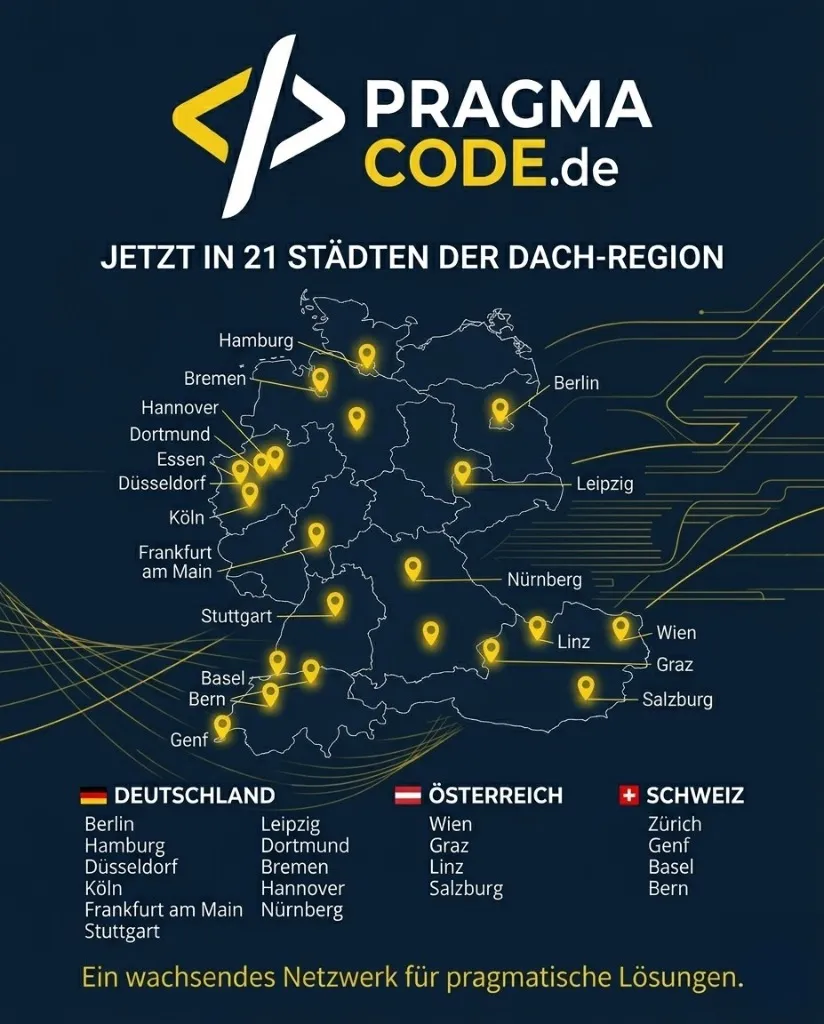
Our Regional Expertise
We are your digital partner – regionally anchored and successfully scaling across borders.
Robotics Is an IT Project
Before a robot can work productively, network, ERP interfaces and security have to be right. We support you with that – vendor-independent and at a fixed price.
Free initial consultationExtended Specialized Glossary
Physical AI
The integration of multimodal AI models into physical robotic systems for autonomous spatial task execution.
RaaS (Robot-as-a-Service)
An operating model in which a robot is rented rather than bought; software, maintenance and updates are usually included.
IT-OT Convergence
The technological unification of Information Technology (ERP, cloud, enterprise IT) and Operational Technology (machinery, PLCs, shop floor).
Vision-Language-Action (VLA) Models
AI models that process camera images and language instructions and derive movement commands for a robot from them.
Human-Robot Collaboration (HRC)
The direct, safe collaboration between human workers and robots in the same physical workspace without physical safety cages.