

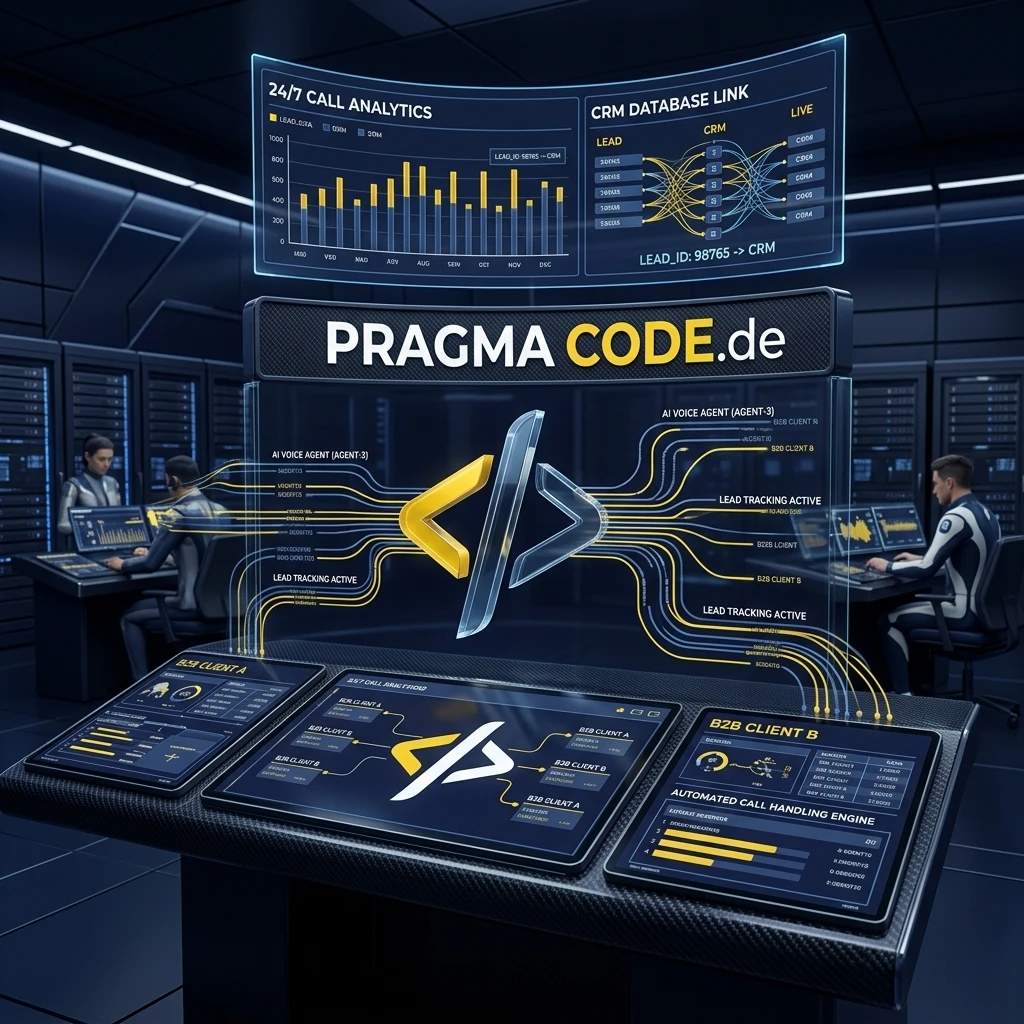
Never miss high-value inbound sales leads due to busy lines or after-hours again: Modern AI telephone switchboards merge low-latency voice pipelines with native CRM synchronization to turn every phone call into qualified business revenue.
This article is an in-depth expert contribution from our content cluster. Discover the complete overview on our main page:AI Automation for Businesses →
- 24/7 Availability Without Staffing Bottlenecks: AI-powered telephone switchboards answer calls instantly at any hour, conduct natural two-way conversations, qualify inbound leads automatically, and eliminate revenue loss after business hours.
- Sub-300ms Low-Latency Voice Pipeline: By chaining Voice Activity Detection (VAD), streaming Speech-to-Text, speculative LLM token streaming, and generative speech synthesis, callers experience real human conversational flow with seamless barge-in.
- Two-Way Value Creation with Live SOP Guidance: The system functions simultaneously as an external customer representative and an internal SOP assistant, providing sales and support teams with real-time call summaries, CRM tickets, and action plans.
The Revolution of B2B Telephony: Agentic Voice AI in Enterprise Practice
Rigid IVR telephone menus ("Press 1 for sales...") are obsolete relics in 2026. Modern Agentic Voice AI systems conduct free, unstructured conversations in natural language, perform real-time database queries via Tool Calling, and push structured records directly into CRM and ERP systems. This is the exact intersection where Conversational AI generates tangible business revenue.
- Introduction: The Availability Crisis in B2B SMEs
- Chapter 1: Anatomy of a Modern AI Switchboard (The Sub-300ms Pipeline)
- Chapter 2: Comparison – Traditional PBX vs. Cloud AI vs. On-Premises Voice Agent
- Chapter 3: Custom GPTs, Brand Voice Training & Barge-in Handling
- Chapter 4: The Integrated SOP Assistant for the Internal Team
- Chapter 5: 24/7 Lead Tracking, Tool Calling & CRM Synchronization
- Chapter 6: GDPR, Telecommunications Secrecy & Compliance in Europe
- Chapter 7: ROI Calculation & Transparent Everything-as-a-Service Model
- Chapter 8: The 5-Phase Implementation Roadmap
- Conclusion & Decision-Maker Quick-Check
Introduction: The Availability Crisis in B2B SMEs
It is Monday morning, 8:30 AM. In the sales office of a mid-sized B2B service provider, the phone lines are constantly ringing. At the same time, employees are drafting client quotes, conducting consulting sessions, and clarifying shipping inquiries. In the middle of this busy atmosphere, the phone of a high-value prospect—who discovered the company through an expensive marketing campaign—starts ringing. After the fourth ring, the call redirects to voicemail. The prospect hangs up without leaving a message and immediately dials the competitor's number instead.
Scenarios like this are standard business reality across European enterprises. Market research proves unequivocally: B2B companies lose up to 25% to 35% of all inbound leads because calls arrive outside regular office hours, phone lines are congested during peak times, or staff are overwhelmed with manual administrative duties. In the digital economy, the principle of "Speed-to-Lead" determines success: A prospect who does not receive a competent response within 5 minutes is over 70% more likely to buy from a competitor.
At the same time, maintaining a traditional 24/7 human call center is financially unfeasible for most SMEs. Severe labor shortages, high payroll costs, complicated shift schedules, and time-consuming onboarding make round-the-clock human staffing an unpredictable cost trap.
Lead Drop-Off from Busy Signals
Over 65% of all B2B buyers refuse to leave voicemail messages. Every missed call represents lost sales revenue that is permanently captured by faster competitors.
Exploding Staffing & Overhead Costs
Maintaining a 24/7 human shift operation requires at least 4 to 5 full-time equivalents (FTEs). This generates fixed overheads exceeding €18,000 per month—regardless of call volume.
Lagging Response Times (Speed-to-Lead)
When weekend voicemail logs are not reviewed until Monday afternoon, more than 48 hours pass before the first outreach—by which time the prospect's purchase intent has evaporated.
Information Silos & Incomplete CRM Logs
Manually written paper notes or scattered inbox messages lead to lost context, mistyped callback numbers, and a complete lack of pipeline transparency for sales reps.
This is where the concept of a modern, turnkey AI Switchboard comes in. By merging low-latency speech synthesis, domain-trained Large Language Models (LLM), and bidirectional API integration, it creates a digital team member. It answers unlimited concurrent calls, understands complex dialects and accents, answers technical questions accurately using your company data, and syncs all customer information into your CRM in seconds.
Chapter 1: Anatomy of a Modern AI Switchboard (The Sub-300ms Pipeline)
To understand the performance of modern voice AI assistants, one must look at the underlying technology evolution. Older Interactive Voice Response (IVR) systems relied on static decision trees and inflexible keyword detection. If a caller did not pronounce the exact keyword required by the menu, the dialogue failed. The result was customer frustration and high drop-off rates.
A professional enterprise AI telephone switchboard in 2026 runs on a continuous streaming audio pipeline over bidirectional WebRTC or SIP gateways. The complete system operates with an end-to-end latency below 300 milliseconds—faster than the natural pause in human telephone conversations.
1. Voice Activity Detection (VAD) & Silero Filtering
Before an audio signal is processed, a high-efficiency VAD algorithm isolates human speech from ambient office noise, keyboard typing, and line crackle. Detection runs in chunks of 10 to 20 milliseconds, recognizing conversational starts and stops without delay.
2. Streaming Speech-to-Text (STT)
Inbound audio is transcribed in real time through dedicated Speech-to-Text (STT) models. Using neural networks with automatic accent recognition, technical terminology, company names, and product numbers are captured with over 98% accuracy.
3. LLM Reasoning Core with Token Streaming
At the center sits a language model fine-tuned to your corporate identity. It evaluates intent, checks data permissions, and generates output tokens sequentially. As soon as initial sentence fragments are generated, they stream immediately to the voice synthesizer without waiting for full completion.
4. Generative Streaming Text-to-Speech (TTS)
Streamed sentence chunks are rendered into lifelike audio using modern neural Text-to-Speech (TTS) synthesizers. Natural breathing pauses, voice inflections, and contextual pitch modulation make the voice virtually indistinguishable from a human operator.
A crucial technological breakthrough is intelligent barge-in handling. If the caller interrupts the AI while it is speaking (e.g., "Wait, I was referring to the Berlin branch"), the system cuts off audio output in less than 40 milliseconds, discards remaining buffers, and immediately switches to active listening. This eliminates the robotic interruptions that frustrate customers with cheap voice bots.
1. SIP/WebRTC Gateway
Integration into enterprise PBX systems (Asterisk, FreeSWITCH, Placetel, NFON, sipgate, 3CX) via SIP trunks with end-to-end TLS/SRTP encryption.
2. Audio Event Orchestrator
Manages WebSocket sessions, synchronizes bidirectional audio streams, handles VAD triggers, and buffers audio chunks for instantaneous response delivery.
3. Custom LLM Engine
Dedicated model instance with RAG connectivity to internal enterprise documentation, anti-hallucination guardrails, and contextual routing rules.
4. Tool Calling & CRM Bridge
Automated connectors to HubSpot, Salesforce, Odoo, or ERP systems for live data lookups, calendar appointment bookings, and instant ticket logging.
Chapter 2: Comparison – Traditional PBX vs. Cloud AI vs. On-Premises Voice Agent
Enterprises evaluating ways to upgrade their phone availability face several architectural options. The following side-by-side comparison highlights the differences between conventional call centers, generic cloud bots, and Pragma Code's enterprise AI switchboards:
System Comparison: Enterprise Telephony Architectures
- Availability: Restricted to office hours; callers land on voicemail during nights and weekends.
- Scalability: Strictly limited by headcount; long queue wait times during call spikes.
- Cost Structure: High recurring labor expenses (from €3,800/month per agent) plus shift bonuses.
- Data Consistency: Manual notes cause fragmented handovers and incomplete CRM records.
- Knowledge Access: New hires require weeks of manual training on complex service procedures.
- Availability: True 24/7/365 availability with zero-second pickup on ring one.
- Scalability: Infinite concurrent call capacity with zero busy signals or queues.
- Cost Structure: Transparent, fixed monthly pricing as Everything-as-a-Service (aaS).
- Data Consistency: Automated transcriptions, intent tagging, and instant CRM synchronization.
- Knowledge Access: Direct RAG integration with live SOPs, product catalogs, and calendar slots.
Chapter 3: Custom GPTs, Brand Voice Training & Barge-in Handling
A primary success factor in premium B2B customer service is brand consistency. A caller reaching a precision engineering manufacturer or a corporate law firm expects a completely different tone, vocabulary, and level of rigor than one calling a consumer e-commerce store. That is why Pragma Code avoids generic off-the-shelf prompts and builds bespoke, sandboxed Custom GPTs and dedicated Voice Agents.
Acoustic Brand Voice & Voice Cloning
Through professional Voice Cloning, we synthesize the familiar voice of your founder or senior customer service lead with their explicit consent. This establishes an acoustic Brand Voice that reinforces corporate identity and inspires customer trust.
RAG Knowledge Base & Technical Jargon
The AI connects to your structured knowledge base: pricing matrices, service level agreements (SLAs), delivery lead times, FAQ sheets, and employee directories. Industry abbreviations and complex product codes are parsed accurately.
Guardrails & Anti-Hallucination Filters
Deterministic validation layers and rigorous Prompt Engineering prevent Hallucinations. The agent never makes unauthorized discount promises or unverifiable claims, politely scheduling human callbacks when uncertain.
Pro Tip: Audio Mastering & VAD Sensitivity
To maximize caller satisfaction in B2B environments, we fine-tune audio equalization curves across landline and mobile codecs (G.711, G.722 HD Voice, Opus). Calibrated Silero VAD thresholds ensure voice agents ignore natural affirmations like "I see" while responding immediately to caller interjections.
Chapter 4: The Integrated SOP Assistant for the Internal Team
Many voice tech vendors view conversational AI merely as an external gatekeeper for inbound calls. The far greater operational leverage for enterprises, however, lies in internal workflow assistance. Pragma Code's AI switchboard is engineered to act as an integrated SOP Assistant (Standard Operating Procedure).
While the voice agent conducts the customer dialogue or assists a human operator, the system analyzes the conversation in the background and evaluates it against your documented corporate guidelines. Once the call concludes, the system immediately presents the responsible team with a structured action blueprint:
A structured, GDPR-compliant summary captures key requirements, agreements, contact credentials, and caller sentiment.
The call topic is categorized cleanly (e.g., "New Inbound Sales Lead - Product Alpha", "Urgent Support Ticket - Machine X", "Appointment Reschedule").
The system displays the exact next procedural steps for the assigned staff member (e.g., "Per SOP 18, run credit verification in ERP prior to quote dispatch").
Based on enterprise size, urgency, and project scope, the system assigns a numeric priority score on the sales rep's dashboard.
This automated mechanism slashes onboarding times for new customer support and sales personnel from months to mere days. Representatives no longer need to memorize hundreds of pages of documentation—the AI serves the required workflow steps at the exact moment a case is assigned.
Chapter 5: 24/7 Lead Tracking, Tool Calling & CRM Synchronization
A qualified sales lead depreciates in value every minute that follow-up is delayed. By leveraging workflow engines like n8n and native REST APIs, our AI switchboard closes the gap between spoken conversations and enterprise CRM systems.
Using standard Tool Calling, the voice agent executes active tasks mid-dialogue: checking calendar availability via Cal.com or Google Calendar, matching caller IDs against CRM accounts, and booking consultation slots on the fly.
Call Reception & Qualification
The voice agent greets the caller, collects name, company, email, phone number, and specific business inquiry through natural dialogue.
Real-Time Lookup via Tool Calling
The system matches caller ID against existing records. For active accounts, the AI retrieves open tickets or account manager data within milliseconds.
Automated CRM Integration
Immediately after hang-up, a structured JSON object is pushed to your CRM (HubSpot, Salesforce, Pipedrive, Odoo), creating new contacts or support tickets.
Instant Sales Dispatch
For high-value A-leads, the system fires instant alerts via Slack, MS Teams, or SMS to the sales leadership team with a 1-click callback link.
Below is a typical JSON payload dispatched to your target systems over our secure API pipeline following each completed interaction:
{
  "call_id": "call_2026_05_26_8921",
  "timestamp": "2026-05-26T14:22:15Z",
  "duration_seconds": 164,
  "caller": {
    "name": "Marcus Weber",
    "company": "Weber Automation Engineering Ltd.",
    "phone": "+497118923401",
    "email": "m.weber@weber-engineering.com"
  },
  "qualification": {
    "intent": "new_lead_ai_automation_inquiry",
    "lead_score": 92,
    "urgency": "high",
    "budget_range": "€25,000 - €50,000",
    "summary": "Interested in AI lead qualification for 12 regional branch hubs. Requested initial consultation in CW 23."
  },
  "actions_taken": [
    "crm_contact_created",
    "hubspot_deal_stage_qualified",
    "slack_alert_sales_leadership"
  ]
}
Chapter 6: GDPR, Telecommunications Secrecy & Compliance in Europe
Recording, transcribing, and processing telephone audio data in the European Union involves strict regulatory requirements. In addition to GDPR Compliance, organizations must adhere to national telecommunications privacy laws and confidential communications acts.
Pragma Code applies an uncompromising "Security & Privacy by Design" approach. Our technical architecture meets all European compliance standards:
1. Explicit 2-Stage Audio Opt-In
Before transcription commences, the assistant informs the caller about the AI interaction and requests verbal consent. If declined, the call routes to a basic voicemail line without AI processing.
2. ISO 27001 Certified EU Data Centers
All speech processing is hosted on certified infrastructure in Frankfurt, Germany. For highly regulated clients, we offer on-premises deployment via vLLM.
3. Automated PII Redaction (Zero-Retention)
Sensitive personal data (credit card numbers, passwords, health data) is automatically sanitized by filter algorithms before long-term storage in CRM databases.
4. Transport & Rest Data Encryption
All SIP signaling and RTP audio streams use TLS 1.3 and SRTP encryption. Data at rest across databases is encrypted using AES-256 bit algorithms.
Important Notice on Article 13 GDPR Information Duties
As the telephone system operator, you remain legally responsible for informing callers about data processing. Pragma Code provides ready-to-use privacy policy templates and configures voice agent greeting scripts in full legal compliance.
Chapter 7: ROI Calculation & Transparent Everything-as-a-Service Model
A conventional customer service representative in Western Europe costs an enterprise an average of €3,800 to €4,600 per month in gross salary, employer contributions, workstation equipment, and paid leave—providing a maximum of 38.5 hours of availability per week.
To provide true 24/7/365 coverage across 168 hours each week, a company mathematically requires at least 4.5 full-time employees. This amounts to fixed annual operating expenses exceeding €200,000.
Pragma Code offers the AI telephone switchboard as a turnkey "Everything as a Service" (aaS) package. You receive a fully operational solution including deployment, SIP trunk connection, custom voice cloning, ongoing optimization, and CRM integration for a predictable monthly fee:
Starter Package
Ideal for boutique law firms, medical practices & B2B agencies
From €490 / MonthIncludes 1 custom voice agent, connection to 1 CRM system, standard brand voice presets, 500 included call minutes, and monthly evals quality audits.
Professional Package
For growing SMEs, e-commerce brands & industrial manufacturers
From €990 / MonthIncludes up to 3 voice agents, deep CRM & ERP integration, bespoke voice cloning, interactive real-time SOP assistant, and 24/7 priority support.
The ROI Breakeven Model: For most B2B enterprises, capturing a single additional customer contract per quarter pays for the entire annual investment of the AI switchboard. Every additional lead saved from drop-off translates directly into profit.
Chapter 8: The 5-Phase Implementation Roadmap
Deploying an AI-powered switchboard with Pragma Code follows a structured, enterprise-tested rollout framework. Your system is fully operational in less than 14 days:
-
Phase 1: Discovery Audit & SIP Trunk Configuration
We analyze historical call volumes, identify common customer inquiry categories, and configure dedicated SIP trunks or after-hours call routing.
-
Phase 2: Persona Engineering & Voice Cloning
We define your brand voice, record voice reference samples for cloning, and establish systemic guardrails against hallucinated statements.
-
Phase 3: Knowledge Base RAG & Tool Calling Integration
We ingest product documentation, pricing sheets, and SOPs into vector databases while connecting API endpoints to CRM and calendar tools.
-
Phase 4: Latency Optimization, Barge-in Tuning & Pilot Audit
We execute test runs across 100+ simulated caller scenarios, calibrate VAD sensitivity, verify audio clarity, and run GDPR compliance checks.
-
Phase 5: Production Go-Live & Continuous Evals Loop
We activate live phone numbers, monitor latency and call metrics, and perform continuous quality optimizations from caller feedback.
Conclusion & Decision-Maker Quick-Check
Your telephone availability represents your enterprise's primary digital storefront. In the competitive B2B environment of 2026, minutes decide multi-thousand euro deals. An AI-powered telephone switchboard eliminates missed calls, qualifies leads in real time, empowers your internal team with automated SOP guidance, and creates an error-free bridge to your CRM.
Do not leave revenue opportunities to chance or voicemail. Harness cutting-edge Agentic Voice AI technology to turn your customer phone lines into a predictable growth engine.
Quick-Check: Your AI Switchboard Roadmap
Ready to Upgrade Your Enterprise Phone Availability to 24/7?
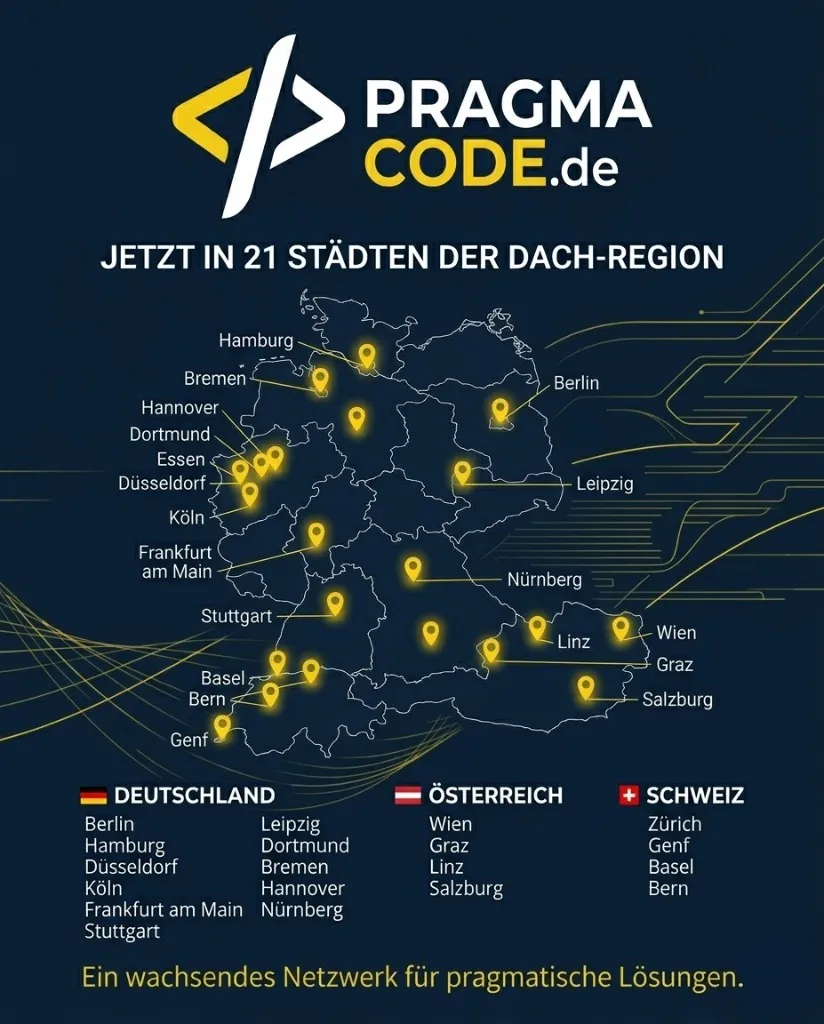
Book Your Free Strategy CallOur Regional Expertise
We are your digital partner – regionally anchored and successfully scaling across borders.
Have a vision?
Let's check together how we can make your idea take flight.
Book your free strategy call nowExtended Specialized Glossary
AI Switchboard
An automated, artificial intelligence-based telephone system that answers calls, holds structured natural dialogues, and executes backend database actions.
Voice Agent
A virtual assistant that processes spoken audio in real time using text-to-speech, LLMs, and NLU to replicate human conversational behavior.
Brand Voice
The tonal and behavioral personality of a company, custom-trained into a voice agent model to ensure consistent client experiences.
SOP Assistant
Software that analyzes phone interactions in real time to show agents matching internal standard operating guidelines based on customer context.
CRM Integration
The connection between the telephone system and a CRM database, automating call summary logs, contact routing, and support ticket creation.