


When automated marketing emails get stuck in spam folders or transactional invoices are silently discarded by customer mail servers, the copy is rarely to blame: Without properly configured SPF, DKIM, and DMARC records, modern mailbox providers aggressively flag domain senders as security risks. Discover how to protect your domain reputation and achieve maximum inbox placement.
This article is an in-depth expert contribution from our content cluster. Discover the complete overview on our main page: IT Security & Compliance →
- Strict Mailbox Provider Mandates: Google, Yahoo, and Microsoft enforce mandatory cryptographic domain authentication. Spam complaint rates above 0.3% or missing DMARC policies trigger immediate domain downgrades.
- The Authentication Triad: SPF authorizes sending server IPs, DKIM guarantees message payload integrity via RSA-2048 signatures, and DMARC governs enforcement and policy rules upon validation failure.
- The 10-Lookup Trap in Modern MarTech: Simultaneously incorporating HubSpot, Brevo, Zendesk, n8n, and billing gateways breaks the SPF record when exceeding 10 DNS lookups with a fatal
PermError. The solution relies on automated SPF-Flattening and subdomain segregation.
- 1. The B2B Email Deliverability Crisis: Why Unauthenticated Mail Is Obsolete
- 2. The Authentication Triad: SPF, DKIM, and DMARC Explained
- 3. The 4-Stage DMARC Migration Plan: Transitioning from p=none to p=reject
- 4. SPF Flattening & Scalable MarTech Architecture
- 5. Advanced Protocols: BIMI, MTA-STS, TLS-RPT, and RFC 8058
- 6. Production DNS Configuration Matrix: Code Examples for Your Domain
- 7. The Pragma-Code Monitoring & Audit Playbook
- 8. Conclusion: Domain Hygiene as a Core Revenue Driver
1. The B2B Email Deliverability Crisis: Why Unauthenticated Mail Is Obsolete
For more than four decades, digital correspondence relied on an inherent trust model: The Simple Mail Transfer Protocol (SMTP, RFC 5321), developed in 1982, included no technical mechanism to verify whether the sender address specified in the email header truly originated from the dispatching server. This legacy design flaw enabled decades of pervasive phishing, CEO fraud, and untamed spam campaigns.
Since 2024, leading global mailbox providers — spearheaded by Google Workspace, Yahoo Mail, Apple iCloud, and Microsoft Defender for Office 365 — have permanently decommissioned unauthenticated email delivery. For commercial senders and organizations dispatching more than 5,000 messages per day, strict and non-negotiable guidelines now govern inbox placement:
Strict 0.3% Spam Complaint Threshold
Crossing a 0.3% spam complaint rate (3 spam reports per 1,000 delivered emails in Google Postmaster Tools) triggers immediate rate-limiting or outright domain-wide blacklisting.
RFC 8058 One-Click Unsubscribe
Automated marketing and subscription emails must support standardized header-based one-click unsubscribe links to prevent classification as unsolicited bulk traffic.
Consistent Forward & Reverse DNS (rDNS/PTR)
The sending IP address must resolve back to a verified PTR record matching the dispatching hostname.
This reality presents a critical bottleneck for small and medium-sized enterprises (SMEs): Modern sales engines and automated pipelines — such as outbound funnels built with marketing automation architectures or transactional dispatch pipelines powered by self-hosted n8n workflow instances — transmit automated proposals, onboarding sequences, and lead notifications. When DNS records are misaligned or incomplete, entire business funnels silently stall without triggering bounce notices.
Domain Reputation Destruction
Dispatching bulk sequences or automated campaigns from an unauthenticated apex domain degrades reputation scores across Spamhaus, Barracuda, and Google. In severe scenarios, even executive 1-to-1 operational emails begin landing in client spam folders.
DNS 10-Lookup PermError
Each additional SaaS tool (HubSpot, Brevo, Salesforce, Zendesk, Stripe) introduces another include: mechanism in the SPF record. When nested recursions exceed 10 DNS queries, recipient mail servers fail the check with a fatal SPF PermError per RFC 7208.
Unaligned From Headers
Many email platforms dispatch messages using shared intermediary IPs and vendor routing domains (e.g. sendgrid.net). If the envelope return path fails to align with your visible From header, DMARC Alignment fails completely.
Silent Blackholing Without NDR
Modern receiving mail servers frequently discard unauthenticated messages without returning a Non-Delivery Report (NDR) to prevent spammers from reverse-engineering filter thresholds. Organizations remain unaware as enterprise opportunities vanish.
2. The Authentication Triad: SPF, DKIM, and DMARC Explained
To establish bulletproof deliverability and defend corporate email identity against spoofing, three distinct cryptographic protocols work in tandem. This architecture is commonly referred to as the Authentication Triad.
1. Sender Policy Framework (SPF)
A DNS TXT record declaring which server IP addresses and hostnames are explicitly authorized to transmit emails using your domain envelope sender address (Return-Path).
2. DomainKeys Identified Mail (DKIM)
Appends an asymmetric cryptographic signature to email headers. Recipient servers verify payload and header integrity against the public key published in your DNS zone.
3. DMARC Enforcement & Alignment
Aligns SPF and DKIM with the visible sender address (From header) and instructs receiving MTAs how to handle unauthenticated messages (None, Quarantine, or Reject).
4. Brand Indicators & Visual Trust
Built on an enforced DMARC reject policy to render your officially certified trademark logo next to sender names across Gmail, Apple Mail, and Yahoo inboxes.
2.1 Sender Policy Framework (SPF): Syntax and Execution
An SPF record is a DNS TXT record situated at the domain apex or subdomain level. When an incoming message reaches a destination mail server, the receiving MTA extracts the envelope sender address (Return-Path), queries the corresponding SPF record, and checks whether the transmitting IP is permitted.
A standard enterprise SPF record adheres to the following structure:
v=spf1 ip4:195.201.44.12 ip4:188.40.88.0/24 include:_spf.google.com include:mailgun.org -allThe record consists of directives, mechanisms, and qualifiers:
v=spf1: Identifies the SPF version (mandatory starting tag).ip4:/ip6:: Directly authorizes static IP addresses or CIDR ranges without incurring additional DNS lookups.include:: Delegates authorization to a third-party vendor's SPF record (e.g. Google Workspace or Mailgun). Eachinclude:consumes at least one DNS query.a/mx: Authorizes the domain's A or MX hosts (requires extra DNS queries; use cautiously).- Qualifiers:
-all(HardFail): Unauthorized server IPs are strictly rejected (recommended standard for mature DMARC setups).~all(SoftFail): Unauthorized server IPs are provisionally accepted but flagged as suspicious.?all(Neutral) /+all(Pass): Dangerous configurations that authorize arbitrary servers — prohibited in production.
Expert Tip: The RFC 7208 10-DNS-Lookup Limit
Under RFC 7208 Section 4.6.4, an SPF evaluation must not require more than 10 DNS queries (evaluating include, a, mx, ptr, exists, and redirect). This ceiling protects mail servers against amplification and Denial-of-Service attacks. Exceeding this limit causes an immediate SPF PermError, leading receiving servers to discard or quarantine the message. Leverage segregated subdomains or deploy automated SPF-Flattening to stay well below the threshold.
2.2 DomainKeys Identified Mail (DKIM): Cryptographic Message Integrity
While SPF validates the transmitting server IP on the envelope layer, DKIM secures message body contents and critical headers against transit tampering while proving authorized domain ownership.
During transmission, the dispatching MTA computes a cryptographic hash (Body Hash bh=) of the email body and selected header fields (From, To, Subject, Date), signing the hash with a private RSA key. This signature is inserted into the email as a DKIM-Signature header. The recipient MTA queries your DNS zone for the matching public key under [selector]._domainkey.[yourdomain.com] to verify the signature.
DKIM-Signature: v=1; a=rsa-sha256; c=relaxed/relaxed; d=pragma-code.de;
 s=k1; t=1724140800;
 h=from:to:subject:date:message-id:content-type;
 bh=47DEQpj8HBSa+/TImW+5JCeuQeRkm5NMpJWZG3hSuFU=;
 b=M4zJ7...k9Q==
Key technical considerations for enterprise DKIM:
- Key Length: Exclusively deploy 2048-bit RSA keys or modern Ed25519 algorithms. 1024-bit RSA keys are cryptographically deprecated and penalized by Gmail and Outlook security filters.
- Canonicalization (
c=relaxed/relaxed): Allows minor whitespace and line break alterations by intermediary MTAs without breaking signature validity. - Selectors (
s=): Enable seamless key rotation and multi-tool routing (e.g.google._domainkeyfor Workspace,n8n._domainkeyfor workflow automations,campaign._domainkeyfor newsletters).
2.3 DMARC: Policy Enforcement and Identifier Alignment
DMARC closes the critical vulnerability between envelope-level routing (SPF) and user-facing display headers (From address). An adversary could easily dispatch an email from a rogue server with valid SPF for attacker-domain.com while inserting ceo@yourcompany.com into the visible From header. Without DMARC, recipient clients would display the forged email unconditionally.
DMARC introduces mandatory Identifier Alignment:
- SPF Alignment: The domain in the technical
Return-Pathmust match the domain in the visibleFrom:header either exactly (in strict modeaspf=s) or as an organizational subdomain (in relaxed modeaspf=r). - DKIM Alignment: The signing domain tag (
d=) must match the visibleFrom:header domain (eitheradkim=roradkim=s).
DMARC passes when at least one protocol (SPF or DKIM) succeeds both technically and with proper identifier alignment.
3. The 4-Stage DMARC Migration Plan: Transitioning from p=none to p=reject
A primary factor delaying enterprise DMARC adoption is fear of operational disruption: Enabling an immediate p=reject policy while legacy systems (such as billing software, CRM integrations, or support desks) remain unauthenticated will cause legitimate business emails to be dropped at the gateway.
A staged rollout eliminates risk while delivering complete visibility:
Phase 1: Discovery & Monitoring (p=none)
Deploy a DMARC record in observation mode with aggregated XML reporting (RUA). Receiving mailbox providers send daily diagnostic reports detailing all servers sending on behalf of your domain alongside their SPF and DKIM pass rates.
Phase 2: Shadow IT Remediation & Vendor Hardening
Process RUA reports using DMARC diagnostic parsers. Identify all legitimate sending services (HubSpot, Salesforce, Zendesk, n8n, Stripe, Microsoft 365) and configure tailored SPF includes and dedicated DKIM selectors for each platform.
Phase 3: Progressive Quarantine (p=quarantine)
Shift the policy to quarantine with incremental percentage enforcement (p=quarantine; pct=25 progressing to pct=50 and pct=100). Unauthenticated emails are routed to recipient spam folders rather than the main inbox while logs are monitored daily for false positives.
Phase 4: Full Enforcement (p=reject) & BIMI Readiness
Activate p=reject; pct=100. Unauthenticated spoofed messages are outright rejected at the SMTP handshake. The domain attains complete spoofing immunity and qualifies for verified brand indicator certification (BIMI).
4. SPF Flattening & Scalable MarTech Architecture
Modern digital enterprises rely on an expanding MarTech ecosystem: Marketing teams deploy Brevo or HubSpot, customer success utilizes Zendesk, developers trigger transactional notifications via SendGrid or n8n, and finance dispatches invoices through Stripe. Incorporating every vendor into a single apex SPF record causes instant architectural failure:
// Broken SPF record: Exceeds the 10 DNS lookup limit!
v=spf1 include:_spf.google.com include:hubspotemail.net include:mailgun.org include:zendesk.com include:servers.mcsv.net include:spf.protection.outlook.com -all
Each include: directive queries nested sub-records that often contain additional includes. For instance, Google uses 1 query, HubSpot consumes 3 queries, Zendesk requires 2, and Mailchimp consumes 2. Together, they rapidly trigger 14 to 18 DNS queries — resulting in a destructive SPF PermError.
Architecture Comparison: Monolithic Apex Domain vs. Subdomain Segregation
- SPF Lookup Exhaustion: Exceeding 10 DNS lookups generates PermError failures across all tools.
- Reputation Contagion: Marketing spam flags degrade the inbox placement of executive 1-to-1 correspondence.
- DMARC Friction: Complex alignment coordination across dozens of disparate SaaS vendors.
- Blacklisting Cascade: A domain-level block paralyzes company-wide communication.
- Isolated Quotas: Each subdomain maintains a lean SPF record consuming 1-2 lookups max.
- Protected Core Trust: Outbound campaigns run via
news.yourcompany.com, transactions onmail.yourcompany.com. - Precise Alignment: Granular DMARC policies for external tools without risking
yourcompany.com. - Rapid Troubleshooting: Isolate deliverability bottlenecks per service in minutes.
What Is SPF Flattening and How Does It Work?
When an external platform must send from the root apex domain, SPF-Flattening resolves the lookup limit. An automated resolver recurses through all nested include:, a, and mx mechanisms, translating them into static, flattened ip4: and ip6: CIDR blocks.
This collapses 12 dynamic lookups into a single static TXT record requiring 0 additional DNS lookups. Because cloud vendors periodically update their dispatch IP ranges, automated SPF flattening must be paired with daily synchronization scripts (e.g. via scheduled cron jobs or n8n monitoring workflows).
5. Advanced Protocols: BIMI, MTA-STS, TLS-RPT, and RFC 8058
Once SPF, DKIM, and DMARC operate at peak enforcement, enterprises can leverage advanced protocols to enhance visual brand presence and enforce in-transit encryption.
BIMI & VMC (Brand Trust)
Displays your verified SVG brand logo in recipient inboxes. Prerequisites: An active DMARC policy of p=quarantine (100%) or p=reject on the apex domain alongside a Verified Mark Certificate (VMC).
MTA-STS (RFC 8461)
Enforces TLS encryption on the SMTP layer, preventing Man-in-the-Middle eavesdropping and blocking unencrypted STARTTLS downgrade exploits.
TLS-RPT (RFC 8460)
Provides automated reporting on inbound and outbound TLS connection issues, enabling early detection of expired SSL certificates or cipher mismatches.
RFC 8058 One-Click Unsubscribe
Header-level unsubscribe standard (List-Unsubscribe-Post: List-Unsubscribe=One-Click) enabling recipients to safely unsubscribe directly inside modern email client interfaces.
6. Production DNS Configuration Matrix: Code Examples for Your Domain
Here is a complete, production-ready DNS configuration template for securing an enterprise domain (example domain: yourcompany.com):
6.1 SPF Record (Apex TXT)
Type:  TXT
Host:  @ (or yourcompany.com.)
Value: v=spf1 ip4:195.201.44.12 include:_spf.google.com include:mailgun.org -all
TTL:   3600
6.2 DKIM Record (Subdomain TXT or CNAME)
Type:  TXT
Host:  k1._domainkey (or k1._domainkey.yourcompany.com.)
Value: v=DKIM1; k=rsa; p=MIIBIjANBgkqhkiG9w0BAQEFAAOCAQ8AMIIBCgKCAQEA0p9K3...IDAQAB
TTL:   3600
6.3 DMARC Record with Aggregate Reporting (TXT)
Type:  TXT
Host:  _dmarc (or _dmarc.yourcompany.com.)
Value: v=DMARC1; p=quarantine; pct=100; rua=mailto:dmarc-reports@yourcompany.com; ruf=mailto:dmarc-forensic@yourcompany.com; sp=quarantine; aspf=r; adkim=r
TTL:   3600
6.4 BIMI Record (TXT)
Type:  TXT
Host:  default._bimi (or default._bimi.yourcompany.com.)
Value: v=BIMI1; l=https://www.yourcompany.com/assets/bimi-logo.svg; a=https://www.yourcompany.com/assets/vmc-certificate.pem
TTL:   3600
6.5 MTA-STS & TLS Reporting Records
// MTA-STS DNS Policy Record
Type:  TXT
Host:  _mta-sts.yourcompany.com.
Value: v=STSv1; id=20260820T120000;

// TLS Reporting Record
Type:  TXT
Host:  _smtp._tls.yourcompany.com.
Value: v=TLSRPTv1; rua=mailto:tls-reports@yourcompany.com;
7. The Pragma-Code Monitoring & Audit Playbook
A single DNS deployment is insufficient to maintain long-term deliverability: Third-party SaaS providers alter IP subnets, team members connect unsanctioned tools, and marketing volume spikes can trigger sudden reputation drops. Pragma-Code provides continuous three-tier deliverability monitoring:
-
Continuous DMARC XML Ingestion
Daily RUA reports are parsed automatically to spot unauthorized IPs attempting to impersonate your domain, triggering immediate security notifications.
-
Google Postmaster & Microsoft SNDS Telemetry
Direct API-driven reputation tracking, monitoring spam complaint rates, IP reputation tiers, and TLS compliance across major consumer mailbox networks.
-
Automated SPF Lookup Limit Guardrails
Routine automated health checks ensure DNS zone changes never exceed the 10-lookup ceiling, preventing silent deliverability failures.
Quick-Check: Your Roadmap to 100% Email Deliverability
8. Conclusion: Domain Hygiene as a Core Revenue Driver
In 2026, email deliverability is no longer a secondary IT operational detail — it is a primary revenue driver. Every bounced sales conversation, every transaction receipt trapped in spam filters, and every delayed proposal directly erodes customer trust and financial performance.
By enforcing 2048-bit DKIM signatures, maintaining tight SPF records, and advancing to a strict DMARC reject policy, your organization protects its brand against spoofing, stabilizes automated marketing funnels, and unlocks verified inbox visibility with BIMI.
Do you have questions regarding your email deliverability or DMARC setup?
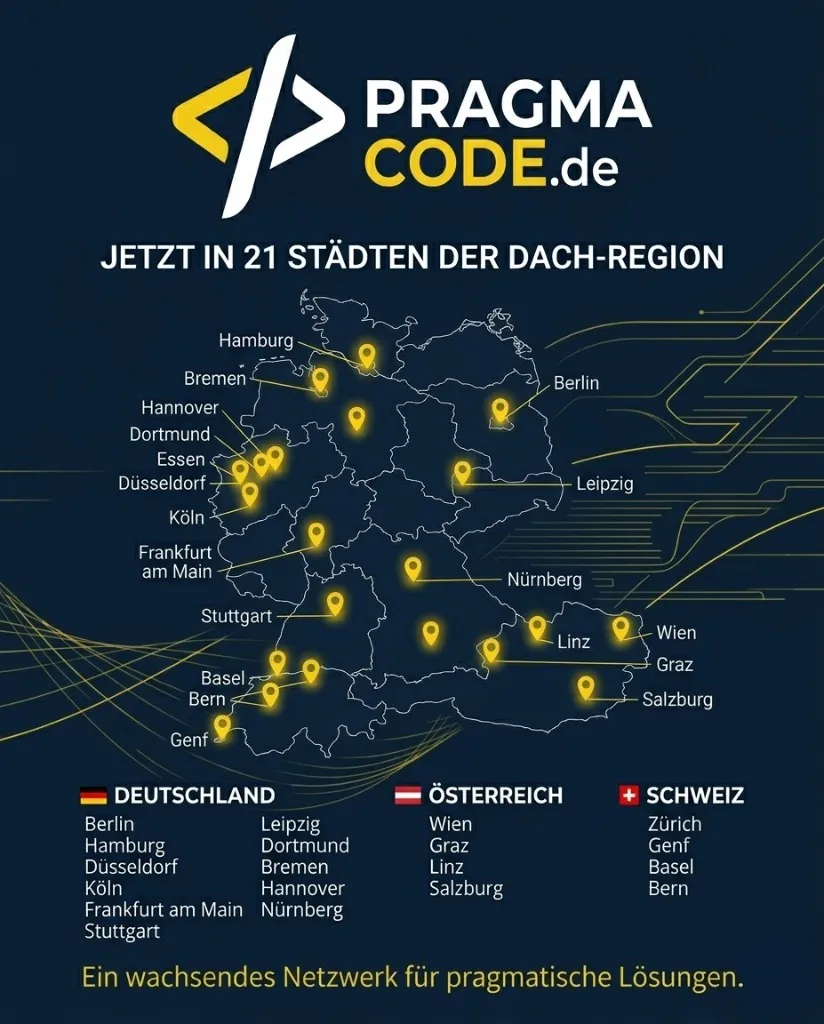
Schedule a Free ConsultationOur Regional Expertise
We are your digital partner – regionally anchored and successfully scaling across borders.
Have a vision?
Let's check together how we can make your idea take flight.
Book your free strategy call nowExtended Specialized Glossary
SPF (Sender Policy Framework)
DNS-based email validation protocol specified in RFC 7208 that defines which mail servers and IP addresses are authorized to send emails on behalf of a given domain.
DKIM (DomainKeys Identified Mail)
Cryptographic email authentication method specified in RFC 6376 that digitally signs outgoing emails with an asymmetric key pair to guarantee message integrity in transit.
DMARC
Email policy and reporting framework specified in RFC 7489 that leverages SPF and DKIM to instruct receiving servers how to handle unauthenticated messages (e.g. quarantine or reject).
DMARC Alignment
Technical verification ensuring the visible sender domain in the From header aligns with the domains authenticated via SPF (Return-Path) or DKIM (d= tag).
SPF-Flattening
Technical optimization method that collapses nested DNS lookup mechanisms into static IP ranges, preventing SPF PermError failures caused by exceeding the 10-DNS-lookup limit.
BIMI (Brand Indicators for Message Identification)
Email standard allowing authenticated domains with strict DMARC enforcement to display verified brand logos directly in recipient inboxes.
MTA-STS
Mail Transfer Agent Strict Transport Security (RFC 8461) protocol that enforces TLS encryption between mail servers and mitigates man-in-the-middle and downgrade attacks.
Reverse DNS (rDNS/PTR)
DNS resolution mapping an IP address back to its associated domain name (PTR record), used by recipient mail servers to verify sender authenticity.