


More than just servers in the basement: Why local business tax allocation, regional energy costs, and data sovereignty in Germany, Austria, and Switzerland strategically shape cloud, colocation, and on-premise architectures for SMEs.
This article is an in-depth expert contribution from our content cluster. Discover the complete overview on our main page:IT Strategy & Infrastructure Consulting →
- 2026 Political & Tax Dynamics: Debates surrounding local business tax allocation to municipalities force data center operators and SMEs to re-evaluate cloud region locations across Germany, Austria, and Switzerland.
- Total Cost of Ownership (TCO): Beyond raw electricity tariffs, local municipal tax rates, grid access, and Power Usage Effectiveness (PUE) sit at the center of financial infrastructure evaluations.
- Strategic Hybrid Architecture: Blending regional hyperscaler zones, energy-efficient colocation facilities, and localized edge servers ensures maximum data sovereignty alongside predictable long-term operating costs.
Geopolitics of Server Landscapes in the DACH Region
Choosing server infrastructure locations is no longer a purely technical decision. Situated between strict EU compliance mandates, municipal tax incentives, and fluctuating energy costs, site selection has become a vital lever for enterprise resilience.
- 1. Introduction: Why Server Locations Are Executive Mandates
- 2. The Tax Debate: Local Business Tax Allocation & Municipal Impact
- 3. The 5 Critical Location Factors in the DACH Region
- 4. Total Cost of Ownership (TCO): What Colocation & Cloud Really Cost
- 5. Comparison: Hyperscaler Cloud vs. Regional Colocation vs. On-Premise
- 6. Green IT & PUE: Energy Efficiency as a Competitive Edge
- 7. The SME Decision Matrix
- 8. Step-by-Step Implementation Roadmap
- 9. Conclusion & Outlook: Sovereign Data Infrastructure
1. Introduction: Why Server Locations Are Executive Mandates
For years, a simple rule governed enterprise IT strategy: "Default to the Cloud." Whether spinning up AWS instances in Frankfurt, Microsoft Azure in Dublin, or Google Cloud services—everything was expected to be virtual, flexible, and hands-off. However, by 2026, corporate mindsets across Germany, Austria, and Switzerland (DACH) have fundamentally shifted. The physical reality of servers, data centers, and fiber optic backbones has returned to center stage.
Two main catalysts drive this strategic pivot: First, strict European regulatory frameworks—such as the EU AI Act, the NIS-2 Directive, and the GDPR—demand uncompromising control over the physical jurisdiction where sensitive corporate data resides. Second, macroeconomic factors including energy tariffs, grid capacity, and municipal tax policies now heavily influence corporate balance sheets.
Strategic Guidance for Leadership
A resilient digital strategy does not evaluate server infrastructure solely on monthly VM rental fees. It synthesizes municipal tax factors, regional power usage effectiveness (PUE), latency requirements, and legal data sovereignty into a single unified financial model.
Recent legislative debates regarding the allocation of local business taxes for data centers highlight this reality: Data infrastructure sites are political and financial hotspots. Where data centers are constructed, substantial tax revenues flow to local municipalities—which directly impacts municipal development, local green energy initiatives, and regional digital infrastructure.
2. The Tax Debate: Local Business Tax Allocation & Municipal Impact
Historically, municipalities hosting massive data center facilities often received surprisingly meager local business tax revenues. Because corporate headquarters of hyperscalers or operator holding companies were frequently registered in major financial hubs or overseas, traditional Local Business Tax Allocation rules (which weighed heavily on local payroll totals) failed to capture the true value. After all, a highly automated 50-megawatt facility might employ only a few dozen technicians on-site.
The 2026 legislative reform directly resolves this discrepancy: By reforming the definition of municipal tax permanent establishments, hosting municipalities that supply land, electrical grid capacity, and cooling resources receive a significantly larger share of local business tax allocations.
Tax Lever Impacting Facility Placement
For data center operators and corporate tenants, tax reforms mean that municipalities in non-metropolitan regions offering attractive local tax multipliers and dedicated green energy grants are rapidly emerging as high-value data center hubs.
For mid-sized enterprises across the DACH region, this yields two primary operational impacts: 1. Regional Diversification: Modern colocation facilities are expanding beyond traditional megacity hubs (like Frankfurt, Zurich, or Vienna) into secondary dezentralized nodes offering lower municipal tax multipliers. 2. Direct Regional Synergy: Enterprises deploying hybrid cloud models can combine ultra-low latency connectivity with regional economic development subsidies by partnering with local data center providers.
3. The 5 Critical Location Factors in the DACH Region
When engineering an enterprise infrastructure strategy for the next 5 to 10 years, decision makers must evaluate the overall DACH Location Factor against five core criteria:
1. Energy Tariffs & Grid Reliability
Industrial electricity rates vary considerably between Germany, Austria, and Switzerland. Availability of renewable energy (wind in northern Germany, hydro in Austria/Switzerland) determines both operating expenditure and Scope 3 carbon metrics.
2. Fiber Connectivity & Peering Exchanges
Direct interconnects to major Internet Exchange Points (such as DE-CIX in Frankfurt or SwissIX in Zurich) guarantee ultra-low latencies (< 5 ms) essential for real-time applications.
3. Data Sovereignty & Legal Jurisdiction
Swiss FADP protects data in Switzerland, while GDPR governs the EU. Enterprises mitigate US CLOUD Act exposure by partnering with pure-play European or Swiss facility operators.
4. Power Usage Effectiveness (PUE)
State-of-the-art facilities achieve a PUE metric between 1.15 and 1.2, whereas aging legacy in-house server closets often exceed 1.8, wasting substantial energy.
5. Municipal Tax Multipliers & Surcharges
Local business tax multipliers ranging from 240% in rural districts to over 470% in Tier-1 cities directly translate into colocation rack rental pricing.
4. Total Cost of Ownership (TCO): What Colocation & Cloud Really Cost
A common executive oversight is comparing raw compute instance pricing in isolation. Evaluating Total Cost of Ownership (TCO) accurately requires analyzing direct and indirect cost drivers across a 5-year operational horizon:
Purchasing server hardware, enterprise NVMe storage arrays, networking hardware, and permanent software licenses. Public cloud models trade CAPEX for ongoing OPEX.
Monthly rack space rental, power consumption per kWh, dedicated bandwidth lines, hardware maintenance contracts, and sysadmin patch operations.
The hidden pitfall of major US cloud platforms: Ingress data is free, but extracting corporate data (Data Egress) incurs significant financial penalties.
Expenses for third-party security audits, NIS-2 certifications, penetration testing, and legal data protection counsel.
Empirical analyses show that for steady-state workloads (e.g. 50+ continuously running database and application servers), a hybrid model leveraging regional colocation alongside serverless edge nodes is up to 40% more cost-effective than running exclusively on public hyperscaler clouds.
5. Comparison: Hyperscaler Cloud vs. Regional Colocation vs. On-Premise
Determining the optimal deployment model depends on workload characteristics. The comparison table below highlights the trade-offs across the three primary server infrastructure models in the DACH region:
Comparison of Server Deployment Models in the DACH Region
- Flexibility: Extremely high – Global instant elasticity on demand.
- Cost Model: Pure OPEX – Expensive for steady-state baseline compute.
- Sovereignty: Constrained – Exposed to US CLOUD Act data access risks.
- Maintenance: Low hardware overhead, high cloud governance complexity.
- Flexibility: High – Owned hardware inside certified data center environments.
- Cost Model: Predictable – Low power & egress costs via local contracts.
- Sovereignty: Maximum – 100% GDPR & EU/Swiss regulatory compliance.
- Maintenance: Balanced – Facilities managed by vendor, hardware owned.
6. Green IT & PUE: Energy Efficiency as a Competitive Edge
Corporate sustainability has transformed from a branding topic into a core financial metric. Following the implementation of the CSRD Directive (Corporate Sustainability Reporting Directive), companies across the DACH region must disclose Scope 3 indirect emissions—which includes the carbon footprint of third-party data center usage.
PUE Metric Definition
Power Usage Effectiveness (PUE) is calculated by dividing total facility energy consumption by IT equipment energy consumption. A PUE of 1.0 represents perfect efficiency.
Waste Heat Reuse
Next-gen DACH data centers feed waste heat into municipal district heating networks or nearby residential areas, unlocking additional efficiency credits.
Organizations migrating workloads into a Green IT Infrastructure lower operational electricity bills while strengthening ESG ratings for tenders, financing, and credit evaluations.
7. The SME Decision Matrix
To assist IT leaders across the DACH region in choosing the right architecture, reference the following decision matrix for enterprise infrastructure planning:
Scenario A: Volatile Workloads & Rapid Prototyping
Use Case: Highly variable traffic spikes, rapid global expansion.
Recommendation: Public CloudLeverage hyperscaler elasticity for agile MVP testing, microservices, and dynamic frontend assets.
Scenario B: Steady Baseline & Sensitive Enterprise Data
Use Case: Core ERP, databases, customer PII, internal AI training.
Recommendation: Regional ColocationAnchor core systems inside certified DACH data centers featuring low PUE ratings and full GDPR compliance.
8. Step-by-Step Implementation Roadmap
Executing an infrastructure transformation requires a structured approach. Follow this step-by-step roadmap from initial audit to live operations:
-
Step 1: Workload Audit & Data Classification
Classify applications based on latency sensitivity, data confidentiality levels, and workload utilization profiles (static vs. dynamic).
-
Step 2: DACH Site & Facility Provider Evaluation
Evaluate prospective data centers on PUE efficiency, municipal tax multipliers, green power sourcing, and peering quality.
-
Step 3: Hybrid Architecture Design & Proof of Concept
Architect redundant network topology (e.g. Direct-Connect links) linking on-premise edge hardware, colocation racks, and cloud endpoints.
-
Step 4: Phased Migration & Continuous Egress Monitoring
Migrate workloads in phases, establish automated egress bandwidth tracking, and audit facility PUE metrics regularly.
9. Conclusion & Outlook: Sovereign Data Infrastructure
Selecting data center sites and server infrastructure across Germany, Austria, and Switzerland in 2026 demands a multidimensional evaluation of tax law, energy efficiency, regulatory compliance, and TCO optimization. Relying uncritically on pure public cloud narratives exposes organizations to unforeseen cost inflation and compliance vulnerabilities.
A strategic hybrid architecture—housing core databases and steady-state workloads inside energy-efficient regional DACH data centers while deploying agile frontend layers via modern edge networks—delivers the ideal balance of speed, cost predictability, and absolute data sovereignty.
Quick Check: 2026 Infrastructure Checklist
Need independent advice on your server & cloud infrastructure strategy?
Schedule Free ConsultationOur Regional Expertise
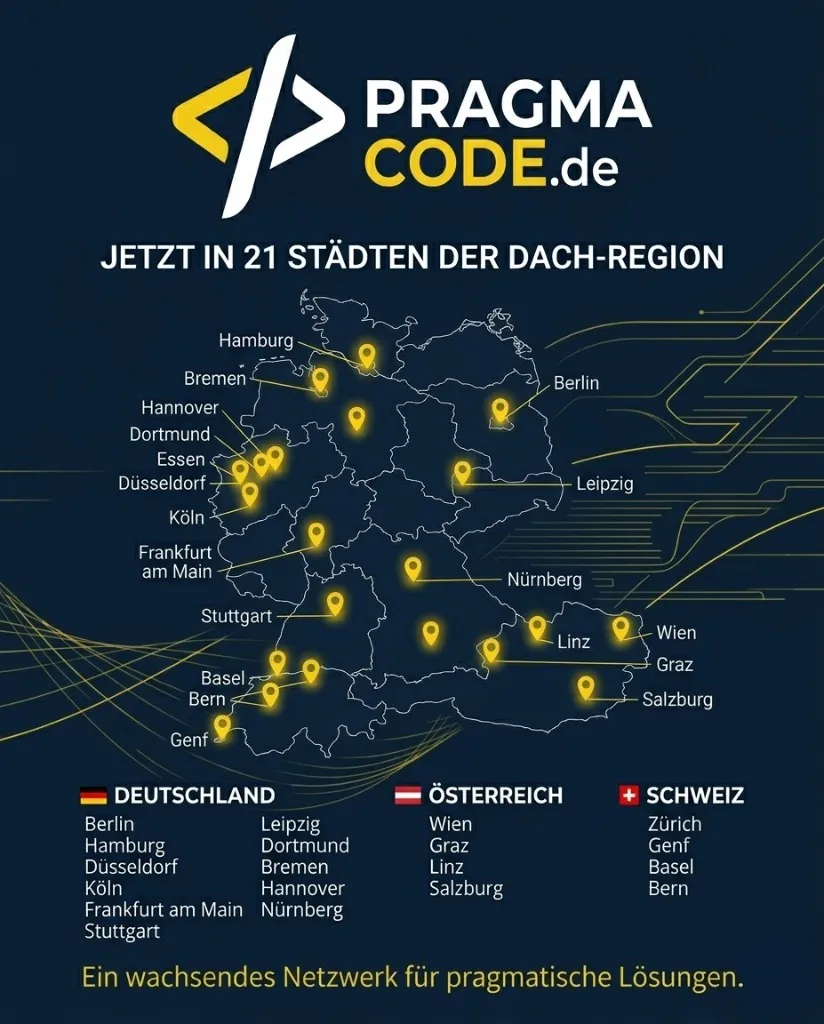
We are your digital partner – regionally anchored and successfully scaling across borders.
Have a vision?
Let's check together how we can make your idea take flight.
Book your free strategy call nowExtended Specialized Glossary
Local Business Tax Allocation
Legal allocation mechanism distributing local business taxes to municipalities hosting data centers or operational facilities.
PUE (Power Usage Effectiveness)
Standardized metric measuring data center energy efficiency, calculated as the ratio of total facility energy to energy consumed by IT equipment.
DACH Location Factor
The aggregate of economic, tax, infrastructural, and regulatory conditions for IT infrastructure investments in Germany, Austria, and Switzerland.
Green IT Infrastructure
Resource-efficient and energy-smart design of server landscapes, cooling systems, and software stacks to minimize corporate carbon footprints.