


Since August 2, 2026, the EU AI Act mandates machine-readable markings for AI-generated content. Discover how SynthID, C2PA, and modern content provenance architectures protect companies from fines, visibility losses, and deepfake risks.
This article is an in-depth expert contribution from our content cluster. Discover the complete overview on our main page:IT Security →
The Era of Mandatory AI Labeling Is Here
Since August 2, 2026, the transparency obligations of the EU AI Act apply in full: providers and deployers of generative AI systems in the EU must mark synthetic media in a machine-readable format. With over 100 billion media files watermarked by Google's SynthID and widespread C2PA adoption, content provenance has become an indispensable enterprise standard.
- Enforceable since August 2026: EU AI Act Article 50 mandates machine-readable marking of AI-generated content — violations carry fines up to €15M or 3% of global annual turnover.
- Dual-layer defense as the industry standard: The tech sector relies on the synergy of SynthID (sub-perceptual, transformation-resilient watermarking) and C2PA (cryptographically signed provenance metadata).
- Google Shopping & E-Commerce: Google actively penalizes AI-generated product images lacking verifiable provenance in the Merchant Center and organic search with visibility losses.
- Why Now? The Grace Period Has Expired
- SynthID Explained: Google DeepMind's Invisible Watermark
- C2PA & Content Credentials: The Digital Birth Certificate for Media
- SynthID vs. C2PA vs. IPTC: The Technical Comparison
- The Industry's Dual-Layer Strategy
- EU AI Act Article 50: Binding Obligations for SMEs
- Google Shopping & SynthID: Visibility and Trust Signals
- Practical Guide: Auditing and Hardening Content Pipelines
- Compliance Roadmap for the Active Enforcement Phase
- Deepfakes & Disinformation: Protecting Corporate Identity
- The Future of Content Authenticity: Outlook 2026–2028
- Conclusion: Transparency as an Operational Competitive Advantage
Why Now? The Grace Period Has Expired
Since the widespread production deployment of generative AI models such as Gemini 2.5, ChatGPT-4o, Midjourney v6, and Claude 3.7 Sonnet, a fundamental question has become unavoidable for the market: How do companies prove whether content is of human or machine origin? The answer from regulatory authorities and the global tech industry is clear: through AI watermarking and seamless content provenance.
The urgency is acute: Since August 2, 2026, the binding transparency obligations under Article 50 of the EU AI Act are fully in effect. Providers and deployers of generative AI systems must ensure that synthetic outputs — whether images, video streams, synthetic voice clones, or LLM-generated text — are marked in a machine-readable format. Concurrently, Google has tightened Merchant Center and Search policies to prioritize verified provenance.
"AI watermarking is no longer an abstract future topic — it is binding law since August 2026 and a tangible ranking factor in the digital value chain. Companies that fail to mark their synthetic content in accordance with standards risk regulatory fines and severe visibility losses."
For small and medium-sized enterprises (SMEs) in Europe leveraging generative AI across marketing, e-commerce catalogs, customer service, or internal workflow automation, the transition from experimentation to regulated enterprise operations is complete. This guide provides technical analysis, legal context, and actionable implementation steps.
SynthID Explained: Google DeepMind's Invisible Watermark
SynthID is a breakthrough technology developed by Google DeepMind that embeds an imperceptible digital watermark directly into the fundamental mathematical fabric of media — into pixel values, audio frequency spectra, or statistical token probability distributions. The key advantage: human eyes and ears perceive zero quality loss.
How Does SynthID Work Technically?
Images & Video (Sub-Pixel Modulation)
SynthID modifies pixel values at a sub-perceptual level across multiple frequency bands. The embedded signal survives extreme transformations such as aggressive JPEG/WebP compression, geometric cropping, color filters, scaling, and screenshots. Globally, over 100 billion images and videos have already been marked with SynthID.
Audio & Voice Synthesis
For synthetic speech and audio content, the signal is modulated directly into the frequency spectra and waveforms. Over 60,000 years of audio material have already been watermarked — notably across Cloud Text-to-Speech and generative voice platforms like ElevenLabs.
Text & LLM Outputs (Open Source via Hugging Face)
For language models, SynthID subtly manipulates the probability distribution of upcoming tokens during sampling, creating a mathematically detectable signature that remains indistinguishable from standard text to human readers. Google DeepMind has released the reference implementation as an open-source library (google-deepmind/synthid-text) on GitHub and integrated it directly into Hugging Face transformers via the SynthIDTextWatermarkingLogitsProcessor. This allows enterprises to watermark self-hosted open-weights models like Llama 3.3, Mistral, or Gemma directly on-premise.
Pro Tip: Integrating Open-Source SynthID Text into Private RAG Pipelines
Enterprises running self-hosted inference servers with vLLM, Hugging Face TGI, or local transformer stacks can activate the SynthIDTextWatermarkingLogitsProcessor with minimal Python code. This satisfies Article 50 of the EU AI Act for internal chatbots and automated text pipelines directly at the inference layer — without proprietary cloud API lock-in.
The SynthID Ecosystem in 2026: Broad Industry Adoption
What began as a Google-internal research initiative has become the bedrock of a global consortium in 2026. With the introduction of native verification tools in Google Chrome, Google Image Search, and "Circle to Search," consumers and compliance auditors can verify in seconds whether content was AI-generated.
Adoption by major industry players highlights its status as an established standard:
1. OpenAI (ChatGPT & DALL·E)
Full integration of SynthID watermarks into DALL·E 3 and GPT-4o media outputs to guarantee cross-platform interoperability and forensic detectability.
2. Nvidia (Cosmos Architecture)
Embedding SynthID into Nvidia's Cosmos Foundation Models for video and 3D world generation — essential for industrial simulation, autonomous driving, and gaming.
3. ElevenLabs
Automated SynthID watermarking for all synthetic speech and voice clone outputs to mitigate voice cloning fraud and social engineering attacks.
4. Kakao & Global Tech
Implementation of the standard across the Asian market for messaging ecosystems and AI search engines to ensure global cross-border compliance.
C2PA & Content Credentials: The Digital Birth Certificate for Media
While SynthID anchors forensic watermarks within the medium itself, the open standard C2PA (Coalition for Content Provenance and Authenticity) takes a complementary approach: it attaches a cryptographically signed metadata manifest to the file, functioning as a tamper-evident "birth certificate."
How the C2PA Standard Works (ISO/IEC 22144)
Manifest Generation upon Creation
When an image is captured by a camera or generated by an AI tool (e.g., Adobe Firefly, Midjourney), the authoring tool signs a manifest containing timestamps, creator ID, and the model used via asymmetric cryptography.
Cryptographic Editing History (Chain of Custody)
Every subsequent editing step (e.g., cropping in Photoshop, color grading in a CMS) appends a new, cryptographically signed layer. Similar to a Git commit log, an unbroken provenance trail is formed.
Public Verifiability (Tamper-Evidence)
Browsers, platforms, and consumers can validate signature chains without specialized proprietary software. If an image is altered without signing a new manifest layer, verification fails automatically.
Hardware Signing at the Sensor Source
Camera manufacturers such as Sony (Alpha A9 III, A7 IV firmware), Leica (M11-P), and Nikon (Z6 III, Z8, Z9) integrate C2PA cryptographic hardware chips into their cameras. Authentic photographs are immutably signed at the precise moment of capture.
Google Search & Lens Trust Badges
In Google Lens and Google Image Search, the "About this image" drawer displays verified C2PA provenance. Media carrying an unbroken provenance chain receives clear trust advantages over unverified web imagery.
C2PA is backed by an industry-leading coalition: Adobe, Microsoft, Intel, BBC, Leica, Nikon, Sony, OpenAI, and Google. For SMEs, C2PA represents the primary instrument for satisfying statutory audit and governance requirements.
Pro Tip: Verifying Content Credentials in Practice
You can verify C2PA manifests at any time via contentcredentials.org/verify or using the open-source CLI (c2patool). We recommend integrating this verification step automatically into your asset pipelines (e.g., via n8n or CI/CD).
SynthID vs. C2PA vs. IPTC: The Technical Comparison
For a robust IT and marketing strategy, decision-makers must understand how these methods differ in resilience, detail, and standardization:
Comparison: Invisible Pixel Watermark vs. Cryptographic Metadata
- Resilience: Extremely high — survives 95%+ of all transformations (cropping, filters, re-encoding, social compression).
- Anchoring: Woven directly into the pixel matrix or frequency spectra.
- Limitation: Detection relies primarily on cloud-based API services (e.g., Google Content Detection API).
- Primary Purpose: Forensic detectability in cases of data loss or malicious metadata stripping.
- Granularity: Maximum detail — provides author identities, timestamps, editing tools, and parent assets.
- Anchoring: Cryptographically signed manifest blocks stored inside the file container (JUMBF).
- Limitation: Can be stripped by simple screenshots or outdated legacy asset pipelines.
- Primary Purpose: Comprehensive documentation, compliance audits, and official transparency proofs.
The Industry's Dual-Layer Strategy
The core insight of modern IT security architectures: No single standard suffices on its own. Leading technology providers are therefore implementing a synchronized dual-layer strategy:
Layer 1: SynthID (The Survivor)
The invisible watermark as forensic fallback
Survives 95%+ of all transformationsEven when an image is captured via screenshot, shared via instant messengers, or compressed by aggressive social media algorithms, the SynthID signal remains detectable.
Layer 2: C2PA (The Historian)
Cryptographic metadata for complete provenance proof
Complete Chain of CustodyC2PA delivers indispensable context: Which model generated the content? When? Was it edited? Essential for regulatory audits and legal certainty.
Businesses using modern enterprise tools from Google, Adobe, or OpenAI already generate media protected by this dual umbrella in many workflows. The operational challenge is ensuring internal CMS, DAM, and build pipelines do not strip these signatures on export.
EU AI Act Article 50: Binding Obligations for SMEs
The EU AI Act governs transparency obligations for generative AI systems under Article 50. These provisions have been directly enforceable across all EU member states since August 2, 2026.
The Three Core Obligations under Active Enforcement
Generative model providers must ensure media outputs are machine-readably marked, interoperable, and detectable. SynthID and C2PA directly fulfill this requirement.
Companies publishing deepfakes or AI-generated likenesses of real persons and events of public interest must label them conspicuously and unmistakably.
Users must be informed immediately when interacting with an AI system (e.g., customer service chatbots or voice agents), regardless of use case.
The EU Code of Practice: 3 Pillars of Audit Readiness
The Code of Practice (GPAI) issued by the European Commission establishes the technical benchmark used by market surveillance authorities during compliance audits:
1. Invisible Watermarks (Forensic Resilience)
Permanent embedding in signal structures (e.g., SynthID) to safeguard provenance even after external file metadata has been removed.
2. Cryptographically Signed Metadata (Transparent Chain)
Full documentation of authoring tools, model versions, and timestamps via C2PA to fulfill statutory audit trails.
3. Visible Labeling (User Disclosure)
Clear visual or acoustic badges on media assets simulating real-world events or human personalities.
Fines for Transparency Infringements
Failure to comply with labeling and documentation mandates
Up to €15M or 3% of global revenueApplies to providers and deployers for missing markings or absent user disclosures.
Fines for Prohibited AI Practices
Use of banned AI systems or deliberate manipulation
Up to €35M or 7% of global revenueApplies to intentional deception or circulating deceptive synthetic media to mislead.
Google Shopping & SynthID: Visibility and Trust Signals
Beyond regulatory fines, a major commercial factor comes into play: Google treats verified content provenance in e-commerce and organic search as a fundamental quality signal.
Visibility Losses without Provenance
AI-generated product images without machine-readable SynthID or C2PA markers are downranked in Google Shopping and organic product carousels, costing merchants valuable traffic.
Erosion of Consumer Trust
Chrome and Google Search display official trust badges on verified media. When these are missing on synthetic product renders, store conversion rates drop noticeably.
Pro Tip: Utilizing the Google Content Detection API
Through the Content Detection API on the Gemini Enterprise platform, merchants and platform operators can automatically scan large media catalogs for SynthID markers and third-party AI content, auditing product feeds prior to Merchant Center synchronization.
Practical Guide: Auditing and Hardening Content Pipelines
How can businesses future-proof their existing content and development pipelines? Key areas of action include:
Product Photography & AI Image Generation
Deploy Certified Enterprise Tools: Use models and platforms featuring native SynthID and C2PA signing (e.g., Google Gemini API, Adobe Firefly Enterprise, OpenAI DALL·E). Avoid unverified open-source generators without provenance layers for commercial assets.
Prevent Metadata Stripping in DAM/CMS: Audit your image optimization and CDN pipelines (e.g., ImageMagick, Sharp, Cloudflare Polish). Ensure JUMBF and C2PA headers are preserved as essential data.
Validate Merchant Center Feeds: Transmit correct attributes for AI-generated images and ensure pixel matrices remain intact through image resizing workflows.
Content Marketing, Text & Social Media
1. Transparency in Editorial AI Content
Satisfy AI Act rules through transparent disclosures when editorial copy is AI-assisted, especially regarding topics of broad commercial or public significance.
2. Leverage LLM APIs with Text SynthID
When using Gemini-based APIs, text watermarks are integrated automatically, protecting against plagiarism claims and proving the origin of enterprise AI assistants.
3. Comply with Platform Requirements
Meta, LinkedIn, YouTube, and TikTok require declaration of synthetic content. Automated social scheduling pipelines should include disclosure flags by default.
Compliance Roadmap for the Active Enforcement Phase
For sustainable and legally sound operations, Pragma-Code recommends a structured 5-stage implementation framework:
-
Phase 1: AI Content Inventory & Shadow AI Audit
Catalog all workflows utilizing generative AI tools. Identify unmanaged employee accounts and migrate them to governed enterprise licenses with provenance support.
-
Phase 2: Tool Evaluation & Pipeline Hardening
Audit image editing and export pipelines in your CMS and shop backend. Verify that C2PA manifests are preserved during resizing and WebP conversion.
-
Phase 3: Dual-Layer Provenance Integration
Combine SynthID-enabled generators with C2PA signing. Embed automated verification steps into your CI/CD and deployment workflows.
-
Phase 4: Employee Training & AI Literacy
Train content creators and marketing leads in labeling requirements under Article 4 of the EU AI Act and document governance policies for audits.
-
Phase 5: Continuous Detection Monitoring
Establish automated spot checks on published media via Content Detection APIs to catch faulty exports before compliance notices or penalties arise.
Deepfakes & Disinformation: Protecting Corporate Identity
Watermarks and Content Credentials represent far more than regulatory compliance: they form a critical shield against cyber threats, executive impersonation, and counterfeit goods.
Protecting against CEO Fraud & Brand Damage
With C2PA and SynthID, companies can prove in real-time during crisis situations whether a circulating executive video is authentic or a malicious deepfake.
Defending against Fake Product Media
Cryptographically signed product photography prevents counterfeiters from faking genuine manufacturer certifications on digital marketplaces.
Verification in Voice & Video Support
Authenticated voice watermarks protect customers from falling victim to fraudulent support calls and simulated corporate voices.
The Future of Content Authenticity: Outlook 2026–2028
The evolution of digital provenance technologies is accelerating rapidly. Key trends driving the market include:
National supervisory bodies are rolling out standardized audits across e-commerce portals and high-traffic publishing platforms.
Browsers and operating systems will display provenance icons directly in address bars and file managers, flagging unverified synthetic media.
Next-generation camera sensors will sign original captures directly on the hardware chip (Secure Enclave), anchoring the boundary between raw photography and AI rendering in hardware.
Conclusion: Transparency as an Operational Competitive Advantage
Content provenance and watermarking are not burdensome bureaucracy, but the bedrock of digital credibility in the AI era. Businesses that establish a clean provenance architecture secure four decisive advantages:
1. Complete Legal Certainty
Protection from EU AI Act fines and immediate audit readiness during supervisory reviews.
2. Maximum Visibility
Preferred ranking in Google Shopping, AI Overviews, and product feeds through verified trust signals.
3. Reputation & Trademark Defense
Cryptographic proof of authentic enterprise media and rapid exposure of deepfake attacks.
4. Sustainable Customer Trust
Transparent handling of synthetic media as a powerful differentiator against opaque competitors.
Compliance Check 2026: Does Your Content Pipeline Meet All Standards?
Do you have questions about AI watermarking & content provenance?
Book your free consultationOur Regional Expertise
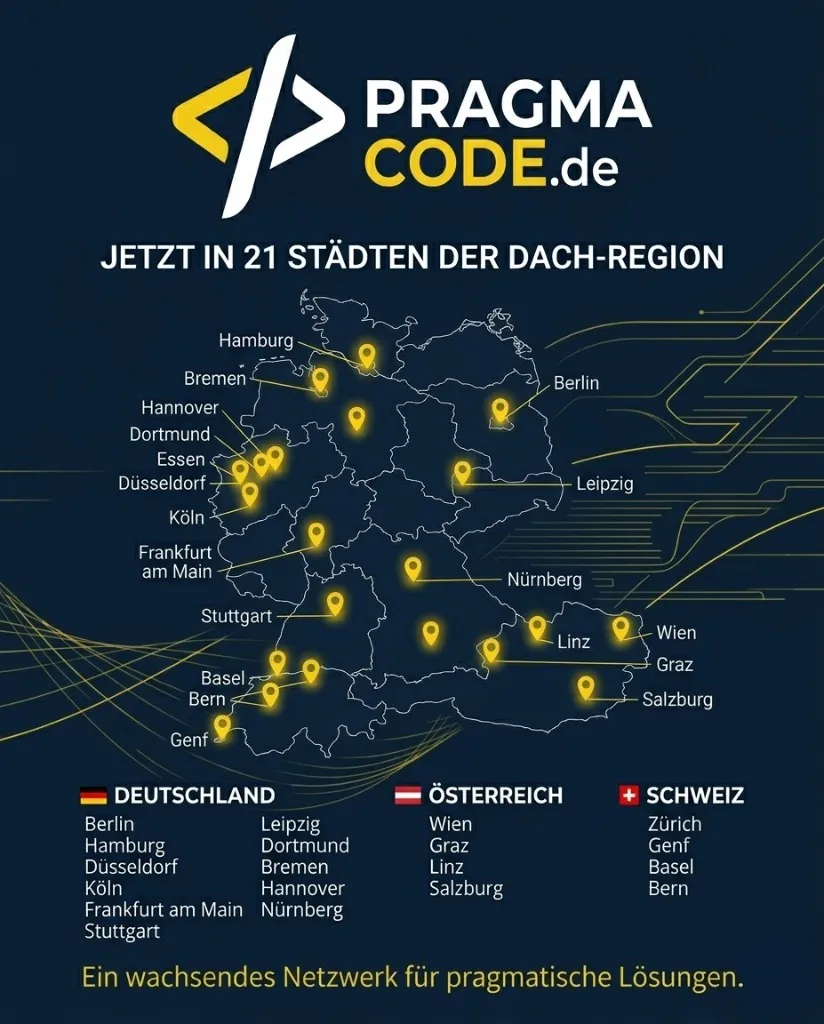
We are your digital partner – regionally anchored and successfully scaling across borders.
Have a vision?
Let's check together how we can make your idea take flight.
Book your free strategy call nowExtended Specialized Glossary
SynthID
A technology developed by Google DeepMind that embeds invisible digital watermarks directly into AI-generated images, audio, video, and text. The mark is robust against compression, cropping, and re-encoding.
C2PA (Content Credentials)
An open technical standard (ISO/IEC 22144) by the Coalition for Content Provenance and Authenticity. It creates cryptographically signed metadata manifests that verifiably document the complete provenance history of content.
Content Provenance
The umbrella term for all technologies and procedures that make the origin, creation method, and editing history of digital content traceable. Encompasses both watermarks (SynthID) and metadata standards (C2PA).
Deepfake
AI-created or manipulated media content (image, video, audio) showing a real person in a situation that never occurred. Deepfakes are subject to EU-wide labeling requirements starting August 2026.
AI Watermarking
The process of embedding invisible digital marks in AI-generated content that enable later machine detection of the content as AI-generated. Leading technologies include SynthID (Google) and comparable systems from OpenAI and Meta.
EU AI Act Article 50
The article of the EU AI Act governing transparency obligations for generative AI systems. It mandates that AI-generated outputs must be machine-readably marked and deepfakes must be clearly labeled as synthetic.
Content Detection API
An API provided by Google on the Gemini Enterprise Agent Platform that enables businesses to detect AI-generated content (including from third-party models). Use cases: feed sorting, fact-checking, and fraud prevention.
Code of Practice (GPAI)
A voluntary framework published by the EU Commission providing practical guidelines for complying with the AI Act's transparency obligations. It recommends the combined use of watermarks and signed metadata.