

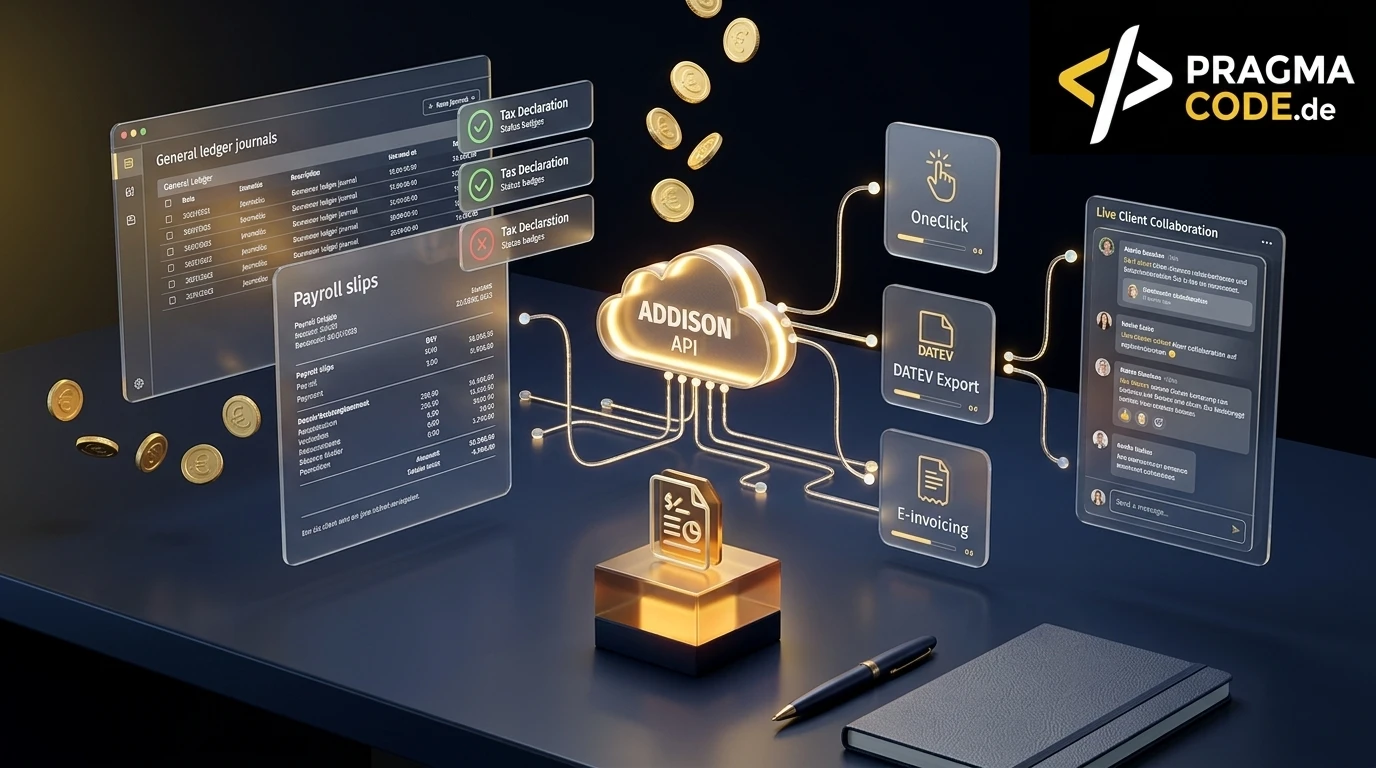
ADDISON by Wolters Kluwer is, alongside DATEV, the most established software foundation for German tax advisories and growing SMEs. How can businesses achieve seamless integration with modern ERP systems, cloud platforms, and automated e-invoicing pipelines in 2026?
This article is an in-depth expert contribution from our content cluster. Discover the complete overview on our main page: AI & Workflow Automation →
- Advisory Backbone & SME ERP: ADDISON supports complex corporate group structures, payroll, and comprehensive tax compliance across DACH.
- ADDISON OneClick Collaboration Hub: Cloud portal for automated receipt capture, employee self-service payroll, and live bank reconciliation.
- Hybrid Integration Architecture: RESTful web services coexist with XML gateways, DATEV interchange formats, and certified e-invoicing pipelines.
- 1. ADDISON in the DACH Market: Architecture & 2026 Positioning
- 2. ADDISON OneClick: The Digital Client Portal in Detail
- 3. Integration Landscape: REST API, XML Gateways & DATEV Exchange
- 4. Comparison: Tax Advisory Edition vs. In-House SME ERP
- 5. The 5 Core Modules for Automated Financial Operations
- 6. GoBD Compliance, E-Invoicing Mandate 2026 & Certified Security
- 7. Integration Roadmap: 4 Phases to an Automated Pipeline
- 8. Avoiding Common Cost Traps & Technical Pitfalls
- 9. Conclusion & Actionable Executive Checklist
1. ADDISON in the DACH Market: Architecture & 2026 Positioning
The ADDISON software suite, developed by the multinational specialized publishing and software corporation Wolters Kluwer Tax & Accounting, stands alongside DATEV as one of the most firmly established core systems for certified public accountants, tax advisors, and ambitious mid-market enterprises across Germany, Austria, and Switzerland. While lightweight modern SaaS tools focus on solo entrepreneurs and early-stage micro-businesses, ADDISON specializes in handling intricate multi-entity corporate holdings, tax consolidation groups, high-volume payroll operations, and regulated advisory practice management.
In 2026, the ADDISON platform operates at the center of an accelerated cloud transformation. Historically constructed on an on-premise client-server architecture powered by relational Microsoft SQL Server databases, Wolters Kluwer links the compute power of dedicated firm servers with the cloud-based client collaboration hub ADDISON OneClick through encrypted TLS tunnels. This hybrid deployment allows tax practices to retain strict sovereignty over sensitive fiscal ledgers while giving client companies, third-party ERP platforms, e-commerce stores, and financial services access to secure web interfaces.
Expert Tip: Seamless DATEV Interoperability
Many enterprises collaborate with external advisors who utilize DATEV ecosystems. ADDISON provides native certified conversion engines for the official DATEV Format, enabling bidirectional batch imports and accounting journal synchronizations without manual friction.
2. ADDISON OneClick: The Digital Client Portal in Detail
The primary driver for efficiency and paperless collaboration between enterprises and their advisors is ADDISON OneClick. This web-native portal operates as a centralized communication bridge where fiscal vouchers, approval workflows, and booking data flow bidirectionally in real time. Instead of relying on insecure email attachments or physical paper folders, corporate clients upload accounts payable and receivable documents directly into dedicated cloud workspaces.
1. Digital Receipt Management & Intelligent OCR
Incoming invoices are ingested via PDF, image files, or structured XML (ZUGFeRD, XRechnung). An embedded OCR engine extracts totals, bank IBANs, invoice identifiers, and tax rates for automated pre-accounting allocation.
2. Integrated Multi-Banking & Automated Account Reconciliation
Direct banking integration connecting German and European financial institutions via PSD2 and EBICS protocols. Live banking statements are matched automatically against outstanding open items.
3. Employee Payroll Self-Service & Hours Ingestion
Corporate staff submit time tracking logs, expense receipts, bonus records, and medical leave notices through the OneClick mobile app or web interface, routing directly into the ADDISON payroll engine.
4. Interactive Business Reporting & Real-Time BWA Dashboards
Monthly economic assessments (BWA), balance sheet summaries, and liquidity forecasting charts are rendered into interactive visual reports accessible to executive decision-makers 24/7.
3. Integration Landscape: REST API, XML Gateways & DATEV Exchange
Integrating ADDISON with contemporary enterprise architectures (such as n8n, Make, custom Node.js/Python microservices, or headless ERP systems) relies on a layered integration ecosystem. Depending on whether your engineering team connects to an advisory installation, the OneClick cloud gateway, or the ADDISON SME enterprise suite, specific protocols are engaged.
1. ADDISON OneClick REST API
Modern JSON REST endpoints for synchronizing invoice documents, payment advice slips, and customer master records directly with the Wolters Kluwer cloud.
2. DATEV Exchange Converters
Bilateral data conversion engine supporting standard DATEV Postversand and Kanzlei-Rechnungswesen specifications for accounting batches and open balances.
3. XML & CSV Directory Watchers
Scheduled file ingestion daemons that ingest structured XML payloads and batch journal entries from external warehousing and billing software.
4. ZUGFeRD & XRechnung Ingestion Engine
Native parsing engine that processes and validates hybrid and purely semantic XML invoices compliant with the European standard EN 16931.
For modern engineering and operations teams, deploying open-source automation platforms like n8n or enterprise cloud iPaaS middleware represents the premier integration methodology. Instead of building rigid point-to-point connections directly into on-premise ADDISON databases, middleware services capture transactional webhooks from storefronts (e.g., Shopify, Shopware), payment processors (Stripe, Adyen), and billing engines. The pipeline validates transaction records against strict tax rules, enriches line items with general ledger account codes, and transmits verified batches into the OneClick API.
A typical API payload dispatched to the OneClick endpoint includes standardized transaction metadata, ISO tax identification keys, debit and credit account codes according to standard German frameworks (SKR03 or SKR04), and the binary Base64-encoded PDF or XML voucher. By validating these data objects prior to ingestion, teams eliminate reconciliation errors, prevent duplicate accounts payable records, and supply clean fiscal data directly to tax accounting teams.
4. Comparison: Tax Advisory Edition vs. In-House SME ERP
Wolters Kluwer offers two primary variations of the ADDISON suite: ADDISON Kanzlei, architected for the professional governance needs of certified tax advisors, and ADDISON Mittelstand, developed for corporate in-house financial management.
Comparison: Practice Edition vs. Corporate SME Suite
- Core Objective: Practice workflow management, statutory deadline tracking, tax declaration, and billing under StBVV.
- Client Scalability: Simultaneous administration of hundreds of independent company accounts and varied charts of accounts.
- Collaboration: ADDISON OneClick acts as the customer-facing portal for digital receipt capture and payroll delivery.
- Governmental Interfaces: Dedicated connectors for ELSTER tax submissions, eGov repositories, and DATEV file conversion.
- Core Objective: In-house general ledger accounting, cost center accounting, fixed asset valuation, and treasury management.
- Operations Integration: Deep linkage with warehouse management, CRM systems, production planning, and commerce engines.
- Financial Controlling: Granular multi-tier contribution margin calculations, corporate subsidiary consolidation, and budget forecasts.
- Data Exchange: Web APIs, EDI communication protocols, and direct automated enterprise ERP ingestion pipelines.
5. The 5 Core Modules for Automated Financial Operations
To eliminate manual repetitive data handling, ADDISON organizes accounting functionality into specialized software modules that coordinate through integrated data layers.
1. General Ledger & AP/AR
Automated journal entry processing with machine learning assignment rules, bank statement matching, and instant automated VAT ID verification across Europe.
2. Payroll Accounting
Certified wage calculation complying with German statutory standards (ITSG, DEÜV), digital personnel files, and automated transmission to social insurance funds.
3. Fixed Asset Management
Calculates straight-line, declining-balance, and special tax depreciations, maintaining real-time asset registers directly synced with balance sheet accounts.
4. Tax Declarations & Financial Statements
Generates commercial and tax balance sheets, profit and loss statements, E-Bilanz taxonomy transmissions, and automated corporate tax returns.
5. Treasury & Cash Flow Management
Processes SEPA credit transfers, direct debits (B2B and Core), automated multi-tier dunning with interest calculation, and electronic bank statement parsing.
6. GoBD Compliance, E-Invoicing Mandate 2026 & Certified Security
When connecting external ERP databases, automated workflows, and billing gateways to ADDISON, full adherence to German audit standards (GoBD) is strictly mandatory. Wolters Kluwer guarantees comprehensive legal and technical compliance.
GoBD-Certified Immutability
Every finalized journal entry receives an unalterable timestamp and cryptographic hash. Corrections are recorded exclusively through reversible reversal entries with complete audit logs.
ISO 27001 & C5 German Cloud Infrastructure
Cloud infrastructure for ADDISON OneClick is hosted in certified high-security German data centers, fulfilling GDPR requirements and professional confidentiality mandates (§ 203 StGB).
EN 16931 E-Invoicing Compliance
Native parsing and validation of structured XML formats (XRechnung, ZUGFeRD), preserving complete semantic data across billing origin, accounting entry, and archive.
Two-Factor Authentication (2FA)
Portal access for corporate clients and staff is protected through multi-factor authentication protocols, preventing credential leaks from exposing corporate payroll data.
7. Integration Roadmap: 4 Phases to an Automated Pipeline
Deploying a reliable, automated integration between enterprise operations (such as Shopify, Odoo, custom software, or Salesforce) and ADDISON requires a methodical four-phase strategy.
-
Phase 1: Chart of Accounts & Tax Key Harmonization
Map internal corporate operational booking rules with the chart of accounts registered in ADDISON (SKR03 or SKR04), aligning cost centers, tax keys, and currency codes.
-
Phase 2: Interface Architecture & Transmission Design
Select the optimal ingestion protocol: Direct REST synchronization via the ADDISON OneClick API or automated scheduled SFTP batch delivery of DATEV/XML transaction journals.
-
Phase 3: Middleware Implementation & Staging Verification
Configure mapping logic and error handlers in n8n or custom middleware. Execute batch test runs with simulated transactions and audit GoBD verification logs in a sandbox environment.
-
Phase 4: Production Deployment & Monitoring
Switch to live automated processing, establish real-time error alerts for rejected line items, and finalize formal sign-off with your appointed certified tax auditor.
8. Avoiding Common Cost Traps & Technical Pitfalls
Despite the comprehensive functionality of ADDISON, companies often encounter unexpected delays and cost overruns during interface implementation if key factors are neglected.
1. Unplanned Connector Licensing Fees
Certain API extensions, automated OneClick modules, and export converters require dedicated software licenses on the advisory side. Clarify these costs prior to kickoff.
2. Desynchronized Master Records & Customer Duplicates
If customer and supplier master records are updated inside the ERP without syncing back to ADDISON, duplicate accounts and unmatched open items quickly accumulate.
3. Missing Visual Previews with Pure XML E-Invoices
When feeding raw XRechnung XML files into ingestion folders, failing to attach a rendered human-readable PDF copy creates friction during advisory audits.
4. Incomplete Batch Synchronization at Month-End
Failing to verify that all transactional batches have successfully settled before statutory monthly VAT deadlines can trigger provisional assessments by tax authorities.
9. Conclusion & Actionable Executive Checklist
In 2026, ADDISON by Wolters Kluwer stands out as a dependable, future-proof operational backbone for demanding tax advisory practices and mid-market companies alike. By combining the strengths of ADDISON OneClick, automated middleware pipelines, and certified DATEV exchange capabilities, enterprises eliminate manual data entry completely. This modernization frees up finance leadership and tax advisors to focus on strategic advisory and agile corporate growth.
Quick-Check: Your ADDISON Automation Checklist
Ready to Automate Your ADDISON Financial Workflows?
Schedule a Free ConsultationOfficial Sources & Primary Documentation
- Wolters Kluwer Germany (2026): "ADDISON Software for Tax Advisors and Businesses" – Official product architecture, module portfolio, and services overview.
- ADDISON OneClick Portal (2026): "Digital Collaboration Portal for Practices and Clients" – Automated receipt capture, payroll self-service, and banking tools.
- Federal Ministry of Finance (BMF): "Principles for the Proper Maintenance and Retention of Electronic Books (GoBD)" – Statutory compliance standards for electronic accounting in Germany.
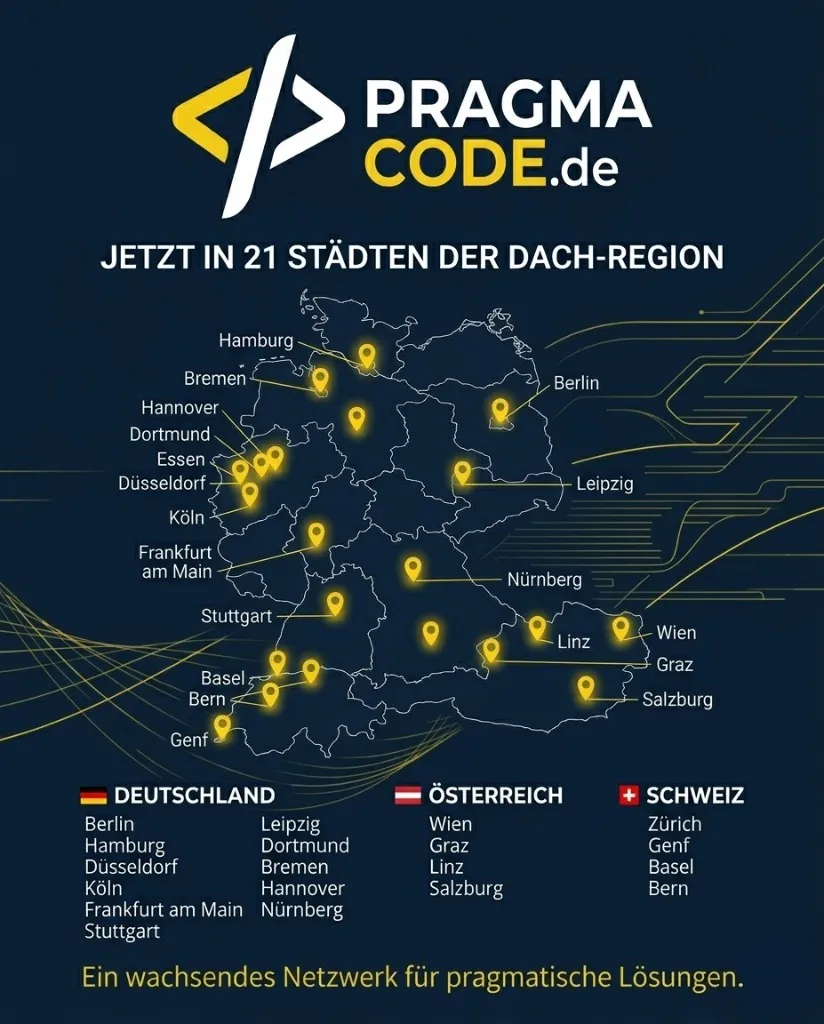
Our Regional Expertise
We are your digital partner – regionally anchored and successfully scaling across borders.
Have a vision?
Let's check together how we can make your idea take flight.
Book your free strategy call nowExtended Specialized Glossary
ADDISON OneClick
The digital client collaboration portal by Wolters Kluwer connecting tax advisory firms and businesses for receipt exchange, payroll, and banking.
Wolters Kluwer Tax & Accounting
The global specialized division of Wolters Kluwer delivering professional practice management, ADDISON software, and corporate tax compliance solutions.
DATEV Format
The standardized CSV-based interface schema created by DATEV eG for exchanging accounting records, master data, and chart of accounts.