


Artificial Intelligence is profoundly transforming medical technology – from automated Technical Documentation and Post-Market Surveillance to AI-assisted diagnostics. Yet for small and medium-sized manufacturers, orchestrating the EU AI Act, MDR, ISO 13485, and GDPR is a high-stakes challenge. Learn how SMEs integrate AI in a legally compliant, audit-ready, and profitable manner.
This article is an in-depth expert contribution from our content cluster. Discover the complete overview on our main page:IT Security & Compliance →
Precision Meets Regulatory Governance in the Era of Agentic AI
In 2026, the medical technology sector is making the definitive transition from isolated machine learning experiments to autonomous multi-agent pipelines and domain-specific language models. For small and medium enterprises (SMEs), this evolution unlocks massive productivity gains across R&D, regulatory submissions, and cleanroom manufacturing. Crucially, with the EU AI Act High-Risk rules officially in force since August 2026, combining the Medical Device Regulation (MDR) with strict data privacy requires uncompromising compliance architectures.
- The Efficiency Lever: AI automation drastically relieves MedTech SMEs from resource-draining repetitive tasks: generating Technical Documentation drafts, Post-Market Surveillance (PMS), clinical literature synthesis, and computer-vision quality inspections in manufacturing.
- The Regulatory Quadrumvirate: Device makers must navigate AI compliance across four interconnected standards: the Medical Device Regulation (MDR EU 2017/745), the EU AI Act (Chapter III High-Risk obligations), ISO 13485 quality management paired with IEC 62304 software lifecycle processes, and continuous risk management under ISO 14971.
- Sovereign Architecture as Key: Public cloud SaaS models frequently fail in clinical domains due to statutory processing bans on health data (GDPR Article 9) and non-deterministic vendor updates. Sovereign on-premise LLM infrastructure backed by strict Human-in-the-Loop (HITL) workflows prevents algorithmic hallucinations and guarantees reproducible, audit-ready performance.
- 1. The MedTech Landscape in Transition: Why AI Is Essential Now
- 2. Top 5 AI Use Cases in MedTech SMEs
- 3. The Regulatory Quadrumvirate: EU AI Act, MDR, ISO 13485 & IEC 62304
- 4. Comparison: Public Cloud SaaS vs. Sovereign On-Premise AI
- 5. Data Governance, GDPR & EHDS-Compliant Architectures
- 6. Human-in-the-Loop & Risk Management under ISO 14971 & ISO/IEC 42001
- 7. The 6-Step Roadmap to Compliant AI Integration
- 8. Conclusion & Actionable Takeaways for Executives
1. The MedTech Landscape in Transition: Why AI Is Essential Now
European medical technology SMEs have long been celebrated as global drivers of precision engineering and healthcare innovation. Yet in 2026, manufacturers face unprecedented headwinds: Surging development costs, severe shortages of qualified Regulatory Affairs managers, software architects, and clinical validation specialists demand radical productivity breakthroughs. Simultaneously, administrative compliance requirements following the EU Medical Device Regulation (MDR EU 2017/745) tie down significant R&D bandwidth for legacy devices and new product submissions alike.
Against this backdrop, strategic AI automation serves as an indispensable operational catalyst. By leveraging domain-tailored Large Language Models, Retrieval-Augmented Generation (RAG), and deterministic multi-agent systems, documentation cycles that previously took weeks can be accelerated into mere hours. For a comprehensive overview of enterprise compliance standards, consult our guide on EU AI Act Compliance for SMEs. Product development lifecycles shorten drastically without making compromises on patient safety or regulatory validity.
However, introducing Artificial Intelligence into medical devices presents fundamental algorithmic challenges: Modern AI systems operate probabilistically rather than deterministically. If AI components embedded in diagnostic equipment, biosignal monitoring tools, or regulatory conformity documentation generate incorrect deductions or hallucinations, manufacturers risk product liability claims, costly field recalls, and potentially the suspension of Notified Body certifications.
Expert Tip: Technical Documentation Efficiency in SMEs
Maintaining Technical Documentation in accordance with MDR Annex II and III absorbs up to 30% of total R&D engineering resources in MedTech SMEs. AI-driven RAG pipelines indexed against harmonized standards, clinical literature databases, and internal Design History Files (DHF) can automatically formulate initial drafts for Instructions for Use (IFU), risk assessments, and Clinical Evaluation Reports (CER).
2. Top 5 AI Use Cases in MedTech SMEs
Artificial Intelligence in medical technology reaches far beyond radiology image classification. Across the daily operations of medium-sized manufacturers, AI delivers its highest return on investment (ROI) at the critical intersections between R&D, regulatory compliance, quality assurance, and manufacturing.
1. Automated Technical Documentation, PMS & PSUR
Generating structured, audit-ready drafts for Clinical Evaluation Reports (CER), Periodic Safety Update Reports (PSUR), and Post-Market Surveillance (PMS) trend evaluations from global adverse event repositories (such as EUDAMED and FDA MAUDE) using local RAG architectures.
2. Software as a Medical Device (SaMD) & Intelligent Diagnostics
Direct integration of validated machine learning algorithms into medical devices – including biosignal processing (ECG, EEG, photoplethysmography), endoscopic video pattern recognition, and predictive vital parameter alerting adhering to Software as a Medical Device (SaMD) standards.
3. Predictive Maintenance & Cleanroom Quality Control
Computer vision inspection of precision micro-components, catheter extrusions, and surgical implants during cleanroom production, accompanied by continuous sensor telemetry on production machinery to eliminate batch contamination and scrap.
4. Regulatory Monitoring & Standards Change Management
Automated ingestion and delta-analysis of global regulatory updates (ISO, IEC, FDA Guidances, MDCG releases) matched against internal product architectures to detect re-certification requirements and compliance gaps early.
5. Intelligent Field Support & Corrective Action Tracking
Domain-trained AI agents empowering clinical biomedical engineers and field technicians with real-time diagnostic repair workflows, error code interpretations, and automated logging of Field Safety Corrective Actions (FSCA).
The true strategic multiplier emerges when these components interlock: When a PMS agent automatically clusters clinical feedback, detects emerging adverse event patterns, and routes them directly into the ISO 14971 risk management file, manufacturers establish a self-healing, audit-proof continuous quality loop.
3. The Regulatory Quadrumvirate: EU AI Act, MDR, ISO 13485 & IEC 62304
Deploying Artificial Intelligence in healthcare mandates a multi-layered compliance evaluation. MedTech SMEs must evaluate their AI solutions against four fundamental regulatory pillars that must be satisfied cumulatively:
MDR (EU 2017/745)
Defines General Safety and Performance Requirements (GSPR), clinical evaluations, vigilance protocols, and conformity assessment workflows for medical devices.
EU AI Act (EU 2024/1689)
Establishes horizontal safety and governance mandates. Medical AI and AI safety components fall under the binding High-Risk category (Chapter III).
ISO 13485 & IEC 62304
Mandatory international standards governing the Quality Management System (QMS) and the medical device software lifecycle across safety classes A, B, and C.
3.1 High-Risk Classification Under the EU AI Act (Chapter III)
A widespread misconception among MedTech leadership has been assuming that an existing MDR CE mark automatically satisfies EU AI Act requirements. In truth, Regulation (EU) 2024/1689 imposes substantial additional evidence duties. Since August 2, 2026, Chapter III obligations for High-Risk AI systems are active law. For AI systems functioning as medical devices or safety components undergoing third-party notified body assessment (Annex I, Section A), four fundamental core duties apply:
1. Data Governance & Training Data
Documented proof that training, validation, and testing datasets are free from systemic statistical bias, adhere to stringent data hygiene protocols, and faithfully represent target European patient demographics.
2. Transparency & Explainability
Technical guarantees enabling clinicians, biomedical staff, and notified body auditors to understand the data features and reasoning pathways behind AI diagnostic suggestions or automated documentation drafts (Explainable AI).
3. Continuous Robustness & Cybersecurity
Ongoing verification that AI models and communication pipelines are resilient against adversarial inputs, data poisoning in imaging datasets, and unauthorized tampering throughout the lifecycle per MDCG 2019-16 guidelines.
4. Technical Dossier & CE Conformity
Compiling comprehensive technical documentation prior to commercial release. Conformity assessment is harmonized with existing MDR audit pathways under the EU's single-window notified body structure.
The Double-Certification Trap for MedTech SMEs
Developing Software as a Medical Device (SaMD) without upgrading the ISO 13485 QMS and IEC 62304 software lifecycle SOPs to incorporate EU AI Act Articles 17 and 43 procedures triggers severe audit bottlenecks. Leading Notified Bodies (such as TÜV SÜD or DEKRA) now demand unified submissions. Attempting piecemeal conformity updates leads to months of commercial freeze and doubled audit fees.
4. Comparison: Public Cloud SaaS vs. Sovereign On-Premise AI
When choosing system architectures, medical technology firms confront a strategic fork in the road: Should they rely on public cloud APIs hosted by global hyperscalers, or is dedicated sovereign server infrastructure the superior path? For technical details on isolating sensitive data within enterprise boundaries, explore our analysis of Local Enterprise RAG for Company Data under GDPR.
Comparison: Public Cloud AI vs. Sovereign On-Premise Deployment
- Data Privacy: Immediate legal exposure when transferring special category health data (GDPR Art. 9) to third-country cloud providers.
- Availability: Full operational dependency on external network uptime, variable latencies, and unexpected vendor outages.
- Model Control: Undocumented vendor updates ("Model Drift") disrupt validation baselines and reproducibility under IEC 62304.
- Cost Predictability: Low upfront barrier, but unpredictable, compounding token costs as inference volume scales.
- Data Privacy: 100% data sovereignty. Proprietary algorithms and sensitive patient data never cross external firewalls.
- Availability: Autonomous, fault-tolerant execution in air-gapped laboratory, cleanroom, and hospital network segments.
- Model Control: Frozen open-source weights guarantee repeatable, fully deterministic validation test outputs.
- Cost Predictability: Fixed capital investment (CAPEX) with near-zero marginal cost per query regardless of transaction volume.
For MedTech SMEs, the verdict is decisive: While non-regulated administrative workflows can operate on fortified cloud instances, all core workflows touching patient biosignals, proprietary IP, or SaMD pipelines necessitate Sovereign On-Premise AI Deployments. Modern open-weight models (such as Llama 3.3, Mistral Large 2, or biomedical models like BioMistral) running on localized accelerator hardware (using vLLM and confidential computing) provide world-class accuracy combined with absolute legal privacy.
5. Data Governance, GDPR & EHDS-Compliant Architectures
Health data constitutes a special category of personal data under GDPR Article 9, subject to strict processing restrictions. To discover how modern security guardrails and cyber resilience align with European mandates, review our guide on the Future of IT Security & NIS2. MedTech SMEs must deploy architectural safeguards preventing raw patient identifiers from ever entering unmonitored AI model contexts.
1. Automated Pseudonymization & De-Identification
Deploying localized de-identification pipelines prior to transmitting unstructured clinical notes, lab reports, or biosignals to AI agents. Direct patient identifiers (names, birth dates, social security numbers) are cryptographically hashed and stripped.
2. Role-Based Access Control (RBAC) & Zero-Retention
Enforcing strict compartmentalization via the Need-to-Know principle. AI agents receive ephemeral, transient memory access buffers, ensuring no clinical input data is cached in permanent model storage.
3. EHDS-Ready Interoperability Architecture
Architectural preparedness for the European Health Data Space (EHDS), allowing future cross-border secondary use of health data for AI clinical validation through standardized European health data access bodies.
6. Human-in-the-Loop & Risk Management under ISO 14971 & ISO/IEC 42001
Artificial Intelligence models are inherently non-deterministic. Statistical hallucinations pose unacceptable clinical and legal liabilities. To enforce the rigorous safety benchmarks mandated by ISO 14971 (Medical Device Risk Management) and the management system standard ISO/IEC 42001 (AIMS), a golden rule governs healthcare engineering:
"No AI-generated document, Technical Documentation draft, diagnostic interpretation, or treatment recommendation may be finalized without explicit validation and sign-off by a qualified human expert."
In production implementations, AI agents operate strictly as intelligent assistants. The system ingests raw inputs, maps references to harmonized standard clauses, and produces structured draft dossiers. Only upon receiving the digital signature of the designated human authority (such as the Regulatory Affairs Officer, Safety Officer, or Principal Investigator) does the output attain legal validity under Human-in-the-Loop (HITL) mandates.
7. The 6-Step Roadmap to Compliant AI Integration
To navigate from conceptual feasibility to an audited, compliant, and production-grade AI system, MedTech SMEs should follow a milestone-driven implementation roadmap:
-
1. Use Case Definition & Classification
Rigorous definition of the Intended Purpose. Early risk classification under MDR (Class I, IIa, IIb, or III), IEC 62304 (Safety Class A, B, or C), and EU AI Act Risk Tier to establish the audit pathway.
-
2. Architecture Decision & Vendor Risk Assessment
Selection of sovereign on-premise hardware to ensure total GDPR Article 9 data protection. Comprehensive cybersecurity and license compliance audits across all hardware, framework, and model vendors.
-
3. QMS Upgrade under ISO 13485 & AI Act Art. 17
Updating Standard Operating Procedures (SOPs). Establishing formal protocols for data governance, model versioning, statistical bias testing, and risk management following ISO 14971 and ISO/IEC 42001.
-
4. Prototyping with Human-in-the-Loop Gateways
Developing an audited Proof of Concept (PoC). Embedding technical confidence scoring thresholds and mandatory four-eyes approval workflows prior to any regulatory output release.
-
5. Verification, Validation & Clinical Evaluation
Executing exhaustive automated test suites on representative validation cohorts. Proving mathematical robustness, absence of hallucinations, and clinical performance per MDR Annex XIV.
-
6. Notified Body Auditing & Post-Market Monitoring
Unified submission of technical documentation to the Notified Body. Deployment of continuous Post-Market Surveillance (PMS) and real-world AI vigilance monitoring pipelines.
8. Conclusion & Actionable Takeaways for Executives
For MedTech SMEs, AI automation is no longer an optional experimentation field—it is the vital strategic tool to counter severe talent shortages and MDR administrative burdens. Organizations that proactively align MDR, the EU AI Act, ISO 13485, and IEC 62304 within their engineering systems turn regulatory friction into a powerful competitive moat.
By establishing sovereign on-premise infrastructure and embedding uncompromising Human-in-the-Loop controls, medical device manufacturers maximize operational velocity while securing 100% patient safety and liability protection.
Strategic Quick-Check for MedTech AI
Do you have questions about AI automation & compliance in MedTech?
Schedule a free consultationOur Regional Expertise
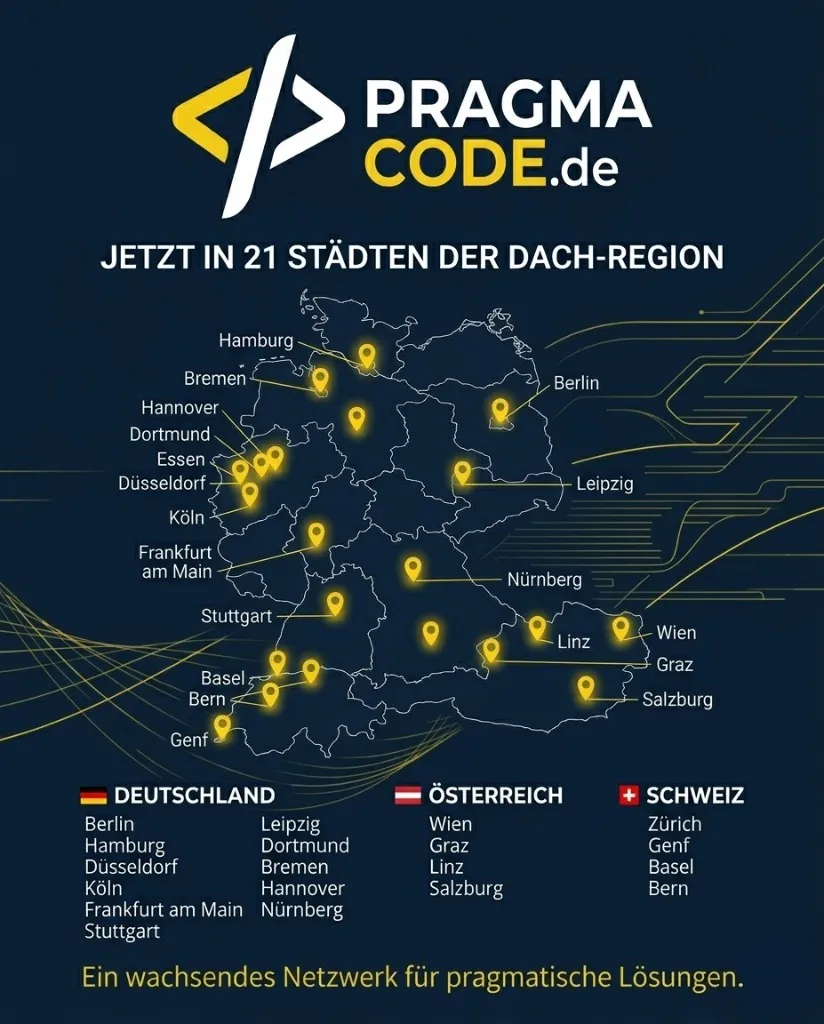
We are your digital partner – regionally anchored and successfully scaling across borders.
Have a vision?
Let's check together how we can make your idea take flight.
Book your free strategy call nowExtended Specialized Glossary
Medical Device Regulation (MDR)
Regulation (EU) 2017/745 setting strict requirements for safety, quality management, and clinical evaluation of medical devices.
Software as a Medical Device (SaMD)
Software intended for medical purposes such as diagnosis or therapy without being part of a physical medical device.
EU AI Act Risk Category
Risk classification system under the EU AI Act, where healthcare AI applications are typically classified as High-Risk AI.
ISO 13485
The international quality management system standard for medical device developers and manufacturers.
ISO 14971
The international standard for medical device risk management. It specifies a continuous process for manufacturers to identify hazards, assess and control risks, and monitor the effectiveness of mitigation measures throughout the device lifecycle.
IEC 62304
The harmonized international standard defining life cycle requirements for medical device software. It establishes clear development, risk management, and maintenance frameworks for Software as a Medical Device (SaMD) and embedded systems across safety classes A, B, and C.
Human-in-the-Loop (HITL)
A governance principle where human experts review and validate all AI recommendations and automated drafts before release.
European Health Data Space (EHDS)
A European initiative enabling safe secondary use and exchange of health data for research, care, and regulatory purposes.