

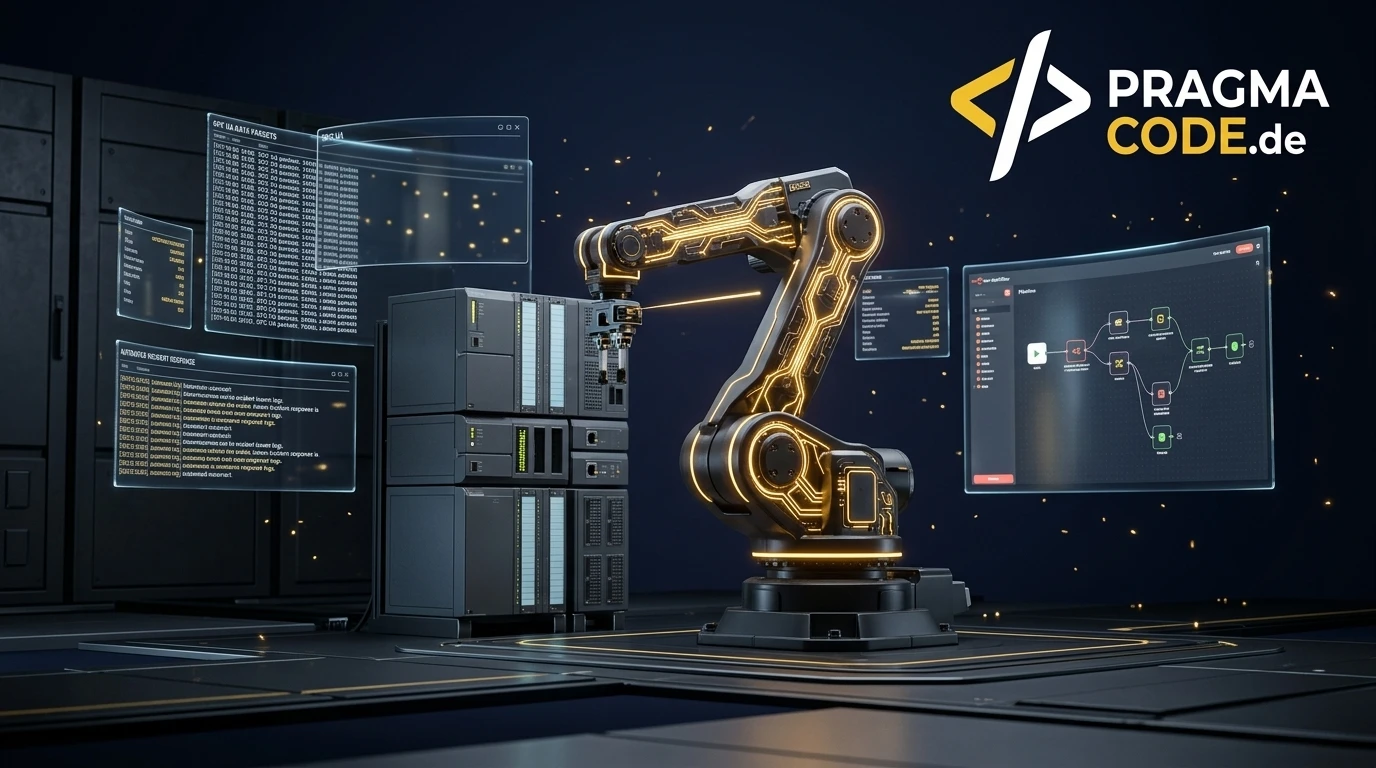
While generative chatbots and language models have transformed corporate office workflows, a far more impactful transformation is taking place across mid-sized factory floors in 2026: the rise of autonomous industrial AI agents. In this hands-on technical guide, discover how manufacturing leaders combine real-time OPC UA machine telemetry, event-driven n8n workflow pipelines, and local edge LLMs to build autonomous systems that proactively eliminate equipment downtime and resolve production bottlenecks in real time.
This article is an in-depth expert contribution from our content cluster. Discover the complete overview on our main page: AI & Automation →
From Passive Dashboards to Autonomous Action
For more than a decade, the promise of Industry 4.0 heralded an era of fully automated, self-healing smart factories. Yet the daily operational reality in many manufacturing plants remained stubbornly reactive: millions of raw sensor readings poured into static dashboards that overwhelmed shift supervisors. When unexpected deviations struck multi-axis CNC machines or robotic assembly cells, production ground to a halt while technicians spent hours manually troubleshooting error codes. In 2026, the convergence of Edge Inference, event-driven n8n workflow engines, and standardized OPC UA communication changes this paradigm forever. Autonomous industrial agents no longer merely visualize data—they diagnose, plan, and execute corrective action.
- Up to 42% Downtime Reduction: Implementing Predictive Incident Management allows autonomous agents to catch microscopic mechanical anomalies and initiate maintenance prior to catastrophic tooling failures.
- Bridging the IT/OT Divide: Combining low-code integration (n8n), OPC UA pipelines, and local LLMs enables seamless interoperability. Work orders, spare parts reservations in ERP platforms (SAP, proALPHA), and shift logs execute autonomously.
- Absolute Data Sovereignty: Proprietary machining parameters and CAD blueprints remain safely on-premises through local edge LLMs (such as Llama 3.3 or DeepSeek R1 hosted on industrial edge hardware), ensuring complete GDPR and EU AI Act compliance.
- 1. The Dilemma of Passive Automation: Why Dashboards Fail to Prevent Downtime
- 2. The 4 Layers of Industrial Agent Architecture: From PLC to Cognitive Reasoning
- 3. Real-World Walkthrough: Autonomous Incident Management in CNC Machining
- 4. Structural Comparison: Reactive Maintenance versus Autonomous Agent Orchestration
- 5. Data Privacy & Air-Gapped Security: Why Cloud Inference Fails on the Shop Floor
- 6. Safety & Governance: The Human-in-the-Loop Standard for Physical Commands
- 7. Implementation Roadmap: 5 Phases to Autonomous Manufacturing Cells
- 8. Conclusion: The Smart Factory as a Collaborative Multi-Agent Ecosystem
1. The Dilemma of Passive Automation: Why Dashboards Fail to Prevent Downtime
Precision manufacturing, mechanical engineering, and automotive supply chains in Central Europe and worldwide are celebrated for engineering excellence. Five-axis milling centers, automated guided vehicles, and robotic welding stations operate continuously. Yet factory managers remain plagued by a persistent obstacle: unplanned machinery downtime.
Traditional digitalization initiatives often aggravated this issue. Facilities deployed thousands of additional vibration and thermal sensors over MQTT brokers, yet data processing remained strictly reactive. Alarms only sounded once a high-speed spindle overheated or an end mill fractured. Diagnosing the root cause resembled detective work: operators sifted through 500-page PDF operating manuals, decoded cryptic PLC error codes, and contacted vendor support hotlines—while every hour of idle machinery cost thousands of euros in lost output.
Autonomous AI agents transform this dynamic. An industrial agent is not a rigid procedural script. It is an active software entity that continuously ingests operational metrics via Industrial Data Ingestion, benchmarks real-time machine behavior against statistical tolerances, conducts automated RAG (Retrieval-Augmented Generation) queries against maintenance archives upon detecting anomalies, and orchestrates targeted corrective actions.
Expert Tip: Boosting OEE through Preemptive Intervention
Overall Equipment Effectiveness (OEE) in mid-sized manufacturing environments can be enhanced by 4 to 9 percentage points with autonomous incident agents. The primary gain stems not from running machines faster, but from eliminating the diagnostic delays and manual verification steps that precede catastrophic equipment failures.
2. The 4 Layers of Industrial Agent Architecture: From PLC to Cognitive Reasoning
Deploying autonomous agent capabilities into brownfield industrial environments requires a modular, decoupled architecture. Monolithic legacy industrial control suites must be replaced by a modern four-layer stack:
OT Connectivity & Signal Ingestion
Continuous harvesting of high-frequency sensor streams across standardized protocols (OPC UA, MQTT Sparkplug B, Modbus TCP). Industrial edge gateways capture spindle rotational speeds, vibration FFTs, and lubrication pressures in millisecond intervals.
Event-Driven Orchestration with n8n
The n8n low-code workflow engine acts as the central event router. When sensor telemetry breaches dynamic thresholds, a webhook triggers the agent pipeline, filtering sensor noise and enriching payloads with contextual batch metadata.
Local Edge LLMs & Technical RAG
Specialized reasoning models (e.g., Llama 3.3 70B or Qwen 2.5 Coder hosted on local industrial servers) perform automated diagnostic analysis, querying technical vector stores of manufacturer maintenance bulletins and engineering schematics.
ERP Connectivity & Human-in-the-Loop
The agent prepares end-to-end resolution: querying inventory for required replacement bearings in ERP systems (SAP, proALPHA) and sending an approval card to maintenance technicians via industrial tablets (Human-in-the-Loop (HITL)).
3. Real-World Walkthrough: Autonomous Incident Management in CNC Machining
To examine this architecture in action, consider a real-world scenario in high-precision metal machining. During an unmanned night shift, a multi-axis CNC machining center registers a subtle harmonic vibration anomaly:
Anomaly Detection via OPC UA Telemetry
A piezoelectric vibration accelerometer on the main milling spindle detects an 18% surge in high-frequency harmonics at 12,000 RPM. While below the emergency mechanical stop threshold, it indicates early raceway bearing fatigue. The OPC UA server fires an event to the n8n edge broker.
Context Enrichment & Technical RAG Diagnosis
The n8n pipeline queries the MES for current component drawings and delivers the telemetry payload to the diagnostic agent. The local LLM cross-references the frequency spectrum against vendor service manuals via vector search, diagnosing an impending front bearing race failure with 94% confidence.
Automated Remediation Planning & Spare Parts Check
The agent queries ERP inventory via REST API, confirming an identical ceramic hybrid bearing is in stock (Bin B-14). Computing remaining operational margin, the agent calculates that reducing feed rate by 15% allows the current 32-minute milling cycle to complete safely without part damage.
Human-in-the-Loop Authorization on Mobile Handhelds
The night supervisor receives an interactive approval card on their rugged tablet displaying diagnostic FFT curves and two options: [Authorize Speed Reduction & Schedule 06:00 Maintenance] or [Execute Immediate Controlled Abort]. A single tap executes the feed rate adjustment and generates the maintenance work ticket.
The outcome: no catastrophic spindle seizure, zero damage to the €4,500 workpiece, and no unexpected morning downtime. Replacement occurs smoothly during scheduled shift handoff.
4. Structural Comparison: Reactive Maintenance versus Autonomous Agent Orchestration
The practical difference between conventional factory maintenance and autonomous agentic orchestration is clearly demonstrated in response latencies and incident expenses:
Direct Comparison: Conventional Reactive Operations vs. Autonomous Agent Orchestration
- Trigger Event: Machinery halts with a red fault lamp; current workpiece is scrapped.
- Fault Diagnosis: Manual troubleshooting by technicians interpreting cryptic numeric fault registers.
- Parts Sourcing: Manual warehouse checks, often requiring premium rush delivery.
- Documentation: Handwritten shift notes or fragmented spreadsheet logs.
- Equipment Downtime: Typically 4 to 16 hours per unexpected failure.
- Trigger Event: Real-time detection of telemetry drift long before catastrophic failure.
- Fault Diagnosis: Semantic RAG cross-referencing of vendor documentation in < 3 seconds.
- Parts Sourcing: Automated ERP reservation and automated staging for maintenance crews.
- Documentation: Complete, automated digital lifecycle documentation and root-cause summaries.
- Equipment Downtime: Predictable servicing scheduled during planned shift changeovers (0 unplanned hours).
5. Data Privacy & Air-Gapped Security: Why Cloud Inference Fails on the Shop Floor
A frequent misstep among early corporate AI pilots was attempting to pipe raw machine telemetry and production parameters to public US cloud APIs (such as OpenAI or Anthropic). In industrial manufacturing, this architecture is fundamentally flawed for three reasons:
1. Protecting Trade Secrets & Manufacturing IP
Feeds, speeds, thermal tolerances, and CAD tooling coordinates represent the core intellectual property of specialized manufacturers. Transmitting these telemetry streams to public third-party clouds creates severe risks of competitive exposure.
2. Latency & Offline Air-Gapped Resilience
Manufacturing assembly lines run on sub-second precision. If a cloud API experiences jitter or internet connectivity drops, physical factory automation cannot stall. Dedicated on-premise industrial servers ensure uninterrupted 24/7 inference.
3. Compliance with NIS-2 & EU AI Act Standards
Manufacturers classified under NIS-2 critical infrastructure guidelines must comply with rigorous supply chain cybersecurity and air-gapped network segmentation. Local edge inference satisfies these compliance mandates natively.
Modern open-weight foundation models (such as Llama 3.3 70B or quantized Mistral architectures) operating on dedicated industrial hardware (e.g., dual-RTX edge servers) provide reasoning and code generation capabilities fully equivalent to public cloud APIs for technical troubleshooting.
6. Safety & Governance: The Human-in-the-Loop Standard for Physical Commands
Autonomous operation must never be confused with unregulated control. In industrial environments, an inviolable rule applies: no autonomous software agent may ever override safety circuits or trigger hazardous physical movements without authenticated human authorization.
We classify autonomous operations into three distinct risk tiers:
Tier 1: Read-Only & Diagnostic Operations
Telemetry aggregation, manual RAG lookups, generation of maintenance tickets, and shift handoff summaries. Executed entirely autonomously by the software agent.
Tier 2: Parametric Optimization
Fine-tuning feed rates or coolant flow within pre-approved narrow safety margins (±10%). Executed autonomously with structured logging in immutable audit trails.
Tier 3: Physical Machinery Interventions
Tooling changes, equipment shutdowns, or ERP parts ordering. Strictly requires authenticated Human-in-the-Loop confirmation via mobile devices before execution.
7. Implementation Roadmap: 5 Phases to Autonomous Manufacturing Cells
Transitioning toward agentic manufacturing systems succeeds best through an iterative, cell-by-cell rollout. Rather than attempting a whole-factory overhaul, start with an isolated pilot production unit:
-
Phase 1: Connectivity Audit & Telemetry Mapping
Catalog existing PLCs (Siemens S7, Beckhoff, Fanuc). Establish standard OPC UA or MQTT endpoints and define critical telemetry thresholds for vibration, heat, and load.
-
Phase 2: Technical RAG Knowledge Base Construction
Digitize and vectorize equipment manuals, historical maintenance tickets, and electrical schematics into a local vector database (such as Qdrant or pgvector).
-
Phase 3: n8n Event-Driven Pipeline Deployment
Deploy the n8n orchestrator on local industrial hardware. Configure triggers, filter out sensor noise, and route notifications to internal communication channels.
-
Phase 4: Agent Reasoning Integration & HITL Gates
Integrate local edge LLMs for automated root-cause analysis, establishing rigorous mobile Human-in-the-Loop approval workflows for maintenance interventions.
-
Phase 5: OEE Benchmarking & Facility Rollout
Measure unplanned downtime reduction in the pilot cell over 90 days. Replicate verified agent blueprints across remaining CNC centers and automated production lines.
Quick-Check: Is Your Shop Floor Ready for Autonomous AI Agents?
8. Conclusion: The Smart Factory as a Collaborative Multi-Agent Ecosystem
The smart factory of 2026 is built not by tearing down legacy plants, but by supercharging existing machinery with agentic software intelligence. Autonomous industrial AI agents serve as tireless digital assistants to engineering crews: predicting failures, automating root-cause diagnoses, and protecting capital assets from costly downtime.
Mid-sized industrial enterprises that adopt open standards (OPC UA, n8n, local open-weight LLMs) establish a profound competitive moat against global competitors. At Pragma-Code, we guide engineering leaders from architecture design to turnkey deployment of resilient industrial agent solutions.
Official Sources & Primary Documentation
- OPC Foundation (2026): "OPC Unified Architecture Specification v1.05" – The vendor-neutral industrial interoperability standard for Industry 4.0.
- Fraunhofer Institute for Manufacturing Engineering and Automation IPA: "Agent-Based Control Systems in Discrete Manufacturing" – Research whitepaper on multi-agent architectures for shop-floor automation.
- German Federal Office for Information Security (BSI): "ICS Security Compendium for Industrial Automation" – Guidelines for secure network segmentation and OT governance.
Ready to Deploy Autonomous AI Agents on Your Shop Floor?
Schedule a Free Industrial Opportunity AuditOur Regional Expertise
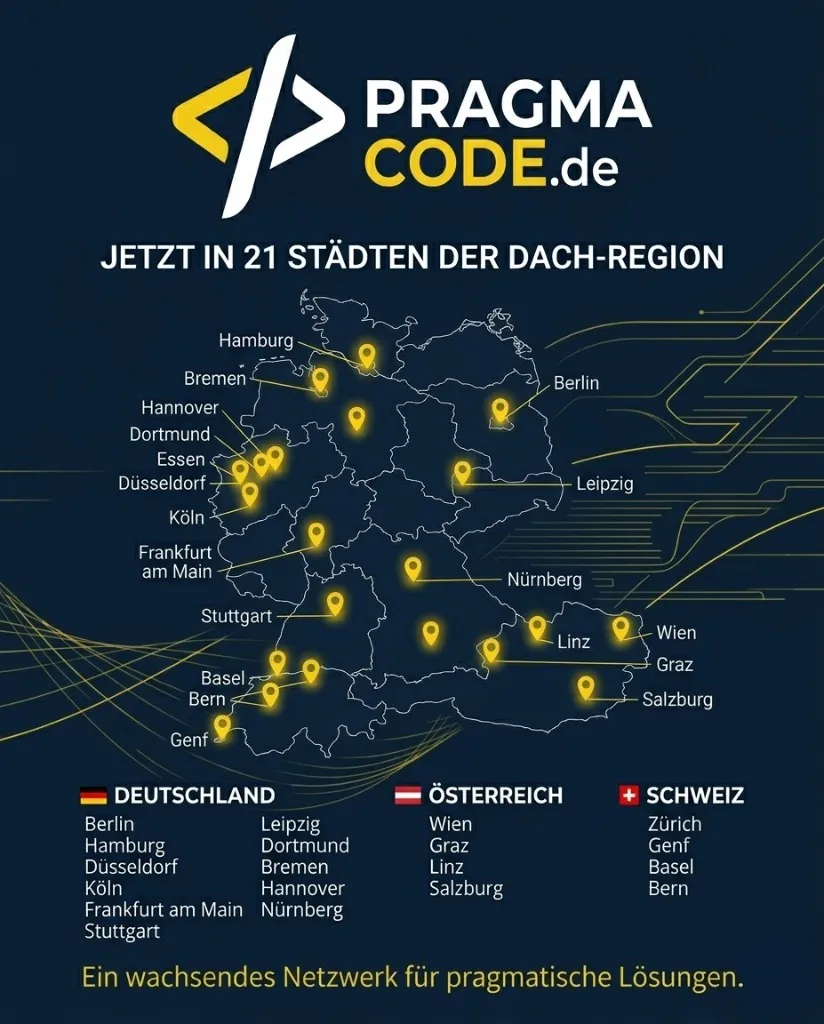
We are your digital partner – regionally anchored and successfully scaling across borders.
Have a vision?
Let's check together how we can make your idea take flight.
Book your free strategy call nowExtended Specialized Glossary
Edge Inference
The execution of trained AI models directly on local industrial PCs or edge gateways on the shop floor, ensuring minimal latency and strict data governance without cloud dependencies.
Predictive Incident Management
The proactive monitoring, automated diagnosis, and scripted resolution of impending equipment failures by autonomous agents before physical shop-floor downtime occurs.
Industrial Data Ingestion
The continuous and standardized harvesting, filtering, and normalization of machine metrics, PLC signals, and sensor streams for consumption in event-driven automation pipelines.
OPC UA
An open, platform-independent industrial communication architecture ensuring secure and semantic data interoperability across automation systems.
Human-in-the-Loop (HITL)
A system architecture requiring explicit human review and authorization for critical operations exceeding predefined risk thresholds.
Predictive Maintenance
Condition-based maintenance utilizing continuous telemetry analysis to eliminate unexpected asset downtime and optimize component lifespans.