Digital Minister Wildberger has presented a far-reaching master plan to modernize Germany's administration and economy with the 'Germany-Stack'. The shift towards open source, open cloud infrastructure, and artificial intelligence has fundamental implications for SMEs in the DACH region. In this guide, SMEs will learn how to position themselves strategically to benefit from standardization.
This article is an in-depth expert contribution from our content cluster. Discover the complete overview on our main page:Process Automation for SMEs →
- The Germany-Stack as a Standard: Germany's administration is to be fundamentally modernized through standardized software modules, open standards, and cloud infrastructures, eliminating system silos.
- Opportunities for SMEs: State-enforced standardization will create new, open APIs and standardized IT architectures for SMEs, drastically reducing complexity in B2B data exchange.
- Focus on Digital Sovereignty: Emphasizing open source and on-premise-compatible AI solutions minimizes dependence on non-European cloud monopolies and strengthens data privacy.
- Introduction: The Wake-Up Call from the Digital Ministry
- The Germany-Stack: Vision and Reality of a Sovereign Platform
- Focus on Open Source and Artificial Intelligence
- The Alliance of Giants: SAP, Telekom, and the Startup Economy
- What the Germany-Stack Means for SMEs in the DACH Region
- Expert Tip: How to Align Your IT Strategy Proactively
- Conclusion: Shaping Digital Germany – A Collaborative Task
1. Introduction: The Wake-Up Call from the Digital Ministry
For decades, Germany's digital infrastructure has resembled a patchwork quilt. Incompatible systems in municipalities, states, and federal authorities not only hinder administration but also burden the economy with unnecessary bureaucratic hurdles and slow processes. In 2026, this situation has intensified due to global geopolitical tensions and rising competitive pressure. The digitalization lag increasingly threatens the market position of medium-sized enterprises.
This is where Digital Minister Karsten Wildberger's Digital Master Plan comes in. Wildberger's vision aims to break the digital gridlock. At the center is the so-called Germany-Stack – a concept that goes far beyond mere administrative digitalization. The plan is a strategic blueprint for a digitally sovereign Germany built on open standards, transparent architectures, and technological independence. Read in our article about the Digitalization Lag in the DACH Region why such government initiatives are crucial for the private sector.
The Era of Infrastructure Sovereignty
Why IT sovereignty and standardized interfaces are the prerequisite for future-proof B2B collaborations and automated AI pipelines in SMEs.
2. The Germany-Stack: Vision and Reality of a Sovereign Platform
The Germany-Stack is not a monolithic software, but a modular, standardized IT infrastructure. The goal is to provide standardized software components, interfaces (APIs), and cloud environments for authorities and, indirectly, for cooperating companies. This prevents expensive and inefficient duplicate developments across different federal states.
The technical foundation of the Germany-Stack rests on four essential pillars designed to ensure seamless interoperability:
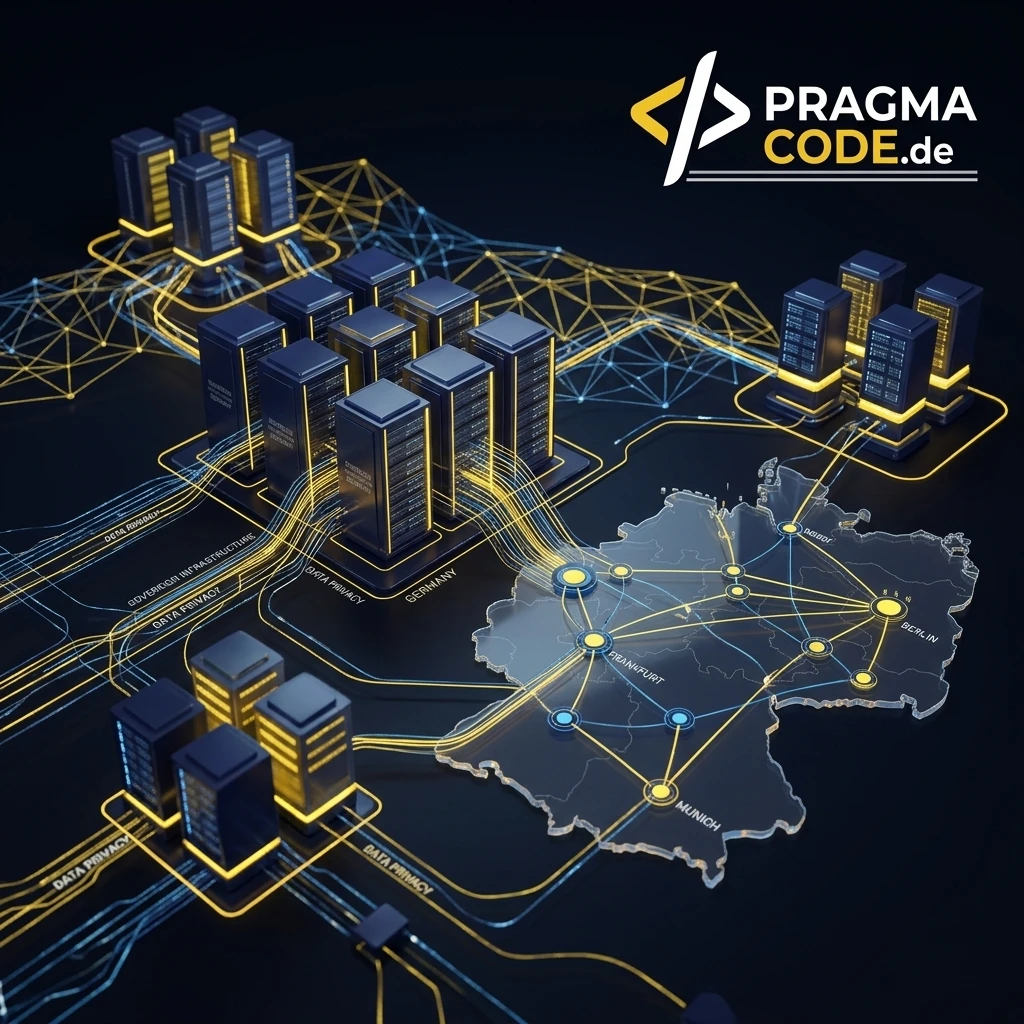
Sovereign Cloud
A distributed, secure cloud infrastructure operated according to European data protection standards, guaranteeing independence from hyperscalers.
Unified APIs
Unified, openly documented interfaces to connect specialized applications at all levels without proprietary barriers.
Identity Management
A federated, secure identity system for citizens and businesses, enabling media-free, end-to-end transactions.
Modular Components
Reusable software components for standard processes (e.g., payment, form processing, archiving).
Implementing the stack is intended to make administration more flexible and resilient. If, for example, a new directive needs to be implemented, this should happen via central updates in the stack rather than in hundreds of different individual systems. For the economy, this means a significant acceleration of official approvals, tax processing, and reporting obligations. However, transitioning from closed legacy systems to an open platform also brings migration challenges that must be solved using modern middleware and API-first architectures.
3. Focus on Open Source and Artificial Intelligence
A major aspect of Wildberger's plan is the commitment to Open Source. Instead of entering into long-term, expensive license agreements with foreign software giants, the federal government is systematically opting for open source code. This creates transparency, strengthens security through public code audits, and enables domestic IT service providers to actively shape and adapt the stack.
In addition, Artificial Intelligence plays a central role. Wildberger plans the widespread use of AI in public administration to automate routine tasks. However, strict attention is paid to data protection and Digital Sovereignty: sensitive data must not flow to unregulated cloud services abroad, but must be processed via locally hosted language models. Read more about this in our deep dive on On-Premise AI in DACH.
Comparison: Proprietary Software vs. Sovereign Open Source
- Vendor Lock-in: High dependence on the chosen provider and their pricing.
- Black Box: No insight into the source code; security gaps can only be patched by the manufacturer.
- Data Leakage: Risk of uncontrolled data flow to third countries via global cloud backends.
- License Costs: Ever-increasing recurring fees per user or transaction.
- Full Control: Code can be self-hosted, modified, and adapted to own B2B processes.
- Maximum Security: Transparent code enables continuous audits and rapid patches.
- Data Ownership: Data remains entirely within your own GDPR-compliant IT infrastructure.
- License-Free: Investments flow into development and customization instead of licenses.
The combination of Open Source and AI offers enormous potential for SMEs in the DACH region. When authorities validate and deploy AI models on an open-source basis, SMEs can adapt these technologies and integrate them into their own workflows. This strengthens trust in artificial intelligence in the B2B sector, as ethical standards and data protection guidelines are transparently anchored in the code.
4. The Alliance of Giants: SAP, Telekom, and the Startup Economy
A government cannot tackle such a monumental infrastructure project as the Germany-Stack alone. Wildberger's Digital Master Plan therefore relies heavily on Public-Private Partnerships (PPPs). Established German technology corporations such as SAP and Deutsche Telekom are working closely with the ministry to provide the technological foundation.
Telekom contributes its expertise in operating highly secure, European data centers, while SAP works on integrating existing ERP structures. At the same time, the master plan emphasizes the involvement of innovative startups. Young, agile tech companies should have the opportunity to develop specialized modules for the stack via standardized bidding procedures and open APIs. This breaks the traditional dominance of large system houses and promotes the domestic software industry.
Bundling competencies in the new Digital Ministry, defining the core standards of the Germany-Stack, and launching first pilot projects in selected municipalities.
Provision of the sovereign cloud environment by Telekom and SAP. Integration of open APIs for third-party developers and startups.
Mandatory use of standardized interfaces for all authority contacts. Full integration of SME systems for automated reporting.
This three-phase development shows that the Germany-Stack is not a short-term political project, but will sustainably change the IT landscape in Germany. Companies that position themselves early in this new ecosystem and support open standards secure valuable competitive advantages and can act as partners in public projects.
5. What the Germany-Stack Means for SMEs in the DACH Region
Even though the Germany-Stack's initial focus is on modernizing the state, the effects on the economy are immense. For medium-sized companies, this presents both opportunities and concrete action items:
Standardization of B2B Processes
Establishing unified APIs in the Germany-Stack dramatically reduces the integration effort for interfaces to customers, suppliers, and authorities.
Simplified Compliance & Data Privacy
Using European, open-source IT standards simplifies compliance with strict data protection regulations (GDPR) and reduces sanction risks.
Access to Government Funding
The federal government specifically funds projects that contribute to digital sovereignty. SMEs can apply for financial grants to convert their IT to open-source solutions.
However, the transition also brings challenges. SMEs must analyze their existing, often proprietary legacy systems and check them for future viability. Rigid software structures that do not support open APIs or are based on outdated technologies risk losing connection as the Germany-Stack rolls out. Therefore, forward-looking IT modernization is indispensable.
6. Expert Tip: How to Align Your IT Strategy Proactively
Expert Tip: Conduct an Open-Source Audit
Don't wait until official interfaces force you to adapt. Conduct an internal IT audit today: identify proprietary dependencies, consistently rely on API-first architectures for new acquisitions, and check where the use of open source (e.g., n8n for process integration) can strengthen your digital sovereignty.
By implementing flexible integration platforms like n8n, mid-sized companies can bridge the gap between their legacy systems and the new, open standards of the Germany-Stack. This minimizes the risk of expensive complete migrations while maintaining company agility. We describe how to implement GDPR-compliant automations with n8n in detail in our article on n8n GDPR Compliance and Data Sovereignty.
7. Conclusion: Shaping Digital Germany – A Collaborative Task
Digital Minister Wildberger's Digital Master Plan and the establishment of the Germany-Stack mark a much-needed turning point in German digital policy. Moving away from isolated individual solutions towards a sovereign, open, and standardized platform. However, this change can only succeed if government and business work hand in hand.
For SMEs in the DACH region, this is no cause for concern, but a historical opportunity. Moving away from proprietary dependencies and turning towards open source and open standards lowers IT costs in the long run, increases innovation power, and secures the digital sovereignty of our economy. Those who set the course today will be among the winners of the new digital ecosystem tomorrow.
Quick-Check: Your Path to Sovereignty
Do you have questions about IT strategy and digital sovereignty?
Schedule a Free ConsultationOur Regional Expertise
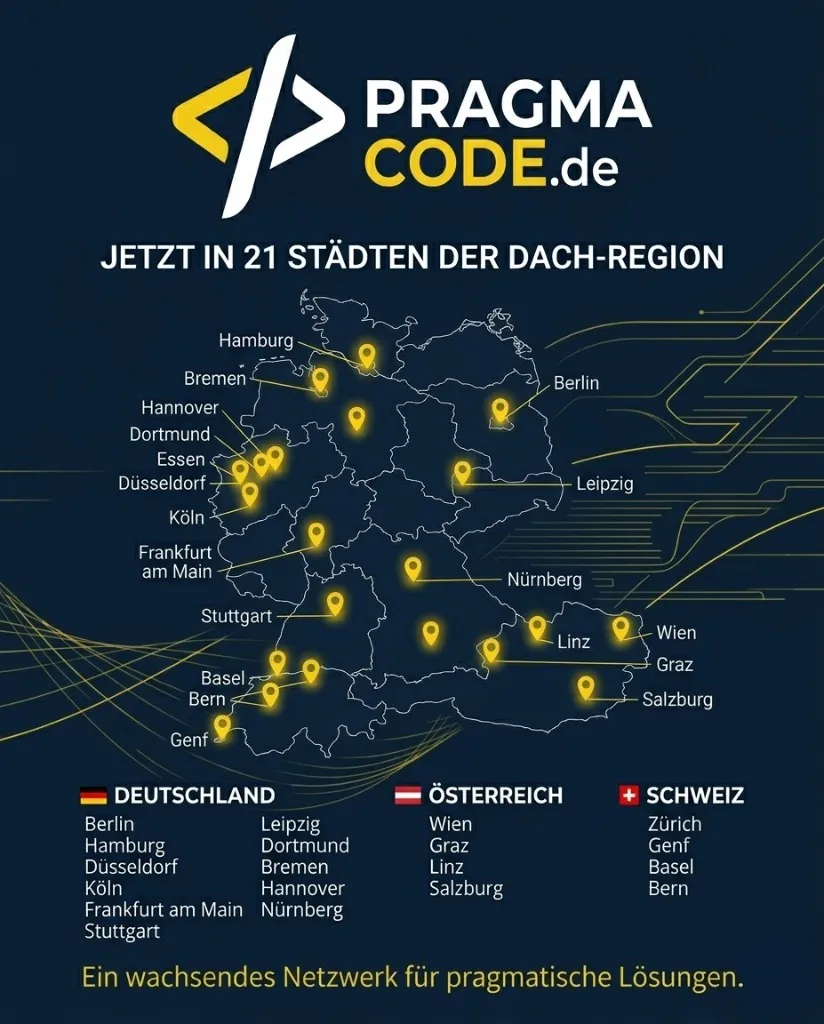
We are your digital partner – regionally anchored and successfully scaling across borders.
Have a vision?
Let's check together how we can make your idea take flight.
Book your free strategy call nowExtended Specialized Glossary
Germany-Stack
A concept for a sovereign and standardized IT infrastructure in Germany, based on open-source software and open standards, aiming to reduce digital dependencies.
Digital Sovereignty
The ability of states, organizations, or individuals to shape their digital affairs self-determinedly and minimize technological dependencies.
Open Source
Software whose source code is publicly accessible and can be viewed, modified, and used by third parties. Usually free of charge and royalty-free.