


Between the definitive End-of-Life of Drupal 7, complex Symfony major upgrades, and surging developer hourly rates, IT leaders face a critical decision: Is upgrading to Drupal 11 / Drupal CMS still justifiable, or is decoupling with Astro the smarter, more profitable move?
This article is an in-depth expert contribution from our content cluster. Discover the complete overview on our main page: Web Development →
Enterprise CMS Paradigm Shift
In 2026, search engines, AI-powered research agents, and discerning B2B buyers demand uncompromising page speed and structured data. Monolithic PHP platforms are under severe pressure regarding Google Core Web Vitals and rising infrastructure overhead. A decoupled architecture with Astro or a focused re-platforming transforms your content ecosystem into a lightning-fast, low-maintenance enterprise asset.
- Ongoing TCO & Talent Scarcity: Monolithic Drupal installations tie up substantial IT budgets. High hourly rates for specialized backend engineers and recurring major upgrades strain operational expenditures.
- Performance & Security Edge: Migrating to Decoupled Drupal with static edge generation (SSG) drives Largest Contentful Paint (LCP) below 0.8 seconds while completely isolating the PHP core from public attack vectors.
- Predictable ROI & Modernization: Whether choosing a hybrid API-first approach or full re-platforming to a modern composable cloud stack, total operational costs drop by 45 % to 65 %, delivering full payback in 12 to 15 months.
- Introduction: The Enterprise Dilemma with Legacy Drupal
- 1. The TCO Trap: What Does Operating Drupal Really Cost?
- 2. Future Architectural Models Compared
- 3. Deep Dive: Headless Drupal with Astro & JSON:API
- 4. Step-by-Step 5-Phase Migration Roadmap
- 5. B2B Financial Model, Cost Breakdown & ROI Case Study
- 6. Quick-Check: Strategic Recommendation for IT Leaders
Introduction: The Enterprise Dilemma with Legacy Drupal
Over the past two decades, Drupal established itself as one of the world's most powerful, flexible open-source CMS platforms. In mid-market enterprises, global corporations, universities, and public institutions, it became the gold standard for intricate data models, granular access control, and large-scale multilingual deployments. Transitioning to a Symfony-based framework from version 8 onward modernized its foundation, but also significantly raised the technical and infrastructural bar.
In 2026, CIOs, CTOs, and digital marketing leaders face an urgent crossroads. The final end-of-life of legacy versions and the continuous release cycles across Drupal 9, 10, and 11 demand relentless, costly refactoring. Meanwhile, the web ecosystem has evolved: Google enforces page speed and interaction responsiveness (Core Web Vitals) as decisive ranking signals, while AI search engines and autonomous purchasing agents require structured, sub-second content feeds.
A conventional monolithic Drupal architecture—where every page view triggers complex PHP executions, database lookups, and server-side Twig rendering—faces severe economic and architectural headwinds. Many organizations spend substantial portions of their digital budgets merely preserving legacy infrastructure rather than building competitive digital experiences. This guide provides a clear economic and technical blueprint to modernize your platform.
1. The TCO Trap: What Does Operating Drupal Really Cost?
When assessing open-source platforms like Drupal, organizations frequently mistake zero license fees for low total costs. In reality, initial software provisioning represents only a minor fraction of the Total Cost of Ownership (TCO). The overwhelming share stems from ongoing engineering maintenance, specialized agency retainers, and complex hosting environments.
Upgrades & Deprecations
Major Version Upgrades
Each major upgrade cycle requires updating PHP and Symfony dependencies. Custom code and deprecated contrib modules require labor-intensive refactoring. An enterprise-grade upgrade typically costs between 15,000 € and 60,000 €.
Talent Scarcity
Agency Lock-in & Rates
Specialized Drupal and Symfony architects are scarce. Senior agency rates across Central Europe frequently range between 160 € and 220 € per hour, turning minor feature requests into major budget outlays.
Hosting & Varnish
Heavy Server Infrastructure
Monolithic PHP deployments demand dedicated server clusters, tuned MariaDB/MySQL databases, Redis caches, and Varnish reverse proxies to handle load spikes, driving monthly hosting bills from 400 € to 1,500 €.
Hidden Opportunity Costs: Time-to-First-Byte & Organic Ranking Drops
Beyond tangible hosting invoices, slow page loads impose massive hidden opportunity costs. The Time to First Byte (TTFB) of monolithic Drupal environments without aggressive full-page caching rarely drops below 600 to 1,200 milliseconds. As soon as teams incorporate dynamic content, personalized components, or authenticated portal features, caching invalidates and the server is forced to re-render dynamically on every request.
In organic search and paid Google Ads campaigns, every extra second of latency escalates bounce rates. A 1.5-second load delay reduces B2B conversion rates by an average of 18 % to 25 %. Clinging to an outdated monolithic frontend continuously forfeits valuable qualified leads to nimbler competitors.
Expert Tip: The Contrib Module Maintenance Burden
Many mature Drupal installations run 40 to 80 active contrib modules, a significant portion of which are no longer actively maintained. Before every core upgrade, these dependencies must be audited. Decoupling the frontend slashes backend module counts by more than 50 %, as layout, asset optimization, and SEO schemas move cleanly to the modern frontend layer.
2. Future Architectural Models Compared
Organizations aiming to future-proof their Drupal deployment have three distinct paths forward. The optimal route depends on editorial workflows, integration complexity, and desired development velocity.
1. Decoupled Drupal with Astro
Drupal remains the familiar editorial backend and content repository. The frontend is fully replaced by Astro as a statically generated edge application, pulling content via native JSON:API endpoints.
2. Composable Re-Platforming
Complete replacement of the PHP monolith with a cloud-native composable stack: Astro/Next.js frontend combined with modern headless CMS tools (Strapi, Sanity, Directus) and serverless SQL databases.
3. Upgrade to Drupal 11 / Starshot
Retaining the monolithic architecture by upgrading to Drupal 11 and adopting the new Drupal CMS distribution, continuing with Twig templates and server-rendered HTML.
4. Zero-Trust API Gateway
The Drupal backend is completely sealed off from the public internet within a private VPC. Only authenticated webhooks and build pipelines communicate with token-protected API endpoints.
Comparison: Monolithic Drupal vs. Decoupled Astro vs. Composable Re-Platforming
- Architecture: PHP monolith with Twig & relational SQL database
- Core Web Vitals: Highly vulnerable to traffic surges & cache misses
- Security Profile: Publicly exposed PHP runtime & database layers
- Ongoing Maintenance: Substantial labor required for core and module patches
- Developer Pool: Limited to specialized PHP/Drupal engineers
- Architecture: Isolated Drupal backend + Edge SSG frontend
- Core Web Vitals: Exceptional (LCP < 0.7s, TTFB < 50ms globally)
- Security Profile: Near zero attack surface with firewall isolation
- Ongoing Maintenance: Low and modular, decoupled updates
- Developer Pool: Broad talent market for TypeScript/Modern Web
3. Deep Dive: Headless Drupal with Astro & JSON:API
Decoupling Drupal using Astro represents the ideal strategy for established mid-market enterprises. Content authors enjoy continuity without learning unfamiliar interfaces: they create and manage taxonomies, media assets, and structured articles as usual. Behind the scenes, automated webhooks trigger instant static builds pushed directly to global edge networks (Cloudflare, AWS CloudFront).
Native Core JSON:API Specification
Since Drupal 8/9, JSON:API has been integrated into the Drupal core. It provides typed, standardized endpoints for all content entities, media bundles, and taxonomy vocabularies without third-party plugin bloat.
99 % Reduction in Attack Surface
Because end-users interact solely with pre-rendered HTML and static assets, traditional PHP vulnerabilities, SQL injections, and cross-site scripting (XSS) vectors are neutralized at the edge.
Accessibility & WCAG AAA Compliance
Modern frontend frameworks like Astro generate clean, semantic HTML5 without legacy monolith overhead. Achieving compliance with the European Accessibility Act (BFSG) becomes straightforward.
Omnichannel & GEO AI Readiness
Decoupled structured content feeds seamlessly into AI search engines, mobile apps, customer portals, and web pages simultaneously, maximizing visibility across generative search engines (Perplexity, SearchGPT).
4. Step-by-Step 5-Phase Migration Roadmap
A structured migration framework eliminates operational downtime and ensures existing organic search visibility is preserved. Our 5-phase model guides enterprise platforms smoothly into the composable era.
-
Phase 1: Architecture Audit & Content Modeling
Comprehensive audit of content types, taxonomies, custom modules, and external integrations. Legacy technical debt is cleaned up using automated Drush scripts to establish a pristine API data schema.
-
Phase 2: Headless API Hardening & Authentication
Configuring native JSON:API and GraphQL endpoints in Drupal. Establishing role-based permission tiers, OAuth2 authentication for live preview environments, and isolating the backend server behind IP whitelisting.
-
Phase 3: Astro Frontend Engineering & Design System
Developing a high-performance, accessible component design system in Astro and Tailwind CSS, complete with dynamic routing, next-gen WebP/AVIF media delivery, and automated Schema.org metadata generation.
-
Phase 4: URL Parity, 301 Redirect Mapping & SEO Transfer
Exact mapping of all legacy URLs. Generating automated 301 redirect tables, integrating hreflang tags for multilingual architectures, and validating canonical tags to safeguard search rankings.
-
Phase 5: CI/CD Pipeline, Zero-Downtime Deployment & Cutover
Implementing automated GitHub Actions build pipelines triggered by editorial webhooks. Staging environment verification, seamless zero-downtime DNS cutover, and continuous Core Web Vitals monitoring.
5. B2B Financial Model, Cost Breakdown & ROI Case Study
To evaluate the financial return of a decoupled migration, let us examine real-world data from a mid-market B2B enterprise (industrial manufacturing supplier with 450 employees, ~2,500 content pages across 4 languages, 85,000 monthly visitors).
Legacy Monolith (Drupal 9/10 on Dedicated Cluster)
Annual hosting and licensing costs: 8,400 €. Ongoing security patches and module maintenance: 19,200 € (120 h at 160 €). Pending major upgrade to Drupal 11: approx. 38,000 €. 3-Year Total Cost: approx. 120,800 €.
Decoupled Modern Stack (Drupal Backend + Astro Edge Frontend)
One-time migration investment: 34,000 €. Annual edge hosting costs (Cloudflare/Hetzner): 1,800 €. Annual maintenance for the lightweight API backend and frontend: 6,400 € (40 h at 160 €). 3-Year Total Cost: approx. 58,600 €.
Financial Takeaways from the Case Study
Migrating to a decoupled Astro architecture generated more than 62,000 € in direct IT savings over three years (slashing recurring OPEX by over 65 %). Crucial performance and business metrics improved dramatically:
Largest Contentful Paint (LCP)
Reduced from 3.9 seconds to 0.65 seconds (-83 % latency reduction).
Interaction to Next Paint (INP)
Improved from 180 ms to 32 ms (flawless Google Core Web Vitals rating).
Organic B2B Conversions
Lead conversion rates increased by +26 % within six months post-launch.
Payback Period
The entire migration investment achieved full amortization in 13.5 months.
6. Quick-Check: Strategic Recommendation for IT Leaders
Use the following checklist to evaluate your platform's modernization readiness:
Quick-Check: Is Your Drupal Setup Ready for Decoupling?
If you answered "Yes" to two or more of these questions, remaining on a legacy monolith is an avoidable financial drain. A decoupled modernization strategy guarantees technical agility and commercial competitiveness.
Planning the Modernization of Your Drupal Website?
Request a Free Feasibility AuditOur Regional Expertise
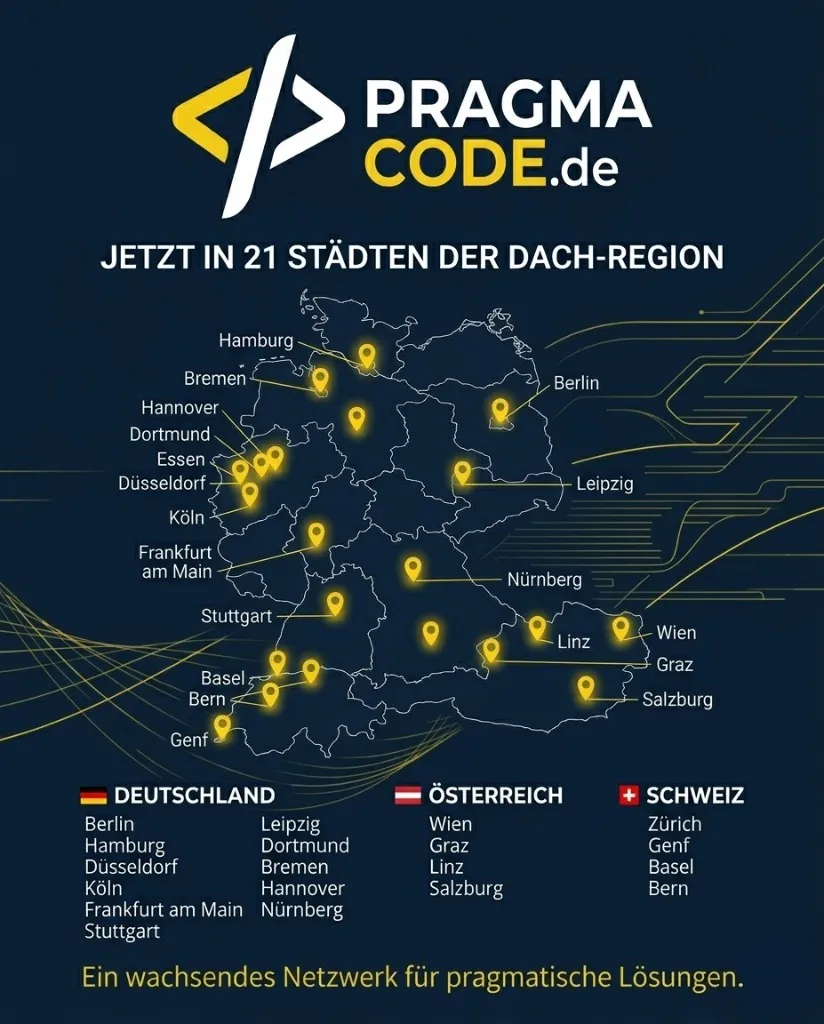
We are your digital partner – regionally anchored and successfully scaling across borders.
Have a vision?
Let's check together how we can make your idea take flight.
Book your free strategy call nowExtended Specialized Glossary
Drupal
A modular, open-source enterprise Content Management System (CMS) built on PHP and Symfony, known for its granular permissions and multilingual capabilities.
Decoupled Drupal
An architectural pattern where Drupal serves strictly as a backend content repository, exposing content via APIs to modern frontends like Astro.
Drupal CMS
The official standard distribution launched alongside Drupal 11 (formerly the Starshot initiative), designed to streamline site building with preconfigured recipes.
JSON:API
A formalized specification for building RESTful APIs in JSON format, natively supported in Drupal to enable efficient filtering without overfetching.
Drush
The standard command-line interface (CLI) for Drupal, used by administrators and developers to run database migrations, cache rebuilds, and module updates.
Twig
A modern, flexible template engine for PHP used in monolithic Drupal setups to separate backend application logic from HTML presentation markup.