


For many enterprises across the DACH region, TYPO3 has served as the backbone of their digital operations for over a decade. In 2026, however, CTOs and managing directors face a sobering financial reality: exploding agency rates driven by a severe shortage of TypoScript developers, costly Extended Long Term Support (ELTS) fees for legacy releases, and structural performance bottlenecks that stifle growth. Discover how a strategic TYPO3 migration to modern composable architectures using Astro or Next.js cuts Total Cost of Ownership (TCO) by up to 65%, pushes page load times below 0.8 seconds, and achieves full ROI within 15 months.
This article is an in-depth expert contribution from our content cluster. Discover the complete overview on our main page: TYPO3 Migration →
Architectural Shift 2026: From PHP Monolith to Composable Edge Web
Many enterprises in the DACH region operate historically grown TYPO3 systems. But in 2026, CTOs face a dilemma: rising hosting and update costs, slow load times (TTFB), and an acute shortage of qualified TypoScript developers strain IT budgets. This guide provides a data-driven TCO analysis and shows how a migration to a modern Composable architecture with Astro or Next.js maximizes ROI, pushes load times below 0.8 seconds, and slashes maintenance costs by up to 65%.
- Ongoing Maintenance Costs (TCO): Traditional TYPO3 installations consume significant IT resources due to labor-intensive core upgrades, ELTS license fees of up to €7,500 per domain, and reliance on high-priced agencies specializing in TypoScript.
- Performance & SEO Impact: Monolithic PHP CMS face structural bottlenecks with Google Core Web Vitals. Moving to static frontend generation (SSG) with Astro improves LCP and TTFB metrics dramatically, protecting marketing budgets from organic drop-offs and lost conversions.
- Modern Migration Paths: Decision-makers can choose a hybrid model (retaining TYPO3 as a Decoupled CMS with a modern frontend) or transition completely to a cloud-based Headless CMS. The payback period is typically under 15 months.
- Introduction: The Enterprise Dilemma with Legacy CMS
- 1. The TCO Trap: What Does Running TYPO3 Really Cost?
- 2. Modern Alternatives: Composable Web & Headless Architecture
- 3. Phases of TYPO3 Migration: A Proven Roadmap
- 4. Practical Case Study: B2B SME Amortizes Migration Costs in 14 Months
- Conclusion: Invest in Modern Web Technologies Instead of Legacy Support
Introduction: The Enterprise Dilemma with Legacy CMS
In the German-speaking corporate landscape, TYPO3 has been the undisputed standard for complex, multilingual, and security-critical enterprise websites for over a decade. With sophisticated permission structures, native multi-site capabilities, and a robust PHP-based architecture, it has earned its place in the IT infrastructure of established corporations and mid-sized market leaders.
Yet, in 2026, the question arises: does a monolithic system like TYPO3 still fit into a modern, agile, and performance-oriented web landscape? More and more Chief Technology Officers (CTOs) and IT decision-makers are finding that the CMS once considered future-proof has become a costly drag on growth.
Rising agency rates (driven by an acute shortage of developers who master niche technologies like TypoScript or the Fluid (Template Engine)), heavy PHP monoliths with subpar values in Google's Core Web Vitals, and resource-intensive major updates swallow substantial budgets. In addition, statutory accessibility mandates (European Accessibility Act / German BFSG) legally enforce WCAG 2.1 AA compliance—a standard that legacy Fluid template engines can often only satisfy with exorbitant refactoring expenditures.
Resources that should be channeled into core digital business, innovative software products, or generative AI search visibility (GEO) are instead drained by system preservation. This guide serves as a commercial and architectural decision-making tool for executives, IT managers, and marketing directors. We compare the true Total Cost of Ownership (TCO) of TYPO3 with modern, decoupled frontend systems, analyze the Return on Investment (ROI), and outline a low-risk, field-tested TYPO3 Migration roadmap.
1. The TCO Trap: What Does Running TYPO3 Really Cost?
To calculate the ROI of a migration, we must first realistically quantify the ongoing operational costs (OPEX) of the existing TYPO3 system. Many companies only look at the monthly hosting invoice and overlook the substantial hidden maintenance, support, and opportunity costs that accumulate over the system's lifecycle.
Major Upgrade Costs
TYPO3 releases regular LTS versions. Once standard support ends, costly ELTS fees take effect. Upgrades require major refactoring of TypoScript code and extensions (€10,000 to €45,000 per major update).
Agency Dependency
TypoScript and Fluid are niche technologies. Because younger web developers prefer modern TypeScript stacks, the supply of TYPO3 specialists is shrinking rapidly, pushing hourly rates up to €150–€190+.
Server & Caching
A PHP monolith performs complex database queries at runtime. This demands high-performance hosting servers and elaborate caching layers (Redis, Varnish) to stay responsive. Hosting costs range from €150 to €600/month.
The Drivers of TCO: ELTS Fees, Versions v11/v12/v13, and Agency Lock-in
An often underestimated cost factor in legacy CMS systems is lifecycle support. After the official three-year free support period of an LTS (Long Term Support) version expires, the TYPO3 GmbH offers a paid Extended Long Term Support (ELTS) service. For legacy branches (like TYPO3 v9, v10, and v11), these ELTS licenses are tiered: approximately €2,500 per domain in the first year, €5,000 in the second year, and up to €7,500 in the third year. For an enterprise operating multiple domains or locales, this amounts to five-figure annual overheads purely for security patches, without gaining any new business capability.
If a company avoids this step and delays the upgrade, it exposes itself to severe security risks. Vulnerabilities in outdated PHP versions and the CMS core are a primary gateway for malware and ransomware. If you perform the upgrade instead, you pay high agency bills for refactoring efforts every two to three years. Due to the lack of available specialists, companies have effectively locked themselves into a monopolistic relationship with their incumbent agencies.
The 4 Hidden Cost Traps of Legacy TYPO3
1. ELTS License Overhead: Up to €7,500/domain annually just for critical security patches on expired LTS releases.
2. Vendor Lock-in: Agency hourly rates between €160 and €195 driven by an acute scarcity of TypoScript engineers.
3. Infrastructure Overhead: Expensive dedicated Linux servers, MySQL replication, and Varnish clusters instead of lightweight edge CDNs.
4. Accessibility Retrofitting: Manual WCAG/BFSG refactoring across legacy Fluid templates easily costs €15,000 to €30,000.
Hidden Opportunity Costs: Load Times, Accessibility Risks & SEO Drops
In addition to direct IT costs, a slow TYPO3 site burns money in marketing. Google's Core Web Vitals (specifically LCP – Largest Contentful Paint and TTFB – Time to First Byte) are extremely difficult to optimize on monolithic CMS architectures because dynamic page assembly on the server costs valuable milliseconds.
Every second of delay in website loading significantly increases the bounce rate of your B2B campaigns (Google Ads, LinkedIn Ads). Furthermore, search algorithms penalize slow websites with lower organic rankings. Modern AI search engines (Perplexity, ChatGPT Search, Google AI Overviews) heavily prioritize pre-rendered, semantic HTML structures with near-zero latency. A sluggish system actively burns marketing budgets and stunts digital customer acquisition.
2. Modern Alternatives: Composable Web & Headless Architecture
If you want to break free from monolithic TYPO3 structures today, you don't need to reinvent the wheel. The modern, future-proof standard for enterprise websites is a Composable architecture. This decouples the backend (content management) and the frontend (presentation layers) cleanly, providing maximum agility, superb performance, and uncompromised IT security.
Option A: Headless TYPO3 with Astro Frontend (Hybrid Approach)
Do your content editors love TYPO3, and do you want to avoid changing their established editing and translation workflows? By using the official TYPO3 Headless Extension and a standardized JSON API, the system is transformed into a pure content backend (Content Provider).
The frontend is rebuilt from scratch with the modern web framework Astro. Astro fetches the structured content via the API and generates static, ultra-fast HTML files beforehand (Static Site Generation – SSG) or leverages server islands for personalized user sections.
The benefit of this hybrid approach: Editors retain their familiar backend environment, including fine-grained roles and permissions. At the same time, the website loads globally in under 0.8 seconds. Because the TYPO3 backend is no longer publicly accessible (operating behind an internal firewall or VPN), the live site is completely immune to hacker attacks and SQL injections.
Pro Tip: Which Migration Path Fits Your Organization?
If your editorial team is deeply rooted in established TYPO3 workflows and relies heavily on complex multi-stage translation and moderation processes across hundreds of authors, choose Option A (Headless TYPO3 with Astro frontend). You keep the powerful backend features of TYPO3 but eliminate all performance and security weaknesses. In contrast, a complete move to Storyblok or Strapi (Option B) is especially beneficial if you want to break free from traditional TYPO3 agencies, radically lower hosting costs, and establish modern, visual authoring experiences.
Option B: Full Transition to Astro / Next.js & a Cloud CMS
For maximum agility, future-proofing, and independence, a complete relaunch is recommended. In this scenario, the old TYPO3 system is completely decommissioned. A modern, cloud-based Headless CMS like Storyblok, Strapi, Sanity, or Contentful serves as the content repository. The frontend is built using Astro (for static-heavy corporate sites) or Next.js (for highly interactive web applications).
This architecture strictly separates software layers. You are never locked into a single CMS again. The frontend consumes standardized data streams; you can swap the backend CMS in the future without changing a single line of frontend code.
1. Headless Content API
Structured content is delivered as clean JSON payloads via REST or GraphQL—sourced from decoupled TYPO3, Storyblok, or Strapi.
2. Astro Static Edge Engine
Zero-JS by default: Astro pre-renders clean, accessible HTML5 at build time. LCP reliably drops to under 0.8 seconds.
3. Serverless Edge CDN
Global CDN deployment via Cloudflare or Vercel Edge networks. No open database ports or PHP processes exposed to the web.
4. CI/CD & Git Workflow
Automated build and test pipelines via GitHub Actions. Editorial changes trigger lightning-fast webhook builds in seconds.
Direct Comparison: Monolithic TYPO3 vs. Astro Composable Stack
- High Maintenance: Costly LTS upgrades every 18 months plus ELTS license fees.
- Slow Page Speeds: Dynamic PHP page rendering requires expensive servers and complex caching.
- Developer Bottleneck: Proprietary skills (TypoScript, Fluid) result in high hourly rates.
- Security Risks: Public backend and PHP runtime environment present large attack surfaces.
- Minimal Run Costs: Serverless Edge hosting on global CDNs for just a few dollars.
- Ultra-fast Loading: Static Site Generation (SSG) delivers LCP under 0.8s.
- Broad Talent Pool: Built on industry-standard JavaScript/TypeScript (React, Vue, Astro).
- Maximum Security: No database connection or PHP process exposed in the public frontend.
3. Phases of TYPO3 Migration: A Proven Roadmap
Migrating a large corporate website with hundreds of subpages, complex content elements, and multilingual structures requires a methodical workflow. A lack of planning inevitably leads to SEO disasters (catastrophic ranking drops on Google) and incomplete data imports. We share our field-tested 6-phase model for a smooth transition.
Phase 1: Audit & Content Cleanup
We crawl your TYPO3 instance for orphan pages, obsolete extensions, and redundant content. A relaunch is the perfect opportunity to discard up to 30% of legacy weight and simplify your data models.
Phase 2: SEO Architecture & Redirect Mapping
Your most valuable asset is your organic Google visibility. We compile a complete mapping of all old TYPO3 URLs to the new routes, establishing server-side 301 redirects at the Edge. No broken links, no SEO drops.
Phase 3: Database Migration
We export structured records (news, blog posts, page tree, assets) from the TYPO3 database using custom ETL scripts and import them cleanly into the target CMS. TYPO3 grids and structures are cleanly translated to JSON.
Phase 4: Frontend Development with Astro / Next.js
We build the modern UI/UX design with light semantic CSS and Astro. The output is fast, accessible, and lightweight code free from heavy script libraries, fully compliant with the European Accessibility Act.
Phase 5: Quality Assurance & Performance Tuning
We conduct cross-device visual validation, accessibility audits, and performance tuning for Google PageSpeed scores of 95+.
Phase 6: Go-Live & DNS Switch
The deployment switch is scheduled during off-peak hours. After the DNS changes propagate, our automated crawlers verify the integrity of the live website and ensure redirect maps work flawlessly.
Under the Hood: Database Content Migration (ETL Pipeline & Asset Processing)
The real bottleneck in enterprise content migrations is data integrity. TYPO3 stores page trees and contents in pages, tt_content, and sys_file_reference tables. These tables are often deeply nested—particularly if plugins like Grid Elements, DCE, or custom Mask configurations are active.
To resolve this, we construct a dedicated ETL (Extract, Transform, Load) pipeline. A custom Python script extracts legacy records directly via SQL or Extbase APIs, strips inline styling tags, and transforms rich text into clean, compliant HTML5 or Markdown. Assets from fileadmin are automatically transcoded to modern WebP and AVIF formats and uploaded to the Headless CMS via its Management API. This pipeline enables migrating thousands of pages reliably in a few hours:
# Sample ETL pipeline snippet for TYPO3 tt_content migration
import mysql.connector
import json
import re

def extract_typo3_content(db_config):
    conn = mysql.connector.connect(**db_config)
    cursor = conn.cursor(dictionary=True)
    query = """
        SELECT c.uid, c.pid, c.CType, c.header, c.bodytext, p.title as page_title
        FROM tt_content c
        JOIN pages p ON c.pid = p.uid
        WHERE c.deleted = 0 AND c.hidden = 0 AND p.deleted = 0
        ORDER BY c.pid, c.sorting
    """
    cursor.execute(query)
    records = cursor.fetchall()
    conn.close()
    return records

def transform_to_clean_markdown(raw_html):
    # Strip obsolete inline styling and legacy span artifacts
    cleaned = re.sub(r'style="[^"]*"', '', raw_html or '')
    cleaned = re.sub(r'<span class="[^"]*">(.*?)</span>', r'\1', cleaned)
    return cleaned.strip()
4. Practical Case Study: B2B SME Amortizes Migration Costs in 14 Months
Theory is useful, but numbers speak louder. Let's look at a real-world migration project executed by Pragma-Code to illustrate the financial impact.
Kromberg & Söhne GmbH
400 Employees | Old System: TYPO3 v9.5 (Out of Support)
The Challenge
- TYPO3 v9.5 was deprecated, presenting severe security vulnerabilities.
- Incumbent agency estimated €32,000 just for the core upgrade to v11/v12.
- Poor mobile loading times (LCP: 5.1s) hurt B2B organic lead generation.
- Editorial work was painfully slow for international marketing teams.
The Investment
Complete migration to Astro frontend and Storyblok Headless CMS
Financial Metrics after 12 Months
Result: The initial investment was fully amortized after just 14 months. From the second year onward, the company saves over €9,000 annually in direct technical overheads.
Quick-Check: Is Your TYPO3 Setup Ready for Migration?
Conclusion: Invest in Modern Web Technologies Instead of Legacy Support
Replatforming is not just a technical IT project; it is a strategic investment in your company's digital competitiveness. Holding onto monoliths like TYPO3 in 2026 is like paying high upkeep for an obsolete manufacturing machine – eventually, the recurring maintenance and repair costs outweigh the purchase of a modern, agile system.
Whether you choose the gentle path (decoupling TYPO3 and modernizing the frontend with Astro) or decide on a clean cut (full migration to a Cloud CMS): you gain speed, security, and independence while drastically reducing your ongoing TCO. The result is a future-proof platform that will delight both your editors and your visitors.
If you are ready to take action: On our service page TYPO3 Migration – Process, Packages, and Pricing, you will find our proven migration roadmap, three fixed-price packages, and answers to the most common questions regarding replacing your TYPO3 system.
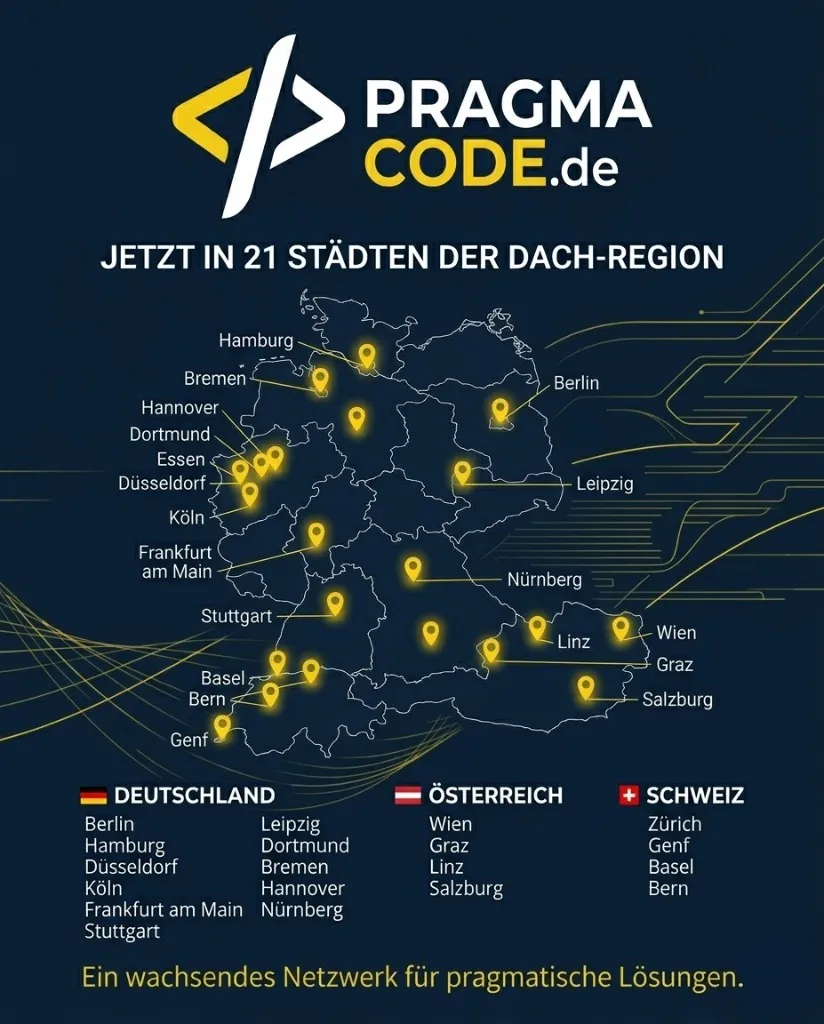
Our Regional Expertise
We are your digital partner – regionally anchored and successfully scaling across borders.
TYPO3 migration for your business?
I deliver this for small and mid-sized businesses: at a fixed price agreed upfront, working directly with the person who builds it. Process, scope and pricing are on the service page.
See service & pricing Or request a free intro callExtended Specialized Glossary
TypoScript
A proprietary configuration language in TYPO3 used to process database records, configure templates, and control output rendering rules.
Fluid (Template Engine)
The standard XML-based template engine of TYPO3 used to render dynamic records and HTML structures safely and flexibly.
Decoupled CMS (Headless)
A content management system responsible solely for content storage and editing, serving data via APIs to a separate frontend stack (like Astro).
TYPO3 Migration
The process of transitioning a TYPO3 installation to a modern web architecture or CMS, typically to optimize performance and reduce running costs.